


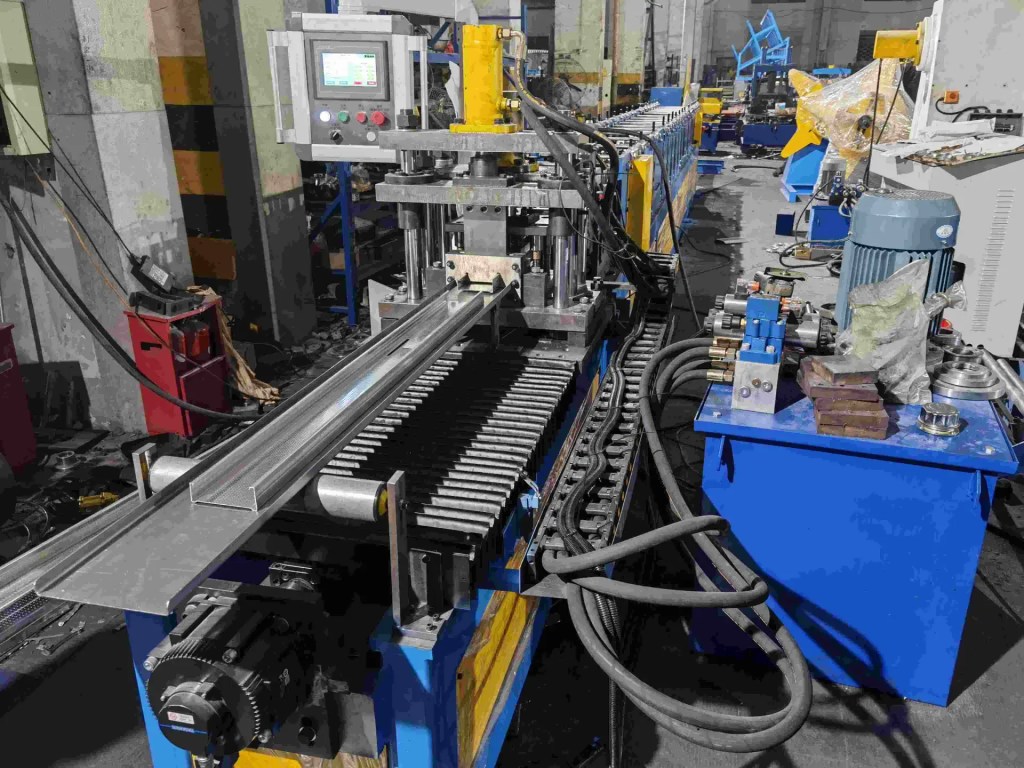
Roll forming hydraulic system maintenance begins with numbers, not with a wrench. A line cutting 1.2 mm galvanized at 25 m/min should hold the same cutter pressure month after month, within a few bar. When the cut starts lagging or the punch needs a second stroke, one of seven checks will name the cause. Beli Rollforming builds the roll forming machines and has over 15 years of field service on hydraulic circuits in 20+ countries, so these checks come from reports, not a manual.
Hydraulic faults rarely arrive without warning. Pressure decays, oil darkens, and filters load up over hundreds of running hours. A preventative maintenance routine that measures the same five pressures monthly catches that decay while it is still a seal or a filter instead of a pump.
1. Log Baseline Pressures Before You Touch Anything
A hydraulic system maintenance log starts with what the machine does when it is healthy. Tap the gauge port at the pump outlet, the cutter clamp line, the punch line, and the uncoiler brake. Record the reading at dead head and again mid stroke. Most lines run 12 to 16 MPa working pressure with the relief set 10 percent above.
The log matters more than any single number. A pump that has lost 15 percent of its flow is on its way out, and only a monthly comparison shows it. Our factory audit checklist uses the same logic on a new machine: prove the numbers before accepting the line.
| Check point | Where to tap | Healthy reading | Act when |
|---|---|---|---|
| Pump outlet at relief | Gauge port on pressure line | 20 to 21 MPa dead head | Flow down 15 percent, or noise rises |
| Cutter clamp | Clamp cylinder port | 10 to 14 MPa | Creep over 3 mm/min under load |
| Punch cylinder | Punch valve outlet | 12 to 18 MPa | Stroke time up 20 percent |
| Accumulator precharge | Gas valve, pump off | 60 to 70 percent of working pressure | Below 50 percent |
| Return filter | Differential indicator | Under 0.15 MPa | Above 0.3 MPa |
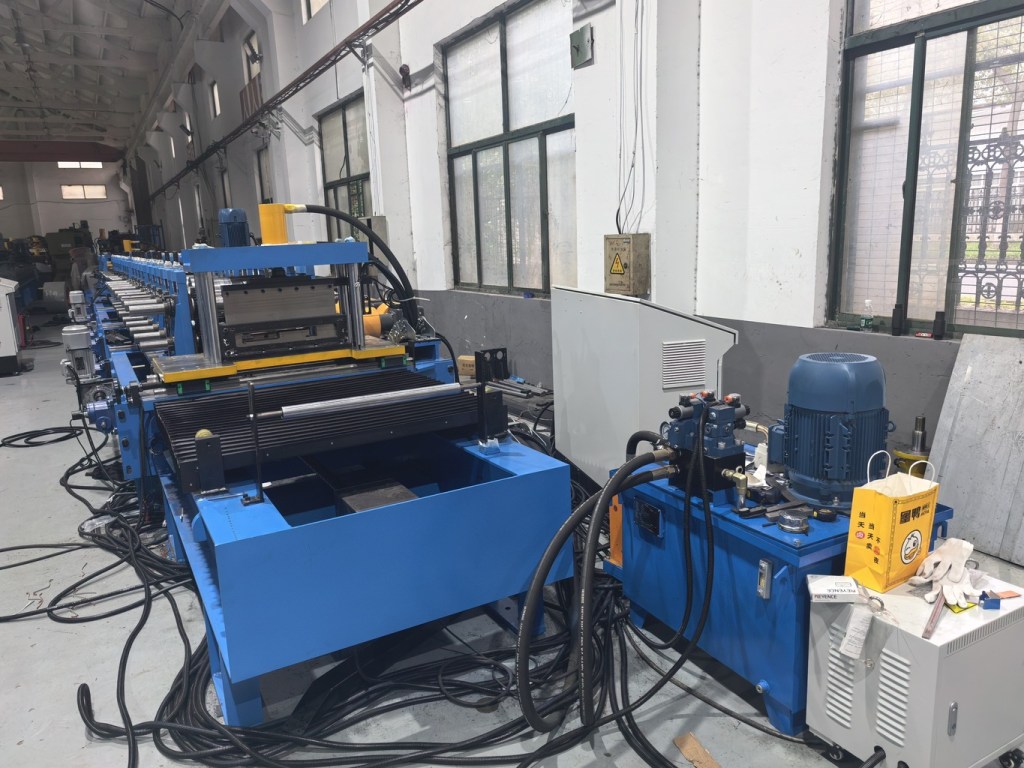
2. Oil Above 60 C Halves Seal Life
Hydraulic oil carries two jobs: transmit pressure and carry heat away. ISO VG 46 is the standard fill for a roll forming line, at 46 cSt at 40 C. Push the oil past 60 C and viscosity falls toward 26 cSt, internal leakage rises, and every seal in the circuit runs hotter than it was designed to.
The alarm point is 60 C at the tank return, and the stop point is 70 C. In roll forming hydraulic system maintenance, temperature is the cheapest early warning you get.
Cooler fins clogged with zinc dust, a low tank level, or a cooler fan wired to the wrong thermostat are the usual causes. If the line sits in a 40 C plant in Saudi Arabia or Australia, size the cooler for ambient, not for a European workshop. The fan circuit belongs to the panel design and must meet NFPA 70 rules. Our installation guide covers tank placement and airflow clearance.
| Oil temperature | Viscosity trend | What happens |
|---|---|---|
| 35 to 55 C | 46 to 30 cSt | Normal operating band |
| 55 to 60 C | 30 to 26 cSt | Watch trend, clean cooler |
| 60 to 70 C | 26 to 20 cSt | Seal life drops, oxidation starts |
| Above 70 C | Under 20 cSt | Stop the line, find the heat source |
3. Read the Filter Indicator, Do Not Bypass It
A 10 micron absolute return filter protects valves and cylinders from the wear particles the circuit makes on its own. Target ISO 4406 cleanliness is 18/16/13 for gear and vane circuits, and 16/14/11 for lines with proportional or servo valves. Those codes are particle counts per millilitre at 4, 6, and 14 micron, and they predict valve sticking.
Change the element at 0.3 MPa differential pressure, or every 1,000 hours, whichever comes first. Never run with the bypass open to finish a shift. A bypassed filter turns the whole tank into a grinding compound and the next failure is a pump, not a filter.
Take a sample every 500 hours and check water content. Anything above 0.05 percent means condensation or a cooler leak, and water destroys bearing surfaces faster than dirt does. Sampling is the part of hydraulic system maintenance most plants skip.
4. Air and Foam Point to a Suction Leak
Foam in the sight glass, a spongy cylinder, or a pump that whines at start-up all say the same thing: air is entering on the suction side. Check the hose clamps, the suction strainer, and the oil level with the cylinder fully extended. A hairline crack in a suction hose will not leak oil out, but it will pull air in.
Bleed at the highest point after any repair, then cycle the cutter and punch 5 to 10 times unloaded. If foam returns, the leak is still there.
Air also hides pressure loss. A circuit with entrained air reads normal at the gauge and still cuts slowly. Our commissioning checklist includes the bleed sequence for a new line.
5. Recharge the Accumulator Every 500 Hours
The accumulator absorbs shock when the cutter fires and holds pressure while the pump catches up. Its precharge is nitrogen at 60 to 70 percent of the minimum working pressure, and it leaks down slowly even on a healthy bladder. Check it every 500 hours with the pump off and the circuit depressurized, following the stored-energy lockout rules in OSHA 1910.147.
Nitrogen only. Compressed air in an accumulator is a fire risk and an insurance finding. A bladder that will not hold precharge for a week is at the end of its life, typically after 2 to 3 years.
Low precharge shows up as a pressure spike at every cut, a hammering noise, and a cutter that bounces. It is the cheapest fix in roll forming hydraulic system maintenance.
6. Run a Creep Test on Every Cylinder
Cylinder seal wear hides behind normal cycle times, so a creep test belongs in every hydraulic system maintenance schedule. Extend the cylinder under load, hold for 5 minutes with the valve closed, and measure the drift. Movement above 3 mm per minute means internal bypass past the piston seal.
Check the rod seal at the same time. A light film is normal. A drip faster than one drop per minute, or a scored chrome rod, means the seal will fail soon. Contamination under the wiper is usually the cause, which links back to filtration.
Worn cylinders and worn tooling fail together more often than buyers expect. The roller wear patterns guide shows how the same contamination that scores a rod also marks a forming roll.

7. Replace Hoses on Age, Not on Failure
Hydraulic system maintenance on hoses is age based, not failure based. Replace pressure hoses at 6 years or 10,000 running hours. SAE J517 sets the burst rating at four times working pressure, and that margin belongs to a new hose, not to one with a cracked cover and 8 years of heat cycles. For plants without a fluid power technician, the International Fluid Power Society publishes the certification material our service team trains against.
Inspect monthly for abrasion against a frame, cover cracks, and bulges. A hose rubbed through to the wire is one shift away from a 20 litre spill.
Fluid change follows analysis, not the calendar. With clean samples, most lines run 2,000 to 4,000 hours between full changes. After a pump or cylinder rebuild, flush the circuit and change the filter twice: once after repair, once at 50 hours.
| Interval | Task | Acceptance limit |
|---|---|---|
| Every 500 h | Oil sample, accumulator precharge, filter indicator | ISO 18/16/13, precharge above 50 percent |
| Every 1,000 h | Filter element, hose inspection, cooler clean | Differential under 0.3 MPa |
| Every 6 years or 10,000 h | Replace all pressure hoses | No cracks, no abrasion |

Conclusion
Roll forming hydraulic system maintenance is a habit of measurement. Five pressures on a log sheet, oil under 60 C, ISO 4406 cleanliness at 18/16/13, accumulator precharge every 500 hours, and a creep test on every cylinder will catch most failures before they stop the line. When pressure loss keeps returning after a rebuild, the circuit is undersized rather than worn. Read the purchase red flags guide before paying for a fix that misses the cause, or the upgrade versus replacement analysis if the machine is past 10 years.
FAQ
1. How often should hydraulic oil be changed on a roll forming machine? With clean oil samples, change the full fluid every 2,000 to 4,000 running hours. Sample every 500 hours and change early if water exceeds 0.05 percent or ISO cleanliness falls below 18/16/13. Filter elements change more often than the oil.
2. What oil temperature is too hot for a roll forming hydraulic system? Treat 60 C at the tank return as the alarm point and 70 C as the stop point. The ideal band is 35 to 55 C with ISO VG 46. Above 60 C viscosity drops toward 26 cSt, internal leakage rises, and seal life roughly halves.
3. What causes hydraulic pressure loss on a roll forming line? The common causes are a worn pump, an internal cylinder bypass, a clogged suction strainer, low accumulator precharge, and air entering the suction side. A pressure log compared month to month separates pump wear from a seal fault.
4. What is a good ISO 4406 cleanliness code for hydraulic oil? Use 18/16/13 for gear and vane circuits and 16/14/11 for lines with proportional or servo valves. The three numbers are particle counts at 4, 6, and 14 micron per millilitre. Cleanliness, not oil colour, predicts valve sticking.
5. How do I test a hydraulic cylinder for internal leakage? Extend the cylinder under load, hold it for 5 minutes with the valve closed, and measure the drift. Movement above 3 mm per minute means the piston seal is bypassing. Repeat on the cutter clamp and the punch cylinder.
6. What should the accumulator precharge be? Nitrogen at 60 to 70 percent of the minimum working pressure. Check it every 500 hours with the pump off and the circuit depressurized. Precharge below 50 percent causes pressure spikes and a hammering noise at each cut.
7. Why does hydraulic oil foam in a roll forming machine? Foam means air is entering the suction side or the oil level is too low. Check suction hose clamps, the strainer, and the level with all cylinders extended. Bleed at the highest point and cycle the cylinders 5 to 10 times without load.
8. When should hydraulic hoses be replaced? Replace pressure hoses at 6 years or 10,000 running hours, whichever comes first. Also replace any hose with cover cracks, bulges, or abrasion down to the wire. SAE J517 rates burst at four times working pressure, and that margin applies to new hose only.
9. How often should the return filter be changed? Change the element at 0.3 MPa differential pressure or every 1,000 hours, whichever comes first. Never run with the bypass open. A bypassed filter circulates wear particles straight back into the valves and cylinders.
10. Can hydraulic maintenance be handled by the operator? Daily level checks, leak walks, and gauge readings belong to the operator. Oil sampling, accumulator precharge, and creep tests need a technician with a gauge set. A roll forming hydraulic system maintenance schedule that mixes the two will miss the early signals.
Last updated: 2026-11-01
Article Changelog
- 2026-10-30: Initial version for the 2026-10-30 calendar slot. 7 hydraulic checks, 3 tables, 10 FAQs, pressure and cleanliness targets from field service data.
- 2026-11-01: Added three body photos as Elementor image widgets.
Next Review Triggers
- ISO 4406 or ISO VG guidance changes for mobile and plant hydraulic circuits
- A new pump or valve technology changes the pressure or filtration targets
- Field data shows a different failure sequence on multi-language installations
- A buyer asks about hydraulic maintenance for a circuit not covered here



 English