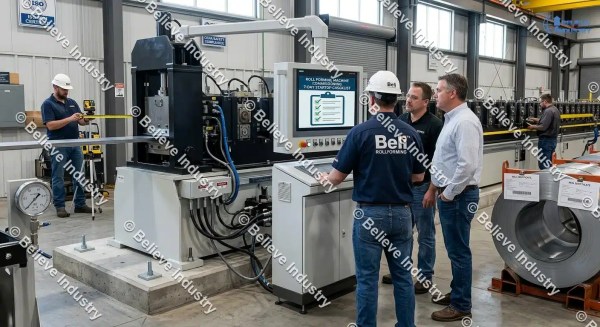










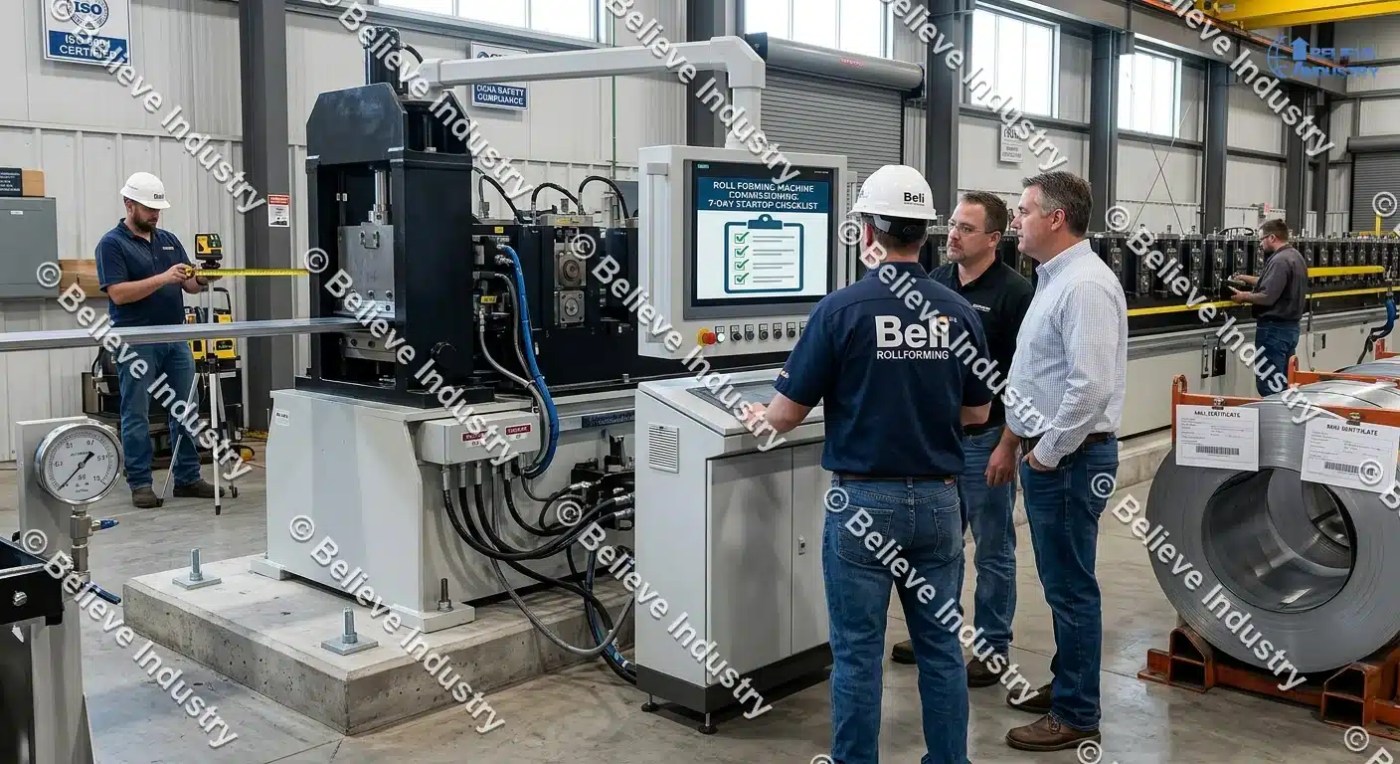
A new roll forming machine is a major investment. Roll forming machine commissioning decides whether that investment pays back fast or stalls for weeks. This guide gives you a practical 7-day startup checklist covering site prep, acceptance tests, and final sign-off.
A new roll forming machine is a major investment. Roll forming machine commissioning decides whether that investment pays back fast or stalls for weeks. Most delays come from poor planning, not machine defects.
This guide gives you a practical 7-day startup checklist. It covers site preparation, daily tasks, acceptance tests, and final sign-off. You will learn what to verify each day and which numbers define success. The same plan works for a strut channel line or a custom purlin machine.
What Is Roll Forming Machine Commissioning?
Roll forming machine commissioning is the structured process of installing, testing, and accepting a new machine before full production starts. It runs from machine arrival to final sign-off. Commissioning includes mechanical installation, electrical hookup, dry runs, material trials, and documented acceptance tests.
Commissioning is not the same as installation. Installation places and connects the equipment. Commissioning proves the machine meets its quoted specifications. That proof matters. It protects your warranty rights and sets the baseline for future maintenance. A factory with ISO 9001 quality management treats commissioning as a formal milestone with records.
Plan 7 working days for a standard line. Complex lines with embossing, punching, or auxiliary equipment may need 10 days. Rushing the process creates defects that surface months later. If your machine is not ordered yet, our guide on how to buy a roll forming machine helps you lock in the right specs first.
Before Day 1: Site Preparation Essentials
Good roll forming machine commissioning starts before the truck arrives. Prepare four things: foundation, power, air, and material.
First, the floor. The machine base needs a level concrete foundation within 2 mm per 3 m. Weak floors cause frame twist and profile twist later. Check that your floor can carry the machine weight plus coil loads. A typical line weighs 8 to 20 tons depending on profile width and stations.
Second, power. Confirm voltage and frequency match the machine nameplate. Voltage should stay within plus or minus 5 percent of rated value. Undersized cables drop voltage under load and trip drives. Have a licensed electrician verify the main breaker size before arrival.
Third, compressed air. Most flying cutoffs and stackers need clean, dry air at 0.6 to 0.8 MPa. Install a filter and dryer. Water in the air lines rusts pneumatic cylinders.
Fourth, material. Stock at least 3 test coils of the exact grade and thickness you ordered. Commissioning tests are only valid on the material the machine was tooled for. Store coils correctly on racks, as covered in our coil storage best practices guide. Also review the uncoiler types guide so your uncoiler setup matches your coil weights.
Pre-Arrival Checklist Table
| Item | Requirement | Verify With |
|---|---|---|
| Foundation | Level within 2 mm per 3 m | Laser level |
| Power supply | Voltage within 5% of nameplate | Multimeter check |
| Compressed air | 0.6 to 0.8 MPa, dry and filtered | Pressure gauge |
| Test coils | 3 coils, correct grade and thickness | Mill certificates |
| Crane access | 5 to 10 ton capacity, clear path | Site walk |
| Manuals | Electrical drawings, tooling list | Supplier pack |
The 7-Day Roll Forming Machine Startup Checklist
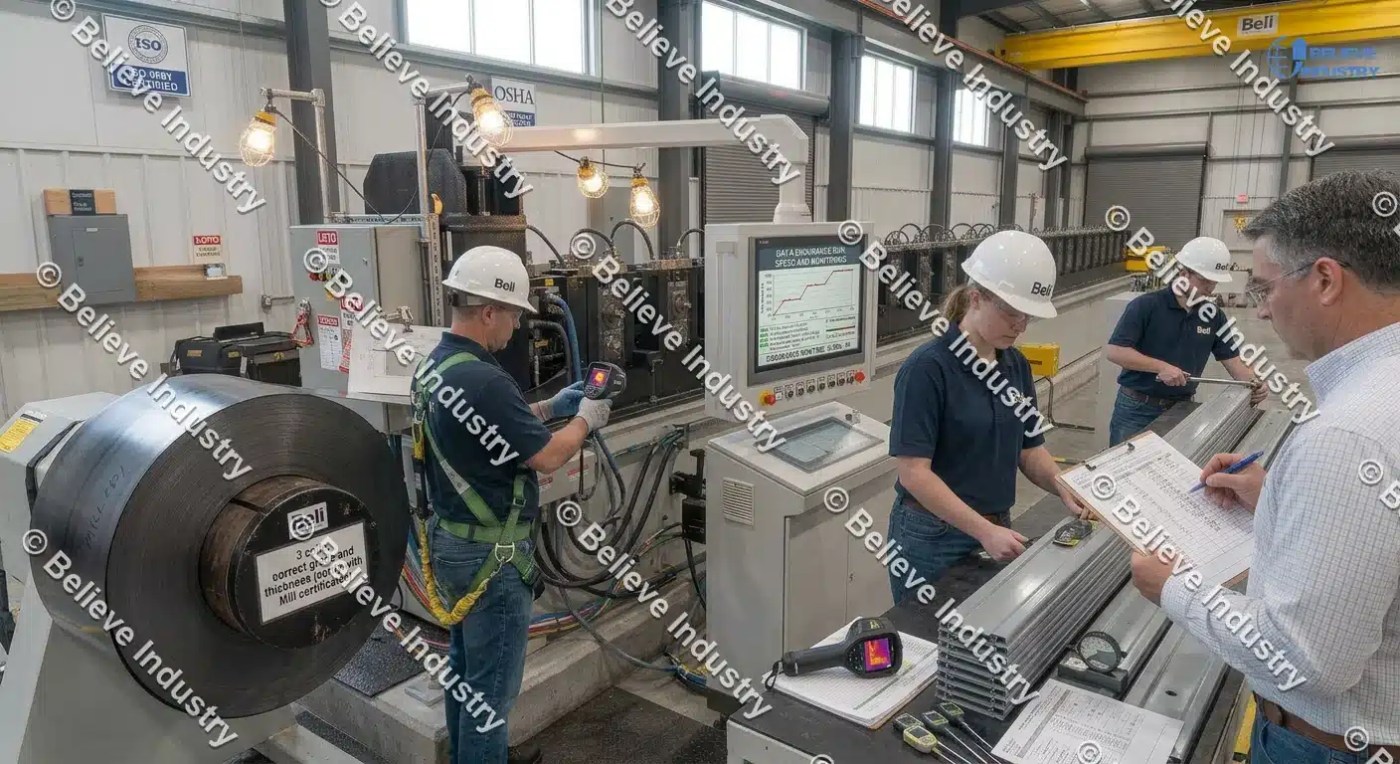
Here is the day-by-day startup checklist. Each day has a clear goal and pass criteria. Keep a written log every day. That log becomes your commissioning record.
Day 1: Unloading and Positioning
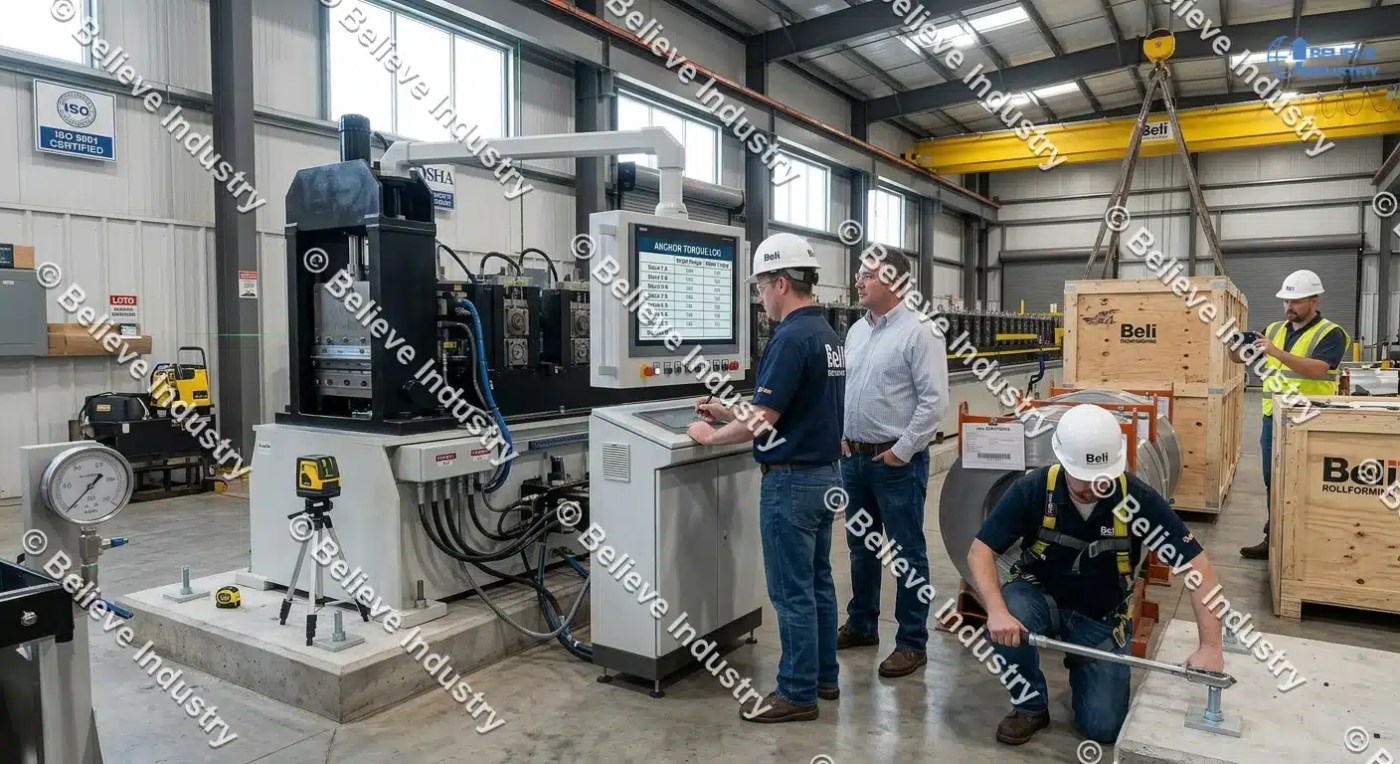
Inspect crates before signing delivery papers. Photograph any damage. Position the machine on the foundation and anchor it. Check frame level again after anchoring. Record anchor torque values.
Day 2: Electrical and Hydraulic Connections
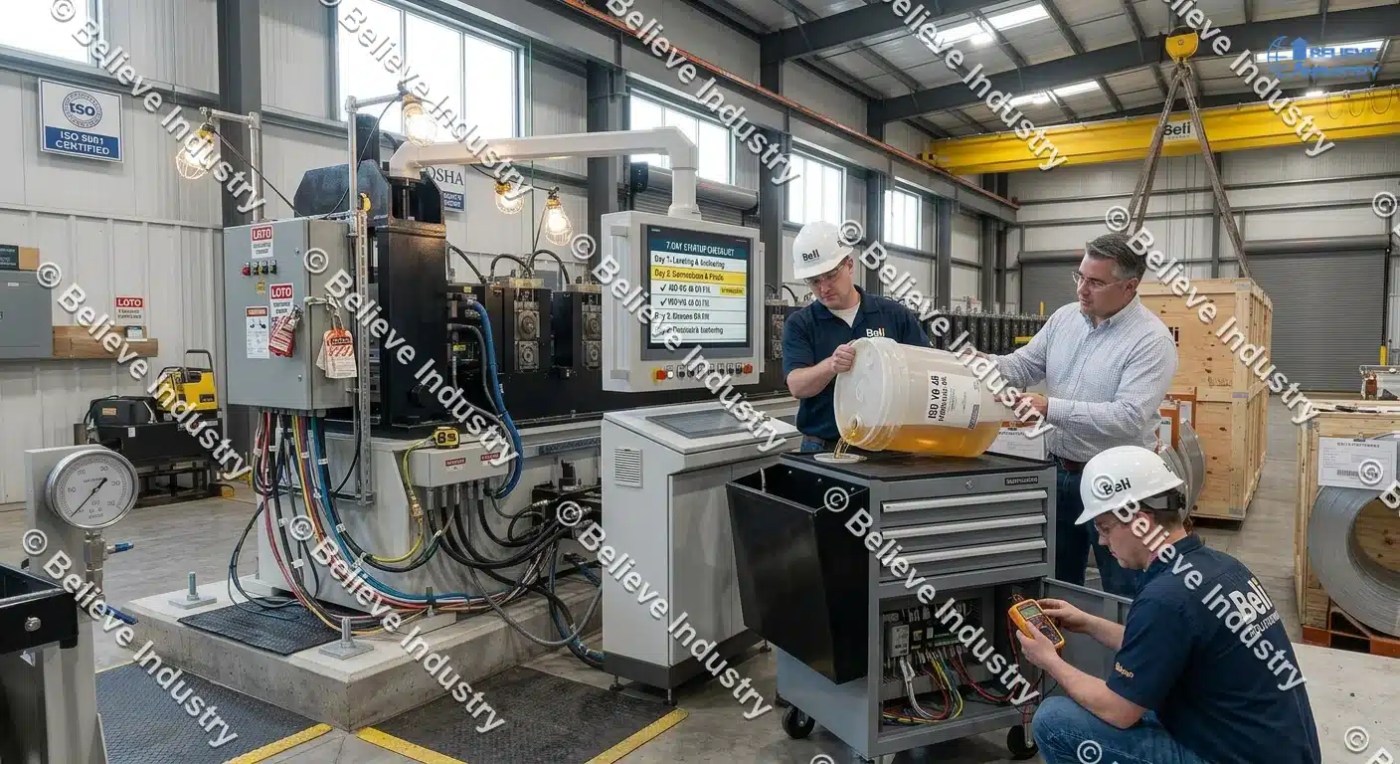
Connect power, control wiring, hydraulic lines, and air lines. Fill the hydraulic tank with ISO VG 46 oil unless the manual states otherwise. Check phase rotation before powering drives. Wrong phase rotation runs pumps backwards and destroys them within minutes.
Day 3: Dry Run Without Material
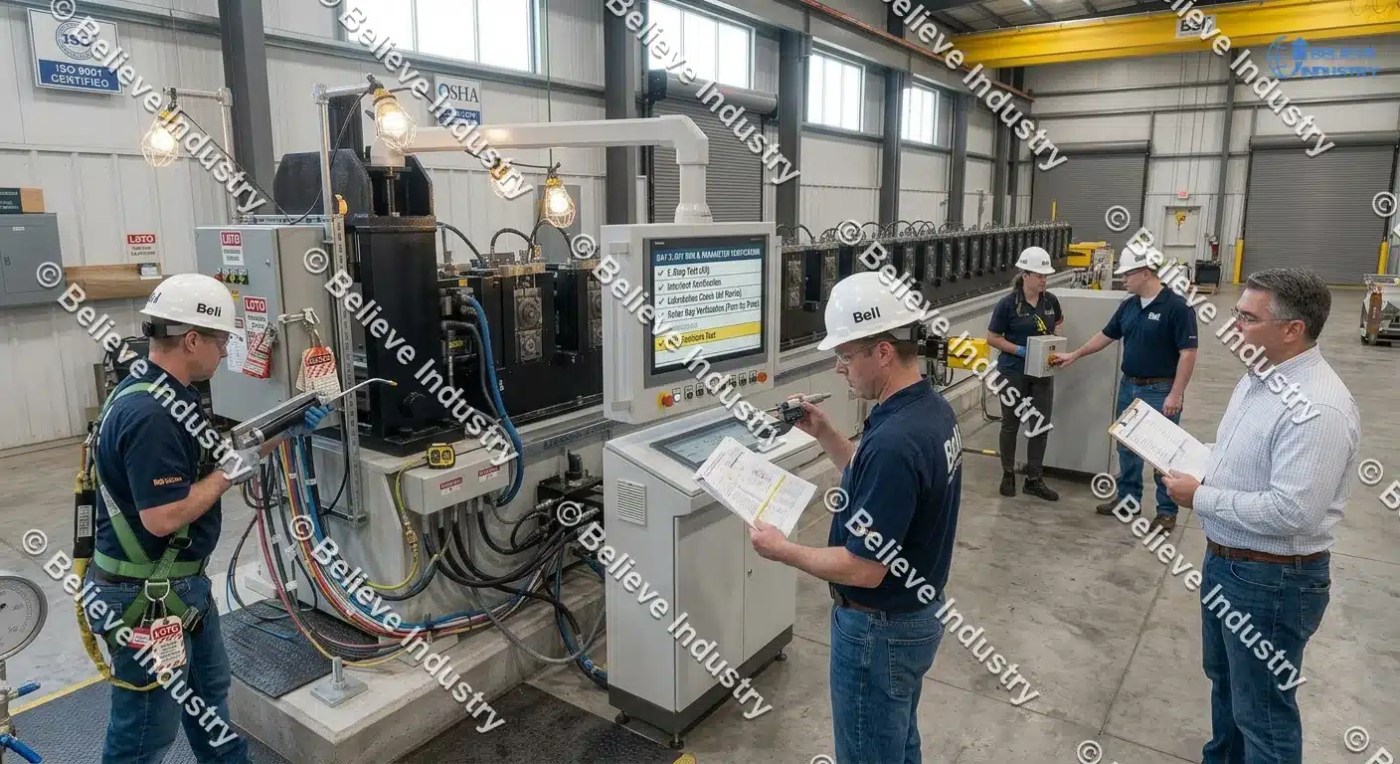
Run every axis and station without coil. Check lubrication points, roller gap settings, and safety guards. Test every e-stop and interlock. Follow lockout tagout rules during any guard opening. Lockout tagout (LOTO) is a safety procedure that isolates all energy sources before maintenance, required by the Occupational Safety and Health Administration (OSHA) under standard 29 CFR 1910.147. Confirm our roller gap clearance rules match the tooling sheet shipped with the machine.
Day 4: First Coil Threading
Thread the first coil at 5 to 10 m/min. Watch the strip enter each stand. Look for edge waviness, scratching, or twisting. Adjust the leveler if the strip carries coil set. Mark any roller marks now, before speeds go up.

Day 5: Profile Tuning and First Article Inspection
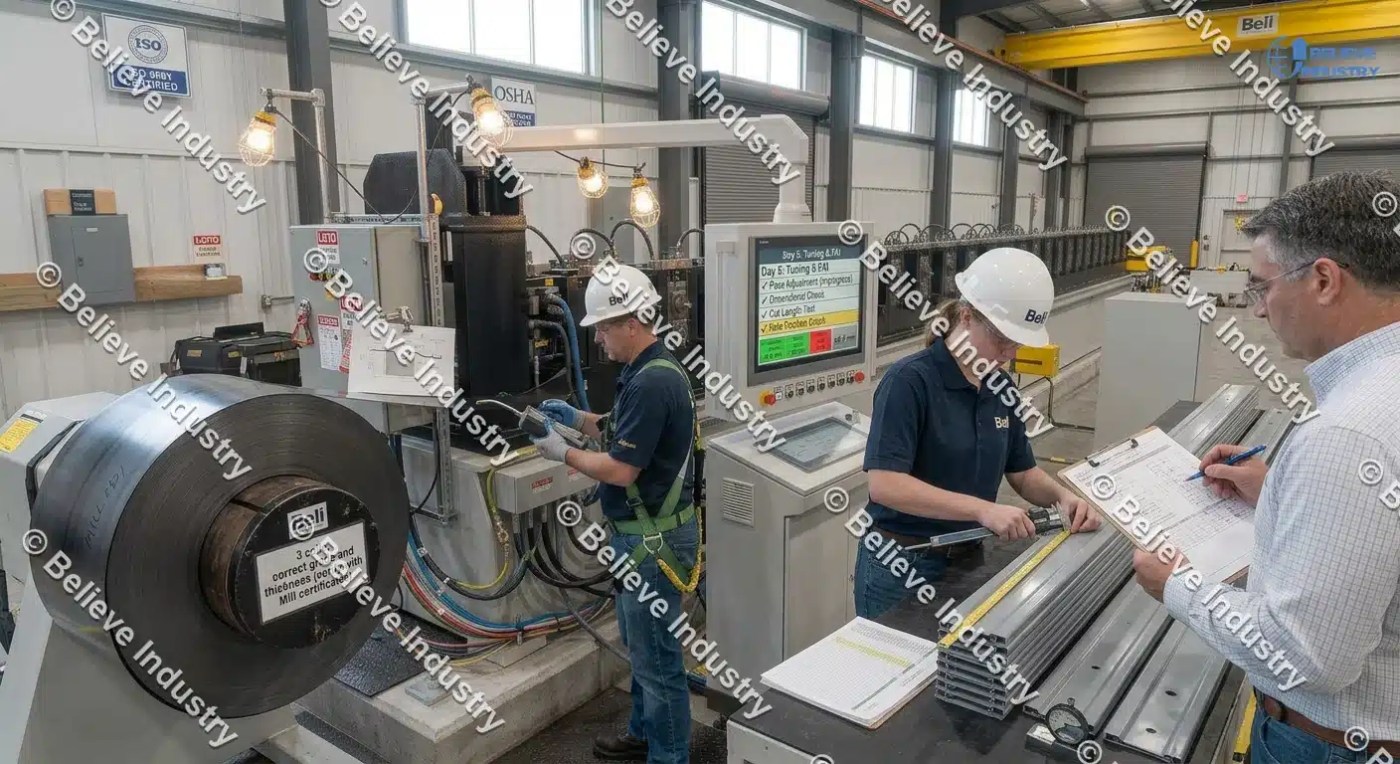
Tune passes until the profile matches the drawing. Perform first article inspection (FAI), a full dimensional check of the first accepted part against the drawing. Typical acceptance limits are plus or minus 0.5 mm on profile dimensions and plus or minus 1 mm on cut length. Test cut length on 10 consecutive parts. Check hole positions if the line includes pre-punching.
Day 6: Speed Ramp and Endurance Run
Ramp line speed in steps. Run at 50 percent, then 80 percent, then full rated speed. Hold full speed for 2 to 4 hours. Monitor bearing temperatures, hydraulic pressure, and motor current. Recheck bolt torque on stands and cutoff after the run. Vibration loosens fasteners in the first hours.
Day 7: Operator Training and Sign-Off
Train operators on startup, shutdown, changeover, and daily checks. Good roll forming operator training cuts early breakdowns dramatically. Hand over manuals, spare parts lists, and electrical drawings. Sign the site acceptance test (SAT) report with the supplier engineer.

7-Day Checklist Summary Table
| Day | Goal | Pass Criteria |
|---|---|---|
| 1 | Position and anchor | Level within 2 mm per 3 m |
| 2 | Connect utilities | Phase rotation correct, no leaks |
| 3 | Dry run | All e-stops and interlocks work |
| 4 | Thread first coil | No scratches or twist at 10 m/min |
| 5 | Profile tuning | FAI within 0.5 mm, cut length within 1 mm |
| 6 | Speed ramp | 2 to 4 hours at full rated speed |
| 7 | Training and sign-off | SAT report signed by both parties |
Acceptance Test Standards for Machine Commissioning
Acceptance tests turn opinions into numbers. Agree on these numbers before the supplier engineer leaves. Disputes after departure cost time and money.
The key tests cover profile geometry, cut length, hole position, speed, and noise. Profile geometry is checked with a profile projector or vernier gauges. Cut length is measured on 10 consecutive parts. Speed is verified with a tachometer against the rated value. Machine noise under load should stay below 85 dB(A), the OSHA action level for hearing conservation.
For galvanized steel lines, test coils should meet ASTM International standard A653 so results reflect real production material. If your contract includes a factory acceptance test (FAT) before shipment, the site numbers should match the factory numbers within tooling tolerance.
Acceptance Test Table
| Test | Method | Typical Pass Limit |
|---|---|---|
| Profile dimensions | Vernier or projector | ±0.5 mm |
| Cut length | 10 parts, tape or encoder check | ±1 mm |
| Hole position | Gauge or CMM | ±0.3 mm |
| Line speed | Tachometer at full speed | 100% of rated |
| Twist per 2 m | Flat table and square | Under 1 degree |
| Noise under load | Sound level meter at 1 m | Below 85 dB(A) |
| Hydraulic leak check | Visual, all fittings | Zero leaks |
5 Common Commissioning Problems and Fixes
Most commissioning problems fall into five groups. Catch them during the 7 days, while the supplier engineer is on site.
| Problem | Likely Cause | Fix |
|---|---|---|
| Profile twist | Uneven floor or unbalanced passes | Re-level frame, adjust side passes |
| Edge wave | Excess strip tension or tight flange passes | Relax tension, open final flange pass |
| Scratched surface | Dirty or damaged rollers | Polish rollers, clean strip path |
| Cut length drift | Encoder slippage or flying cutoff tuning | Clean encoder wheel, retune cutoff |
| Drive overload trips | Undersized supply cable | Upgrade cable and breaker size |
Surface scratches and edge wave deserve extra attention. They are the two most cited defects in new line reports. Our guides on surface scratch prevention and edge wave control cover root causes in depth.
Final Sign-Off and Documentation
Never sign the SAT report with open items. If a test fails, record it, agree on a fix date, and hold a retention clause in payment. Keep these documents on file: SAT report, FAI sheet, electrical drawings, hydraulic schematic, tooling list, spare parts list, and training log.
Good records pay off later. When you plan a profile change or a quick change rollout, the baseline numbers from commissioning tell you what normal looks like. Beli Rollforming ships every line with a full documentation pack and engineer support on site, drawing on more than 15 years of experience and machines working in over 20 countries.