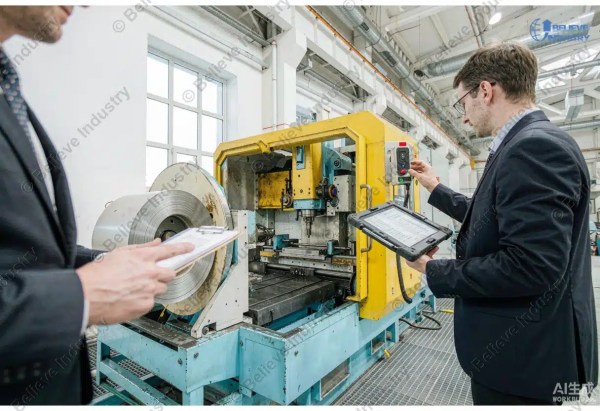










Roll forming machine technology turns a flat steel coil into a finished profile in one continuous pass. The process is fast, precise, and repeatable. That is why purlins, roof panels, cable trays, and racking uprights are all made this way across the United States, Europe, Australia, and the Middle East.
This guide explains how a roll forming machine works, what it can produce, and how to buy one. Each chapter builds on the last, from process fundamentals to roll design, automation, quality, and cost. Use the table of contents to jump to the section you need.
The focus here is practical knowledge. Every chapter carries numbers you can use in a request for quotation (RFQ), from forming speeds to tolerance limits. For a structured buying process, start with our complete roll forming machine buying guide 2026.
Roll forming is a cold forming process. Metal strip feeds through consecutive roller stations, and each station bends the strip a little more until the final cross section is complete. That definition explains nearly everything else in this guide. Speed comes from continuous feed, precision comes from fixed tooling, and cost comes from the number of stations.
1. Введение и основные принципы работы профилегибочной машины
Roll forming is a continuous cold forming process in which a metal strip is progressively bent through a series of rotating roller dies until it reaches the final profile shape. No heat is applied, and no material is removed. The strip moves in one direction, and each roller stand adds a controlled bend.
The process suits long, uniform profiles. A roll forming machine produces parts measured in meters with a constant cross section, such as C purlins, Z purlins, strut channel, and cable tray. Because the metal work hardens as it bends, the finished profile is stiffer than the flat strip it came from. This work hardening effect is a genuine strength benefit, not a side effect to manage.
1.2 Basic Mechanics and Material Considerations
Strip width and thickness set the machine size. Most lines handle strip from 100 mm to 1,500 mm wide, and thickness from 0.4 mm to 6.0 mm. Heavy racking lines go up to 12.7 mm plate. Coil weight usually ranges from 3 to 20 tonnes, which sets how long a line runs before a coil change.
Material choice drives roll design. Mild steel bends easily. High strength low alloy (HSLA) steel resists bending and springs back more. Stainless steel 304 and 316 work harden quickly and need more stations. Aluminum 3003 and 5052 are softer and can scratch if rollers are not polished. For the full comparison, see our roll forming material selection guide и steel vs aluminum roll forming analysis.
Yield strength is the number that matters most. A coil with 250 MPa yield bends differently from one with 550 MPa. The machine must be sized for the highest strength material you plan to run, because bending force and springback both rise with yield strength.

2 Процесс и оборудование профилегибочной машины
2.1 Комплексная разбивка процесса
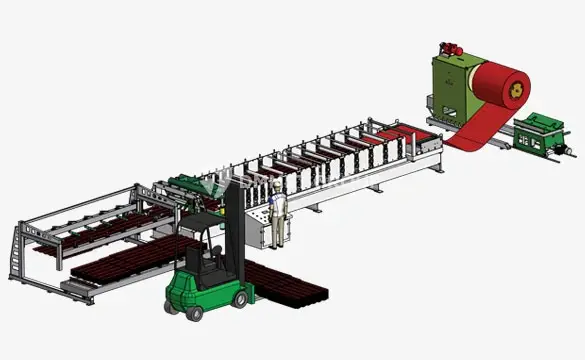
A complete roll forming line runs in a fixed sequence. Each station has one job, and the whole line is timed by the PLC control system:
- Uncoiling. A coil car and uncoiler hold the coil and feed strip at controlled tension. Uncoiler selection is covered in our Руководство по типам размоточных устройств.
- Leveling. The leveler removes coil set and crossbow so the strip is flat before forming. See the roll forming leveler guide.
- Pre-punching and notching. Optional presses punch holes, slots, and knockouts while the strip is still flat, which is far cheaper than punching after forming.
- Forming. The strip passes through roll stands, each bending it 1.5 to 3 degrees per station. Typical lines use 12 to 30 stands.
- Cutoff. A servo flying shear or press cuts the profile to length without stopping the line. See технология сервоприводных летающих ножниц.
- Runout and stacking. Finished profiles move to a runout table, then an automatic stacker for palletizing.
Light gauge roofing lines run at 25 to 45 m/min. Heavy structural lines run at 6 to 12 m/min. The tradeoff is simple: thicker and stronger material always forms slower.
2.2 Типы профилегибочных станов и их применение
Mill construction decides rigidity and tool access. There are four common types.
| Mill type | Строительство | Толщина материала | Лучшее приложение |
|---|---|---|---|
| Консольный | Rollers supported on one side | 0.4 to 1.5 mm | Door frames, small channels, quick tool changes |
| Inboard | Shafts supported on both sides | 0.8 to 3.0 mm | Purlins, strut channel, general profiles |
| Rafted | Stands mounted on separate rafts | 3.0 to 12.7 mm | Racking uprights, heavy structural sections |
| Side by side | Two forming lines on one base | 0.4 to 2.5 mm | Two profiles in parallel, high output plants |
Cantilevered mills win on tool change speed. Inboard mills win on rigidity and are the default for most buyers. Rafted mills handle the heaviest material but cost the most per station. Side by side lines double output from one footprint, which is why double layer machines are popular for roofing sheet producers.
2.3 Основные компоненты машины и их функции
Every roll forming machine line shares the same core components. Their quality decides line reliability more than any single feature.
| Компонент | Функция | Key specification |
|---|---|---|
| Разматыватель | Holds and feeds the coil | 3 to 20 t capacity, mandrel expansion |
| Leveling system | Flattens strip before forming | 5 to 7 straightening rolls |
| Подставки для рулонов | Apply progressive bends | 12 to 30 stands, hardened shafts |
| Drive system | Powers the stands | Variable frequency drives, IEC 61800 compliant |
| Cutoff mechanism | Cuts profiles to length | Servo flying shear or press cut |
| система управления | Sequences the whole line | PLC plus HMI, tolerance ±0.5 mm |
For a deeper look at each station, read our Руководство по компонентам станка для профилирования вальцов.
2.4 Production Speed by Material and Gauge
Speed tables drive capacity planning, yet few guides publish them. The table below shows typical forming speeds on a correctly sized line.
| Материал | Gauge | Скорость формования | Typical product |
|---|---|---|---|
| Prepainted steel | 0.4 to 0.6 mm | 25 to 45 m/min | Roof sheets, wall panels |
| Оцинкованная сталь | 0.8 to 1.5 mm | 15 to 30 m/min | Strut channel, cable tray |
| Mild steel | 2.0 to 3.0 mm | 10 to 20 m/min | C and Z purlins, studs |
| High strength steel | 3.0 to 6.0 mm | 6 to 12 m/min | Racking uprights |
| Stainless steel 304 | 0.5 to 2.0 mm | 8 to 20 m/min | Architectural profiles, food grade tray |
These are planning numbers, not guarantees. Yield strength, profile complexity, and hole patterns all pull speed down. Quote the speed you need in the RFQ and ask the builder to confirm it for your exact material. Our roll forming machine RFQ guide lists the six specifications every buyer should state.

3 Материалы и применение в современной промышленности.
3.1 Material Selection for Roll Forming Machine Lines
Material choice is a cost decision first and a technical decision second. The table compares the five common families.
| Материал | Grade examples | Typical use | Coating options |
|---|---|---|---|
| Mild steel | S235, S275, A36 | Purlins, studs, channels | Pre-galvanized, hot dip galvanizing |
| HSLA steel | S450, A1011 Grade 55 | Racking uprights, long spans | None or paint |
| Нержавеющая сталь | SS304, SS316 | Cable tray, food, coastal | None, brushed, passivated |
| Алюминий | 3003, 5052 | Solar, roofing, cladding | Mill finish, PVDF paint |
| Prepainted steel | G90, G300 coil | Roofing, wall cladding | Polyester, PVDF, SMP |
Coating choice changes tooling. Pre-galvanized strip demands polished rollers to avoid zinc pickup. Stainless steel demands harder roller grades to avoid galling. Both topics are covered in our stainless steel roll forming tooling guide.
3.2 Industrial Applications and Sector Implementations
Roll forming machines serve five main sectors:
- Строительство: purlins, studs, roof sheets, floor deck, door frames. C and Z purlin lines are the most common machines sold worldwide, covered in our C-прогон и Z-образная прогонка pages.
- Solar and energy: mounting rails, strut channel, and bracket profiles for ground mount and rooftop arrays. See solar mounting strut channel.
- Material handling: racking uprights, shelf panels, and box beams. Our руководство по покупке вертикальной стойки walks through the sizing math.
- Electrical: cable tray, cable ladder, and DIN rail. Cable tray roll forming is one of the fastest growing categories.
- Roofing and cladding: standing seam, PBR, spandek, and custom orbs. See standing seam roof panel machines.
3.3 Advantages and Limitations
Cold roll forming wins on four points. Speed is the first, with continuous output far above press braking. Repeatability is the second, with dimensional tolerance held to ±0.3 mm on a well built line. Material efficiency is the third, with scrap rates near zero. Work hardening is the fourth, since formed profiles are stiffer than the source strip.
The limitations are equally clear. A roll forming machine makes one cross section family at a time, so profile changeovers cost time. Tooling is expensive, which favors long production runs. Small batches below 500 m are usually cheaper on a press brake. For the direct comparison, read roll forming vs press brake.
4. Roll Design and Process Optimization
4.1 Основные принципы проектирования валков
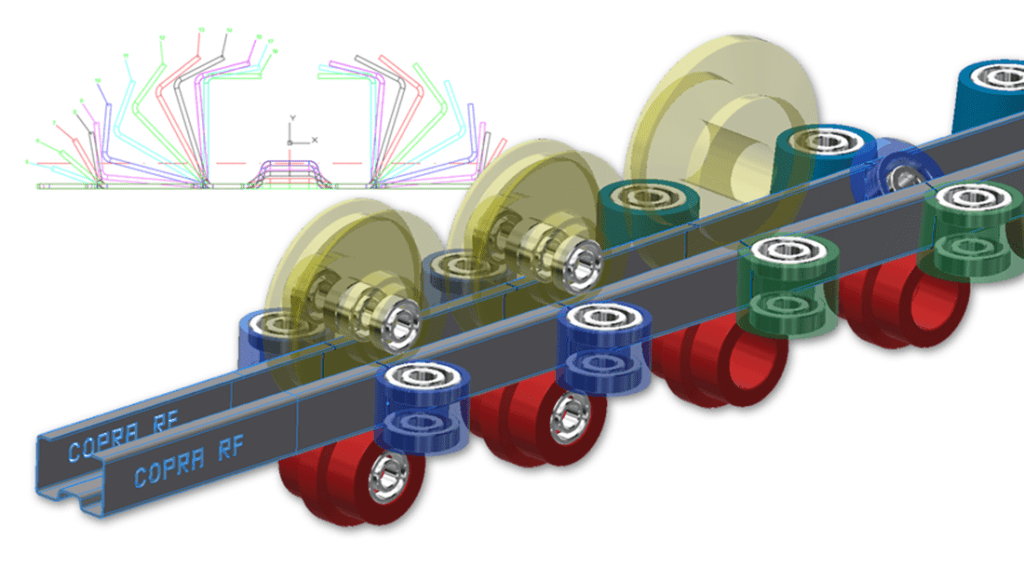
A flower pattern is the design drawing that shows the strip cross section at every roller station, laid out in sequence. It is the master plan of the roll forming line, and it decides the bend sequence, station count, and tool geometry.
Good roll design follows three rules. Bend gradually, with 1.5 to 3 degrees of bend per station. Keep the bend line inside the strip width so no material is stretched beyond its limit. Use the same inside radius throughout the profile so the material strains evenly. Violating any rule invites springback and twist.
4.2 Последовательность изгиба и оптимизация профиля
Bend order matters as much as bend angle. The safest sequence bends outer edges first and works inward, because the strip stays flat where the rollers still need to grip it. Inside radii should never be smaller than 1x material thickness for mild steel, and 2x for stainless.
Springback compensation is the hardest part of roll design. High strength steel springs back 0.5 to 2 degrees per bend, so the tooling must overbend by that amount. Many modern lines add a calibration station at the end that squeezes the profile back to final dimension. Our springback control article explains the compensation math in detail.
4.3 Вычислительные средства и передовые методы проектирования
Roll design moved from drafting boards to simulation software. Programs such as COPRA RF and AutoForm run a finite element analysis (FEA) of the strip through every station before any steel is cut. The software predicts edge strain, springback, and buckling, which cuts tooling development time from weeks to days.
Сайт руководство по программному обеспечению для профилирования compares seven simulation programs used by tool shops. Even with software, a physical trial run with the first coil is still the final check. Simulation reduces risk, it does not remove it.

5 передовых технологий и новых тенденций
5.1 Innovative Variations and Hybrid Processes
Modern roll forming machine lines do more than bend. Inline welding joins edges for closed sections like tubes and box beams. Inline embossing adds stiffness patterns or brand marks. Inline notching and punching cut complex hole patterns that were once impossible to do on a moving strip.
Наш inline welding methods guide covers seven joining technologies for continuous lines. The embossing and notching design guide explains when to punch flat versus after forming, a decision that changes the whole press layout.
5.2 Автоматизация, системы управления и интеграция Индустрии 4.0
Automation is where lines differentiate. Servo flying shears hold length tolerance to ±1 mm at full speed. PLC control with recipe storage lets one operator recall a full profile setup in minutes. Cassette type quick change tooling switches profiles in 20 to 40 minutes instead of a full shift.
Industry 4.0 adds data collection. Modern lines report uptime, scrap, and speed to a dashboard, which feeds predictive maintenance. European buyers increasingly ask for machine data interfaces as standard, a trend tracked in our roll forming automation overview и quick change machine guide.
5.3 Sustainability and Energy Performance
Cold forming is one of the most energy efficient metal shaping processes. Forming steel at room temperature avoids the reheat furnaces of hot rolling, and the Всемирная ассоциация производителей стали reports that cold forming routes use significantly less energy per tonne than hot forming routes for the same shape. Material efficiency runs at 95 to 99 percent because there is no cutting swarf and almost no scrap.
The energy savings come with a second benefit. Coil feedstock is made from recycled steel, and a roll forming line produces no process emissions at the forming stage. Buyers targeting green building credits can document both the energy saving and the material yield. For the commercial case, our roll forming market impact analysis puts the numbers in context.
6. Контроль качества и предотвращение дефектов на профилегибочных машинах
6.1 Распространенные дефекты и их основные причины
Most roll forming defects trace back to five root causes. The table matches defect to cause to fix.
| Defect | Root cause | Исправить |
|---|---|---|
| Крайняя волна | Uneven strip tension across width | Reset leveler, balance strip tension |
| Пружинный отскок | High yield material, underbent tooling | Add overbend, extra calibration station |
| Surface marks | Roller pickup or debris | Polish rollers, apply forming lubricant |
| Twist | Uneven gauge across strip width | Check coil tolerance, realign stands |
| Chatter marks | Vibration at speed | Dampen stands, reduce line speed |
Edge wave deserves special attention because it appears late. Strip tension control and roller gap rules are covered in our edge wave prevention guide и Правила регулировки зазора между валиками.
6.2 Методы обеспечения качества и техники контроля
Quality starts with the first article. The first profile off a new setup is measured against the drawing for every dimension, and the results are logged before production starts. In-line gauging goes further: laser profile scanners measure the cross section continuously and flag drift in real time.
Dimensional tolerance on a good line is ±0.5 mm on length and ±0.3 mm on cross section. Material standards such as ASTM A653 define the coating and gauge of the incoming coil, which is the baseline for everything downstream. A manufacturing quality system built on ISO 9001 keeps the inspection process consistent, and our ISO 9001 in roll forming manufacturing article explains how to audit a builder against it.
6.3 Протоколы обслуживания для обеспечения постоянного качества
Defect prevention is a maintenance job. Daily checks cover roller bearings, lubrication, and strip alignment. Weekly checks cover shaft runout and hydraulic pressures. Monthly checks cover the leveler rolls and shear blades.
A documented maintenance plan prevents 80 percent of unplanned stops. Our preventive maintenance guide 2026 provides a full checklist, and the скрытые затраты на профилегибочное оборудование article shows what downtime actually costs per hour.

7. Рекомендации по внедрению и экономические соображения
7.1 Критерии выбора оборудования и планирование производительности
Select a roll forming machine on material envelope, speed, and tooling, in that order. Define the thickest and strongest material you will run, then the required speed in meters per minute, then the number of profiles. Adding profiles later is where cost grows, because each profile needs its own roll set.
Capacity planning is simple arithmetic. Line speed in m/min times working hours times line efficiency (80 to 85 percent is realistic) gives annual output. Most buyers overestimate efficiency, which is why the arithmetic matters. The прайс-лист на станки для профилирования рулонов includes capacity examples for different budget bands.
7.2 Cost Analysis and Justification
Roll forming machine prices in 2026 (USD, ex works China) split into three bands:
| Machine class | Ценовой диапазон | Typical line |
|---|---|---|
| Entry level | USD 25,000 to 60,000 | Simple C purlin, door frame, single profile |
| Mid range | USD 60,000 to 180,000 | Strut channel, cable tray, roof panel with punching |
| Heavy and high speed | USD 180,000 to 400,000+ | Racking uprights, double layer roofing, servo flying shear |
The range above is a planning guide based on 2026 market data, not a quote. Freight, customs, installation, and tooling add 20 to 40 percent on top. Our скрытые затраты на профилегибочное оборудование analysis breaks down every line item.
7.3 Установка, обучение оператора и протоколы безопасности
Installation takes 7 to 14 days on site with the builder’s engineers. Foundation, power, and compressed air must be ready before arrival. Our 7 day commissioning checklist covers the startup sequence station by station.
Operator training is the difference between a line that performs and one that underperforms. A structured training program covers setup, changeover, and first line maintenance. See our roll forming operator training guide.
Safety follows lockout/tagout rules. The Occupational Safety and Health Administration (OSHA) requires 29 CFR 1910.147 lockout/tagout procedures for all energy sources before maintenance. Roll nip points need guarding, and emergency stops must be reachable along the whole line. For Europe, CE marking under the Machinery Directive is mandatory, explained in our CE marking guide.

8. Заключение и перспективы на будущее
Roll forming machine technology rewards buyers who understand the process. The fundamentals are stable: progressive bending through roller stations, cold forming, and continuous output. The advances are in the peripherals, from servo shears and quick change tooling to simulation software and data collection.
The next five years will bring three shifts. AI assisted roll design will shorten tooling development further. Adaptive control will adjust station gaps automatically as coil properties drift. Green steel coils with lower carbon footprints will change material specifications in Europe and Australia.
Choose a machine that fits your material envelope today and leaves room to grow. Get the fundamentals right, and a roll forming machine will produce for 20 years or more. For the market landscape, see our Тенденции профилегибочных машин 2025 года analysis, then compare builders with the top manufacturers in China ranking.
Часто задаваемые вопросы (FAQ)
How to Choose the Right Roll Forming Machine
Choosing the right roll forming machine starts with defining your profile requirements, material specifications, and production volume. Consider the profile complexity, material thickness (typically 0.004–0.125 inches), and whether you need inline operations like punching or cutting. For a complete buyer’s checklist, read our guide on как купить профилегибочную машину.
Roll stands and tooling selection depends on material thickness, profile complexity, and production speed. Cantilevered mills work best for thin materials up to 0.08 inches, while inboard mills handle thicker materials up to 0.100 inches. For deep sections, inboard designs provide better rigidity. Learn more about optimizing your line with our Руководство по компонентам станка для профилирования вальцов.
The number of roller stations (typically 6–30) depends on bend complexity and material type. More stations mean gentler forming and better precision. For custom profiles, use Computer-Aided Engineering (CAE) to simulate the flower pattern before committing to tooling.
Roof panel roll formers require specific considerations for profile type (R-panel, AG-panel, standing seam), material width, and local building codes. For the US market, check out our metal roof roll forming machine guide for 2026 profile recommendations.
Single-specification models are cost-effective for dedicated production runs. Multispecification or quick-change models reduce changeover time by up to 75% if you produce multiple profiles. Explore our quick change roll forming machine strategies for massive savings.
What Metals and Materials Are Best for Cold Roll Forming
The best metals for cold roll forming include low-carbon steels (yield 30,000–50,000 psi), HSLA steels (yield 50,000–70,000 psi), stainless steels, galvanized steels, aluminum alloys (5000 and 6000 series), copper, and brass. Material selection depends on strength requirements, corrosion resistance, and cost. Read our detailed comparison of roll forming material steel vs aluminum.
Roll forming typically handles material thicknesses from 0.004 inches (0.10 mm) to 0.125 inches (3.2 mm), with widths from 1 inch to 30 inches. Advanced hot roll forming can process materials up to 50 mm thick, including titanium alloys.
Standard roll forming lines process carbon steels, stainless steels, galvanized steels, aluminum alloys, copper, and brass. Specialty lines can handle pre-painted steel, high-strength steels, and even composite materials.
Solar roll forming typically processes galvanized steel (0.8–2.5 mm) and aluminum (1.0–3.0 mm) for mounting rails, strut channels, and panel frames. See our solar strut channel machine specifications for details.
How Roll Forming Compares with Other Metal Fabrication Methods
Roll forming is continuous and ideal for high-volume production of constant cross-sections, while press braking is batch-based and better for short runs and variable geometries. Roll forming offers superior dimensional consistency and minimal waste. Read our full comparison: профилегибочная машина против листогибочного пресса.
The key difference is that roll forming uses a series of contoured rolls to gradually bend metal without stopping, while press brake bending uses a punch and die to create discrete bends. Roll forming is faster for long runs; press brakes offer more flexibility for custom angles.
Roll forming is a continuous process ideal for long profiles with consistent cross-sections, while stamping is a discrete process best for complex 3D shapes and short runs. Roll forming produces less scrap and offers higher speeds (30–300 ft/min).
Pre-punching creates holes before forming, which is ideal for simple patterns and high-speed lines. Post-cutting (flying cutoff) happens after forming and is better for complex profiles where punching before forming would cause distortion. Learn about технология сервоприводных летающих ножниц for precision cutting.
Common Defects in Formed Profiles and Fixes
Common defects include edge waving (compressive stress), longitudinal bow and twist (unbalanced residual stresses), springback (material elasticity), oil canning (tension control issues), surface marks, and cracking. Most defects are preventable through proper roll design and process control.
Edge waving can be fixed by adjusting roll sequencing; bow and twist require balanced stress distribution; springback needs over-bending compensation. Learn our 4 key techniques to control springback in roll forming.
Roll forming machine prices range from 15,000 for basic models to 350,000+ for fully automated lines with inline punching, welding, and stacking. Factors include stand count, automation level, and auxiliary equipment. Discover our 7 ultimate secrets to roll forming machine price.
Fully automatic lines with decoilers, levelers, punch presses, roll formers, flying shears, and auto stackers typically range from 80,000 to 350,000 depending on complexity and speed requirements. Don’t forget to account for скрытые затраты на профилегибочное оборудование.
Typical Components in a Roll Forming Line
A typical roll forming line includes an uncoiler/decoiler, leveling system, pre-punching unit (optional), roll forming stands (6–30 stations), drive system (2–200 HP), cutting mechanism (flying shear or stationary), and control system (PLC/HMI). Explore our detailed breakdown of компоненты профилегибочной машины.
К основным компонентам относятся разматыватель для загрузки рулонов, выравниватель для выравнивания, роликовые стенды для постепенной формовки, приводная система для передачи мощности и отрезное устройство для обеспечения точности длины. Каждый компонент имеет решающее значение для производства без отходов.
Custom profiles require specially designed roll tooling based on a flower pattern (bend sequence). Tooling includes top and bottom rolls, side rolls, and sometimes auxiliary rolls for complex geometries. Tooling investment is typically the largest upfront cost. Read about модернизация оснастки для профилирования.
Maintenance and Safety
Regular maintenance includes lubrication of bearings and drive chains, hydraulic system checks, tooling inspection for wear, alignment verification, and electrical system diagnostics. Preventive maintenance can extend machine life beyond 50 years. Follow our руководство по профилактическому техническому обслуживанию при профилировании.
Daily: visual inspection and lubrication. Weekly: check belt tension and bolt tightness. Monthly: inspect roll gaps and tooling wear. Yearly: full alignment check and bearing replacement if needed. Download our maintenance checklist for details.
Roll former maintenance focuses on roll alignment, shaft bearing lubrication, drive system checks, and tooling condition monitoring. Predictive technologies like vibration analysis and thermography can prevent unexpected downtime.
Essential safety measures include machine guarding, lockout/tagout (LOTO) procedures, proper PPE, emergency stop buttons, and operator training. High-speed lines (up to 800 ft/min) require additional safety barriers and interlocks.
Industries and Applications
Major industries include construction (steel framing, purlins, roofing), automotive (seat tracks, bumper reinforcements), logistics (shelving, rack uprights), energy (solar rails, cable trays), and agriculture (grain bins, fencing).
Roll formed profiles are used in construction, automotive, warehousing, renewable energy, electrical infrastructure, and transportation. The versatility of roll forming makes it suitable for any industry requiring long metal profiles with consistent cross-sections.
A flower pattern (or form sequence) is the step-by-step diagram showing how a flat strip is gradually bent into the final profile shape across multiple roll stations. Each station typically bends 10–30 degrees maximum to prevent material stress.
Advanced Topics
Standard roll forming speeds range from 30–300 ft/min (10–100 m/min). High-speed lines for simple profiles can reach 800 ft/min (~240 m/min). Speed depends on material thickness, profile complexity, and cutoff method.
CAE uses Finite Element Analysis (FEA) to simulate the roll forming process before tooling is manufactured. It predicts longitudinal strain, edge compression, bowing, and twisting, allowing designers to optimize the flower pattern and reduce trial-and-error by up to 80%.
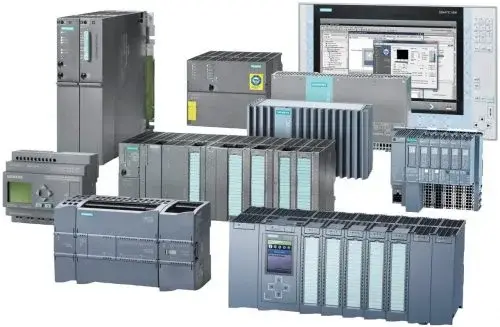
PLC (Programmable Logic Controller) systems provide precise speed synchronization, automatic length measurement, fault diagnostics, and integration with Industry 4.0 systems. Modern PLCs with HMI interfaces allow operators to adjust parameters in real-time, reducing setup time and improving repeatability. Learn about ПЛК-управление для повышения эффективности профилирования..
Changelog & Next Review
История изменений статьи
- 2026-09-01: Full refresh. Added table of contents, production speed table, sustainability data, and unified H2 numbering. Expanded FAQs to 10 direct answer pairs. Fixed the publish date and price year inconsistencies. Replaced stale internal and external links with verified URLs.
Триггеры следующего пересмотра
- New automation or quick change technology appears on the market
- Roll forming machine price bands shift by more than 15 percent
- ASTM, EN, or ISO standards relevant to roll forming are revised
- New product pages go live on belirollforming.com that belong in this guide
- Speed data for high strength or stainless steel changes in published references