









Roll forming machine technology turns a flat steel coil into a finished profile in one continuous pass. The process is fast, precise, and repeatable. That is why purlins, roof panels, cable trays, and racking uprights are all made this way across the United States, Europe, Australia, and the Middle East.
This guide explains how a roll forming machine works, what it can produce, and how to buy one. Each chapter builds on the last, from process fundamentals to roll design, automation, quality, and cost. Use the table of contents to jump to the section you need.
The focus here is practical knowledge. Every chapter carries numbers you can use in a request for quotation (RFQ), from forming speeds to tolerance limits. For a structured buying process, start with our complete roll forming machine buying guide 2026.
Roll forming is a cold forming process. Metal strip feeds through consecutive roller stations, and each station bends the strip a little more until the final cross section is complete. That definition explains nearly everything else in this guide. Speed comes from continuous feed, precision comes from fixed tooling, and cost comes from the number of stations.
1. Rulo Şekillendirme Makinesinin Tanıtımı ve Temel Prensipleri
Roll forming is a continuous cold forming process in which a metal strip is progressively bent through a series of rotating roller dies until it reaches the final profile shape. No heat is applied, and no material is removed. The strip moves in one direction, and each roller stand adds a controlled bend.
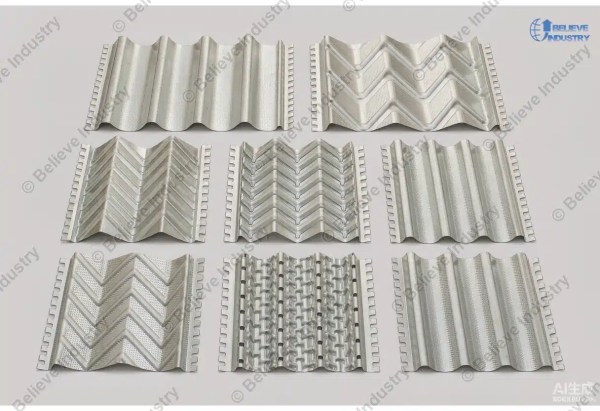
The process suits long, uniform profiles. A roll forming machine produces parts measured in meters with a constant cross section, such as C purlins, Z purlins, strut channel, and cable tray. Because the metal work hardens as it bends, the finished profile is stiffer than the flat strip it came from. This work hardening effect is a genuine strength benefit, not a side effect to manage.
1.2 Basic Mechanics and Material Considerations
Strip width and thickness set the machine size. Most lines handle strip from 100 mm to 1,500 mm wide, and thickness from 0.4 mm to 6.0 mm. Heavy racking lines go up to 12.7 mm plate. Coil weight usually ranges from 3 to 20 tonnes, which sets how long a line runs before a coil change.
Material choice drives roll design. Mild steel bends easily. High strength low alloy (HSLA) steel resists bending and springs back more. Stainless steel 304 and 316 work harden quickly and need more stations. Aluminum 3003 and 5052 are softer and can scratch if rollers are not polished. For the full comparison, see our Rulo şekillendirme malzemesi seçim kılavuzu ve steel vs aluminum roll forming analysis.
Yield strength is the number that matters most. A coil with 250 MPa yield bends differently from one with 550 MPa. The machine must be sized for the highest strength material you plan to run, because bending force and springback both rise with yield strength.

2 Rulo Şekillendirme Makinesi İşlemi ve Makineleri
2.1 Kapsamlı Süreç Ayrıntısı
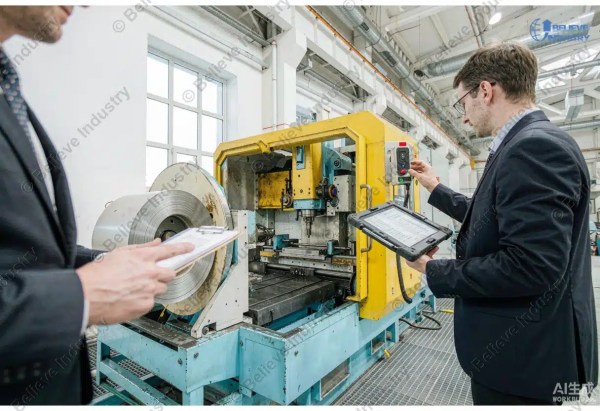
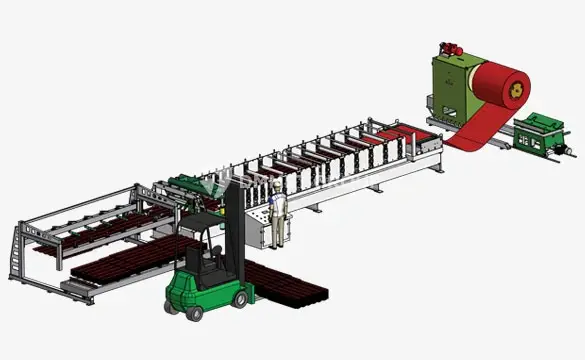
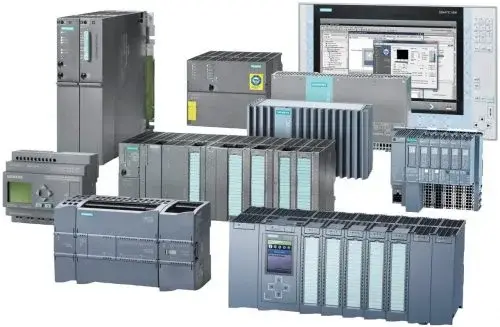
A complete roll forming line runs in a fixed sequence. Each station has one job, and the whole line is timed by the PLC control system:
- Uncoiling. A coil car and uncoiler hold the coil and feed strip at controlled tension. Uncoiler selection is covered in our uncoiler types guide.
- Leveling. The leveler removes coil set and crossbow so the strip is flat before forming. See the roll forming leveler guide.
- Pre-punching and notching. Optional presses punch holes, slots, and knockouts while the strip is still flat, which is far cheaper than punching after forming.
- Forming. The strip passes through roll stands, each bending it 1.5 to 3 degrees per station. Typical lines use 12 to 30 stands.
- Cutoff. A servo flying shear or press cuts the profile to length without stopping the line. See servo uçan makas teknolojisi.
- Runout and stacking. Finished profiles move to a runout table, then an automatic stacker for palletizing.
Light gauge roofing lines run at 25 to 45 m/min. Heavy structural lines run at 6 to 12 m/min. The tradeoff is simple: thicker and stronger material always forms slower.
2.2 Rulo Şekillendirme Değirmenlerinin Türleri ve Uygulamaları
Mill construction decides rigidity and tool access. There are four common types.
| Mill type | Yapı | Malzeme kalınlığı | En iyi uygulama |
|---|---|---|---|
| Konsollu | Rollers supported on one side | 0.4 to 1.5 mm | Door frames, small channels, quick tool changes |
| Inboard | Shafts supported on both sides | 0.8 to 3.0 mm | Purlins, strut channel, general profiles |
| Rafted | Stands mounted on separate rafts | 3.0 to 12.7 mm | Racking uprights, heavy structural sections |
| Side by side | Two forming lines on one base | 0.4 to 2.5 mm | Two profiles in parallel, high output plants |
Cantilevered mills win on tool change speed. Inboard mills win on rigidity and are the default for most buyers. Rafted mills handle the heaviest material but cost the most per station. Side by side lines double output from one footprint, which is why double layer machines are popular for roofing sheet producers.
2.3 Makinenin Temel Bileşenleri ve İşlevleri
Every roll forming machine line shares the same core components. Their quality decides line reliability more than any single feature.
| Bileşen | İşlev | Key specification |
|---|---|---|
| Rulo açıcı | Holds and feeds the coil | 3 to 20 t capacity, mandrel expansion |
| Leveling system | Flattens strip before forming | 5 to 7 straightening rolls |
| Tekerlekli standlar | Apply progressive bends | 12 to 30 stands, hardened shafts |
| Drive system | Powers the stands | Variable frequency drives, IEC 61800 compliant |
| Cutoff mechanism | Cuts profiles to length | Servo flying shear or press cut |
| Kontrol sistemi | Sequences the whole line | PLC plus HMI, tolerance ±0.5 mm |
For a deeper look at each station, read our Rulo şekillendirme makinesi bileşenleri kılavuzu.
2.4 Production Speed by Material and Gauge
Speed tables drive capacity planning, yet few guides publish them. The table below shows typical forming speeds on a correctly sized line.
| Malzeme | Gauge | Şekillendirme hızı | Typical product |
|---|---|---|---|
| Prepainted steel | 0.4 to 0.6 mm | 25 to 45 m/min | Roof sheets, wall panels |
| Galvanizli çelik | 0.8 to 1.5 mm | 15 to 30 m/min | Strut channel, cable tray |
| Mild steel | 2.0 to 3.0 mm | 10 to 20 m/min | C and Z purlins, studs |
| High strength steel | 3.0 to 6.0 mm | 6 to 12 m/min | Racking uprights |
| Stainless steel 304 | 0.5 to 2.0 mm | 8 to 20 m/min | Architectural profiles, food grade tray |
These are planning numbers, not guarantees. Yield strength, profile complexity, and hole patterns all pull speed down. Quote the speed you need in the RFQ and ask the builder to confirm it for your exact material. Our roll forming machine RFQ guide lists the six specifications every buyer should state.

3 Modern Endüstride Malzemeler ve Uygulamaları.
3.1 Material Selection for Roll Forming Machine Lines
Material choice is a cost decision first and a technical decision second. The table compares the five common families.
| Malzeme | Grade examples | Typical use | Coating options |
|---|---|---|---|
| Mild steel | S235, S275, A36 | Purlins, studs, channels | Pre-galvanized, hot dip galvanizing |
| HSLA steel | S450, A1011 Grade 55 | Racking uprights, long spans | None or paint |
| Paslanmaz çelik | SS304, SS316 | Cable tray, food, coastal | None, brushed, passivated |
| Alüminyum | 3003, 5052 | Solar, roofing, cladding | Mill finish, PVDF paint |
| Prepainted steel | G90, G300 coil | Roofing, wall cladding | Polyester, PVDF, SMP |
Coating choice changes tooling. Pre-galvanized strip demands polished rollers to avoid zinc pickup. Stainless steel demands harder roller grades to avoid galling. Both topics are covered in our stainless steel roll forming tooling guide.
3.2 Industrial Applications and Sector Implementations
Roll forming machines serve five main sectors:
- Yapı: purlins, studs, roof sheets, floor deck, door frames. C and Z purlin lines are the most common machines sold worldwide, covered in our C kirişi Ve Z kirişi pages.
- Solar and energy: mounting rails, strut channel, and bracket profiles for ground mount and rooftop arrays. See solar mounting strut channel.
- Material handling: racking uprights, shelf panels, and box beams. Our dikey raf makinesi satın alma rehberi walks through the sizing math.
- Electrical: cable tray, cable ladder, and DIN rail. Cable tray roll forming is one of the fastest growing categories.
- Roofing and cladding: standing seam, PBR, spandek, and custom orbs. See standing seam roof panel machines.
3.3 Advantages and Limitations
Cold roll forming wins on four points. Speed is the first, with continuous output far above press braking. Repeatability is the second, with dimensional tolerance held to ±0.3 mm on a well built line. Material efficiency is the third, with scrap rates near zero. Work hardening is the fourth, since formed profiles are stiffer than the source strip.
The limitations are equally clear. A roll forming machine makes one cross section family at a time, so profile changeovers cost time. Tooling is expensive, which favors long production runs. Small batches below 500 m are usually cheaper on a press brake. For the direct comparison, read roll forming vs press brake.
4. Rulo Tasarımı ve Proses Optimizasyonu
4.1 Rulo Tasarımının Temel İlkeleri
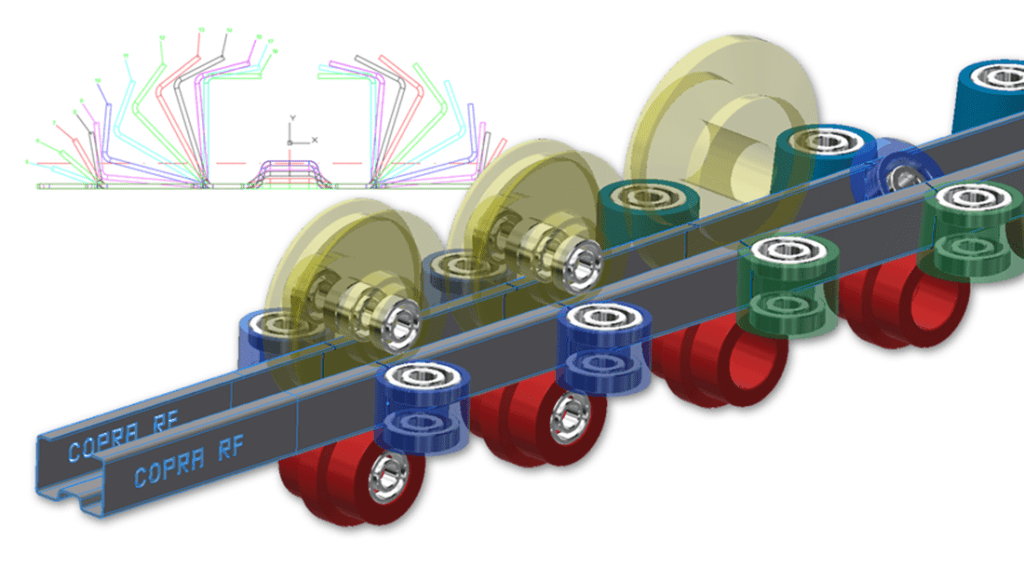
A flower pattern is the design drawing that shows the strip cross section at every roller station, laid out in sequence. It is the master plan of the roll forming line, and it decides the bend sequence, station count, and tool geometry.
Good roll design follows three rules. Bend gradually, with 1.5 to 3 degrees of bend per station. Keep the bend line inside the strip width so no material is stretched beyond its limit. Use the same inside radius throughout the profile so the material strains evenly. Violating any rule invites springback and twist.
4.2 Büküm Sıralaması ve Profil Optimizasyonu
Bend order matters as much as bend angle. The safest sequence bends outer edges first and works inward, because the strip stays flat where the rollers still need to grip it. Inside radii should never be smaller than 1x material thickness for mild steel, and 2x for stainless.
Springback compensation is the hardest part of roll design. High strength steel springs back 0.5 to 2 degrees per bend, so the tooling must overbend by that amount. Many modern lines add a calibration station at the end that squeezes the profile back to final dimension. Our springback control article explains the compensation math in detail.
4.3 Hesaplamalı Yardımcılar ve Gelişmiş Tasarım Teknikleri
Roll design moved from drafting boards to simulation software. Programs such as COPRA RF and AutoForm run a finite element analysis (FEA) of the strip through every station before any steel is cut. The software predicts edge strain, springback, and buckling, which cuts tooling development time from weeks to days.
The rulo şekillendirme yazılımı kılavuzu compares seven simulation programs used by tool shops. Even with software, a physical trial run with the first coil is still the final check. Simulation reduces risk, it does not remove it.

5 Gelişmiş Teknoloji ve Ortaya Çıkan Trend
5.1 Innovative Variations and Hybrid Processes
Modern roll forming machine lines do more than bend. Inline welding joins edges for closed sections like tubes and box beams. Inline embossing adds stiffness patterns or brand marks. Inline notching and punching cut complex hole patterns that were once impossible to do on a moving strip.
Bizim inline welding methods guide covers seven joining technologies for continuous lines. The embossing and notching design guide explains when to punch flat versus after forming, a decision that changes the whole press layout.
5.2 Otomasyon, Kontrol Sistemleri ve Endüstri 4.0 Entegrasyonu
Automation is where lines differentiate. Servo flying shears hold length tolerance to ±1 mm at full speed. PLC control with recipe storage lets one operator recall a full profile setup in minutes. Cassette type quick change tooling switches profiles in 20 to 40 minutes instead of a full shift.
Industry 4.0 adds data collection. Modern lines report uptime, scrap, and speed to a dashboard, which feeds predictive maintenance. European buyers increasingly ask for machine data interfaces as standard, a trend tracked in our roll forming automation overview Ve quick change machine guide.
5.3 Sustainability and Energy Performance
Cold forming is one of the most energy efficient metal shaping processes. Forming steel at room temperature avoids the reheat furnaces of hot rolling, and the Dünya Çelik Birliği reports that cold forming routes use significantly less energy per tonne than hot forming routes for the same shape. Material efficiency runs at 95 to 99 percent because there is no cutting swarf and almost no scrap.
The energy savings come with a second benefit. Coil feedstock is made from recycled steel, and a roll forming line produces no process emissions at the forming stage. Buyers targeting green building credits can document both the energy saving and the material yield. For the commercial case, our roll forming market impact analysis puts the numbers in context.
6 Rulo Şekillendirme Makinesinde Kalite Kontrolü ve Kusur Önleme
6.1 Yaygın Kusurlar ve Kök Nedenleri
Most roll forming defects trace back to five root causes. The table matches defect to cause to fix.
| Kusur | Root cause | Fix |
|---|---|---|
| Edge wave | Uneven strip tension across width | Reset leveler, balance strip tension |
| Geri tepme | High yield material, underbent tooling | Add overbend, extra calibration station |
| Yüzey izleri | Roller pickup or debris | Polish rollers, apply forming lubricant |
| Bükülme | Uneven gauge across strip width | Check coil tolerance, realign stands |
| Chatter marks | Vibration at speed | Dampen stands, reduce line speed |
Edge wave deserves special attention because it appears late. Strip tension control and roller gap rules are covered in our edge wave prevention guide Ve roller gap clearance rules.
6.2 Kalite Güvence Yöntemleri ve Muayene Teknikleri
Quality starts with the first article. The first profile off a new setup is measured against the drawing for every dimension, and the results are logged before production starts. In-line gauging goes further: laser profile scanners measure the cross section continuously and flag drift in real time.
Dimensional tolerance on a good line is ±0.5 mm on length and ±0.3 mm on cross section. Material standards such as ASTM A653 define the coating and gauge of the incoming coil, which is the baseline for everything downstream. A manufacturing quality system built on ISO 9001 keeps the inspection process consistent, and our Rulo şekillendirme imalatında ISO 9001 article explains how to audit a builder against it.
6.3 Tutarlı Kalite için Bakım Protokolleri
Defect prevention is a maintenance job. Daily checks cover roller bearings, lubrication, and strip alignment. Weekly checks cover shaft runout and hydraulic pressures. Monthly checks cover the leveler rolls and shear blades.
A documented maintenance plan prevents 80 percent of unplanned stops. Our preventive maintenance guide 2026 provides a full checklist, and the rulo şekillendirme makinelerinin gizli maliyetleri article shows what downtime actually costs per hour.

7 Uygulama Yönergeleri ve Ekonomik Hususlar
7.1 Ekipman Seçim Kriterleri ve Kapasite Planlaması
Select a roll forming machine on material envelope, speed, and tooling, in that order. Define the thickest and strongest material you will run, then the required speed in meters per minute, then the number of profiles. Adding profiles later is where cost grows, because each profile needs its own roll set.
Capacity planning is simple arithmetic. Line speed in m/min times working hours times line efficiency (80 to 85 percent is realistic) gives annual output. Most buyers overestimate efficiency, which is why the arithmetic matters. The rulo şekillendirme makinesi fiyat rehberi includes capacity examples for different budget bands.
7.2 Cost Analysis and Justification
Roll forming machine prices in 2026 (USD, ex works China) split into three bands:
| Machine class | Fiyat aralığı | Typical line |
|---|---|---|
| Entry level | USD 25,000 to 60,000 | Simple C purlin, door frame, single profile |
| Mid range | USD 60,000 to 180,000 | Strut channel, cable tray, roof panel with punching |
| Heavy and high speed | USD 180,000 to 400,000+ | Racking uprights, double layer roofing, servo flying shear |
The range above is a planning guide based on 2026 market data, not a quote. Freight, customs, installation, and tooling add 20 to 40 percent on top. Our rulo şekillendirme makinelerinin gizli maliyetleri analysis breaks down every line item.
7.3 Kurulum, Operatör Eğitimi ve Güvenlik Protokolleri
Installation takes 7 to 14 days on site with the builder’s engineers. Foundation, power, and compressed air must be ready before arrival. Our 7 day commissioning checklist covers the startup sequence station by station.
Operator training is the difference between a line that performs and one that underperforms. A structured training program covers setup, changeover, and first line maintenance. See our roll forming operator training guide.
Safety follows lockout/tagout rules. The İş Sağlığı ve Güvenliği İdaresi (OSHA) requires 29 CFR 1910.147 lockout/tagout procedures for all energy sources before maintenance. Roll nip points need guarding, and emergency stops must be reachable along the whole line. For Europe, CE marking under the Machinery Directive is mandatory, explained in our CE işaretleme kılavuzu.

8 Sonuç ve Geleceğe Bakış
Roll forming machine technology rewards buyers who understand the process. The fundamentals are stable: progressive bending through roller stations, cold forming, and continuous output. The advances are in the peripherals, from servo shears and quick change tooling to simulation software and data collection.
The next five years will bring three shifts. AI assisted roll design will shorten tooling development further. Adaptive control will adjust station gaps automatically as coil properties drift. Green steel coils with lower carbon footprints will change material specifications in Europe and Australia.
Choose a machine that fits your material envelope today and leaves room to grow. Get the fundamentals right, and a roll forming machine will produce for 20 years or more. For the market landscape, see our rulo şekillendirme makinesi trendleri 2025 analysis, then compare builders with the top manufacturers in China ranking.
Sıkça Sorulan Sorular (SSS)
Doğru Rulo Şekillendirme Makinesini Nasıl Seçersiniz?
Doğru rulo şekillendirme makinesini seçmek, profil gereksinimlerinizi, malzeme özelliklerinizi ve üretim hacminizi belirlemekle başlar. Profil karmaşıklığını, malzeme kalınlığını (tipik olarak 0,004–0,125 inç) ve delme veya kesme gibi hat içi işlemlere ihtiyacınız olup olmadığını göz önünde bulundurun. Eksiksiz bir alıcı kontrol listesi için kılavuzumuzu okuyun. rulo şekillendirme makinesi nasıl satın alınır.
Rulo tezgahları ve takım seçimi, malzeme kalınlığına, profil karmaşıklığına ve üretim hızına bağlıdır. Konsol tipi freze tezgahları 0,08 inç'e kadar ince malzemeler için en iyi sonucu verirken, içten freze tezgahları 0,100 inç'e kadar daha kalın malzemeleri işleyebilir. Derin kesitler için, içten tasarımlar daha iyi rijitlik sağlar. Hattınızı optimize etme hakkında daha fazla bilgi edinmek için web sitemizi ziyaret edin. Rulo şekillendirme makinesi bileşenleri kılavuzu.
Silindir istasyonlarının sayısı (tipik olarak 6-30), bükme karmaşıklığına ve malzeme türüne bağlıdır. Daha fazla istasyon, daha yumuşak şekillendirme ve daha iyi hassasiyet anlamına gelir. Özel profiller için, kalıp üretimine geçmeden önce çiçek desenini simüle etmek için Bilgisayar Destekli Mühendislik (CAE) kullanın.
Çatı paneli rulo şekillendirme makineleri, profil tipi (R-panel, AG-panel, kenet kenarlı), malzeme genişliği ve yerel bina yönetmelikleri için özel hususlar gerektirir. ABD pazarı için, lütfen sayfamızı inceleyin. metal çatı rulo şekillendirme makinesi kılavuzu 2026 profil önerileri için.
Tek özellikli modeller, belirli üretim süreçleri için maliyet açısından avantajlıdır. Çoklu özellikli veya hızlı değiştirme modelleri, birden fazla profil üretiyorsanız geçiş süresini 75%'ye kadar azaltır. Daha fazla bilgi için ürün yelpazemizi inceleyin. hızlı değişimli rulo şekillendirme makinesi stratejileri Büyük tasarruflar için.
Soğuk Haddeleme Yöntemiyle Şekillendirme İçin En İyi Metaller ve Malzemeler Hangileridir?
Soğuk haddeleme için en iyi metaller arasında düşük karbonlu çelikler (akma dayanımı 30.000–50.000 psi), HSLA çelikler (akma dayanımı 50.000–70.000 psi), paslanmaz çelikler, galvanizli çelikler, alüminyum alaşımları (5000 ve 6000 serisi), bakır ve pirinç bulunur. Malzeme seçimi, mukavemet gereksinimlerine, korozyon direncine ve maliyete bağlıdır. Detaylı karşılaştırmamızı okuyun. Rulo şekillendirme malzemesi: Çelik mi, alüminyum mu?.
Rulo şekillendirme, tipik olarak 0,004 inç (0,10 mm) ile 0,125 inç (3,2 mm) arasında kalınlıkta ve 1 inç ile 30 inç arasında genişlikte malzemeleri işleyebilir. Gelişmiş sıcak rulo şekillendirme, titanyum alaşımları da dahil olmak üzere 50 mm kalınlığa kadar malzemeleri işleyebilir.
Standart rulo şekillendirme hatları karbon çelikleri, paslanmaz çelikler, galvanizli çelikler, alüminyum alaşımları, bakır ve pirinç işleyebilir. Özel hatlar ise önceden boyanmış çelik, yüksek mukavemetli çelikler ve hatta kompozit malzemeleri işleyebilir.
Güneş panelleri için rulo şekillendirme işlemi genellikle montaj rayları, destek kanalları ve panel çerçeveleri için galvanizli çelik (0,8–2,5 mm) ve alüminyum (1,0–3,0 mm) malzemelerini işler. Daha fazla bilgi için lütfen web sitemizi ziyaret edin. güneş enerjili destek kanalı makinesi özellikleri Ayrıntılar için.
Rulo Şekillendirme Yönteminin Diğer Metal İşleme Yöntemleriyle Karşılaştırılması
Rulo şekillendirme sürekli bir işlemdir ve sabit kesitli yüksek hacimli üretim için idealdir; pres bükme ise parti bazlıdır ve kısa süreli üretimler ve değişken geometriler için daha uygundur. Rulo şekillendirme üstün boyutsal tutarlılık ve minimum atık sunar. Tam karşılaştırmamızı okuyun: rulo şekillendirme makinesi ve pres freni.
Temel fark, rulo şekillendirmede metalin durmadan kademeli olarak bükülmesi için bir dizi konturlu rulo kullanılırken, pres bükmede ise belirli bükümler oluşturmak için bir zımba ve kalıp kullanılmasıdır. Rulo şekillendirme uzun üretimlerde daha hızlıdır; pres bükme makineleri ise özel açılar için daha fazla esneklik sunar.
Rulo şekillendirme, tutarlı kesitlere sahip uzun profiller için ideal olan sürekli bir işlemdir; presleme ise karmaşık 3 boyutlu şekiller ve kısa üretim serileri için en uygun olan kesikli bir işlemdir. Rulo şekillendirme daha az hurda üretir ve daha yüksek hızlar (30–300 ft/dak) sunar.
Ön delme, şekillendirmeden önce delikler oluşturur; bu, basit desenler ve yüksek hızlı hatlar için idealdir. Sonradan kesme (uçan kesim), şekillendirmeden sonra gerçekleşir ve şekillendirmeden önce delmenin bozulmaya neden olacağı karmaşık profiller için daha iyidir. Daha fazla bilgi edinin servo uçan makas teknolojisi Hassas kesim için.
Şekillendirilmiş Profillerde Sık Görülen Hatalar ve Çözümleri
Sık görülen kusurlar arasında kenar dalgalanması (basınç gerilimi), boyuna eğilme ve burkulma (dengesiz artık gerilimler), geri yaylanma (malzeme esnekliği), yağ tenekesi etkisi (gerilim kontrolü sorunları), yüzey izleri ve çatlama bulunur. Kusurların çoğu, uygun rulo tasarımı ve proses kontrolü ile önlenebilir.
Kenar dalgalanması, haddeleme sırasının ayarlanmasıyla düzeltilebilir; eğilme ve burulma, dengeli gerilim dağılımı gerektirir; geri yaylanma ise aşırı bükülme telafisi gerektirir. 4 temel tekniğimizi öğrenin. Rulo şekillendirmede geri yaylanmanın kontrolü.
Rulo şekillendirme makinelerinin fiyatları şu aralıktadır: Temel modeller için 15.000'e kadar 350.000'den fazla adet, hat içi delme, kaynak ve istifleme özelliklerine sahip tam otomatik hatlar için. Fiyatlandırmada stand sayısı, otomasyon seviyesi ve yardımcı ekipman gibi faktörler rol oynar. Daha fazla bilgi için keşfedin. Rulo şekillendirme makinesi fiyatının 7 nihai sırrı.
Açıcılar, düzleştiriciler, pres makineleri, rulo şekillendiriciler, uçan makaslar ve otomatik istifleyiciler içeren tam otomatik hatların tipik maliyet aralığı şu şekildedir: 80.000 ila Karmaşıklık ve hız gereksinimlerine bağlı olarak 350.000. Şunları da hesaba katmayı unutmayın: rulo şekillendirme makinelerinin gizli maliyetleri.
Bir Rulo Şekillendirme Hattındaki Tipik Bileşenler
Tipik bir rulo şekillendirme hattı; bir açıcı/açıcı, düzleştirme sistemi, ön delme ünitesi (isteğe bağlı), rulo şekillendirme tezgahları (6-30 istasyon), tahrik sistemi (2-200 HP), kesme mekanizması (uçan makas veya sabit) ve kontrol sistemi (PLC/HMI) içerir. Detaylı dökümümüzü inceleyin. rulo şekillendirme makinesi bileşenleri.
Temel bileşenler arasında bobin yükleme için açıcı, düzleştirme için seviyeleyici, kademeli şekillendirme için rulo standları, güç aktarımı için tahrik sistemi ve uzunluk doğruluğu için kesme cihazı bulunur. Her bir bileşen, sıfır atık üretim için kritik öneme sahiptir.
Özel profiller, çiçek deseni (bükme sırası) esas alınarak özel olarak tasarlanmış bükme kalıpları gerektirir. Kalıplar, üst ve alt bükümler, yan bükümler ve bazen karmaşık geometriler için yardımcı bükümler içerir. Kalıp yatırımı genellikle en büyük başlangıç maliyetidir. Daha fazla bilgi için okumaya devam edin. rulo şekillendirme kalıp yükseltmeleri.
Bakım ve Güvenlik
Düzenli bakım, rulmanların ve tahrik zincirlerinin yağlanmasını, hidrolik sistem kontrollerini, takım aşınmasının incelenmesini, hizalama doğrulamasını ve elektrik sistemi teşhisini içerir. Önleyici bakım, makine ömrünü 50 yıldan fazla uzatabilir. Bizi takip edin Rulo şekillendirme önleyici bakım kılavuzu.
Günlük: Görsel inceleme ve yağlama. Haftalık: Kayış gerginliğini ve cıvata sıkılığını kontrol edin. Aylık: Makara boşluklarını ve takım aşınmasını inceleyin. Yıllık: Tam hizalama kontrolü ve gerekirse rulman değişimi. Ayrıntılar için bakım kontrol listemizi indirin.
Rulo şekillendirme makinelerinin bakımı, rulo hizalaması, şaft yataklarının yağlanması, tahrik sistemi kontrolleri ve takım durumu izlemesi üzerine odaklanır. Titreşim analizi ve termografi gibi öngörücü teknolojiler, beklenmedik arıza sürelerini önleyebilir.
Temel güvenlik önlemleri arasında makine koruması, kilitleme/etiketleme (LOTO) prosedürleri, uygun kişisel koruyucu ekipman (PPE), acil durdurma düğmeleri ve operatör eğitimi yer almaktadır. Yüksek hızlı hatlar (dakikada 800 ft'ye kadar) ek güvenlik bariyerleri ve kilitleme sistemleri gerektirir.
Endüstriler ve Uygulamalar
Başlıca sektörler arasında inşaat (çelik iskelet, aşıklar, çatı kaplama), otomotiv (koltuk rayları, tampon takviyeleri), lojistik (raflar, raf dikmeleri), enerji (güneş paneli rayları, kablo kanalları) ve tarım (tahıl depoları, çitler) yer almaktadır.
Rulo şekillendirme profilleri inşaat, otomotiv, depolama, yenilenebilir enerji, elektrik altyapısı ve ulaşım sektörlerinde kullanılmaktadır. Rulo şekillendirmenin çok yönlülüğü, tutarlı kesitlere sahip uzun metal profillere ihtiyaç duyan her sektör için uygun hale getirmektedir.
Çiçek deseni (veya şekil dizisi), düz bir şeridin birden fazla bükme istasyonunda kademeli olarak nihai profil şekline nasıl büküldüğünü gösteren adım adım bir şemadır. Malzeme gerilimini önlemek için her istasyon genellikle en fazla 10-30 derece bükme yapar.
İleri Konular
Standart rulo şekillendirme hızları 30–300 ft/dak (10–100 m/dak) arasında değişir. Basit profiller için yüksek hızlı hatlar 800 ft/dak (~240 m/dak) hıza ulaşabilir. Hız, malzeme kalınlığına, profil karmaşıklığına ve kesme yöntemine bağlıdır.
CAE, kalıp üretimi öncesinde rulo şekillendirme sürecini simüle etmek için Sonlu Eleman Analizi (FEA) kullanır. Boyuna gerilimi, kenar sıkışmasını, eğilmeyi ve burulmayı tahmin ederek tasarımcıların çiçek desenini optimize etmelerine ve deneme yanılma yöntemini 1'e kadar azaltmalarına olanak tanır.
PLC (Programlanabilir Mantık Kontrol Cihazı) sistemleri, hassas hız senkronizasyonu, otomatik uzunluk ölçümü, arıza teşhisi ve Endüstri 4.0 sistemleriyle entegrasyon sağlar. HMI arayüzlü modern PLC'ler, operatörlerin parametreleri gerçek zamanlı olarak ayarlamasına olanak tanıyarak kurulum süresini azaltır ve tekrarlanabilirliği artırır. Daha fazla bilgi edinin Rulo şekillendirme verimliliği için PLC kontrolü.
Değişiklik Günlüğü ve Sonraki İnceleme
Makale Değişiklik Günlüğü
- 2026-09-01: Full refresh. Added table of contents, production speed table, sustainability data, and unified H2 numbering. Expanded FAQs to 10 direct answer pairs. Fixed the publish date and price year inconsistencies. Replaced stale internal and external links with verified URLs.
Sonraki İnceleme Tetikleyicileri
- New automation or quick change technology appears on the market
- Roll forming machine price bands shift by more than 15 percent
- ASTM, EN, or ISO standards relevant to roll forming are revised
- New product pages go live on belirollforming.com that belong in this guide
- Speed data for high strength or stainless steel changes in published references