


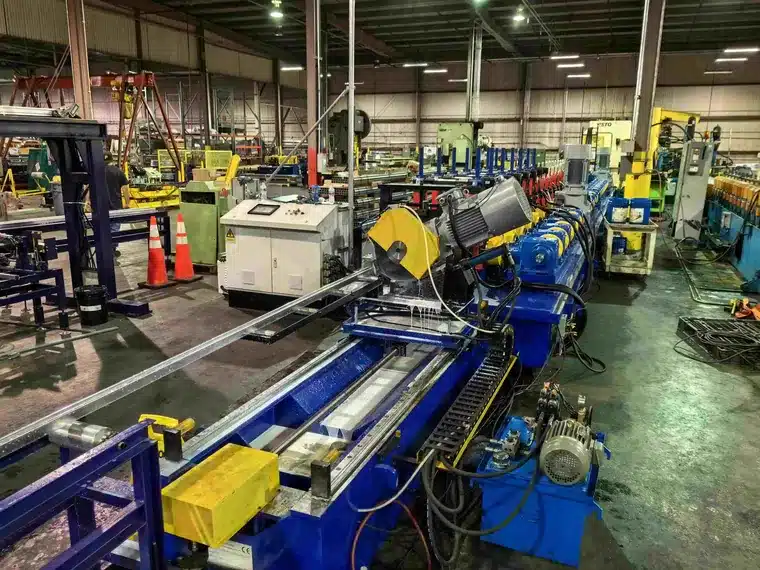
A roll forming spare parts list is usually written after the first breakdown. That is the expensive way to build one, because the part you need is always the part with the longest lead time.
The alternative costs 2 to 5 percent of the machine price and removes most of the risk. Seven item groups cover the failures that actually stop a line, and each one has a defensible stock level. Buy roll forming spare parts with the machine when you can, because freight and a second lead time cost more than the parts.
The logic is not “stock everything”. It is “stock what cannot be bought in time”, and that set is smaller than most plants assume.
Why the Stock Level Follows the Lead Time
Downtime cost sets the budget. A small line running at 20 m/min on a 1,000 m coil produces 12 tonnes a shift, and an unplanned stop of two days costs more than a full spare parts kit.
Lead time sets the quantity. A part with a 2 week lead time can be bought when it fails. A part with a 12 week lead time cannot, and that is the line between stock and no stock.
The rule that works: if lead time is longer than the time you can afford to be down, keep one on the shelf. Everything else is a purchase, not an inventory item. Maintenance planning guidance from The Fabricator applies the same logic to press and roll forming shops.
That single rule usually produces a kit of 15 to 30 items, not 300. It also explains why the same machine in Germany and in Indonesia need different stock levels for identical parts.
The Seven Groups That Stop a Line
| Group | Typical life | Lead time | Stock rule |
|---|---|---|---|
| Forming roll sets | 5 to 15 years with regrinding | 8 to 16 weeks | One backup of the first and last two stands |
| Bearings and adapter sleeves | 2 to 5 years | 1 to 4 weeks | One set of the most loaded stands |
| Cut-off and piercing blades | 50,000 to 200,000 cuts | 4 to 10 weeks | One spare set, sharpened rotation |
| Hydraulic seals, hoses, accumulator | 2 to 3 years | 1 to 6 weeks | Full seal kit plus two hoses per circuit |
| Encoders, sensors, limit switches | 3 to 8 years | 1 to 8 weeks | One of each model on the line |
| Drive module, VFD, contactors | 8 to 15 years | 2 to 12 weeks | One VFD of the largest rating, critical contactors |
| Chains, couplings, cardan shafts | 3 to 8 years | 2 to 8 weeks | One chain loop and one coupling |
Life figures assume clean strip, correct lubrication and a line running normal duty. A plant running prepainted or high strength steel should cut the blade and bearing figures by 30 percent.
Group 1 to 3: Roll Sets, Bearings and Blades
Forming roll sets are the longest lead item on the machine. A new set is cut to a specific profile, hardened and matched to the pass it runs, and no amount of money shortens the 8 to 16 week cycle.
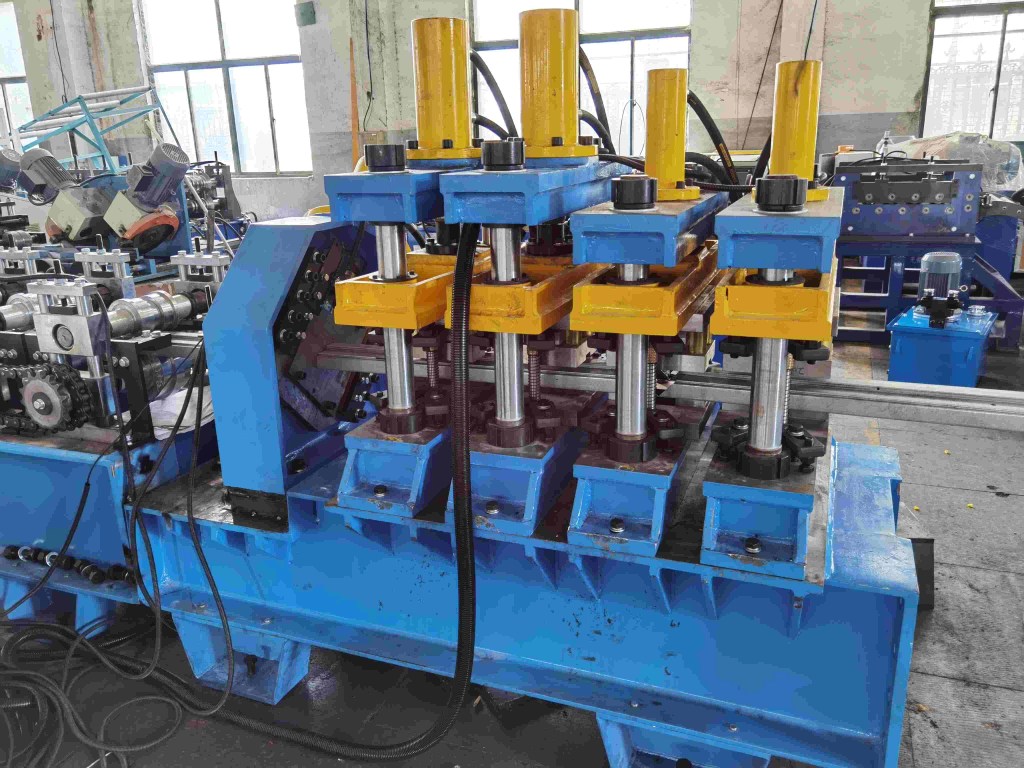
Full duplication is wasteful for a mature plant. The practical compromise is a backup of the first stand, where damage from a mis-fed strip happens, and the last two stands, where the finished profile is set. Those four rolls cover the failures that cannot wait.
Roll condition, not roll failure, is the usual reason to replace. This guide to roller wear patterns explains when regrinding is enough and when a new set is the cheaper route.
Bearings fail without warning and cost little. The tension between those two facts is why they belong on the shelf. Stock the bearing used on the most heavily loaded stands, plus adapter sleeves for the same positions, because a sleeve that fretted on the shaft is not reusable.
A bearing that runs hot has a shorter life than the catalogue says, and the temperature rule in this bearing failure guide explains why the same part fails at different rates on two lines.
Cut-off blades are consumable, and plants underestimate the consumption. A blade set lasts 50,000 to 200,000 cuts depending on material, and prepainted or high strength stock can halve that. On a line running three shifts, a set can be consumed in a year.
Keep one spare set, and rotate the worn set through regrinding rather than waiting for a failure. A dull blade does not just cut badly, it tears the edge and starts coating or flatness defects downstream.
Group 4 to 5: Hydraulics and Electronics
Seals and hoses fail from age, not from use. A seal kit that sat on the shelf for six years is not a spare, it is a risk, because elastomer life is limited even in storage.
Stock a full seal kit for every cylinder model on the line, two hoses per hydraulic circuit, and one accumulator bladder if the line uses one. Replace shelf stock on a five year rotation, and keep the purchase date on the box. The pressure checks in this hydraulic maintenance guide also tell you which circuit is likely to need the kit first.
Electronics are the quiet risk. Encoders, proximity sensors and limit switches are cheap, model specific, and often have a 6 to 8 week lead time when they are not in local stock. One spare of each model on the line is a small expense.
VFDs and drive modules deserve one spare at the largest rating. A failed drive stops the line as completely as a broken shaft, and a drive that has been superseded may not be available at all.
Group 6 to 7: Drive Train and the Small Parts
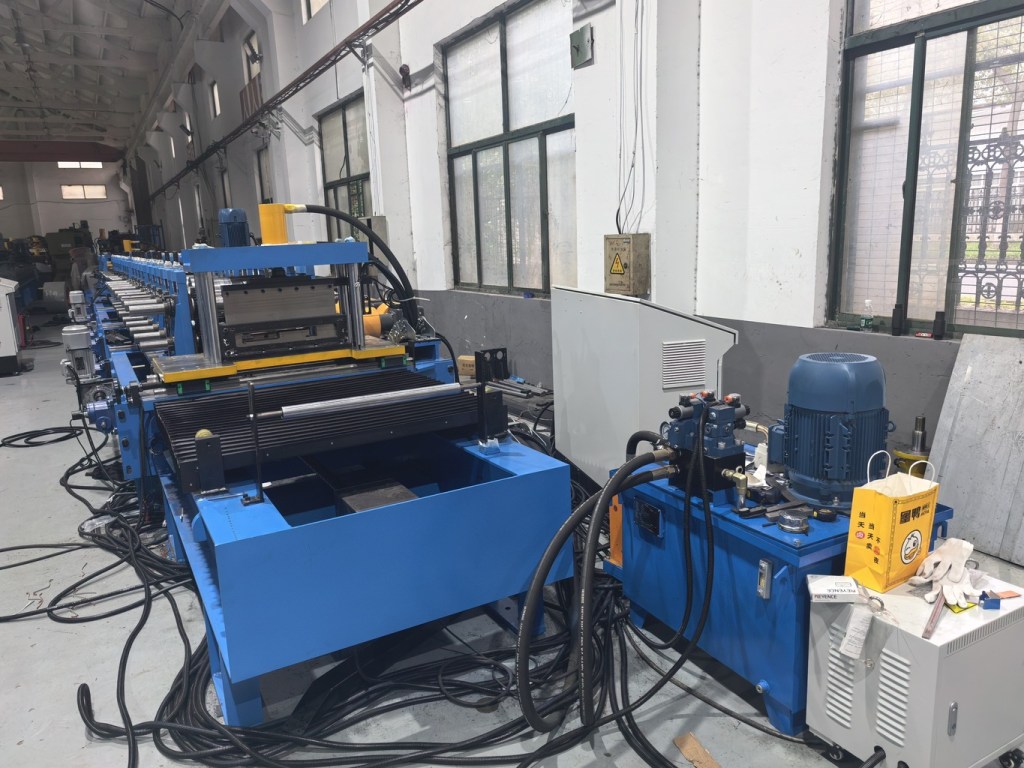
Chains, couplings and shafts wear together. Replace a chain and keep the worn sprockets, and the new chain wears to the old pitch in weeks. Stock the chain loop and the coupling as a pair, and inspect the sprocket teeth when the chain is changed.
Cardan shafts and universal joints belong in this group. A worn joint shows as vibration at speed, and the vibration then damages the gearbox.
The small parts are the ones that stop a line for a week. A $4 proximity switch with a 6 week lead time can idle a $500,000 machine. That asymmetry is the whole argument for a critical spares list, and it is the first thing a factory acceptance inspection should capture: the exact model number of every sensor on the line.
Build the List Before You Need It
| Step | Action | Output |
|---|---|---|
| 1 | List every part with a lead time over 4 weeks | Long lead register |
| 2 | Mark parts that stop the line when they fail | Critical list |
| 3 | Compare against downtime cost per day | Stock decision per item |
| 4 | Record exact model and serial numbers | Order-ready data |
| 5 | Set a review date and a shelf life rule | Living document |
The part numbers matter more than the quantities. A bearing description without the exact suffix, or a sensor without its model code, turns a 2 week order into a 10 week investigation.
Ask for the electrical and mechanical parts list at commissioning, and check it against the machine. A documented parts list is also an ISO 9001 traceability requirement for plants that run a certified quality system. This commissioning checklist covers the handover documents that should include it, and the same list belongs in the RFQ so that quotation comparison covers spares and not just the machine.
FAQ
1. How much should a plant spend on roll forming spare parts? Two to five percent of the machine price for the initial kit. After that, one to two percent a year covers consumption and shelf life replacement. Spares bought with the machine are the cheapest roll forming spare parts you will ever buy.
2. Which spare part should I buy first? The one with the longest lead time that stops the line when it fails. Usually that is a forming roll set or a drive module, not a bearing.
3. How long do cut-off blades last? Between 50,000 and 200,000 cuts. Prepainted and high strength steel reduce that by up to 50 percent, and a dull blade shows as a torn edge before it fails completely.
4. Can I store hydraulic seals indefinitely? No. Elastomer seals have a shelf life of about five years, and storage conditions matter. Date the box and rotate the stock.
5. Do I need a full backup roll set? Rarely. A backup of the first and last two stands covers most failures that cannot wait for a new set.
6. What is the most commonly forgotten spare? Sensors and encoders. They are cheap, model specific, and often have a long lead time when the model is not in local stock.
7. Should bearings be stocked by size or by position? By position, with the exact part number for that stand. A same-size bearing with a different clearance or cage is not interchangeable in a forming stand.
8. How often should the spare parts list be reviewed? Once a year, and after any profile change. A new profile can introduce a new roll set, new blades and new sensors.
9. Is it cheaper to buy spares with the machine? Usually yes. Spares bought with the machine are priced at production cost and ship in the same container, which avoids freight and a second lead time.
10. What belongs in the handover file? A parts list with exact model numbers, supplier contacts, lead times, and the lubrication and seal schedule. Without it, every future order starts from a photo and a phone call.
Conclusion
Roll forming spare parts planning is a lead time exercise, not a storage exercise. Stock what cannot arrive in time, buy what can, and record the exact part number for everything on the line.
The kit that saves a line is small, boring and specific. Build it while the machine is running, not after it stops.
Beli Rollforming builds roll forming machines and delivers a parts list with exact model numbers for every electrical and mechanical item on the line. Since 2005 and across 50+ countries, the plants that recover fastest are the ones that ordered spares with the machine and filed the list where the maintenance team could find it.
Last updated: 2026-11-04
Article Changelog
- 2026-11-04: First publication. Seven spare part groups ranked by lead time and downtime risk, stock rules, life figures, shelf life limits and a five step list building method.
Next Review Triggers
- A supplier discontinues a sensor or drive model used on the line
- New field data on blade life in prepainted or high strength steel
- A profile change that adds a roll set or a new blade

 English