Σύντομη περίληψη: A μηχανή διπλής στρώσης (also called a μηχανή διπλής στρώσης ή μηχανή διπλού προφίλ) combines two forming stations on a single frame, letting you switch between two profiles without buying a second line. Manufacturers worldwide are adopting this technology to cut capital cost by 30–50% and floor space by 40% compared to owning two separate lines. Read on to discover whether a double layer roll former is right for your factory. For the full process background, see our ολοκληρωμένη ανάλυση της τεχνολογίας μηχανών διαμόρφωσης με κυλίνδρους.
What Is a Double Layer Machine?
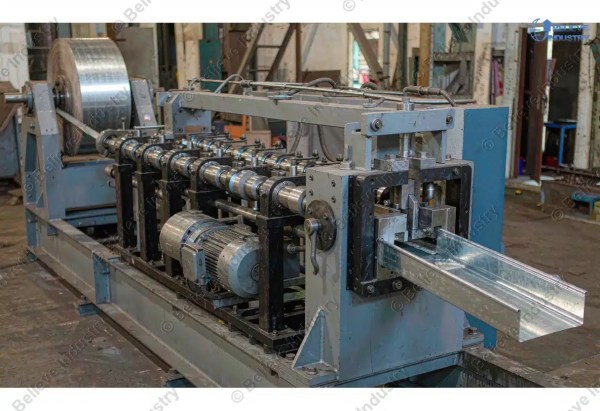
A μηχανή διπλής στρώσης is a type of μηχανή σχηματισμού ρολού that stacks two sets of forming stations — each capable of producing a completely different metal profile — onto a single base frame. The operator selects which layer runs via a PLC touchscreen, and the strip travels through one set of rollers while the other stands idle.
Unlike a cassette mill that swaps modular tooling packs, a μηχανή διπλής στρώσης keeps both tooling sets permanently mounted. Profile switching takes less than 5 minutes — simply adjust the material path and press a button.
Double layer machines are commonly used to produce:
- Roofing sheets (e.g., corrugated + IBR, or R-panel + trapezoidal)
- Wall panels (flat + ribbed)
- Decking profiles (B-deck + W-deck)
Double Layer Machine by the Numbers
| Προδιαγραφή | Τυπικό εύρος |
|---|---|
| Πάχος υλικού | 0.3 mm – 1.2 mm |
| Ταχύτητα παραγωγής | 8 – 25 m/min per layer |
| Forming stations per layer | 16 – 28stations |
| Profile changeover time | 3 – 8 minutes |
| Footprint saving vs. 2 separate lines | 35 – 50% |
| Capital cost saving vs. 2 separate lines | 30 – 45% |
| Material yield (steel/aluminium/PPGI) | 0.3 – 1.5 mm |
| Typical machine weight | 4,000 – 12,000 kg |
| Σύστημα ελέγχου | Siemens / Delta PLC + HMI |
| Cutting method | Hydraulic post-cut or servo flying shear |
Why Manufacturers Choose a Double Layer Machine: 7 Proven Reasons
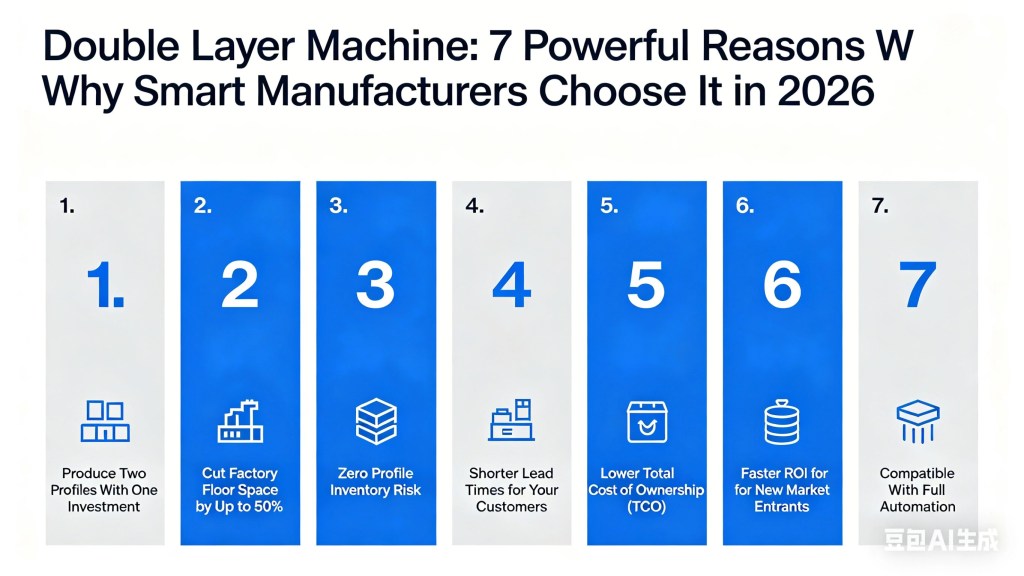
1. Παραγωγή Δύο Προφίλ με μία Επένδυση
Ο πιο πειστικός λόγος που οι αγοραστές επιλέγουν μια μηχανή διπλής στρώσης είναι η οικονομία. Αντί να αγοράζετε και να συντηρείτε δύο ξεχωριστές γραμμές roll forming, μία μηχανή διπλής στρώσης προσφέρει την ίδια ευελιξία παραγωγής σε περίπου 55–70% του συνολικού κόστους.
Μια μεσαίου μεγέθους βιομηχανία στεγών στη Νότια Αφρική ανέφερε εξοικονόμηση USD 35,000 σε επένδυση εξοπλισμού επιλέγοντας μια μηχανή διπλού προφίλ αντί για δύο μονές γραμμές, διατηρώντας παράλληλα τη δυνατότητα εξυπηρέτησης τόσο του τμήματος αγοράς κυματοειδών όσο και IBR ταυτόχρονα.
2. Μείωση Χώρου Εργοστασίου έως και 50%
Ο χώρος δαπέδου είναι ακριβός. Μια τυπική γραμμή roll forming μονού προφίλ καταλαμβάνει συνήθως 30–50 γραμμικά μέτρα χώρου δαπέδου συμπεριλαμβανομένου του decoiler και του stacker. Μια μηχανή διπλής στρώσης που αντικαθιστά δύο από αυτές τις γραμμές καταλαμβάνει μόνο συνολικά 32–55 γραμμικά μέτρα — περίπου το ίδιο αποτύπωμα με μία γραμμή.
Για κατασκευαστές που δραστηριοποιούνται σε βιομηχανικά πάρκα με περιορισμένες μισθωμένες εκτάσεις, αυτό είναι συχνά ο καθοριστικός παράγοντας. Στην Believe Industry Company, οι τυπικές μας μηχανές διπλής στρώσης έχουν σχεδιαστεί με συμπαγές πλαίσιο tandem για να μεγιστοποιήσουν αυτό το πλεονέκτημα.
3. Μηδενικός Κίνδυνος Αποθέματος Προφίλ
Οι εποχιακές μεταβολές της ζήτησης σημαίνουν ότι οι κατασκευαστές φύλλων στέγης συχνά πρέπει να αλλάζουν από το ένα προφίλ στο άλλο μέσα στην ίδια εβδομάδα παραγωγής. Μια μηχανή διπλής στρώσης καταργεί την ανάγκη αποθήκευσης, μεταφοράς ή επαναρρύθμισης ξεχωριστών σετ εργαλείων. Και τα δύο προφίλ είναι πάντα έτοιμα — η μηχανή δεν χρειάζεται ποτέ να σταματήσει για μια μεγάλη αλλαγή εργαλείων.
Αυτή η δυνατότητα υποστηρίζει άμεσα Διαμόρφωση με κύλιση υψηλού όγκου στρατηγικές που βασίζονται σε ευέλικτο προγραμματισμό παραγωγής με γρήγορη απόκριση.
4. Συντομότεροι Χρόνοι Παράδοσης για τους Πελάτες σας
Η ανταπόκριση στην αγορά είναι ανταγωνιστικό πλεονέκτημα. Επειδή μια μηχανή διπλής στρώσης διατηρεί και τα δύο προφίλ έτοιμα, μια παραγγελία πώλησης για το Προφίλ Α ή το Προφίλ Β μπορεί να μπει σε παραγωγή μέσα σε λεπτά, όχι ημέρες. Οι διανομείς και οι εργολάβοι στεγών — ιδίως στις αγορές των ΗΠΑ, της Αυστραλίας και της Αφρικής — απαιτούν όλο και περισσότερο παράθυρα παράδοσης just-in-time που μόνο μια διάταξη διπλής στρώσης μπορεί να υποστηρίξει.
5. Χαμηλότερο Συνολικό Κόστος Ιδιοκτησίας (TCO)
Το κρυφό κόστος μηχανημάτων διαμόρφωσης κυλίνδρων αθροίζεται γρήγορα: δύο προϋπολογισμοί συντήρησης, δύο σετ ανταλλακτικών κυλίνδρων, δύο ηλεκτρικοί πίνακες ελέγχου, δύο υδραυλικά συστήματα. Μια μηχανή διπλού προφίλ συγκεντρώνει όλα αυτά σε μία μοναδική περιουσιακή μονάδα, μειώνοντας δραστικά το TCO σε έναν κύκλο ζωής μηχανής 10 ετών.
Εκτιμώμενη σύγκριση TCO για 10 έτη (USD):
| Κατηγορία Κόστους | 2 × Γραμμές Μονού Προφίλ | 1 × Μηχανή Διπλής Στρώσης |
|---|---|---|
| Κεφαλαιουχικός εξοπλισμός | $90,000 | $70,000 |
| Σετ ανταλλακτικών κυλίνδρων | $30,000 | $30,000 |
| Εργατικά συντήρησης | $5,000 | $3,000 |
| Ηλεκτρικές αναβαθμίσεις | $6,000 | $3,000 |
| Σύνολο (εκτιμώμενο) | $131,000 | $100,600 |
Πηγή: Εσωτερικά δεδομένα Bel Rollforming, 2025. Οι τιμές είναι ενδεικτικές και ποικίλλουν ανάλογα με την πολυπλοκότητα του προφίλ.
6. Ταχύτερη Απόδοση Επένδυσης (ROI) για Νέους Εισερχόμενους στην Αγορά
Αν μπαίνετε στον κλάδο roll forming για πρώτη φορά — ή επεκτείνεστε σε μια νέα κατηγορία προϊόντων — μια μηχανή διπλής στρώσης είναι μία από τις ταχύτερες οδούς προς την απόδοση επένδυσης (ROI). Μπορείτε να δοκιμάσετε τη ζήτηση της αγοράς για δύο διαφορετικά προφίλ ταυτόχρονα, να κατανείμετε την παραγωγική ικανότητα δυναμικά και να φτάσετε στο σημείο ισορροπίας με μικρότερη αρχική επένδυση.
Πλεονεκτήματα της μηχανής σχηματισμού ρολού είναι καλά τεκμηριωμένα: σταθερή διαστατική ακρίβεια, ελάχιστη σπατάλη υλικού και υψηλή επαναληψιμότητα. Η μηχανή διπλής στρώσης ενισχύει αυτά τα οφέλη σε δύο γραμμές προϊόντων από την πρώτη ημέρα.
7. Συμβατό με Πλήρη Αυτοματισμό
Σύγχρονες double layer machines της Believe Industry Company ενσωματώνονται άψογα με αυτοματοποιημένα decoiler, servo flying shear και συστήματα αυτόματης στοίβαξης. Το σύστημα ελέγχου PLC διαχειρίζεται την επιλογή διαδρομής υλικού, το μήκος κοπής και την καταμέτρηση παρτίδας και για τις δύο στρώσεις από μία μοναδική οθόνη HMI.
Αυτό καθιστά την μηχανή διπλού προφίλ ιδανική επιλογή για αυτοματοποίηση διαμόρφωσης ρολού και περιβάλλοντα παραγωγής Industry 4.0, όπου ο προγραμματισμός βάσει δεδομένων και η απομακρυσμένη παρακολούθηση αποτελούν στάνταρ προσδοκίες.
Double Layer Machine vs. Single Profile Machine vs. Cassette Mill: Full Comparison
This is the most important decision a buyer faces. The table below gives you a factual, side-by-side view across 14 dimensions.
| Χαρακτηριστικό | Double Layer Machine | Single Profile Machine | Cassette Mill |
|---|---|---|---|
| Number of profiles | 2 (fixed) | 1 | 2–8+ (interchangeable) |
| Profile changeover time | 3–8 minutes | N/A | 15–45 minutes |
| Capital cost (relative) | Μεσαία | Χαμηλή | Υψηλή |
| Floor space required | Μεσαία | Χαμηλή | Χαμηλό–Μεσαίο |
| Tooling investment | 2 × dedicated sets (built-in) | 1 × dedicated set | Multiple cassette modules |
| Ταχύτητα παραγωγής | 8–25 m/min | 8–25 m/min | 8-25 m/min |
| Εύρος πάχους υλικού | 0,3–1,2 mm | 0.2–6 mm+ | 0.3–3 mm |
| Πολυπλοκότητα προφίλ | Χαμηλό–Μεσαίο | Low–Very High | Μεσαίο–Υψηλό |
| Operator skill required | Χαμηλή | Χαμηλή | Μεσαίο–Υψηλό |
| Πολυπλοκότητα συντήρησης | Μεσαία | Χαμηλή | Υψηλή |
| Κόστος ανταλλακτικών | Μεσαία | Χαμηλή | Υψηλή |
| Καλύτερο για | 2 related profiles, roofing sheets, panels | Single dedicated high-volume profile | Frequent multi-profile switching |
| Scalability | Limited to 2 profiles | Add second machine | Add cassette modules |
| ROI timeline | Fast (12–24 months typical) | Fast | Slower (high initial cost) |
Περίληψη: A μηχανή διπλής στρώσης is the optimal choice when you need exactly two profiles, want to minimize capital investment, and prioritize fast changeover over ultimate flexibility. A cassette mill is better when you need to produce five or more profiles regularly. A single profile machine wins only when you need one profile at extremely high speed or material thickness.
Who Should Buy a Double Layer Machine?
Ideal buyers include:
- Roofing sheet manufacturers targeting 2 popular local profiles (e.g., corrugated + IBR in Africa; R-panel + AG panel in the USA)
- Wall and ceiling panel producers with paired product lines
- Custom roll forming machine buyers entering the market with limited capital
- Decking manufacturers producing composite floor deck and roof deck
- Distributors who manufacture to order for multiple client specifications
A double layer machine is NOT recommended when:
- You need material thickness above 1.5 mm (single profile or cassette mill performs better)
- You produce more than 3 different profiles regularly
- Maximum production speed is the top priority
How a Double Layer Machine Works: Step-by-Step
- Coil Loading — Steel, aluminum, or PPGI coil is loaded onto the αποκυλινδρωτήρας. Typical coil weight: 3–8 tonnes.
- Ισοπέδωση (Optinial and normally no need)— Strip passes through an integrated μηχανή ισοπέδωσης (5–7 rollers) to remove coil set and ensure flatness.
- Pre-punching (optional) — A servo μονάδα διάτρησης adds holes or slots before forming, if required by the profile.
- Layer Selection — The operator selects Layer 1 or Layer 2 via the PLC touchscreen. A manual or automatic guide directs the strip into the selected forming pass.
- Η διαμόρφωση με κύλιση — The strip passes through 12–22 roll forming stations, each progressively bending the metal until the target profile is achieved.
- Τομή — A hydraulic post-cut die or Ιπτάμενη ψαλίδα servo (servo flying shear) cuts the profile to the programmed length.
- Stacking/Collection — Finished panels are collected on a run-out table or automated stacker.
The entire process from coil to finished profile is continuous and fully automated. No operator intervention is required between pieces once the batch is running.
Double Layer Machine for Roofing: The Most Popular Application
Roofing is the dominant market for double layer machines globally. In markets where both corrugated and trapezoidal/IBR profiles are in demand — particularly Sub-Saharan Africa, Southeast Asia, and Latin America — a μηχανή διπλής στρώσης is the standard configuration for new factory setups.
Popular roofing profile combinations for double layer machines:
| Layer 1 | Layer 2 | Κύρια αγορά |
|---|---|---|
| Corrugated 762 | IBR / Superdek | Africa, South Asia |
| R-Panel | AG Panel | USA, Americas |
| Trapezoidal 1000 | Corrugated 762 | Southeast Asia, Middle East |
| Standing seam | Κυματοειδής | Europe, Australia |
| B-deck | W-Deck | USA Commercial Construction |
Believe Industry Company: Double Layer Machine Specifications
Believe Industry Company (Wuxi, China) has manufactured and exported double layer machines to more than 40 countries since 2005. Key standard specifications:
| Παράμετρος | Προδιαγραφή |
|---|---|
| Frame material | 350–400 mm H-beam welded steel |
| Υλικό κυλίνδρου | GCr15 bearing steel, HRC 58–62 |
| Διάμετρος άξονα | 70–90 mm, 40Cr heat-treated steel |
| Drive system | Geared motor + chain or direct drive |
| Ελεγχος | Siemens S7-1200 PLC + 7″ HMI |
| Τομή | Hydraulic post-cut (standard) or servo flying shear (optional) |
| Layer changeover | Manual guide bar + PLC switch |
| Length tolerance | ± 1.5 mm |
| CE / ISO | ISO 9001:2015 certified; CE available |
| Χρόνος παράδοσης | 45–75 days ex-works Wuxi |
| Εγγύηση | 12 months parts and labour |
View more>> Μηχανή σχηματισμού ρολού διπλής στρώσης
Video: Double Layer Machine in Action
Watch our double layer machine producing corrugated and R/PBR Panel profiles back-to-back at our Wuxi facility. The video demonstrates production process and the automated stacking system in operation.
Related Machines and Resources
If you are evaluating a μηχανή διπλής στρώσης, these related Believe Industry resources will help you make a fully informed decision:
- Roll Forming Machine — Complete Overview
- Custom Roll Forming Machine — Global Market Guide 2026
- Roll Forming Machine Price — 7 Best 2026 Secrets
- Πλεονεκτήματα της μηχανής σχηματισμού ρολού
- Quick Change Roll Forming Machine (Cassette Mill)
- Σχηματισμός ρολού μεγάλου όγκου
- εξαρτήματα μηχανής διαμόρφωσης με κυλίνδρους
- Roll Forming Tooling
- How to Buy a Roll Forming Machine — 2026 Buyer’s Guide
- Κορυφαίοι κατασκευαστές μηχανών διαμόρφωσης με κυλίνδρους στην Κίνα
External authority references:
- The Fabricator — Roll Forming Design Principles — Industry standard reference for roll forming engineers and buyers
- Metal Construction News — Roofing & Cladding Profiles — US market data on popular panel profiles
- AISI — Steel Framing Standards — American Iron and Steel Institute design standards
- Rollforming Magazine — Dedicated trade publication for the roll forming industry
- ISO 9001:2015 Quality Management — Certification standard followed by Believe Industry Company
Frequently Asked Questions: Double Layer Machine
A μηχανή διπλής στρώσης is a roll forming line that houses two complete sets of forming stations on a single welded steel frame. Each set of rollers is tooled to produce a specific metal profile. The operator selects which profile to run via a PLC control system, and the coil strip is guided into the corresponding forming pass. The result is two production-ready profiles from one machine, one decoiler, and one operator.
Οι όροι μηχανή διπλής στρώσης, μηχανή διπλής στρώσης, και μηχανή διπλού προφίλ all refer to the same equipment type. They are used interchangeably in the roll forming industry. Some manufacturers may use “dual layer” to emphasize the two-layer stacked frame design, while “double profile” highlights the output capability. There is no functional or technical difference between these names.
No. A μηχανή διπλής στρώσης produces one profile at a time. The two forming stations share a single feed path, decoiler, and cutter. Simultaneous dual-profile production would require two independent material feeds and two cutting systems, which is not the standard configuration. The advantage is fast switching (3–8 minutes), not simultaneous output.
Production speed depends on the profile geometry, material thickness, and cutting method. For typical roofing sheet profiles (corrugated or trapezoidal), a μηχανή διπλής στρώσης τρέχει στο 10–20 m/min. With a servo flying shear, speeds up to 25 m/min are achievable. Note that cutting-to-length operations are the primary speed limiter on shorter panel sizes.
Most double profile machines are designed for:
- Pre-painted galvanized steel (PPGI) — the most common
- Γαλβανισμένος χάλυβας (GI)
- Colour-coated aluminium
- Bare cold-rolled steel (CRS)
- Stainless steel (with upgraded roller hardness)
Standard material thickness range is 0.3 mm to 1.2 mm. For thicker materials (above 1.5 mm), a single-profile machine with heavier shaft and bearing specifications is recommended.
Profile changeover on a μηχανή διπλής στρώσης takes 3 to 8 minutes in normal operation. The process involves:
- Stopping the machine and cutting off the current strip
- Threading the new coil (or re-threading the same coil) into the second forming pass
- Selecting the new profile on the PLC HMI
- Running a test panel to confirm length and profile accuracy
This compares favourably to a cassette mill (15–45 minutes per change) and is far faster than re-tooling a single-profile machine (4–24 hours).
Yes — a μηχανή διπλής στρώσης costs more than a single-profile machine for the same profile complexity, because it includes two full sets of tooling and a more complex frame. However, it costs 30–45% less than purchasing two separate single-profile machines. The price differential depends on profile complexity, forming station count, and automation level. Contact Believe Industry Company for a detailed quotation based on your specific profile requirements.
| Double Layer Machine | Cassette Mill | |
|---|---|---|
| Tooling storage | Both sets permanently mounted | Removable cassette modules |
| Number of profiles | Exactly 2 | 2 to 8+ |
| Changeover time | 3–8 minutes | 15–45 minutes |
| Capital cost | Μεσαία | Υψηλή |
| Καλύτερο για | 2 fixed profiles | Multi-profile flexibility |
A cassette mill (also called a μηχανή roll forming γρήγορης αλλαγής) is the better choice when you need to switch among three or more profiles regularly. The μηχανή διπλής στρώσης wins on price, simplicity, and speed for exactly two profiles.
No special foundation is required beyond what a standard roll forming line needs. The machine is mounted on a standard level concrete floor (minimum 200 mm thickness, 25 MPa compressive strength). Anchor bolts are recommended for machines above 6,000 kg. For detailed civil drawings, Believe Industry Company provides foundation layout documentation with every machine order.
Yes, this is one of the key design considerations. Most double profile machines are engineered to use the same coil width for both profiles, simplifying inventory management and decoiler setup. Where coil widths differ between the two profiles, an adjustable decoiler with edge guide is recommended. Believe Industry Company engineers your dual layer machine around your specific coil width requirements.
Belie Rollforming provides the following post-sale support for all double layer machines:
- 12-month parts warranty from date of commissioning
- Remote commissioning support via video call (standard)
- On-site installation and commissioning available in most countries (see Roll Forming Machine Installation)
- Spare parts supply via DHL/FedEx within 3–5 business days
- Εκπαίδευση χειριστών — on-site or remote, included in machine price
- PLC program backup — provided on USB with every machine
Ask yourself these four questions:
- Do you regularly produce (or plan to produce) exactly two different profiles?
- Is your target material thickness 1.2 mm or less?
- Is capital investment a primary constraint?
- Do you need fast changeover (under 10 minutes)?
If you answered yes to three or more of these, a μηχανή διπλής στρώσης is very likely your best option. If your profiles require thicker steel, or you need more than two profiles, contact Believe Industry Company to explore cassette mill or multiple single-profile line configurations.
Conclusion: Is a Double Layer Machine Worth It in 2026?
For the right buyer — a roofing sheet manufacturer, wall panel producer, or roll forming entrepreneur entering a dual-profile market — the answer is a clear yes. A μηχανή διπλής στρώσης delivers:
- 30–45% lower capital cost than two separate lines
- Up to 50% floor space saving
- 3–8 minute profile switching without major changeover
- Single maintenance budget and simplified spare parts inventory
- Full automation compatibility with modern PLC, servo, and IoT systems
Το μηχανή διπλής στρώσης is not the right tool for every application. If you need to produce 5 profiles, process material above 1.5 mm, or run at speeds above 30 m/min, a different configuration will serve you better. But for focused, two-profile production — especially in the roofing, wall panel, and decking segments — the μηχανή διπλού προφίλ from Believe Industry Company represents one of the highest-ROI equipment investments available in 2026.
Ready to get a price? Contact Believe Industry Company via the Ζητήστε μια προσφορά page. Our engineering team will respond within 24 hours with a detailed proposal based on your specific profile requirements, material specifications, and production targets.
Αρχείο αλλαγών
| Έκδοση | Ημερομηνία | Σημειώσεις |
|---|---|---|
| 1.0 | 2026-05-04 | Initial publish |
| — | 2026-08-04 | Scheduled review date |