สรุปโดยย่อ: A เครื่องแบบสองชั้น (also called a เครื่องแบบสองชั้น หรือ เครื่องสองโปรไฟล์) combines two forming stations on a single frame, letting you switch between two profiles without buying a second line. Manufacturers worldwide are adopting this technology to cut capital cost by 30–50% and floor space by 40% compared to owning two separate lines. Read on to discover whether a double layer roll former is right for your factory. For the full process background, see our การวิเคราะห์เชิงลึกเกี่ยวกับเทคโนโลยีเครื่องขึ้นรูปด้วยลูกกลิ้ง.
What Is a Double Layer Machine?
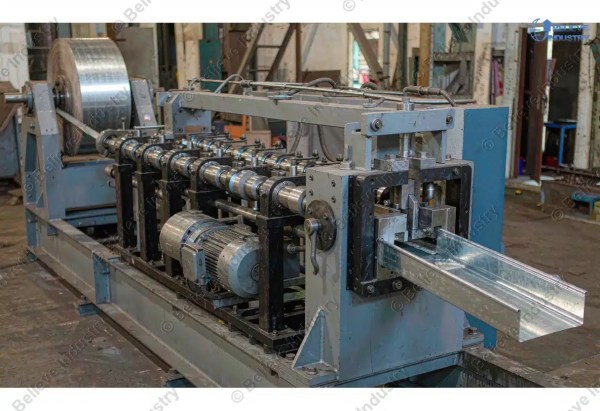
A เครื่องแบบสองชั้น is a type of เครื่องขึ้นรูปม้วน that stacks two sets of forming stations — each capable of producing a completely different metal profile — onto a single base frame. The operator selects which layer runs via a PLC touchscreen, and the strip travels through one set of rollers while the other stands idle.
Unlike a โรงโม่แบบเทป that swaps modular tooling packs, a เครื่องแบบสองชั้น keeps both tooling sets permanently mounted. Profile switching takes less than 5 minutes — simply adjust the material path and press a button.
Double layer machines are commonly used to produce:
- Roofing sheets (e.g., corrugated + IBR, or R-panel + trapezoidal)
- Wall panels (flat + ribbed)
- Decking profiles (B-deck + W-deck)
Double Layer Machine by the Numbers
| ข้อกำหนด | ช่วงทั่วไป |
|---|---|
| ความหนาของวัสดุ | 0.3 mm – 1.2 mm |
| ความเร็วในการผลิต | 8 – 25 m/min per layer |
| Forming stations per layer | 16 – 28stations |
| เวลาในการเปลี่ยนโปรไฟล์ | 3 – 8 minutes |
| Footprint saving vs. 2 separate lines | 35 – 50% |
| Capital cost saving vs. 2 separate lines | 30 – 45% |
| Material yield (steel/aluminium/PPGI) | 0.3 – 1.5 mm |
| Typical machine weight | 4,000 – 12,000 kg |
| ระบบควบคุม | PLC + HMI ของ Siemens / Delta |
| วิธีการตัด | Hydraulic post-cut or servo flying shear |
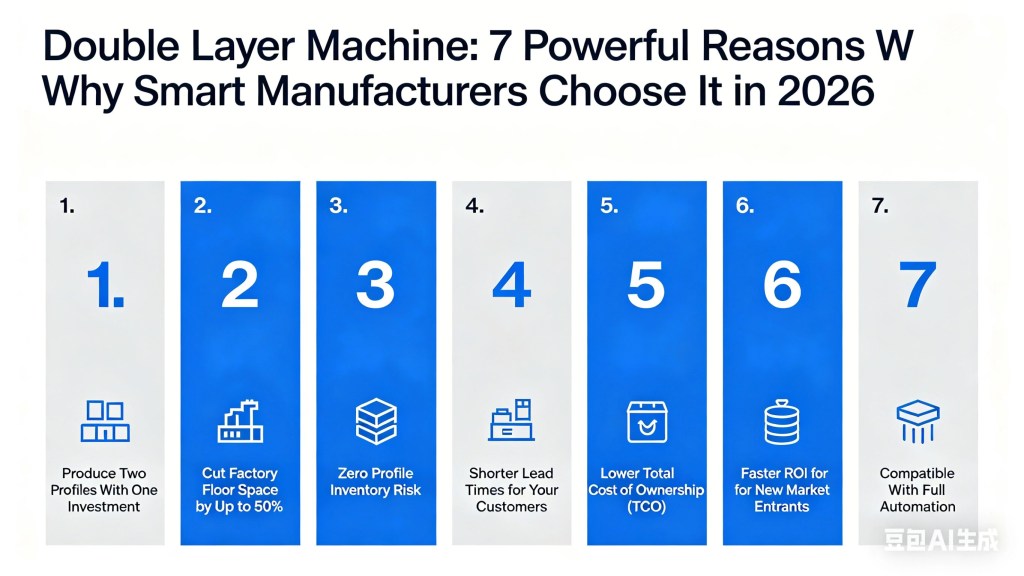
Why Manufacturers Choose a Double Layer Machine: 7 Proven Reasons
1. ผลิตโปรไฟล์สองแบบด้วยการลงทุนครั้งเดียว
เหตุผลที่ดึงดูดให้ผู้ซื้อเลือก เครื่องแบบสองชั้น คือเรื่องเศรษฐศาสตร์ แทนที่จะซื้อและบำรุงรักษาสายการรีดขึ้นรูปสองสาย เครื่องแบบสองชั้นเครื่องเดียวให้ความยืดหยุ่นในการผลิตเท่าเดิมในต้นทุนราว 55–70% ของต้นทุนรวม
ผู้ผลิตหลังคาขนาดกลางในแอฟริกาใต้รายงานว่าประหยัด USD 35,000 ในการลงทุนเครื่องจักรโดยเลือกเครื่องสองโปรไฟล์เหนือสายเดี่ยวสองสาย พร้อมรักษาความสามารถในการรองรับทั้งตลาดแผ่นคลื่นและ IBR พร้อมกัน
2. ลดพื้นที่โรงงานได้สูงสุด 50%
พื้นที่มีราคาแพง สายการรีดขึ้นรูปโปรไฟล์เดี่ยวมาตรฐานโดยทั่วไปใช้พื้นที่ 30–50 เมตรเชิงเส้น ของพื้นที่รวมถึงเครื่องคลายม้วนและเครื่องซ้อน เครื่อง เครื่องแบบสองชั้น ที่ทดแทนสองสายนั้นใช้พื้นที่เพียง 32–55 เมตรเชิงเส้นรวม — ราวๆ พื้นที่เดียวกับสายเดียว
สำหรับผู้ผลิตในนิคมอุตสาหกรรมที่มีพื้นที่เช่าจำกัด นี่มักเป็นปัจจัยชี้ขาด ที่ Believe Industry Company เครื่องแบบสองชั้นมาตรฐานของเราถูกออกแบบด้วยโครงสร้างแทนเดมกะทัดรัดเพื่อเพิ่มประโยชน์นี้ให้มากที่สุด
3. ความเสี่ยงสต็อกโปรไฟล์เป็นศูนย์
ความผันผวนของความต้องการตามฤดูกาลหมายความว่าผู้ผลิตแผ่นหลังคามักต้องปรับเปลี่ยนจากโปรไฟล์หนึ่งไปอีกโปรไฟล์ภายในสัปดาห์การผลิตเดียวกัน เครื่อง เครื่องแบบสองชั้น ขจัดความจำเป็นในการจัดเก็บ ขนส่ง หรือปรับแต่งชุดโต้ลิงแยก โปรไฟล์ทั้งสองพร้อมเสมอ — เครื่องไม่ต้องหยุดสำหรับการเปลี่ยนโต้ลิงครั้งใหญ่
ความสามารถนี้สนับสนุนโดยตรง สายการผลิตเครื่องรอลล์ฟอร์มมิ่งปริมาณสูง กลยุทธ์ที่พึ่งพาการจัดตารางการผลิตที่ยืดหยุ่นและตอบสนองเร็ว
4. ระยะเวลาส่งมอบที่สั้นลงสำหรับลูกค้าของคุณ
การตอบสนองตลาดคือข้อได้เปรียบทางการแข่งขัน เพราะ เครื่องแบบสองชั้น รักษาโปรไฟล์ทั้งสองพร้อมใช้งาน คำสั่งซื้อสำหรับโปรไฟล์ A หรือ B สามารถเข้าสู่การผลิตภายในนาทีไม่ใช่วัน ตัวแทนจำหน่ายและผู้รับเหมาหลังคา — โดยเฉพาะในตลาดสหรัฐ ออสเตรเลีย และแอฟริกา — เรียกร้องหน้าต่างการส่งมอบแบบทันทีที่เครื่องแบบสองชั้นเท่านั้นรองรับได้
5. ต้นทุนการเป็นเจ้าของรวม (TCO) ที่ต่ำลง
The ต้นทุนแฝงของเครื่องจักรขึ้นรูปโลหะแบบม้วน เพิ่มขึ้นอย่างรวดเร็ว: งบบำรุงรักษาสองชุด ชุดลูกกลิ้งสำรองสองชุด แผงควบคุมไฟฟ้าสองชุด ระบบไฮดรอลิกสองชุด เครื่อง เครื่องสองโปรไฟล์ รวมทั้งหมดนี้เป็นสินทรัพย์เดียว ลด TCO ลงอย่างมากตลอดอายุเครื่อง 10 ปี
การเปรียบเทียบ TCO โดยประมาณตลอด 10 ปี (USD):
| หมวดต้นทุน | สายโปรไฟล์เดี่ยว × 2 | เครื่องแบบสองชั้น × 1 |
|---|---|---|
| อุปกรณ์ทุน | $90,000 | $70,000 |
| ชุดลูกกลิ้งสำรอง | $30,000 | $30,000 |
| แรงงานบำรุงรักษา | $5,000 | $3,000 |
| การอัปเกรดไฟฟ้า | $6,000 | $3,000 |
| รวม (โดยประมาณ) | $131,000 | $100,600 |
ที่มา: ข้อมูลภายใน Bel Rollforming 2025 ค่าตัวเลขเป็นเพียงตัวบ่งชี้และแปรผันตามความซับซ้อนของโปรไฟล์
6. ผลตอบแทนการลงทุน (ROI) ที่เร็วกว่าสำหรับผู้เข้าสู่ตลาดใหม่
หากคุณกำลังเริ่มธุรกิจรีดขึ้นรูปครั้งแรก — หรือขยายสู่หมวดผลิตภัณฑ์ใหม่ — เครื่อง เครื่องแบบสองชั้น คือหนึ่งในเส้นทางสู่ ROI ที่เร็วที่สุด คุณสามารถทดสอบความต้องการตลาดสำหรับสองโปรไฟล์พร้อมกัน จัดสรรกำลังการผลิตแบบไดนามิก และถึงจุดคุ้มทุนด้วยการลงทุนล่วงหน้าน้อยลง
ข้อดีของเครื่องขึ้นรูปม้วน มีการบันทึกไว้ชัดเจน: ความแม่นยำมิติที่สม่ำเสมอ ขยะวัสดุต่ำสุด และความซ้ำซากสูง เครื่อง เครื่องแบบสองชั้น เพิ่มประโยชน์เหล่านั้นข้ามสองสายผลิตภัณฑ์ตั้งแต่วันแรก
7. เข้ากันได้กับระบบอัตโนมัติเต็มรูปแบบ
สมัยใหม่ เครื่องจักรสองชั้น จาก Believe Industry Company ผสานรวมเข้ากับเครื่องคลายม้วนอัตโนมัติ กรรไกรบินเซอร์โว และระบบซ้อนอัตโนมัติได้ไร้รอยต่อ ระบบควบคุม PLC จัดการเลือกเส้นทางวัสดุ ความยาวการตัด และนับล็อตสำหรับทั้งสองชั้นจากหน้าจอ HMI เดียว
สิ่งนี้ทำให้ เครื่องสองโปรไฟล์ เหมาะสมอย่างเป็นธรรมชาติสำหรับ ระบบอัตโนมัติในการขึ้นรูปม้วน กลยุทธ์และสภาพแวดล้อมการผลิต Industry 4.0 ซึ่งการจัดตารางขับด้วยข้อมูลและการตรวจสอบระยะไกลเป็นมาตรฐานที่คาดหวัง
Double Layer Machine vs. Single Profile Machine vs. Cassette Mill: Full Comparison
This is the most important decision a buyer faces. The table below gives you a factual, side-by-side view across 14 dimensions.
| คุณสมบัติ | Double Layer Machine | Single Profile Machine | Cassette Mill |
|---|---|---|---|
| Number of profiles | 2 (fixed) | 1 | 2–8+ (interchangeable) |
| เวลาในการเปลี่ยนโปรไฟล์ | 3–8 minutes | N/A | 15–45 minutes |
| Capital cost (relative) | ปานกลาง | ต่ำ | สูง |
| Floor space required | ปานกลาง | ต่ำ | ต่ำ–ปานกลาง |
| Tooling investment | 2 × dedicated sets (built-in) | 1 × dedicated set | Multiple cassette modules |
| ความเร็วในการผลิต | 8–25 m/min | 8–25 m/min | 8-25 m/min |
| Material thickness range | 0.3–1.2 มม. | 0.2–6 mm+ | 0.3–3 mm |
| ความซับซ้อนของโปรไฟล์ | ต่ำ–ปานกลาง | Low–Very High | ปานกลาง–สูง |
| Operator skill required | ต่ำ | ต่ำ | ปานกลาง–สูง |
| ความซับซ้อนในการบำรุงรักษา | ปานกลาง | ต่ำ | สูง |
| ต้นทุนอะไหล่ | ปานกลาง | ต่ำ | สูง |
| เหมาะที่สุดสำหรับ | 2 related profiles, roofing sheets, panels | Single dedicated high-volume profile | Frequent multi-profile switching |
| Scalability | Limited to 2 profiles | Add second machine | Add cassette modules |
| ROI timeline | Fast (12–24 months typical) | Fast | Slower (high initial cost) |
สรุป: A เครื่องแบบสองชั้น is the optimal choice when you need exactly two profiles, want to minimize capital investment, and prioritize fast changeover over ultimate flexibility. A cassette mill is better when you need to produce five or more profiles regularly. A single profile machine wins only when you need one profile at extremely high speed or material thickness.
Who Should Buy a Double Layer Machine?
Ideal buyers include:
- Roofing sheet manufacturers targeting 2 popular local profiles (e.g., corrugated + IBR in Africa; R-panel + AG panel in the USA)
- Wall and ceiling panel producers with paired product lines
- Custom roll forming machine buyers entering the market with limited capital
- Decking manufacturers producing composite floor deck and roof deck
- Distributors who manufacture to order for multiple client specifications
A double layer machine is NOT recommended when:
- You need material thickness above 1.5 mm (single profile or cassette mill performs better)
- You produce more than 3 different profiles regularly
- Maximum production speed is the top priority
How a Double Layer Machine Works: Step-by-Step
- Coil Loading — Steel, aluminum, or PPGI coil is loaded onto the เครื่องคลายขด. Typical coil weight: 3–8 tonnes.
- Leveling (Optinial and normally no need)— Strip passes through an integrated เครื่องปรับระดับ (5–7 rollers) to remove coil set and ensure flatness.
- Pre-punching (optional) — A servo หน่วยเจาะรู adds holes or slots before forming, if required by the profile.
- Layer Selection — The operator selects Layer 1 or Layer 2 via the PLC touchscreen. A manual or automatic guide directs the strip into the selected forming pass.
- การรอลล์ฟอร์มมิ่ง — The strip passes through 12–22 roll forming stations, each progressively bending the metal until the target profile is achieved.
- การตัด — A hydraulic post-cut die or เซอร์โวฟลายอิ้งชีท cuts the profile to the programmed length.
- Stacking/Collection — Finished panels are collected on a run-out table or automated stacker.
The entire process from coil to finished profile is continuous and fully automated. No operator intervention is required between pieces once the batch is running.
Double Layer Machine for Roofing: The Most Popular Application
Roofing is the dominant market for เครื่องจักรสองชั้น globally. In markets where both corrugated and trapezoidal/IBR profiles are in demand — particularly Sub-Saharan Africa, Southeast Asia, and Latin America — a เครื่องแบบสองชั้น is the standard configuration for new factory setups.
Popular roofing profile combinations for double layer machines:
| Layer 1 | Layer 2 | ตลาดหลัก |
|---|---|---|
| Corrugated 762 | ไอบีอาร์ / Superdek | Africa, South Asia |
| R-Panel | แผง AG | USA, Americas |
| Trapezoidal 1000 | Corrugated 762 | Southeast Asia, Middle East |
| Standing Seam | กระดาษลูกฟูก | Europe, Australia |
| B-deck | W-Deck | USA Commercial Construction |
Believe Industry Company: Double Layer Machine Specifications
Believe Industry Company (Wuxi, China) has manufactured and exported เครื่องจักรสองชั้น to more than 40 countries since 2005. Key standard specifications:
| พารามิเตอร์ | ข้อกำหนด |
|---|---|
| Frame material | 350–400 mm H-beam welded steel |
| วัสดุลูกกลิ้ง | GCr15 bearing steel, HRC 58–62 |
| เส้นผ่านศูนย์กลางเพลา | 70–90 mm, 40Cr heat-treated steel |
| Drive system | Geared motor + chain or direct drive |
| Control | Siemens S7-1200 PLC + 7″ HMI |
| การตัด | Hydraulic post-cut (standard) or servo flying shear (optional) |
| Layer changeover | Manual guide bar + PLC switch |
| ความคลาดเคลื่อนของความยาว | ± 1.5 mm |
| ซีอี / ไอเอสโอ | ISO 9001:2015 certified; CE available |
| เวลาส่งมอบ | 45–75 days ex-works Wuxi |
| การรับประกันสินค้า | 12 months parts and labour |
View more>> เครื่องขึ้นรูปม้วนสองชั้น
Video: Double Layer Machine in Action
Watch our double layer machine producing corrugated and R/PBR Panel profiles back-to-back at our Wuxi facility. The video demonstrates production process and the automated stacking system in operation.
Related Machines and Resources
If you are evaluating a เครื่องแบบสองชั้น, these related Believe Industry resources will help you make a fully informed decision:
- Roll Forming Machine — Complete Overview
- Custom Roll Forming Machine — Global Market Guide 2026
- Roll Forming Machine Price — 7 Best 2026 Secrets
- ข้อดีของเครื่องขึ้นรูปม้วน
- Quick Change Roll Forming Machine (Cassette Mill)
- การขึ้นรูปม้วนปริมาณสูง
- ชิ้นส่วนของเครื่องขึ้นรูปด้วยลูกกลิ้ง
- Roll Forming Tooling
- How to Buy a Roll Forming Machine — 2026 Buyer’s Guide
- ผู้ผลิตเครื่องขึ้นรูปด้วยลูกกลิ้งชั้นนำในจีน
External authority references:
- The Fabricator — Roll Forming Design Principles — Industry standard reference for roll forming engineers and buyers
- Metal Construction News — Roofing & Cladding Profiles — US market data on popular panel profiles
- AISI — Steel Framing Standards — American Iron and Steel Institute design standards
- Rollforming Magazine — Dedicated trade publication for the roll forming industry
- ISO 9001:2015 Quality Management — Certification standard followed by Believe Industry Company
Frequently Asked Questions: Double Layer Machine
A เครื่องแบบสองชั้น is a roll forming line that houses two complete sets of forming stations on a single welded steel frame. Each set of rollers is tooled to produce a specific metal profile. The operator selects which profile to run via a PLC control system, and the coil strip is guided into the corresponding forming pass. The result is two production-ready profiles from one machine, one decoiler, and one operator.
The terms เครื่องแบบสองชั้น, เครื่องแบบสองชั้น, และ เครื่องสองโปรไฟล์ all refer to the same equipment type. They are used interchangeably in the roll forming industry. Some manufacturers may use “dual layer” to emphasize the two-layer stacked frame design, while “double profile” highlights the output capability. There is no functional or technical difference between these names.
No. A เครื่องแบบสองชั้น produces one profile at a time. The two forming stations share a single feed path, decoiler, and cutter. Simultaneous dual-profile production would require two independent material feeds and two cutting systems, which is not the standard configuration. The advantage is fast switching (3–8 minutes), not simultaneous output.
Production speed depends on the profile geometry, material thickness, and cutting method. For typical roofing sheet profiles (corrugated or trapezoidal), a เครื่องแบบสองชั้น runs at 10–20 m/min. With a servo flying shear, speeds up to 25 m/min are achievable. Note that cutting-to-length operations are the primary speed limiter on shorter panel sizes.
Most double profile machines are designed for:
- Pre-painted galvanized steel (PPGI) — the most common
- เหล็กชุบสังกะสี (GI)
- Colour-coated aluminium
- Bare cold-rolled steel (CRS)
- Stainless steel (with upgraded roller hardness)
Standard material thickness range is 0.3 mm to 1.2 mm. For thicker materials (above 1.5 mm), a single-profile machine with heavier shaft and bearing specifications is recommended.
Profile changeover on a เครื่องแบบสองชั้น takes 3 to 8 minutes in normal operation. The process involves:
- Stopping the machine and cutting off the current strip
- Threading the new coil (or re-threading the same coil) into the second forming pass
- Selecting the new profile on the PLC HMI
- Running a test panel to confirm length and profile accuracy
This compares favourably to a cassette mill (15–45 minutes per change) and is far faster than re-tooling a single-profile machine (4–24 hours).
Yes — a เครื่องแบบสองชั้น costs more than a single-profile machine for the same profile complexity, because it includes two full sets of tooling and a more complex frame. However, it costs 30–45% less than purchasing two separate single-profile machines. The price differential depends on profile complexity, forming station count, and automation level. Contact Believe Industry Company for a detailed quotation based on your specific profile requirements.
| Double Layer Machine | Cassette Mill | |
|---|---|---|
| Tooling storage | Both sets permanently mounted | Removable cassette modules |
| Number of profiles | Exactly 2 | 2 to 8+ |
| Changeover time | 3–8 minutes | 15–45 minutes |
| Capital cost | ปานกลาง | สูง |
| เหมาะที่สุดสำหรับ | 2 fixed profiles | Multi-profile flexibility |
A โรงโม่แบบเทป (also called a เครื่องรอลล์ฟอร์มมิ่งเปลี่ยนแม่พิมพ์ด่วน) is the better choice when you need to switch among three or more profiles regularly. The เครื่องแบบสองชั้น wins on price, simplicity, and speed for exactly two profiles.
No special foundation is required beyond what a standard roll forming line needs. The machine is mounted on a standard level concrete floor (minimum 200 mm thickness, 25 MPa compressive strength). Anchor bolts are recommended for machines above 6,000 kg. For detailed civil drawings, Believe Industry Company provides foundation layout documentation with every machine order.
Yes, this is one of the key design considerations. Most double profile machines are engineered to use the same coil width for both profiles, simplifying inventory management and decoiler setup. Where coil widths differ between the two profiles, an adjustable decoiler with edge guide is recommended. Believe Industry Company engineers your dual layer machine around your specific coil width requirements.
บริษัท Belie Rollforming ให้การสนับสนุนหลังการขายดังต่อไปนี้สำหรับลูกค้าทุกราย เครื่องจักรสองชั้น:
- รับประกันอะไหล่ 12 เดือน นับตั้งแต่วันที่เริ่มใช้งาน
- การสนับสนุนการติดตั้งระบบจากระยะไกล ผ่านการสนทนาทางวิดีโอ (แบบมาตรฐาน)
- การติดตั้งและทดสอบระบบ ณ สถานที่ปฏิบัติงาน มีจำหน่ายในประเทศส่วนใหญ่ (ดูเพิ่มเติม) การติดตั้งเครื่องรีดขึ้นรูป)
- การจัดหาชิ้นส่วนอะไหล่ จัดส่งโดย DHL/FedEx ภายใน 3-5 วันทำการ
- การฝึกอบรมผู้ปฏิบัติงาน — บริการในสถานที่หรือบริการระยะไกล รวมอยู่ในราคาเครื่องแล้ว
- การสำรองข้อมูลโปรแกรม PLC — มีให้ในรูปแบบ USB สำหรับทุกเครื่อง
Ask yourself these four questions:
- Do you regularly produce (or plan to produce) exactly โปรไฟล์สองแบบที่แตกต่างกัน?
- Is your target material thickness 1.2 mm or less?
- Is capital investment a primary constraint?
- Do you need fast changeover (under 10 minutes)?
If you answered yes to three or more of these, a เครื่องแบบสองชั้น is very likely your best option. If your profiles require thicker steel, or you need more than two profiles, contact Believe Industry Company to explore cassette mill or multiple single-profile line configurations.
Conclusion: Is a Double Layer Machine Worth It in 2026?
For the right buyer — a roofing sheet manufacturer, wall panel producer, or roll forming entrepreneur entering a dual-profile market — the answer is a clear yes. A เครื่องแบบสองชั้น delivers:
- 30–45% lower capital cost than two separate lines
- Up to 50% floor space saving
- 3–8 minute profile switching without major changeover
- Single maintenance budget and simplified spare parts inventory
- Full automation compatibility with modern PLC, servo, and IoT systems
The เครื่องแบบสองชั้น is not the right tool for every application. If you need to produce 5 profiles, process material above 1.5 mm, or run at speeds above 30 m/min, a different configuration will serve you better. But for focused, two-profile production — especially in the roofing, wall panel, and decking segments — the เครื่องสองโปรไฟล์ from Believe Industry Company represents one of the highest-ROI equipment investments available in 2026.
Ready to get a price? Contact Believe Industry Company via the ขอใบเสนอราคา page. Our engineering team will respond within 24 hours with a detailed proposal based on your specific profile requirements, material specifications, and production targets.
บันทึกการเปลี่ยนแปลง
| เวอร์ชัน | วันที่ | หมายเหตุ |
|---|---|---|
| 1.0 | 2026-05-04 | Initial publish |
| — | 2026-08-04 | Scheduled review date |