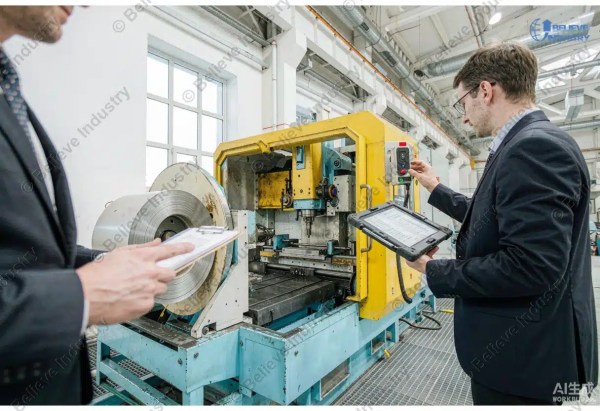











The optimal Cable Tray Manufacturing Process is a continuous, highly automated operation that transforms heavy-duty metal coils into NEMA-compliant electrical support systems using decoiling, leveling, servo-punching, roll forming, and flying shear technologies. Believe Industry Company, a premier global exporter located in Wuxi, China, leverages over 15 years of industrial expertise and a dedicated force of 80+ engineers to engineer these automated lines. By strictly controlling machine deflection and utilizing premium GCr15 tooling, this process guarantees ultra-precise tolerances, eliminates material waste, and maximizes factory throughput for international markets.
Redefining Output in 2026
In today’s hyper-competitive industrial landscape, relying on outdated metal fabrication methods drains your capital and cripples your delivery timelines. The modern Cable Tray Manufacturing Process demands absolute precision, high-speed continuous forming, and zero-defect output. With the explosive growth of data centers and smart grids, scaling your production capabilities is no longer optional—it is critical for survival.
To truly understand the physics of material deformation, yield limits, and the structural integrity of bent metal, we highly recommend reviewing our comprehensive analysis of roll forming machine technology. Building upon that core engineering foundation, here are the 5 best secrets to optimizing your facility’s output and dominating your regional market.
Secret 1: Implement a “Tight Line” Servo Punching Setup
The greatest bottleneck in any perforated Cable Tray Manufacturing Process is the hole-punching stage. Traditional systems often use a loose line setup, which utilizes a strip loop, allowing the material to stop momentarily for punching in a stationary press. While functional, this start-and-stop motion limits your maximum line speed and increases mechanical wear.
The elite secret is transitioning to a “tight line” synchronization using an advanced punching unit. In a tight line, the material moves continuously, requiring a ‘flying die’ to match strip speed. By integrating a precision servo feeder that accelerates the hydraulic punch to perfectly match the velocity of the moving steel coil, you can stamp complex ventilation patterns at speeds exceeding 20 meters per minute without ever pausing the roll forming line.
Secret 2: Eradicate Camber with Advanced Coil Leveling
You cannot produce a perfectly straight, high-load cable tray from warped raw material. Metal coils inherently possess “coil set” and camber from the metallurgical rolling process. If this memory is not erased before the metal enters the forming stations, the final tray will twist, leading to massive scrap rates and rejected shipments.
To guarantee zero-defect production, your Cable Tray Manufacturing Process must incorporate a heavy-duty roll forming leveler. A specialized 5-to-7 station leveling unit and precision straightening heads eliminate camber and twist, ensuring profiles meet strict ±0.5mm tolerances.
Secret 3: Master High-Strength Material Springback
As commercial projects demand lighter yet stronger infrastructure, manufacturers are increasingly using high-tensile steel (often exceeding 450 MPa yield strength). However, high-strength steel aggressively resists bending. “Springback” occurs when the metal attempts to return to its flat state after passing through the rollers.
A highly optimized Cable Tray Manufacturing Process combats this through strategic “over-bending.” Our engineers design the flower pattern to push the flange slightly past the required 90-degree angle (for instance, to 93 degrees) during the final forming passes. As the tray exits the machine, the metal relaxes precisely into a perfect right angle.
Secret 4: Demand GCr15 Tooling for Maximum Longevity
The hidden cost in any Cable Tray Manufacturing Process is tooling wear. If your rollers degrade, your product dimensions will drift, causing non-compliance with global electrical standards.
The secret to decades of reliable production is upgrading your roller materials. Believe Rollforming recommends GCr15 bearing steel for rollers, vacuum-quenched to HRC 58-62 for maximum wear resistance and precision. This rigorous heat treatment ensures the rollers withstand the immense friction of high-speed steel forming without scoring or galling. To learn more about our strict metallurgical standards and corporate capabilities, you can explore the Believe Industry Company global portal.
Secret 5: Upgrade to a Fully Automated Turnkey System
Fragmented production lines—where the decoiler, punch press, and roll former operate on different software protocols—are notoriously inefficient. They require multiple operators and suffer from constant communication errors.
The ultimate strategy for 2026 is investing in a fully integrated, automated cable tray roll forming machine. When the entire Cable Tray Manufacturing Process is governed by a singular, closed-loop PLC system (programmable logic controller), you achieve seamless harmony from coil to stacked product. For overarching guidelines on industrial safety and electrical enclosure standards, consulting the National Electrical Manufacturers Association (NEMA) ensures your final product is ready for immediate deployment.
Financial Impact: Scrap Reduction Formula
By upgrading your Cable Tray Manufacturing Process, you dramatically lower your material scrap rate. Industrial engineers use the following formula to calculate the exact financial savings generated by reducing scrap:
Where:
S_savings = Total cost savings per month
W = Total weight of steel processed per month (in kg)
C = Cost of raw steel per kg
R_old = Old scrap rate percentage (expressed as a decimal)
R_new = New optimized scrap rate percentage (expressed as a decimal)
Interactive Tool: Manufacturing Scrap Savings Calculator
To instantly visualize how much capital you are losing to inefficient machinery, use our interactive tool below. Enter your current production metrics to see your potential monthly savings when you upgrade your Cable Tray Manufacturing Process.
Scrap Savings Calculator
By upgrading, your estimated savings:
Upgrade your line with Believe Industry Company (Wuxi, China)
WhatsApp: +86 186 1692 7760
Email: enquiry@belirollforming.com
Web: belirollforming.com
Conclusion & Call to Action
Mastering the Cable Tray Manufacturing Process is the ultimate key to unlocking unprecedented profit margins in 2026. By transitioning to a tight-line flying punch system, eradicating material camber with advanced leveling, controlling high-tensile springback, and utilizing ultra-durable GCr15 rollers, you transform raw coils into premium infrastructure assets with virtually zero waste. Clinging to disjointed, manual legacy machinery will only drain your capital and severely limit your output capacity.
Are you prepared to engineer zero-defect perfection into your factory floor? Partner with the global leaders in industrial automation. Contact the elite engineering team at Believe Industry Company right now via WhatsApp at +8618616927760 or email us directly at enquiry@belirollforming.com to request your custom machinery layout and pricing!
FAQ
A highly capable Cable Tray Manufacturing Process is engineered to handle cold-rolled and galvanized steel thicknesses typically ranging from 1.5mm to 2.5mm, with custom upgrades available for processing high-tensile steel up to 3.0mm.
We engineer “slugless” profiling dies that perfectly match the cross-section of the formed tray. When the hydraulic blade strikes, the die fully supports the flanges from the inside, preventing the sides from buckling inward and ensuring a perfectly flat, installation-ready cut.
Yes. All Beli Rollforming equipment is fully ISO 9001 and CE certified, adhering to international safety and quality metrics. Every machine features advanced safety guarding and emergency stop circuitry integrated directly into the PLC framework.
By utilizing our advanced Quick-Change technology and PLC-driven automatic width adjustment via servo motors, transition times are reduced by up to 75% compared to traditional manual spacer systems, allowing for massive savings in downtime. Most profile width adjustments can be completed in under 10 minutes.