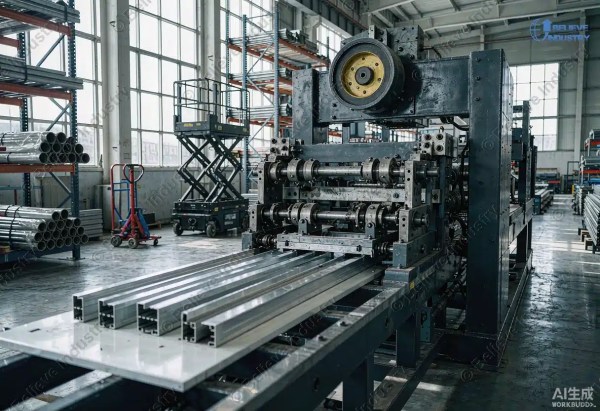











Buying a Z purlin roll forming machine is a six-figure decision that shapes your production for a decade. A wrong choice means downtime and lost orders. A right choice means faster output and higher margins.
This Z Purlin Roll Forming Machine Buying Guide lays out the comparisons side by side — profile types, punching methods, and suppliers across four countries. If you are searching for a Z Purlin Machine Buying Guide with real specs, you are in the right place. We show exactly where Believe Industry (Beli Rollforming) fits, with specs you can verify.
Quick summary: By the end, you will know which profile combination fits your market, which punching system saves the most on tooling, why Chinese suppliers lead on value, and how Beli’s four key specs stack up against competitors from Turkey, India, and Europe. Five comparison tables give you side-by-side numbers for your next supplier meeting.
1. Purlin Profile Types: C, Z, Sigma, and U Compared
Most buyers start with Z purlins. But your customers will ask for C purlins next week and Sigma purlins the week after. A comprehensive Z Purlin Roll Forming Machine Buying Guide must cover all four profiles. C Purlin VS Z Purlin: Top 5 Critical Differences for Cost-Effective Steel Construction is a good primer.
Purlin Profile Comparison Table
| Feature | C Purlin | Z Purlin | Sigma Purlin | U Purlin |
|---|---|---|---|---|
| Cross-Section Shape | C-shaped, lips face inward | Z-shaped, lips point opposite | Sigma (Σ) with web stiffener | U-shaped open channel |
| Primary Use | Wall girts, simple roof spans | Roof purlins, lapped multi-span | Heavy roof loads, long spans | Bracing, framing, tracks |
| Lapping Capability | No — butt joint only | Yes — nestable at supports | Limited | No |
| Load Capacity | Moderate | High (when lapped) | Highest (stiffened web) | Low (open section) |
| Torsional Stability | Low | Good | Excellent | Poor |
| Common Gauges | 1.5–3.0 mm | 1.5–3.0 mm | 2.0–4.0 mm | 1.2–2.5 mm |
| Typical Yield Strength | 345–550 MPa | 345–550 MPa | 350–550 MPa | 235–350 MPa |
| Machine Complexity | Simple | Moderate | High | Simplest |
Here is why this matters: Z purlins lap at supports for a continuous beam effect. C purlins cannot. That makes Z purlins dominant for roof structures. SkyCiv’s Cold-Formed Steel Purlin Design Guide explains the engineering.
Sigma purlins add a longitudinal stiffener rib for higher buckling resistance, increasingly specified for heavy industrial roofs and large spans. See Roll Forming Industry: 7 Ways Sigma Purlin Machines Revolutionize Construction Efficiency.
What This Means for Your Machine Purchase
A Z-only machine locks you out of the C purlin market — often 40%+ of local demand. A CZ machine without Sigma misses the premium segment where margins are 15–25% higher. This Z Purlin Machine Buying Guide recommends: a machine handling C, Z, U, and Sigma in one line. Beli’s automatic changeover delivers this (Section 5).

2. Punching Methods: Hydraulic vs Servo vs Dynamic (CSV-Driven)
The punching system defines your speed, accuracy, tooling cost, and flexibility. Any experienced buyer knows the punching method matters more than line speed — and that is exactly what a Z Purlin Roll Former Buying Guide should cover. Here we compare five punching methods:
Punching Method Comparison Table
| Method | Speed (Holes/min) | Accuracy | Pattern Flexibility | Tooling Cost | Best For |
|---|---|---|---|---|---|
| Pre-Punch (Hydraulic Die) | 40–60 | ±0.5 mm | Fixed pattern per die set | High | Single-size, high-volume |
| Post-Punch (Hydraulic) | 25–40 | ±0.8 mm | Fixed pattern per die set | High | Standard profiles |
| Inline Servo Hydraulic | 30–50 | ±0.3 mm | Semi-flexible (manual adj.) | Medium | Multi-size, moderate flex |
| Inline Servo Mechanical | 60–80 | ±0.2 mm | Semi-flexible | Medium | High-speed production |
| Dynamic Servo Punching (Beli) | 80–120 | ±0.15 mm | Fully flexible — CSV-driven | Low | Any pattern, any run size |
Pre-punch systems need a new die set per hole pattern — 1–2 hours per changeover. Post-punch risks deforming the already-formed profile. Inline mechanical is faster but requires manual reprogramming.
Dynamic servo punching is different. The punch head sits on a servo-driven X-Y axis — longitudinal and transverse hole spacing is fully variable. Import a CSV spreadsheet, and the servo punches at 30 m/min. No die changes, no manual reprogramming. A customer emails a pattern; minutes later the machine runs it.
AISI S100-16 sets strict limits on hole size and spacing for structural purlins. A fixed-die system cannot adapt to different regional standards. Dynamic punching solves this at the source.

3. Supplier Comparison: China vs Turkey vs India vs Europe
Every Z purlin roll forming machine buying guide must compare suppliers. Here is how four manufacturing regions stack up.
Supplier Country Comparison Table
| Factor | China (Beli) | Turkey | India | Europe (Italy/Germany) |
|---|---|---|---|---|
| Entry-Level (C-only) | $28,000–45,000 | $45,000–65,000 | $22,000–38,000 | $80,000–140,000 |
| Multi-Profile (CZ Sigma) | $65,000–120,000 | $85,000–150,000 | $55,000–90,000 | $180,000–300,000 |
| Max Line Speed | Up to 30 m/min | 15–22 m/min | 10–18 m/min | 20–35 m/min |
| Changeover Time | 5–10 min (auto) | 20–45 min (semi-auto) | 30–60 min (manual) | 3–8 min (auto) |
| Max Thickness | 5.0 mm (550 MPa) | 3.0–4.0 mm | 2.5–3.5 mm | 4.0–5.0 mm |
| Width Range | 100–450 mm | 100–350 mm | 100–300 mm | 80–500 mm |
| Dynamic Punching (CSV) | Yes | No | No | Optional (+$30k) |
| Auto Stacking | Standard | Optional | Rare | Standard |
| After-Sales | Remote + on-site | Regional agents | Local only | Regional hubs |
| Lead Time | 45–75 days | 60–90 days | 40–60 days | 90–150 days |
| Warranty | 18 months | 12–24 months | 12 months | 24 months |
| CE Certification | Yes | Yes | Limited | Yes (standard) |
| Ideal Buyer | Export, multi-profile, mid-high volume | Regional, EU-adjacent | Domestic, budget-first | Premium EU projects |
Chinese suppliers like Believe Industry offer the strongest value-to-price ratio — multi-profile, dynamic punching, and auto stacking at half the European price. This Z Purlin Roll Forming Machine Buying Guide confirms it: for export-focused buyers, China leads on value. Turkish machines suit Middle Eastern buyers. Indian machines cap at ~3.5 mm. European machines deliver top automation at 2–3× the price.
See also: Cee Purlin Roll Former: Fantastic 9 Comparisons Before You Buy and our roll forming machine manufacturers overview.
4. Machine Type: CZ vs CZ Sigma vs Dedicated Single-Profile
Which machine configuration fits your market? This Z Purlin Machine Buying Guide breaks down the three options:
Machine Type Comparison Table
| Feature | Dedicated Z-Only | CZ Interchangeable | CZ Sigma U Multi-Profile (Beli) |
|---|---|---|---|
| Profiles | Z only | C + Z | C + Z + Sigma + U |
| Changeover Method | Manual size adjust | Semi/full-auto swap | Fully automatic |
| Changeover Time | N/A | 15–30 min | 5–10 min |
| Sigma Rib | No | No | Yes — integrated |
| Initial Investment | $28,000–45,000 | $50,000–85,000 | $65,000–120,000 |
| Market Coverage | ~25% | ~65% | ~95% |
| Future-Proof | Low | Medium | High |
| Best For | Captive production | Regional suppliers | Export, multi-market |
A Z-only machine works for captive factories. A CZ purlin machine covers C for walls, Z for roofs. The CZ Sigma U machine captures the Sigma premium and U channels. More: Quick Change Roll Forming Machine guide.
5. Believe Industry (Beli Rollforming) — Four Specs That Matter
No Z Purlin Roll Former Buying Guide is complete without examining specific, verifiable specs. Here is what Beli’s CZ Sigma U machine actually delivers.
Advantage 1: Fully Automatic C, Z, U, Sigma Profile Changeover
Traditional changeover takes 30–60 minutes. Beli’s servo system repositions every roller stand from the PLC touchscreen — side rollers, Sigma stiffener rib, all at once. Total: 5–10 minutes. No tools. C purlins in the morning, Z purlins in the afternoon — same crew.
Advantage 2: Dynamic Servo Punching with CSV Import
Your customer in Saudi Arabia sends a hole pattern spreadsheet. You load it, and the machine punches at 30 m/min. Longitudinal and transverse spacing fully variable. Punch on the web, either flange, or both. No die sets, no pattern limit per day. Springback in Roll Forming is compensated via servo feedback.
Advantage 3: Automatic Stacking at 30 Meters Per Minute
Beli’s stacker catches, counts, aligns, and bundles purlins without slowing the line. It syncs with the flying shear. At the preset count, the stacker indexes to the next position. Your operator loads coils and drives the forklift.
Advantage 4: Width Range 100–450 mm, Thickness up to 5.0 mm, 550 MPa
Most competitors stop at 3.0 mm and 350 MPa. Beli machines process up to 5.0 mm at 550 MPa across 100–450 mm width. A 550 MPa rating demands larger shaft diameters and stronger gearboxes, all standard. See Roll Forming Material: Steel vs Aluminum and Roll Forming Tooling Upgrades.
6. Buying Checklist — 10 Questions Before You Sign
Use this checklist alongside this Z Purlin Machine Buying Guide when evaluating any supplier.
Does it handle C, Z, U, and Sigma — or just C and Z? Each missing profile is a lost market.
Is changeover fully automatic? Semi-auto eats 20–40 minutes per switch.
What is the real speed after punching? A machine forming at 25 m/min but punching at 8 m/min runs at 8 m/min.
Can it import CSV hole patterns? If not, every new pattern means a new die set.
What are the real thickness and yield limits? Ask for shaft diameter and gearbox torque — not just claimed specs.
Is auto stacking standard? Optional stacking adds 15–25% to your total.
What does the warranty actually cover? Some exclude rollers, punches, and electronics. Read the fine print.
Can the supplier install and train on-site? Remote video support is not equivalent. See Roll Forming Export.
What is the spare parts timeline? No export infrastructure = weeks of downtime for a replacement servo drive.
Has the supplier exported to your region? Familiarity with local voltage and customs avoids surprises. See China Roll Forming and Roll Forming Machine Components.
7. Total Cost of Ownership: 5-Year Comparison
A 75,000 machine needing 50,000 in tooling and two operators costs more than a $100,000 machine with one operator and zero tooling changes.
| Cost Item | Dedicated Z | CZ Interchangeable | CZ Sigma U (Beli) |
|---|---|---|---|
| Purchase Price | $35,000 | $70,000 | $95,000 |
| Tooling (5 profiles × 3 sizes) | $25,000 | $15,000 | $0 (servo-adaptive) |
| Installation & Training | $5,000 | $8,000 | $10,000 |
| Operators | 2 | 2 | 1.5 (auto stacking) |
| 5-Year Operator Cost | $120,000 | $120,000 | $90,000 |
| Spare Parts (5 yr) | $18,000 | $22,000 | $20,000 |
| Changeover Downtime | $0 | $45,000 | $8,000 |
| Revenue Lost (no Sigma) | $250,000+ | $80,000+ | $0 |
| Total 5-Year TCO | $453,000+ | $360,000+ | $223,000 |
The CZ Sigma U machine costs more upfront but less to own — tooling savings, labor reduction, faster changeovers, and Sigma revenue close the gap fast.
8. Export Readiness and Compliance
ISO 9001:2015 certification ensures documented quality processes. Beli is ISO 9001 certified. CE marking (EN 60204-1, EN 1010) is standard on Beli machines for the EU.
For purlin products: ASTM A653 governs zinc-coated steel, AISI S100 governs cold-formed steel design, and the MBMA Roof Framing Design Guide sets load criteria. See Roll Forming Inspection: 4 Mistakes That Wreck Machine Life.
Conclusion
This Z Purlin Roll Forming Machine Buying Guide covered four layers: profile types, punching methods, supplier countries, and machine configurations. Whether you use this as a Z Purlin Machine Buying Guide or a Z Purlin Roll Former Buying Guide, the conclusion is the same.
Here is what really counts: buy for the market you want in three years, not the one you serve today. A CZ Sigma U machine with dynamic servo punching and auto stacking costs more upfront — but covers 95% of the market, slashes tooling cost to near zero, and cuts changeover downtime by 85%.
Believe Industry (Beli Rollforming) has over 15 years of experience exporting to 20+ countries, with main markets in the US, Europe, and Australia.
Contact Beli Rollforming for a custom quotation, a video demonstration, or a detailed specification sheet.
Frequently Asked Questions
A Z purlin machine produces only Z-shaped purlins. A CZ machine switches between C and Z profiles via automatic or semi-automatic roller adjustment. A CZ Sigma U machine adds Sigma and U profiles for full market coverage.
On Beli’s machine, changeover takes 5 to 10 minutes. The operator selects the new profile and size on the PLC touchscreen, and servo motors reposition all roller stands, side rollers, and the Sigma stiffener rib station simultaneously. No tools or manual measurement needed.
Dynamic punching uses servo-driven X-Y axis control — hole positions are software-defined, not fixed by dies. You import a CSV spreadsheet with your hole pattern and the machine punches it at full line speed. It matters because customers increasingly demand custom patterns that fixed-die systems cannot handle.
Yes — if engineered for it. Beli’s machine processes up to 550 MPa yield strength at 5.0 mm thickness. Lighter machines are typically rated for 345 MPa only. Always verify shaft diameter and gearbox torque, not just the claimed thickness.
A competitive minimum is 100–350 mm. Beli’s 100–450 mm range captures everything from small residential purlins to heavy industrial sections. Machines limited to 100–250 mm miss significant commercial and industrial demand.
Yes for any line above 15 m/min. At 30 m/min producing 6-meter purlins, that is 5 pieces per minute — too fast for manual handling. Auto stacking also removes the safety hazard of operators near the shear. Beli includes it as standard.
Established Chinese manufacturers like Believe Industry deliver 80–90% of European automation at 40–50% of the price. European machines may offer marginally higher top speed, but for most export buyers the Chinese value proposition — multi-profile, dynamic punching, auto stacking, CE certification — wins. See Metal Roll Forming Machine.
Machine: CE marking (EU), ISO 9001, EN 60204-1 electrical safety. Purlins: AISI S100 dimensional tolerances, ASTM A653 material specs, MBMA Roof Framing Design Guide load criteria.
Standard lead time is 45–75 days including manufacturing, assembly, factory testing, and export packing. Shipping adds 15–35 days. On-site installation adds 5–10 days. Plan for approximately 3–4 months total.
Yes. Beli sends a technician for installation, commissioning, and operator training. Technicians hold valid visas for the US, Europe, Australia, and Middle Eastern countries. Training covers operation, changeover, CSV import, maintenance, and troubleshooting — backed by ongoing remote support via video call.
Article Changelog
| Date | Version | Changes |
|---|---|---|
| 2026-06-30 | 1.1 | Compressed from 4,517 to 2,991 words per workspace policy. All tables, FAQs, links, and Beli advantages retained. |
Next Review Triggers
- Review when a competing supplier adds dynamic punching capability.
- Update if Beli releases new speed, width, or thickness specs.
- Refresh standard links (AISI, ASTM, MBMA) when new editions publish.
- Revisit pricing data every 6 months.