









A servo feeder for the roll forming industry is a high-precision, automated system engineered to deliver consistent, error-free material flow to roll forming lines. Unlike outdated gravity or hydraulic feeders, it uses servo motor technology and encoder feedback (1,000+ adjustments per second) to achieve ±0.01–0.05mm accuracy—eliminating misfeeds, reducing scrap, and boosting throughput. It syncs seamlessly with CNC roll formers to handle everything from 0.3mm aluminum to 6 mm steel, making it the backbone of modern, efficient roll forming operations.
Why a Servo Feeder? Solve Legacy Feeding Pain Points
Traditional roll forming feeders are a constant source of inefficiency:
Gravity feeders require manual adjustments for every coil change (thickness, width, weight), risking human error that causes jams or misaligned parts.
Hydraulic feeders suffer from fluctuating pressure, leading to jittery material delivery and scrap rates up to 15%.
Manual setups waste hours of downtime when switching between materials or jobs.
A servo feeder fixes these issues by bringing automation, precision, and intelligence to feeding:
Consistency: Servo motors deliver micron-level accuracy, ensuring every coil is fed smoothly—even for tight-tolerance parts like automotive chassis components.
Adaptability: Switch between steel, aluminum, or coated stock with a few taps on its touchscreen. No downtime for recalibration.
Self-Monitoring: Sensors track tension, motor health, and feed errors, alerting operators to issues beforethey halt production. This cuts unplanned downtime by 35–40%—critical for 24/7 shops.
Speed: Syncs with roll formers running at 10–20+ meters per minute, maximizing line utilization.
Where to Use a Servo Feeder? Roll Forming & Stamping!
A servo feeder isn’t just for roll forming—it’s a versatile solution for two major metalworking applications:
Roll Forming
In roll forming, a servo feeder is indispensable for producing high-volume, precision parts:
- Energy and Electric: Strut Channel, Cable Tray, Din rail
- Material Handling: Upright Rack, Welding Column, Upright Foot
- Customized Profile with continuous holes punched
Stamping
In stamping, a servo feeder integrates with hydraulic presses or CNC turrets to sync material delivery with punch strokes:
Mixed Materials: Adjusts feed length and clamp pressure for thin copper (electronics housings) or thick steel (industrial brackets).
Tight Tolerances: Eliminates mis-stamps by delivering material exactlywhen and where the punch needs it—reducing scrap by 30–45%.
Small Batches: Cuts setup time by 50% with recipe storage, letting you switch between jobs quickly.
Whether you’re stamping automotive parts or appliance components, a servo feeder ensures every hit is accurate and consistent.
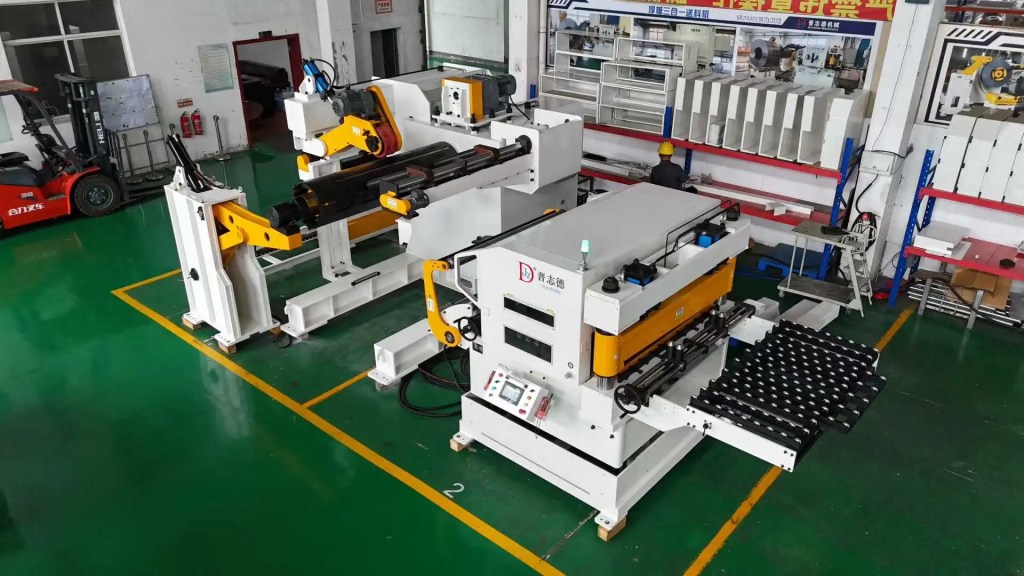
What’s New? Integrated Uncoiler, Leveler, and Servo Feeder Systems
Gone are the days of separate uncoilers, levelers, and feeders cluttering your floor. Today’s servo feeder systems integrate all three into one compact, smart unit—revolutionizing workflow:
How It Works
Uncoiler: Unwinds the coil smoothly, with tension control to prevent slack or stretching.
Leveler: Flattens the coil to eliminate camber (a common cause of jams in roll forming).
Servo Feeder: Delivers precise lengths to the roll former or press—all controlled by a single touchscreen HMI.
Key Benefits
Space Savings: Reduces floor space by 30%—critical for facilities with limited room.
Fewer Errors: Syncs via industrial protocols (EtherNet/IP), so the uncoiler adjusts tension based on the servo feeder’s speed, and the leveler compensates for coil variations.
Faster Setup: Cuts daily setup from 2 hours to 30 minutes—freeing labor to focus on quality.
How to choose your Servo Feeder?
With so many options, picking the right servo feeder requires focus on your unique needs:
1. Precision Specs
Look for ±0.01–0.05mm accuracy—non-negotiable for tight-tolerance parts. Avoid systems with vague “high precision” claims; demand test data.
2. Material Compatibility
Ensure it handles your range: thin aluminum (0.3mm), heavy steel (6mm), coated stock (galvanized, pre-painted). Check for:
adjustable clamp pressure (gentle for coated metals, strong for steel).
Anti-slip rollers (prevents thin materials from sliding).
3. Integration Capabilities
Will it connect to your existing CNC roll former or press? Can it integrate with an uncoiler/leveler? Avoid systems that require costly custom retrofitting.
4. Smart Features
Prioritize IoT-enabled models with:
Sensors for tension, motor health, and feed errors.
Cloud connectivity for remote monitoring (get alerts on your phone!).
Recipe storage (save 100+ job settings for instant recall).
Conclusion: Invest in a Servo Feeder, Transform Your Production
A servo feeder for the roll forming industry isn’t just a tool—it’s a strategic investment in efficiency, quality, and growth. It solves the biggest pain points of traditional feeders: inconsistency, downtime, and slow changeovers. Whether you’re using it in roll forming or stamping, a servo feeder boosts throughput, cuts waste, and lets your team focus on value-added work.
And with integrated uncoiler/leveler systems, it’s more streamlined than ever. If you’re ready to leave legacy issues behind and unlock peak production, a servo feeder is the choice.
Ready to Choose Your Servo Feeder?
Contact us or WhatsApp today for a trusted vendor for:
A free custom ROI analysis tailored to your shop.
A live demo of an integrated servo feeder system.
Recipe storage templates to streamline your job changes.
Don’t let feeding hold you back—invest in a servo feeder and take your roll forming (or stamping) operation to the next level.