









Introduction
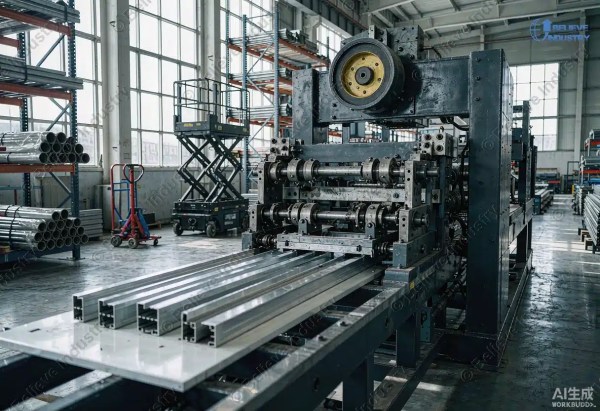
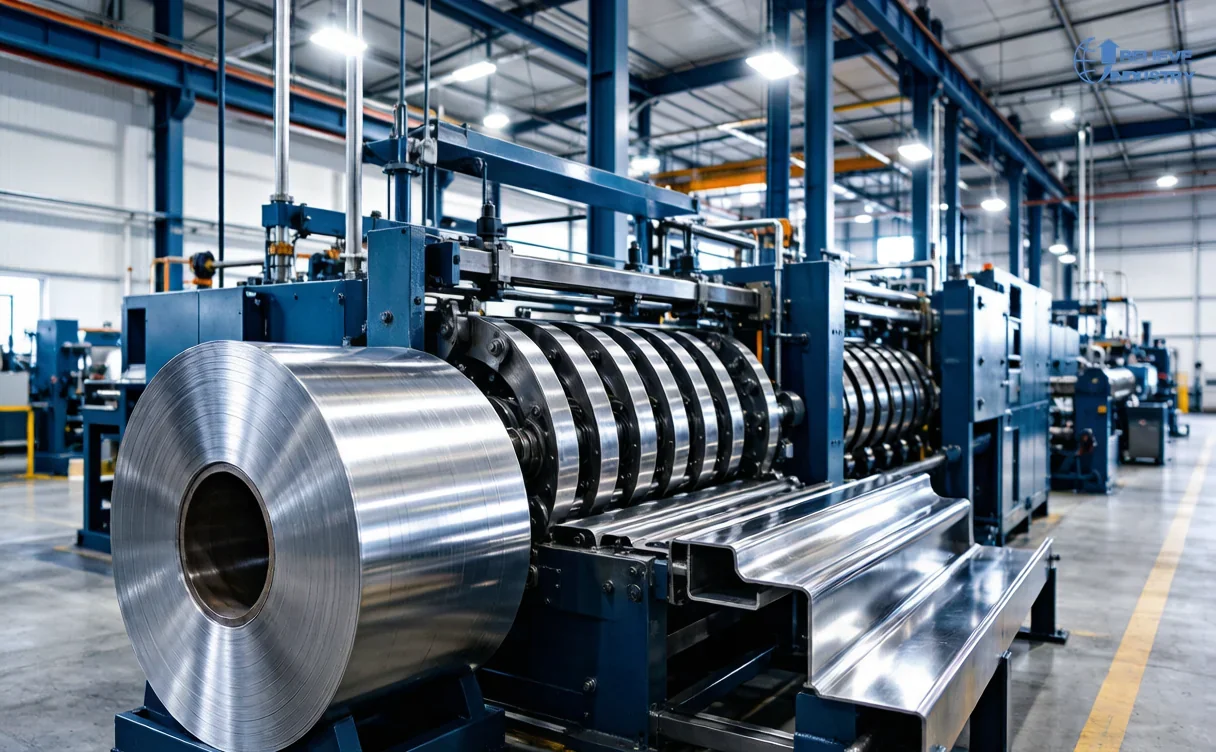
Roll forming stainless steel demands a completely different tooling approach. The 300-series and 400-series grades behave differently under bending forces. Each grade pushes tooling harder than mild steel ever does. That is why stainless steel roll forming tooling must be engineered from the ground up for the material.
This guide covers seven stainless steel tooling requirements every manufacturer must know before processing stainless. Whether you produce architectural trim, structural channels, or food-grade profiles, these requirements separate a line that runs cleanly from one that constantly scrapes by.
By the end, you will understand why stainless steel roll forming demands hardened rollers, more forming passes, specialized lubrication, and corrosion-resistant coatings. You will also see how Believe Industry (Beli Rollforming) configures lines for stainless production across 20+ countries. For the full process background, see our comprehensive analysis of roll forming machine technology.
1. Hardened Roller Materials: D2, SKD11, or Tungsten Carbide
Standard roller steel cannot handle stainless. Austenitic grades like 304 and 316 work-harden rapidly during forming. This means the material gets harder as it bends, increasing contact pressure on every roller. Mild steel rollers deform within weeks.
For stainless steel roll forming, roller material must be D2 tool steel (SKD11 equivalent) at minimum. D2 offers HRC 58–62 hardness and excellent wear resistance. For high-volume stainless lines, tungsten carbide inserts on critical forming passes extend roller life by 3–5× over D2. See Roll Forming Tooling Upgrades for coating and material strategies.
The ASM International Handbook documents that work-hardening rates for 304 stainless can exceed 50% hardness increase after a single forming pass. That hardened surface then grinds against the next roller. Without hardened tooling, you are machining your rollers with every coil.
Roller Material Comparison Table
| Roller Material | Hardness (HRC) | Roller Life on 304 SS | Relative Cost | Best Application |
|---|---|---|---|---|
| 45 Carbon Steel | 28–32 | 2–4 months | Low | Mild steel only |
| GCr15 Bearing Steel | 55–60 | 6–10 months | Medium | Light-gauge stainless |
| D2 / SKD11 Tool Steel | 58–62 | 12–18 months | Medium-High | Standard stainless lines |
| Tungsten Carbide Insert | 88–92 HRA | 36–60 months | High | High-volume, premium lines |
This table shows why stainless steel roll forming tooling starts at D2 and goes up. Anything less means frequent roller changes and profile inconsistency.

2. Additional Forming Stations: More Passes for Gradual Bending
Stainless steel resists bending more than carbon steel. Its higher yield strength and work-hardening behavior mean each forming pass must accomplish less. Attempting aggressive bends in fewer stations causes cracking, edge waviness, and springback failures.
A typical carbon steel line uses 12–18 forming stations. Roll forming stainless steel often requires 18–24 stations for the same profile. The extra passes distribute strain gradually, keeping the material within its elastic limits longer. Roll Forming Roll Design covers flower diagram and pass scheduling in detail.
The Specialty Steel Industry of North America (SSINA) recommends minimum bend radii of 1.5× to 2× material thickness for 304 stainless, versus 1× for mild steel. More stations accommodate these larger radii while still reaching the final profile geometry.
For stainless steel tooling requirements, the rule is simple: add 30–50% more forming stations than you would for carbon steel of the same gauge and profile.
3. Springback Compensation: FEA-Based Overbend Design
Springback is the single biggest challenge in stainless steel roll forming. Austenitic stainless (304, 316) springs back 2–3× more than mild steel. Ferritic grades (430) spring back 1.5–2× more. If your tooling does not account for this, every profile comes out wrong.
Springback in Roll Forming explains four compensation techniques. For stainless steel roll forming, the most effective approach combines Finite Element Analysis (FEA) simulation with overbend angle design. Each roller station over-bends the material slightly beyond the target angle, so the natural springback brings it back to spec.
Springback Comparison Table
| Material Grade | Yield Strength (MPa) | Springback vs Mild Steel | Recommended Overbend | Elastic Modulus (GPa) |
|---|---|---|---|---|
| Mild Steel (DC01) | 170–320 | 1.0× (baseline) | 1–3° | 210 |
| 304 Austenitic SS | 205–520 | 2.0–3.0× | 3–8° | 193 |
| 316 Austenitic SS | 205–550 | 2.0–3.0× | 3–8° | 193 |
| 430 Ferritic SS | 250–450 | 1.5–2.0× | 2–5° | 200 |
| 201 Low-Nickel SS | 260–700 | 2.5–3.5× | 4–9° | 197 |
This data explains why stainless steel roll forming tooling requires custom flower diagrams per grade. A one-size-fits-all approach produces scrap.
4. Specialized Lubrication Systems for Stainless Grades
Stainless steel galls. When stainless contacts tool steel under pressure, material transfers and welds to the roller surface. This destroys surface finish on the profile and degrades the roller within hours.
Stainless steel roll forming requires dedicated lubrication systems, not the general-purpose oil used for carbon steel. Chlorinated oils, sulfurized lubricants, or synthetic forming fluids specifically formulated for stainless prevent galling and extend tooling life. Roll Forming Preventative Maintenance outlines lubrication schedules that protect both rollers and shafts.
The Nickel Institute publishes technical guidance on galling resistance across stainless grades. Their data confirms that 304 and 316 are the most galling-prone grades, which happen to be the ones most commonly roll formed. Proper lubrication is not optional. It is a core stainless steel tooling requirement.
For roll forming stainless steel, effective lubrication means spraying at every forming station, not just at entry. Flow rates of 0.5–2.0 L/min per point work for most lines, depending on speed. Filtration at 10 microns minimum prevents recirculating metal fines from scratching profiles. And the fluid must be compatible with stainless — it should not stain surfaces or leave residue that needs aggressive post-forming cleaning.

5. Enhanced Shaft Diameter and Rigidity
Stainless steel’s higher yield strength means greater forming forces. Greater forces mean more shaft deflection. A shaft that is perfectly adequate for mild steel will flex under stainless, producing inconsistent profiles across the web width.
Stainless steel roll forming demands larger shaft diameters and higher-grade shaft materials. Standard lines use 40Cr shafts at 60–70 mm diameter. Stainless lines should use 40Cr or 42CrMo shafts at 80–100 mm diameter, heat-treated to HRC 45–50. Shaft for Roll Former compares material choices and heat treatment strategies.
Shaft Rigidity Comparison Table
| Parameter | Standard Line (Mild Steel) | Stainless Line (Required) |
|---|---|---|
| Shaft Material | 45 Steel | 40Cr / 42CrMo |
| Shaft Diameter | 60–70 mm | 80–100 mm |
| Heat Treatment | None or tempering | Quench + temper HRC 45–50 |
| Max Deflection | 0.05–0.08 mm | < 0.03 mm |
| Bearing Class | P6 | P5 or P4 |
| Wall Plate Thickness | 25–30 mm | 35–45 mm |
Roll forming shaft rigidity directly affects profile tolerance. At higher forming forces, even 0.05 mm of deflection shifts the bend line. For stainless steel roll forming tooling, shaft rigidity is non-negotiable.
6. Corrosion-Resistant Tooling Coatings: PVD and TiN
Stainless steel roll forming generates friction heat and material transfer. Even with D2 rollers and proper lubrication, bare tool steel surfaces eventually pit and gall when running stainless continuously. Surface coatings extend tooling life and protect profile finish.
Physical Vapor Deposition (PVD) coatings, particularly Titanium Nitride (TiN) and Titanium Carbonitride (TiCN), are the industry standard for stainless steel roll forming tooling. TiN coatings reach HV 2000–2400 hardness, far exceeding D2’s HRC 60. They also reduce friction coefficient by 30–40%, which directly cuts galling tendency.
Roll Forming Machine Components explains how coated components integrate into the full line. The ASTM A240 standard governs stainless steel sheet and strip properties, including surface finish requirements that influence coating selection.
Here are the main coating choices. TiN (Titanium Nitride, gold-colored, HV 2200) handles general-purpose stainless forming. TiCN (Titanium Carbonitride, blue-gray, HV 3000) suits high-speed lines. CrN (Chromium Nitride, silver, HV 1800) is the go-to for food-grade stainless where contamination matters. DLC (Diamond-Like Carbon, black, HV 3000–5000) is the premium anti-galling option for 316 SS in the most demanding runs.

7. Precision Slitting and Edge Conditioning
Stainless steel coil arrives with mill edges that are uneven, work-hardened, and sometimes micro-cracked. Feeding this edge directly into a roll former causes edge cracking, camber, and tooling damage. Precision slitting and edge conditioning are essential stainless steel tooling requirements.
A slitter removes the mill edge and cuts the coil to the exact strip width your flower diagram demands. Edge conditioning, which deburrs and rounds the slit edge, eliminates stress concentrators that initiate cracks during forming. Coil Processing & Material Handling covers the full coil preparation workflow.
For roll forming stainless steel, the slitting line needs a tolerance of ±0.15 mm or tighter. Burr height should stay below 0.05 mm with edges rounded. Camber must not exceed 1 mm per 3 meters of strip length. A Leveling Machine removes coil set before forming begins.
Designing Products for Roll Forming covers how edge quality affects final profile tolerances. Poor edge preparation is the leading cause of scrap in stainless steel roll forming, more than any single tooling issue.

Stainless Steel vs Carbon Steel Tooling: Summary Comparison
| Requirement | Carbon Steel Line | Stainless Steel Line | Impact of Skipping |
|---|---|---|---|
| Roller Material | GCr15 (HRC 55) | D2 / Carbide (HRC 58–92) | Roller failure in weeks |
| Forming Stations | 12–18 | 18–24 | Cracking, edge waviness |
| Springback Compensation | 1–3° overbend | 3–9° overbend (FEA-based) | Dimensional rejection |
| Lubrication | General-purpose oil | Chlorinated / synthetic SS fluid | Galling, surface damage |
| Shaft Diameter | 60–70 mm | 80–100 mm | Profile inconsistency |
| Surface Coating | Optional | PVD (TiN/TiCN) mandatory | Galling, short roller life |
| Slitting & Edge Prep | Standard | Precision + conditioning | Edge cracking, scrap |
This table is your checklist. Every row represents a stainless steel tooling requirement that cannot be skipped.
How Beli Rollforming Configures Stainless Steel Lines
Believe Industry (Beli Rollforming) has over 15 years of experience building roll forming lines for stainless steel applications. With exports to 20+ countries and main markets in the US, Europe, and Australia, Beli configures each stainless line with D2 or carbide rollers as standard, 18–24 station configurations with custom flower diagrams per grade, FEA-based springback compensation engineered into every pass, dedicated lubrication systems with stainless-specific fluids, upgraded shafts (80–100 mm, 42CrMo, heat-treated), PVD-coated critical rollers for extended life, and integrated slitting with edge conditioning as standard.
See Metal Roll Forming Machine for technical specifications. The Roll Forming Capacity guide covers material limits and force calculations.
Roll Forming Inspection details the quality checks that verify tooling is performing to spec on stainless lines. Contact Beli Rollforming for a custom stainless steel roll forming line quotation.
Conclusion
Stainless steel roll forming is a different discipline from carbon steel forming. The seven stainless steel tooling requirements covered here are hardened rollers, additional forming stations, springback compensation, specialized lubrication, enhanced shafts, PVD coatings, and precision slitting. These are not optional. They are the starting point for producing clean, dimensionally accurate stainless profiles.
Skip any one of them and you see galling, cracking, dimensional failures, or premature tooling wear. Invest in all seven and your line runs stainless as reliably as it runs mild steel. The cost difference between these paths is significant.
Believe Industry (Beli Rollforming) builds lines engineered for stainless from the first roller to the last. With over 15 years of experience and 20+ countries served, the main markets in the US, Europe, and Australia depend on the precision these seven requirements deliver.
Frequently Asked Questions
Stainless steel work-hardens faster, springs back 2–3× more than mild steel, and galls tooling surfaces. Standard carbon steel tooling cannot withstand these forces. Special tooling — hardened rollers, PVD coatings, and enhanced shafts — is essential for stainless steel roll forming.
D2 tool steel (SKD11) at HRC 58–62 is the minimum for stainless steel roll forming tooling. For high-volume lines, tungsten carbide inserts on critical forming passes extend life 3–5×. Bare carbon steel rollers fail within weeks on stainless.
Typically 18–24 stations, compared to 12–18 for carbon steel. The extra stations distribute bending strain gradually, preventing cracking and accommodating the larger bend radii that stainless requires.
Austenitic grades (304, 316) spring back 2–3× more than mild steel. Ferritic grades (430) spring back 1.5–2× more. FEA-based overbend design compensates — each station over-bends 3–9° depending on grade and thickness.
Chlorinated oils, sulfurized lubricants, or synthetic fluids specifically formulated for stainless prevent galling. General-purpose carbon steel oil will not work. Flow rate should be 0.5–2.0 L/min per lubrication point with 10-micron filtration.
Yes. TiN or TiCN PVD coatings reduce friction by 30–40% and extend roller life significantly. Without coatings, even D2 rollers will gall and pit when running 304 or 316 stainless continuously.
Partially. You can upgrade rollers, shafts, and lubrication. But if the line has fewer than 18 stations, you cannot add enough forming passes without a major rebuild. A purpose-built stainless steel roll forming line is always more cost-effective.
Grade 304 is the most common, followed by 316 (for corrosive environments) and 430 (ferritic, for decorative applications). Grade 201 (low-nickel) is increasingly used in cost-sensitive markets but requires the most aggressive springback compensation.
Mill edges on stainless coil are work-hardened and micro-cracked. Without precision slitting and edge conditioning, these defects propagate into cracks during forming. Edge preparation is a non-negotiable stainless steel tooling requirement.
Yes. Believe Industry configures roll forming lines with D2 or carbide rollers, 18–24 stations, FEA-designed flower diagrams, dedicated lubrication, upgraded shafts, and PVD-coated critical rollers. The company serves 20+ countries with main markets in the US, Europe, and Australia.
Article Changelog
- 2026-07-28: Initial publication. Covered 7 special tooling requirements for stainless steel roll forming. Included 3 comparison tables, 10 FAQs, and 12 internal links to belirollforming.com product pages.
Next Review Triggers
- Update when new PVD coating technologies (e.g., multilayer AlCrN) become standard for roll forming tooling.
- Review if ASTM A240 or AISI standards for stainless steel sheet/strip publish new editions.
- Refresh springback data when new stainless grades (e.g., lean duplex 2101) enter mainstream roll forming.
- Revisit lubrication recommendations when EPA or EU regulations restrict chlorinated forming oils.
- Update roller material comparison when new carbide grades or composite rollers enter the market.