This Spandek roll forming machine guide is written for roofers, shed builders, and steel service centers who are comparing suppliers in 2026. Whether you are buying your first line or replacing an old one, the numbers here will save you time.
A Spandek roll forming machine turns flat steel coil into square-corrugated roofing sheets. The profile is wide and shallow. It drains water well. It is the go-to panel for warehouses, factories, and commercial sheds across Southeast Asia, Australia, and Africa.
This guide covers what the machine does, what is inside it, and what you will actually pay. You will also see how Beli’s Spandek line stacks up against Trimdek, Custom Orb, and AG Panel machines. If you are comparing suppliers, we put the numbers side by side.
We also built a separate AG panel roll former buying guide if that is what you are shopping for. Different machine, different rules.
What a Spandek Roll Forming Machine Does
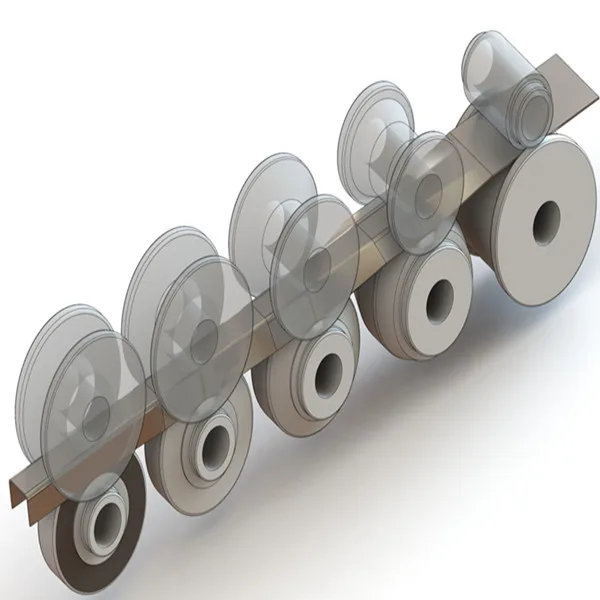
If you landed on this Spandek roll forming machine guide looking for the basics, start here. The machine feeds a steel coil through a series of rollers. Each roller station bends the metal a little more. After 24 stations, the flat strip becomes a SPANDEK profile. A shear cuts it to length. A stacker catches the finished sheet.
Spandek panels use a concealed clip system. No screws through the face. That means fewer leaks and a cleaner look. LYSAGHT owns the SPANDEK trademark. Most of the world just calls the profile “spandek” anyway. The official LYSAGHT specs list cover widths around 700 mm and lengths up to 12 meters when site-rolled.
These machines typically run COLORBOND or ZINCALUME steel. Some shops also run plain galvanized coil for budget jobs. The COLORBOND steel range includes 22 standard colors. Your customers will ask for specific ones.
Beli’s Spandek machine handles material from 0.3 mm to 0.6 mm thick. That covers residential sheds up to commercial warehouses.
If you want more detail than this Spandek roll forming machine guide covers, our main product page has the full spec sheet.
The 4 Main Components
Every Spandek line has four core units. Skip one and the line does not run. Here is what each does.
1. Hydraulic Uncoiler
Holds the coil. Feeds it into the line at a steady tension. Without this, the coil wobbles. Beli uses a hydraulic expanding mandrel. Capacity ranges from 5 to 10 tons. Smaller shops use 5-ton units. High-volume plants go bigger.
A hydraulic uncoiler also saves labor. One operator can load a coil with a pendant control. Manual uncoilers need two people and a forklift.
This is the heart. A series of roller stations mounted on a welded steel base. Beli’s Spandek machine uses 24 forming stations. Each station has top and bottom rollers. The rollers are machined from 1045 steel. Buyers who run pre-painted coil often upgrade to chrome-plated rollers to prevent scratching.
The stations bolt to a common base plate. Side rolls handle the profile edges. Drive is chain-and-sprocket as standard. Belt buyers upgrade to gearbox drive for higher speed and less maintenance.
3. Shearing (Cut-Off)
Cuts the finished panel to length. Beli offers two options. A mechanical shear stops the line momentarily. A servo flying shear cuts while the line keeps moving.
Flying shear is faster. It also has a longer lifespan. The standard cut tolerance is ±1.0 mm. That is tight enough for panels up to 12 meters.
The shear die is profile-specific. If you switch from Spandek to another profile later, you need a new die set.
4. Auto Stacking
Catches cut panels and stacks them. No one wants a guy pulling hot sheets off a table all day. Auto stacking reduces labor to one operator. The conveyor runs the sheet onto a lift table. The table drops as the stack grows.
Stackers can be simple roller tables or fully automated with side alignment and pneumatic stops. Beli’s standard stacker handles sheets up to 7 meters. Longer sheets need an extended table.
Automated Workflow: Increase throughput and reduce labor costs with the Auto Stacker, which neatly collects and prepares the finished panels from the line.
Seeing a Spandek roll forming machine run tells you more than spec sheets ever will. Watch the coil feed in. Watch the rollers bend it station by station. Watch the flying shear cut without stopping the line. Watch the stacker catch the finished sheet.
Pay attention to three things in the video:
Line speed. Count how many seconds between cuts. At 60 m/min with 6-meter sheets, you get one panel every 6 seconds.
Profile accuracy. Look at the rib height and spacing on the output. Consistent ribs mean the rollers are dialed in.
Shear clean cut. The cut edge should be straight. No burrs. No drag marks. That is the flying shear doing its job.
Want to see more machine demos? Beli’s YouTube channel has roofing, purlin, and deck panel machines running at full speed.
Beli Spandek Machine: The Numbers
Here is what you get out of the box:
24 forming stations on a welded steel frame
Hydraulic uncoiler, 5-ton standard
Material: 0.3–0.6 mm PPGI, PPGL, or aluminum
Profile width: 700 mm cover
Speed: 15–20 m/min standard, up to 40 m/min with upgrades
Cut accuracy: ±1.0 mm
Weight: 6,500 kg
Dimensions: 8,500 × 1,350 × 1,500 mm
Power: 415V/50Hz (Australia standard), 480V/60Hz (US) available
Price: $23,000 (sale price, FOB China)
Add roughly 3,000–3,000–5,000 for ocean freight to most ports. Budget another 3,000–3,000–5,000 for customs, duties, and local trucking.
Not every roof needs Spandek. Here is how the main roofing profiles compare on one Beli line.
Profile
Stations
Material Range
Standard Speed
Max Speed
Beli Price (FOB)
Spandek
24
0.3–0.6 mm
15–20 m/min
40 m/min
$23,000
Trimdek
20
0.3–0.6 mm
15–20 m/min
35 m/min
$26,500
Custom Orb
18
0.3–0.6 mm
12–18 m/min
30 m/min
$23,000
Corrugated 7/8″
18
0.3–0.5 mm
12–18 m/min
30 m/min
$21,000
R/AG Panel
18–24
0.4–0.8 mm
20–35 m/min
45 m/min
$20,000
Spandek uses 24 stations. Trimdek needs fewer stations but tighter tolerances on the trapezoidal ribs. Custom Orb is simpler, which keeps the machine cost down. R Panel (AG Panel) runs faster because the profile ribs are shallower.
If your market uses multiple profiles, a double layer machine might make sense. Some shops run Spandek on one level and Corrugated on the other. Our double layer machine guide covers this setup.
Supplier Comparison: Beli vs Australia/US Manufacturers
Buying local has advantages. Support is closer. No shipping drama. But the price gap is real. Here is how Beli compares to typical Australian and North American suppliers.
Factor
Beli (China)
AU/US Local Supplier
Spandek Machine Price
~$23,000 FOB
75,000–140,000
Trimdek Machine Price
~$26,500 FOB
85,000–155,000
Custom Orb Price
~$23,000 FOB
65,000–125,000
Lead Time
45–60 days build + 18–30 days sea freight
12–16 weeks
Total Door-to-Door
~75–90 days
~12–16 weeks
Customization
Full profile, any voltage, any standard
Limited to catalog profiles
Warranty
24 months
12–24 months (varies)
On-Site Install Support
Available at extra cost
Usually included
CE / ISO 9001
Yes
Varies by manufacturer
Spare Parts Lead Time
7–14 days air freight
2–5 days
Minimum Order
1 machine
1 machine
The price gap is wide enough that many AU and US roofers buy from China and self-manage the import. You need to factor in freight, duty, and a few days of commissioning. We wrote a detailed guide on how to buy a roll forming machine that walks through the whole process.
The global roll forming machine market was valued at roughly 0.59 billion in 2026 and is projected to reach 0.86 billion by 2035. More builders are bringing production in-house instead of buying sheets from distributors.
What Drives the Price Up (or Down)
Five things move the price on a Spandek machine.
Station count. More stations means more rollers, more shafts, more bearings. A 24-station machine costs more than an 18-station. But you get better profile accuracy and can run harder steel.
Drive type. Chain drive is cheap. Gearbox drive adds about 15–20% to the machine cost but runs quieter and needs less maintenance. Servo drive adds 30–40% and gives you speed control per station.
Cut-off method. A stationary shear is the budget option. Servo flying shear cuts without stopping the line. It costs more up front but produces more sheets per shift.
Roller material and coating. Standard 1045 steel rollers work for galvanized coil. Chrome-plated GCr15 rollers (HRC 58–62) cost more but last longer and do not scratch pre-painted COLORBOND.
Voltage and certifications. CE marking and UL-compliant electrical panels add cost. A 480V/60Hz US-spec panel costs more than a standard 380V/50Hz panel.
AG Panel (also called R Panel) is the workhorse of North American ag buildings. The profile is taller and narrower than Spandek. It handles heavier loads. Farmers use it for barns. Contractors use it for commercial metal buildings.
We built a dedicated AG panel roll former buying guide. It covers station count, drive systems, roller specs, and the seven decisions most buyers get wrong.
If you need an ag panel machine buy guider, start with that page. For an ag panel roll former buy guider, the same resource covers both machine types.
Many buyers also search for an ag panel machine buy guider that includes price comparisons. Our AG panel guide has a pricing table. If you want an ag panel roll former buy guider with supplier comparisons, that is there too.
If you are trying to decide between R Panel and AG Panel, they are basically the same profile. The naming depends on the region. Our R Panel vs AG Panel comparison clears up the confusion.
Beli’s R Panel machine starts at $20,000. That includes an 18-station forming section, hydraulic uncoiler, flying shear, and auto stacker. The PBR Panel machine uses a similar frame but different roller tooling. It sells for the same price. Both product pages are here: Beli R Panel roll forming machineBeli PBR Panel roll forming machine
If you are still looking for an ag panel machine buy guider with detailed specs, check the R Panel page. For an ag panel roll former buy guider that covers rib dimensions, the AG panel guide has those numbers.
A Spandek roll forming machine guide is not complete without a quick note on AG panel machines. Many buyers shop for both at the same time. If you are one of them, the ag panel machine buy guider and ag panel roll former buy guider sections above point you to the right pages.
Getting the Machine Running
A machine is only useful if it makes good panels. Installation matters.
Beli ships machines with a factory-trained engineer. The engineer handles leveling, alignment, electrical hookup, and first-run testing. They also train your operators. Typical commissioning takes 3 to 5 days.
After commissioning, maintenance keeps the line running. The main items are lubrication, chain tension checks, and roller inspection. Our preventative maintenance guide has daily, weekly, and monthly checklists.
Material selection also affects machine life. Running abrasive or out-of-spec coil wears rollers faster. Check the roll forming material selection guide before you order coil.
Need to plan coil inventory? Use the free coil calculator to figure out weight, length, and OD from your coil specs.
FAQ
What is a Spandek roll forming machine?
A machine that continuously forms flat steel coil into SPANDEK square-corrugated roofing panels. It rolls, cuts, and stacks the finished sheets. The machine has four main modules: uncoiler, forming section, shear, and stacker. This Spandek roll forming machine guide explains each one.
How much does a Spandek roll forming machine cost?
Beli’s machine is 23,000 FOB China. LocalAU/US suppliers charge 75,000 to 140,000 for a comparable machine. Add 6,000–$10,000 for freight and import costs on a China-built machine.
What is the difference between Spandek and Trimdek?
Spandek has a square-corrugated profile. Trimdek has a trapezoidal (flat-topped) rib. Spandek works for both roof and wall. Trimdek is primarily a roofing profile. Both use concealed fasteners. Both work with COLORBOND steel.
How fast does a Spandek roll forming machine run?
The Beli standard configuration runs 15–20 meters per minute. With a servo flying shear and gearbox drive, it hits 35–40 m/min. At 20 m/min, you produce about one 6-meter sheet every 18 seconds.
Can I make other profiles on the same machine?
Not without changing the roller tooling. A Spandek machine’s rollers are machined for one profile shape. If you need multiple profiles, consider a cassette-type machine or a double layer machine. We covered cassette machines in this guide.
How long does delivery take?
Build time is 45–60 days from deposit. Sea freight adds 18–30 days depending on your port. US West Coast is about 18–22 days. East Coast and Australia are 25–30 days. Door-to-door, budget 75–90 days.
Do I need CE certification?
If you import into the EU, yes. Australia and the US do not require CE, but it is a useful quality signal. Beli machines are CE marked and ISO 9001 certified. The electrical panels meet both IEC and UL standards depending on the destination country.
What steel works in a Spandek machine?
PPGI and PPGL coil from 0.3 mm to 0.6 mm thick. Yield strength up to 550 MPa in the upgraded configuration. Standard machines handle 235–345 MPa. COLORBOND and ZINCALUME both run without issues on chrome-plated rollers.
If you are a distributor looking for an ag panel machine buy guider to share with your customers, that FAQ page is a good starting point. For an ag panel roll former buy guider with North American profile specs, the AG panel guide has those details.
Next Step
A Spandek machine is a serious investment. The 23,000,machine price is real. So are the 8,000+ in freight and import costs. Do the math on your local sheet prices first. If you are paying a distributor for panels now, bringing production in-house usually pays back in 18 to 30 months.
Request a quote if you want a detailed proposal. Tell us your profile dimensions, material specs, voltage, and target output. We will send a spec sheet and price breakdown within 24 hours. WhatsApp also works: +86 186 1692 7760.