





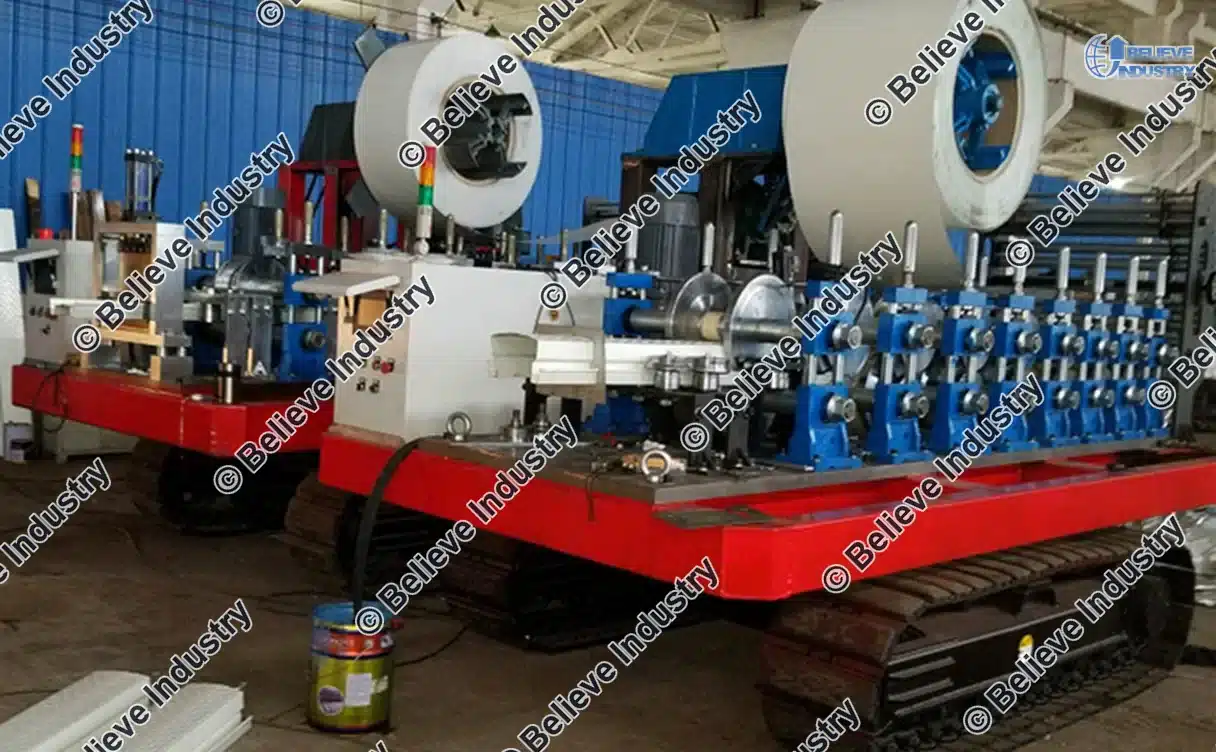
A greenhouse gutter cassette mill forms two or more gutter sections on one line. Each section sits in a removable cassette. An operator lifts one out and lowers the next in. The swap should take 2 to 3 hours from line stop to a signed first article.
That is a hardware question for a greenhouse gutter cassette mill. It depends on cassette location, shaft count, and recipe reload speed, not on bay span or coating choice.
This guide gives seven numbered purchase specs for a greenhouse gutter cassette mill that set the 2 to 3 hour changeover.
The wider equipment context sits in the roll forming machine overview.
What a Cassette Changeover Requires of the Machine
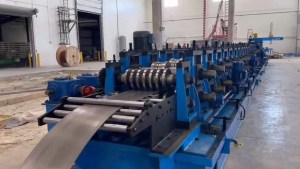
On a fixed gutter line, a profile change means resetting every stand by hand. A greenhouse gutter cassette mill removes that work: rolls for one profile lift out in a welded frame, and a second drops onto the same base.
A grower with 4 m to 5 m greenhouse bays often needs a standard gutter and a wider collector gutter in one week. A greenhouse gutter cassette mill covers both without a second full line. The earlier guide on this site covers span and coating selection; this article stays on the machine.
The site guide on greenhouse gutters covers a different question.
See the greenhouse gutter roll forming machine guide
Conventional single profile equipment is described in the gutter machine guide.
Read the gutter roll forming machine overview
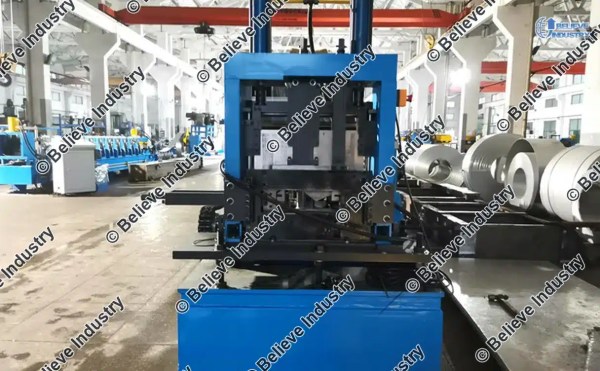
Cassette type machines share a base, a drive, and a cutoff. The cassette is the only part that changes. That split makes a 2 to 3 hour swap possible on a greenhouse gutter cassette mill.
The general quick change architecture is covered in the cassette machine guide.
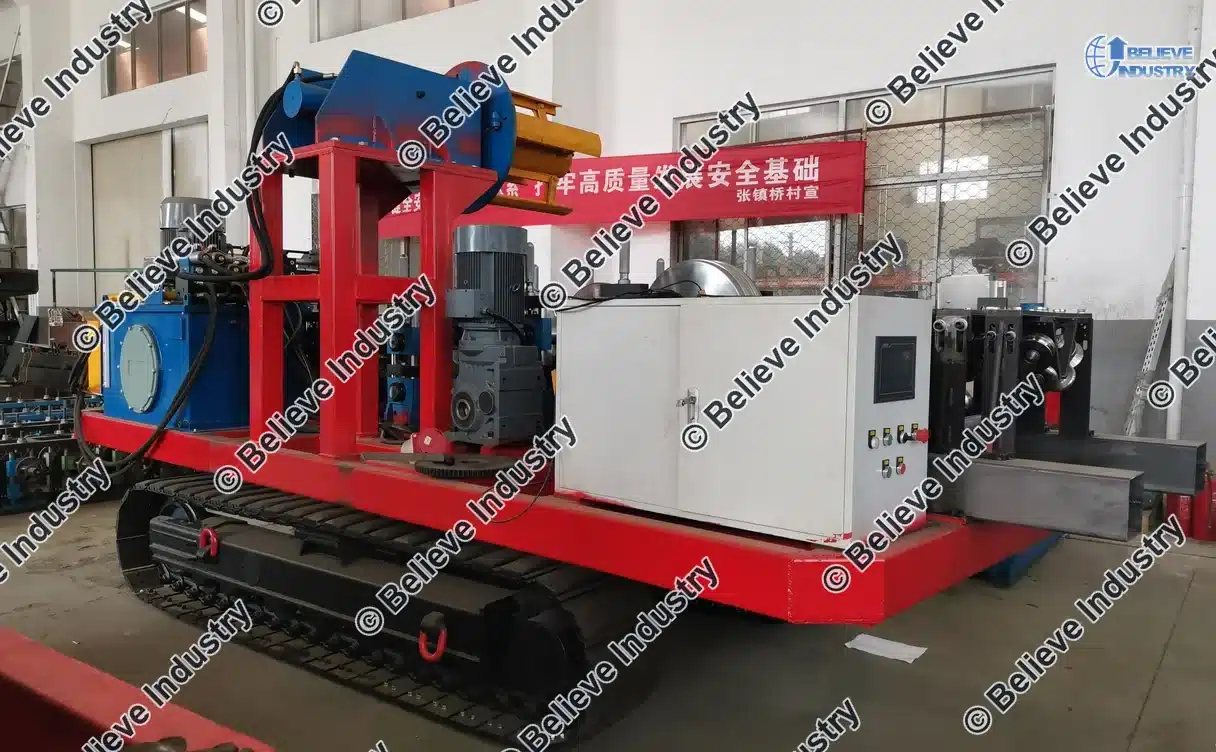
The whole line sits on one chassis, so the cassette swap starts at a fixed datum.
Seven Purchase Specs With Numbers
The table is the shortlist for a purchase order. Seven named specs, each with a number, describe a greenhouse gutter cassette mill that swaps in 2 to 3 hours. Treat each figure as a starting band to confirm against the real coil and drawing.
| # | Purchase spec | Concrete value or band | Changeover purpose |
|---|---|---|---|
| 1 | Cassette registration and repeatable datum | 2 dowel pins plus a ground datum face, repeatable to 0.05 mm to 0.10 mm | Returns a new cassette to the same position without shimming |
| 2 | Shaft and stand count | 16 to 24 stands, shaft diameter 65 mm to 90 mm | Limits how many drives couple at each swap |
| 3 | Widest developed profile | Up to 4000 mm strip for 4 m to 5 m greenhouse bays | Sets the base length and cassette envelope |
| 4 | Coil thickness and coating grades | 0.6 to 1.5 mm coil, Z120, Z275 and Zn-Al-Mg | Fixes roll gap range and punch clearance |
| 5 | Punch and drain hole pattern | Holes 8 mm to 12 mm at 200 mm to 500 mm pitch | Sets quick release punch holders per cassette |
| 6 | ความคลาดเคลื่อนของความยาวในการตัด | Plus or minus 1.0 mm to 1.5 mm over a 6 m part | Ties the encoder and cutoff to a measurable limit |
| 7 | Spare cassette and recipe handover | At least 2 spare cassette sets, 20 to 40 stored recipes | Keeps the swap repeatable after the crew changes |
Spec 1 is the repeatable datum. Two dowel pins and one ground face place the cassette within 0.05 mm to 0.10 mm every time. Without it, an operator shims each stand and the 2 to 3 hour target disappears.
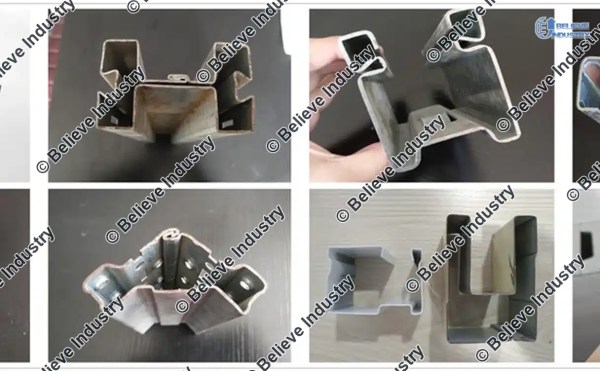
Spec 2 is the shaft and stand count. More stands form a wide gutter gently, but each shaft is another coupling. A band of 16 to 24 stands with 65 mm to 90 mm shafts suits most sections. Keep shaft centres identical across every cassette.
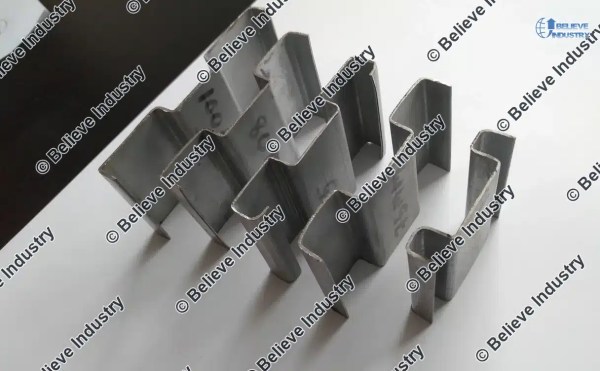
Spec 3 is the widest profile. A greenhouse gutter cassette mill for 4 m to 5 m greenhouse bays should accept developed strip up to 4000 mm. The base and the run out table grow with that number.
Wide sheet sections are also formed on floor deck equipment.
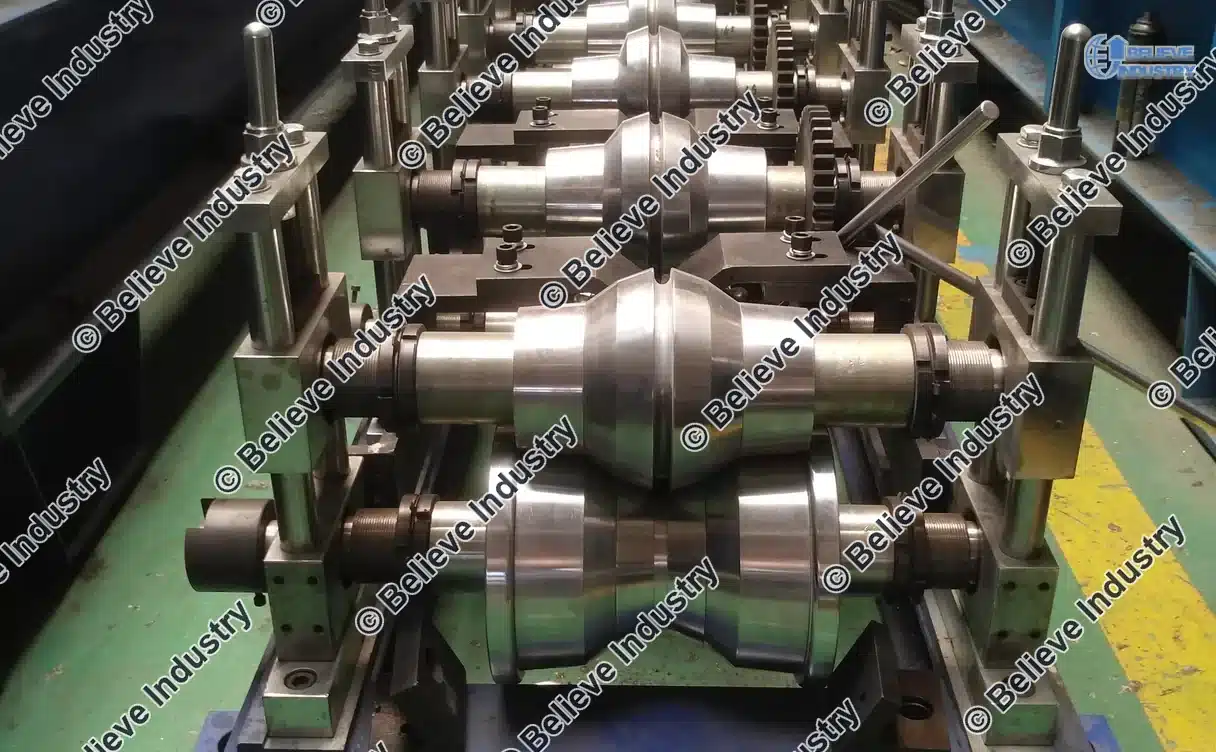
Registration faces on the cassette decide how fast the changeover repeats.
Coil, Coating and Punch Pattern as Hardware Limits
Spec 4 covers coil. A greenhouse gutter cassette mill for this duty runs 0.6 to 1.5 mm coil. Name the grades the rolls will see: Z120, Z275, and Zn-Al-Mg. These are forming variables, not a corrosion ranking.
Coating grades sit under EN 10346 and section tolerances under EN 10162. ASTM A653 / A653M covers galvanized sheet, while EN 1993-1-3 and AISI S100-16 cover cold formed design. Quote the edition on the drawing.
Set roll gap to measured thickness plus a small clearance, and store one value per coil lot as a starting figure.
Coating formability data is published by the zinc industry.
แนวทางว่าด้วยความสามารถในการขึ้นรูปของชั้นเคลือบสังกะสี
Spec 5 is the punch and drain hole pattern. Drain holes from 8 mm to 12 mm at 200 mm to 500 mm pitch are punched before cutoff. A greenhouse gutter cassette mill that shares one punch frame across profiles saves the indexing step.
Keep hole centres at least 2.5 times thickness from a bend line, since a close hole ovalises as metal flows. Some gutters use aluminium coil, and aluminium sections follow alloy data from the Aluminum Association.
Aluminium grade data is collected by the industry association.
ข้อมูลการออกแบบจาก Aluminum Association
Peeling and cracking at a formed corner are covered in a separate guide.
The 2 to 3 Hour Changeover Sequence
Spec 6 is cut length tolerance. A greenhouse gutter cassette mill should hold cut length to plus or minus 1.0 mm to 1.5 mm over a 6 m part. The encoder, the flying cutoff, and the stored recipe all feed that number.
The table gives a sequence that lands at 130 to 180 minutes, or 2 to 3 hours. Each row is a starting band to confirm during commissioning.
| Step | การดำเนินการ | Typical minutes |
|---|---|---|
| 1 | Stop the line, run out the coil, and lock out the drive | 10 to 15 |
| 2 | Release cassette clamps and lift out the old cassette | 15 to 20 |
| 3 | Set the repeatable datum and lower the new cassette on its dowels | 15 to 20 |
| 4 | Couple the shaft drives and set roll gap from the recipe | 20 to 30 |
| 5 | Load the stored recipe and index the punch stations | 20 to 25 |
| 6 | Thread strip and run a first article part | 30 to 40 |
| 7 | Measure the part, sign off, and release to production | 20 to 30 |
| รวม | Line stop to first article sign off | 130 to 180 |
Step 3 pays back the datum, since the dowels locate to 0.05 mm to 0.10 mm and skip the shim work. Step 5 reloads gaps, speed, and punch positions in one action on a greenhouse gutter cassette mill.
A comparable quick change routine is described for purlin lines.
Compare seven C to Z purlin changeover features
Sheet metal fabrication and tolerance practice is gathered by a metal construction group.
Metal Construction Association technical resources
High strength forming data helps set a starting band for springback on a greenhouse gutter cassette mill.
Forming data for advanced steel grades is published by a global automotive steel group.
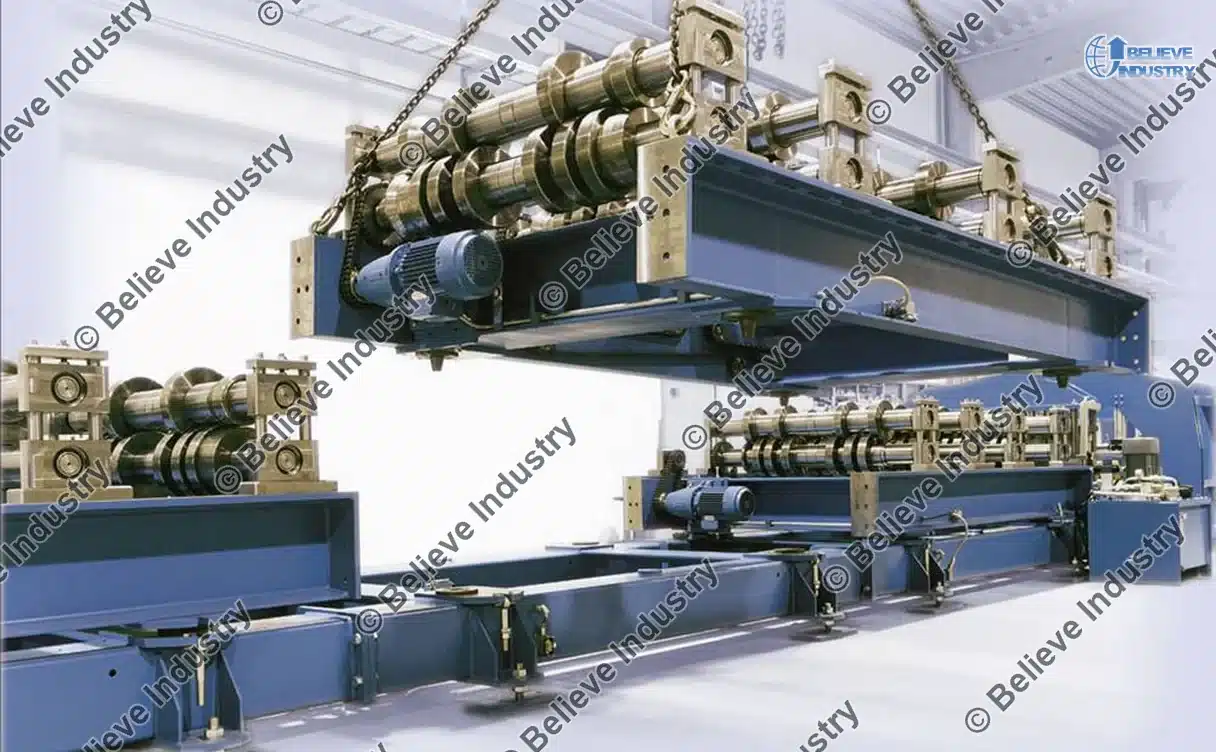
Lifting one cassette out and dropping the next one in is the core of a 2 to 3 hour swap.
Spare Cassette and Recipe Handover List
Spec 7 is the handover list. A greenhouse gutter cassette mill is only as fast as the spares and documents that arrive with it. Ask for at least 2 spare cassette sets, 20 to 40 stored recipes, and a setting sheet for each.
List the datum drawing, shaft centre table, roll gap sheet, punch pattern, and cut length acceptance value. Freeze the recipe after the first article. A greenhouse gutter cassette mill with a frozen recipe removes trial and error from every swap.
The formal acceptance and start up routine is covered in the commissioning guide.
คำถามที่พบบ่อย
1. What is a greenhouse gutter cassette mill? A greenhouse gutter cassette mill is a roll forming line that holds each profile in a removable cassette for a 2 to 3 hour swap.
2. How long should one changeover take? A well specified greenhouse gutter cassette mill finishes one swap in 2 to 3 hours, or 130 to 180 minutes, from line stop to sign off.
3. What does cassette registration mean? It is the dowel and datum system that returns a cassette to the same spot within 0.05 mm to 0.10 mm, removing manual shimming.
4. How many stands and shafts should I specify? Specify 16 to 24 stands with 65 mm to 90 mm shafts on a greenhouse gutter cassette mill, with identical shaft centres.
5. Can the line form a 4 m wide gutter? Yes. A greenhouse gutter cassette mill for 4 m to 5 m bays accepts developed strip up to 4000 mm.
6. Which coil grades and thicknesses work? A greenhouse gutter cassette mill runs 0.6 to 1.5 mm coil with Z120, Z275, or Zn-Al-Mg under EN 10346.
7. How are drain holes handled? Holes from 8 mm to 12 mm at 200 mm to 500 mm pitch are punched before cutoff on a greenhouse gutter cassette mill.
8. What cut length tolerance is realistic? A greenhouse gutter cassette mill holds plus or minus 1.0 mm to 1.5 mm over a 6 m part against a measured first article.
9. What should the handover include? Ask for 2 spare cassette sets, 20 to 40 stored recipes, and a setting sheet with datum and roll gap values.
10. How is this different from the standard gutter guide? This covers cassette hardware and purchase specs, while the earlier greenhouse gutter guide covers span and coating selection. A greenhouse gutter cassette mill is a swap problem here.
สรุป
A greenhouse gutter cassette mill is a hardware purchase, not an agronomy decision. The 2 to 3 hour swap comes from the datum, shaft count, stored recipe, and signed handover. Put those seven specs into the order.
Confirm each band against the real coil and drawing. A greenhouse gutter cassette mill specified this way holds tolerance shift after shift.
Beli Rollforming has built roll forming machines since 2005. We have delivered 500+ machines to 50+ countries from a 15,000 m² plant, with 80+ engineers and technicians. Every machine carries a 24-month warranty on the complete machine.
อัปเดตล่าสุด: 2026-11-10
บันทึกการเปลี่ยนแปลงบทความ
- 2026-11-10: First publication. Seven purchase specs, a seven row spec table, a 2 to 3 hour changeover sequence table, and ten FAQ entries.
เงื่อนไขที่ต้องทบทวนครั้งต่อไป
- A revision to EN 10346, EN 10162 or ASTM A653 / A653M that changes tolerance callouts
- A customer drawing that calls for developed strip above 4000 mm
- New published data for a coil grade outside the 0.6 to 1.5 mm band
- A change in the rated 2 to 3 hour swap time after commissioning feedback

 ไทย