Мы используем cookie, чтобы обеспечить максимальное удобство использования нашего веб-сайта.
Будьте в курсе событий с Новости отрасли Believe
24 тыс. подписчиков
Оформите подписку уже сегодня, чтобы получать эксклюзивные руководства по профилированию, информацию о тенденциях отрасли и первый доступ к нашим последним инновациям — все это будет отправлено вам на почту.
Оставайтесь в курсе событий Вера в индустрию’экспертные мнения!
Australia’s construction industry demands precision, speed, and compliance. BoxSpan steel beams have become the go-to structural solution for residential and commercial flooring. If you manufacture steel framing products, a BoxSpan beam roll forming machine for Australia is a strategic investment.
This guide covers everything you need to know. We explain what BoxSpan beams are, why they matter in Australia, and which machine features deliver the best ROI.
What Is a BoxSpan Beam?
BoxSpan is a registered trademark of Spantec Systems Pty Ltd. BoxSpan is a light structural steel beam formed from two C-sections of high-tensile galvanized steel, mechanically locked together.
The result is a box-shaped beam that combines the strength of steel with the workability of timber. BoxSpan is lighter than comparable products by 40–60% and is fully termite-proof.
In Australia, BoxSpan beams are widely used for:
Floor joists and bearers
Roof framing and rafters
Lintels above openings
Deck and veranda structures
Australian builders and engineers can verify span tables and load ratings directly from the official BoxSpan residential span tables published by Spantec.
Because BoxSpan is made from galvanized steel, it does not rot, warp, or burn. This makes it ideal for Australia’s harsh climate conditions.
Why the Australian Market Needs BoxSpan Beam Roll Forming Machines
Australia’s building codes and climate create strong demand for steel framing systems. Here is why a BoxSpan beam roll forming machine for Australia makes commercial sense.
1. Termite Resistance Is Non-Negotiable
Eastern Australia has some of the world’s highest termite activity. Timber beams require chemical treatment. BoxSpan steel beams eliminate this problem entirely.
2. Bushfire-Prone Areas
Steel does not burn. In Bushfire Attack Level (BAL) zones, non-combustible materials are often mandatory. BoxSpan beams meet these requirements.
3. Precision and Speed
Australian builders value straight, true framing. Steel roll formed beams arrive on-site cut to exact lengths. No warping, no on-site adjustment.
4. Growing Modular Construction
Prefab and modular building is expanding in Australia. Roll formed steel beams fit perfectly into off-site manufacturing workflows.
If you want to explore more about the Australian roll forming market, read our dedicated guide on roll forming machine Australia for local insights and compliance requirements.
Believe Industry: 4 Key Equipment Advantages
Believe Industry Company designs and manufactures BoxSpan beam roll forming machines for Australia with four standout advantages that directly impact your production efficiency and profit margin.
Traditional roll forming machines are fixed to a single profile width. Changing widths means stopping the line, adjusting rollers manually, and wasting valuable production time.
Believe Industry’s BoxSpan beam machine features automatic width adjustment from 100 mm to 250 mm. The operator sets the target width on the Siemens PLC touchscreen. All roll forming stands move simultaneously under PLC control. NSK ball bearings are used throughout for可靠 operation.
This matters because Australian suppliers often stock multiple BoxSpan sizes — B100, B150, B200, and B250. With one machine that covers the full range, you reduce capital expenditure and floor space.
You can learn more about our general профилегибочная машина technology and how automatic adjustment fits into modern production lines.
Advantage 2: Dynamic Punching with CSV File Import
BoxSpan beams require holes for connectors, bolts, and alignment. Believe Industry’s boxspan beam roll forming machine accepts CSV file imports to define custom hole patterns — the same workflow that LGSF (Light Gauge Steel Framing) detailers already use.
The control system is able to import CSV files for both cutting and punching. The software divides each box beam into two C-profiles for roll forming, then seamlessly seams them together. The authoring software produces a CSV file that treats each beam as one line item. The machine then splits the CSV line into two lines and seams the correct channels into a box.
Here is how it works:
The engineer creates the hole pattern in CAD or spreadsheet software.
The file is exported as CSV.
The operator uploads the CSV file to the industrial computer with touchscreen.
Six sets of servo-driven punching devices dynamically punch holes at the specified positions. Five sets handle box beam holes. One set punches the identification hole for cutting reference.
This is a major upgrade over fixed-tool punching. Each project can have a different hole layout without stopping production to change dies.
Advantage 3: Simultaneous Production of Different Lengths (1–12 m)
Australian projects vary in span requirements. A residential floor might need 3-metre bearers. A commercial deck might need 12-metre joists.
Believe Industry’s BoxSpan beam machine handles variable lengths from 1 metre to 12 metres in a single production run. The multi-function hydraulic cutting device cuts each piece to its specified length while the line continues running.
This means you can fulfill a mixed order — say, 50 pieces at 3.6 m and 30 pieces at 5.4 m — without stopping the machine between batches.
The continuous operation is made possible by our advanced secondary operations in the roll forming line design, where inline cutting and punching happen without interrupting material flow.
Advantage 4: Automatic Seaming with Bite and Dimple, High Load Capacity
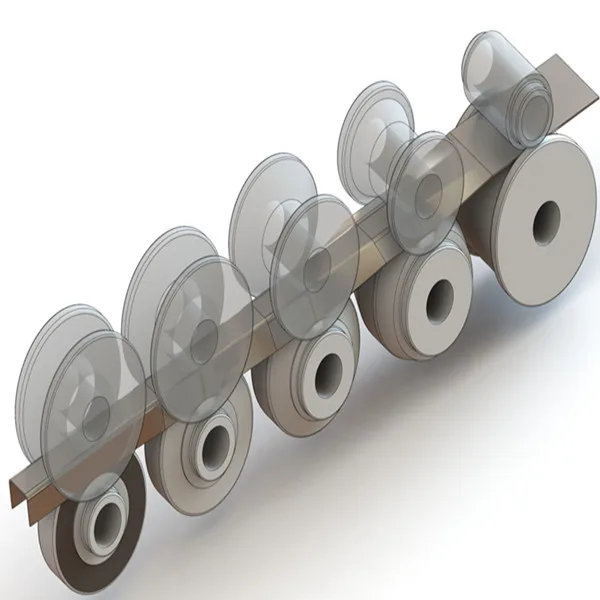
BoxSpan beams are formed by mechanically locking two C-sections together. Believe Industry’s boxspan beam roll former machine automates this process with a dedicated automatic seaming machine featuring 5 stands with GCr15 rollers (HRC 58–62).
The dimple joints create a high-load mechanical connection between the two C-sections. This eliminates the need for continuous welding along the beam length. The result is a beam that meets structural load requirements while keeping production speed at 4–6 m/min.
The transfer and overturn rack (12 metres long) conveys, overturns, aligns, and drives the beams into the seaming machine. Overturn and push actions are pneumatic-powered. The negative-direction transfer reduces total line length.
For warehouses and heavy-duty applications, this high-load connection is critical. The beam must resist both vertical load and lateral torsion.
Believe Industry’s automatically seamed BoxSpan beam roll forming machine integrates every step from coil to finished box beam. The whole line layout follows this sequence:
Each section is synchronized by the central Siemens PLC control system. The operator manages the entire line from one industrial computer with touchscreen, keyboard, and mouse. CAT6, USB backup, and WiFi functions are included. Aviation plugs are used for easy wiring connection.
Technical Parameters: BoxSpan Beam Roll Forming Machine
Uncoiler and Leveler with Coil Car
Описание
Спецификация
Uncoiling method
Hydraulic expansion, passive uncoiling
Coil width (max)
400 мм
Coil thickness
0.8–1.5 mm
Coil weight (max)
3,000 kg
Coil inner diameter
450–530 mm
Coil outer diameter (max)
1,300 mm
Hydraulic motor power
1.5 KW
Leveling motor power
3 KW
Leveling device design
2 pinch rolls, 7 leveling rolls
Leveling roller diameter
52.5 mm
Leveling roller material
40Cr
Hydraulic valve brand
Beijing Huade
Inverter
Яскава
Limit sensor
Omron
Coil car capacity
3 тонны
Coil upender capacity
5 тонн
Feeding Guide and Punching Holes Device
Описание
Спецификация
Guiding device
One side fixed, one side adjustable; moves with the stands for different coil widths
Punching sets
6 sets total (5 for box beam holes, 1 for identification hole)
Punch adjustment
All 5 box beam punch sets are servo motor driven for different X-value
Punch mold material
CR12MOV or SKD11, HRC 58–62
Hydraulic motor power
11 KW
Hydraulic pressure
20 MPa
Hydraulic station structure
6 loops
Hydraulic station cooling
Oil and air cooling
Рулонная формовочная машина
Описание
Спецификация
Machine base
H-beam welded
Roll forming stands
Iron cast stands
Forming stations
16 forming steps
Roller material
CR12MOV (equiv. JIS SKD11), HRC 58–62, chromed surface
Shaft material
42Cr, 80 mm diameter
Shaft bearings
NSK ball bearings
Roll forming thickness
0.8–1.5 mm
Power for roll forming
7.5 KW Servo Motor
Adjust motor power
1.5 KW x 2
Line speed
4–6 m/min
Transmission method
1.5 inch chain and sprocket; some stands use gears to drive upper rollers also
Side rolls
Assembled between roll forming stands to form the edge radius
Hydraulic cutting power
5.5 KW
Cutting blade material
CR12MOV, HRC 58–62
Straightening device
Equipped to ensure product straightness
Transfer and Overturn Rack
Описание
Спецификация
Size
12 metres
Transfer motor power
3 KW x 2
Conveyor rollers
Diameter 55 mm, chromed
Overturn and push
Pneumatic powered
Direction
Negative direction to reduce line length
Seaming Machine
Описание
Спецификация
Stands quantity
5 stands
Motor power
5.5 KW
Rollers material
GCr15, HRC 58–62
Machine stands
Iron cast
Передача инфекции
Chain and sprocket
Adjustment
Automatic adjust design, controlled by PLC
Система управления
Описание
Спецификация
ПЛК
Сименс
Кодер
Omron
Electric components
Schneider
Industrial computer
Apuqi industrial computer with touch function
Software
Customized, suitable for box beam CSV import
Connectivity
CAT6, USB backup, WiFi function
Emergency stop
Emergency stop and pull-cord stop included
Гидравлическая станция
Описание
Спецификация
Количество
2 sets (one for punching, one for cutting)
Hydraulic power
11 KW for punching, 5.5 KW for cutting
Working pressure
12–16 MPa
Hydraulic oil
46# hydraulic oil
Voltage and Frequency
Описание
Спецификация
Напряжение
415V
Частота
50Hz
Phase
3-Phase
This electrical configuration matches Australian industrial power standards.
These specs align with the requirements outlined in our производители профилегибочных машин guide, where we explain how to evaluate supplier specifications against your production needs.
BoxSpan Profile Sizes and Machine Compatibility
BoxSpan beams are manufactured in four standard widths. Your boxspan beam roll forming machine must be capable of producing all of them:
BoxSpan 100×50: Uses BMT 0.6 mm or 0.8 mm. Suitable for light joist applications.
BoxSpan 150×50: Uses BMT 0.8 mm or 1.0 mm. The most common residential size.
BoxSpan 200×50: Uses BMT 0.8 mm or 1.0 mm. For longer spans and heavier loads.
BoxSpan 250×50: Uses BMT 1.0 mm. The heaviest duty BoxSpan profile.
Believe Industry’s automatic width adjustment covers all four sizes without manual roller change. The adjustment is motorized (1.5 KW x 2) and controlled by PLC. This is a significant advantage over fixed-width machines that require spacers or cassette changes.
To understand more about how roll design affects multi-size production, read our technical guide on roll forming roll design — it explains flower diagrams and pass scheduling for variable-width profiles.
Australian Compliance and Standards
When installing a BoxSpan beam roll forming machine for Australia, you must consider local compliance:
Electrical Standards: Australian sites use 415V/50Hz three-phase power. Believe Industry configures the machine electrical system to match exactly, using Siemens PLC, Omron encoder, and Schneider electric components.
Safety Standards: AS/NZS 4024 (Safety of Machinery) applies. Our machines include light curtains, emergency stops, and pull-cord stops compliant with international standards. CE certification is included as standard.
Steel Grade: Australian steel mills supply G350 and G550 galvanized coil. The machine handles both grades. The roller material (CR12MOV, HRC 58–62, chromed surface) is designed for 450 MPa high-tensile steel as standard.
Our company profile at Компания "Вери Индастри explains our 20+ years of export experience and how we handle country-specific compliance for every market.
Comparing BoxSpan Machines to Other Profile Lines
A BoxSpan beam machine shares technology with several other roll forming lines. Understanding these connections helps you plan your factory layout and product range.
vs. Strut Channel Machine: Both use servo punching and hydraulic cutting. Strut channel machines typically run faster because the profile is simpler. BoxSpan requires 16 roll stations due to the double-C lock-forming process and the additional seaming step.
vs. C Purlin Machine: Both produce C-shaped sections. The difference is that BoxSpan locks two C-sections together, while purlins are used individually. Purlin machines often include a Z-overlap feature, which is not needed for BoxSpan.
If you are considering adding purlin production, our C purlin roll forming machine guide covers the technical differences.
vs. Storage Racking Beam: BoxSpan and racking step beams both use the bite-and-dimple joint method. The profiles are different shapes, but the seaming technology is similar. Both require high-load mechanical connection without continuous welding.
If you want to produce both products, Believe Industry can design a shared production line with quick-change tooling.
Installation and Training in Australia
For Australian clients, we provide:
Pre-shipment factory acceptance test (FAT)
Sea freight to Australian port (FOB Shanghai)
On-site installation and commissioning (typically 14 days, 2 weeks)
Operator training (qualified tradespeople recommended)
24-month warranty covering labour and replacement of defective parts
Remote technical support via WiFi-connected industrial computer
Local spare parts recommendations
Installation personnel are charged at USD 200 per day plus travel time. The buyer is responsible for floor/foundation preparation, electrical supply and connection, and safe installation environment per WorkSafe regulations.
Наш roll forming machine installation service page explains the full process, including typical timelines and what to prepare before the machine arrives.
Why Choose Believe Industry for Your BoxSpan Beam Machine
Believe Industry Company has been manufacturing roll forming machines over 15 years. Here is why Australian buyers choose us:
Proven Track Record: 300+ machines installed in 20+ countries.
Custom Engineering: We design the machine around your profile drawings, not the other way around. The software is customized to suit box beam CSV import workflows.
CSV Import Punching: Our dynamic punching system is specifically designed for project-based production — the same workflow as LGSF detailers already use. Six sets of servo-driven punching devices handle complex hole patterns.
Australian Market Experience: We understand local voltage (415V/50Hz), safety standards, and steel grade requirements. Siemens PLC and Schneider electric components are standard.
Complete Line Integration: From uncoiler to collection table, we build the entire production line. You don’t need to source components from multiple vendors.
Seaming Technology: Our 5-stand seaming machine with GCr15 rollers delivers high-load mechanical connection through bite-and-dimple joints — no continuous welding required.
If you are planning to manufacture BoxSpan-style steel beams for the Australian market, we can help you specify the right machine.
Tell us:
Which BoxSpan sizes do you plan to produce?
What is your target daily production volume?
Do you need CSV file import for punching?
What is your factory’s power supply specification?
Do you need the coil upender and coil car included?
Свяжитесь с нашей командой сегодня. We will respond with a detailed proposal, including line layout, technical specifications, and pricing — typically within 24 hours.
Часто задаваемые вопросы (FAQ)
What is a BoxSpan beam roll forming machine?
A BoxSpan beam roll forming machine is an automated production line that forms galvanized steel coil into box-shaped structural beams. The machine rolls two C-sections, punches holes per the design file, then mechanically seams them into a closed box beam. The finished product is used for floor joists, bearers, rafters, and lintels in residential and commercial construction.
What material does the BoxSpan beam machine process?
The machine processes galvanized steel coil with a yield strength of 450 MPa. Material thickness range is 0.8–1.2 mm. Coil width maximum is 400 mm, and coil weight is up to 3,000 kg. The machine handles G350 and G550 grade steel, which are the standard grades supplied by Australian steel mills.
How does the CSV file import for punching work?
The authoring software produces a CSV file that treats each beam as one line item. The operator uploads this file to the industrial computer with touchscreen. The Siemens PLC then splits each CSV line into two (one per C-section) and controls six servo-driven punching devices to punch holes at the specified positions. Five sets handle box beam holes (V-slot, H-slot, web hole, flag hole). One set punches the identification hole for cutting reference. Read our detailed guide on пробивной пресс для профилегибочной промышленности.
What production sizes can the machine handle?
The machine produces box beams from 100 mm to 250 mm width, covering all four BoxSpan sizes: B100x50, B150x50, B200x50, and B250x50. Length range is 1 to 12 metres. Width adjustment is fully automatic via PLC-controlled motorized stands (1.5 KW x 2 motors). No manual roller changes or cassette swaps are needed.
What is the production speed and daily output?
The machine runs at 4–6 metres per minute. In an 8-hour shift at 4 m/min, output is approximately 1,920 linear metres. At 6 m/min, this reaches ~2,880 linear metres per shift. Actual output depends on punching complexity, hole pattern density, and length mix.
What power supply is needed for the Australian market?
The machine requires 415V, 50Hz, 3-phase power — matching Australian industrial electrical standards. The control system uses Siemens PLC with Omron encoder and Schneider electric components. An industrial computer with touchscreen is included for the operator HMI.
How does the automatic seaming machine work?
After roll forming and cutting, the two C-profile sections are conveyed onto the 12-metre transfer and overturn rack. Pneumatic arms overturn the top C-section, align it with the bottom one, and push both into the seaming machine. The 5-stand seaming machine (5.5 KW motor, GCr15 rollers, HRC 58–62) mechanically locks the two C-sections together through bite-and-dimple joints. No continuous welding is required. The result is a high-load box beam with closed profile integrity.
How long does installation and commissioning take?
Installation and commissioning typically require 14 days (2 weeks) for a team of two engineers. The buyer must prepare the factory floor (floor plans are supplied by Believe Industry), electrical and air connections, and a safe working environment per WorkSafe regulations. Pre-shipment, the buyer arranges coil delivery to Believe Industry’s factory for acceptance testing. Installation costs are USD 200 per engineer per day plus travel time.
What is the warranty and after-sales support?
A 24-month warranty covers labour and replacement of defective mechanical and hydraulic parts due to faulty workmanship or materials. The warranty excludes electrical components, and parts damaged by poor maintenance, collision, or operator error. The warranty is based on single-shift (40-hour) operation, with pro-rata adjustment for multi-shift use. Remote technical support is available via the machine’s WiFi-connected industrial computer.
Can the machine produce both BoxSpan beams and other profiles?
The machine is designed primarily for box beam production via the seaming process. However, the roll forming section also produces C-profile sections that can be used as individual purlins or studs. If you need multi-profile capability, read our профилегибочная машина guide. For dedicated purlin production, see our C purlin roll forming machine page.
What maintenance schedule is recommended?
Regular maintenance is essential for uptime. Key items include: daily lubrication of chain drives and bearings (NSK ball bearings used throughout), weekly inspection of punch die wear (CR12MOV/SKD11, HRC 58–62), monthly hydraulic oil level checks (46# hydraulic oil), and quarterly PLC and sensor calibration. For a complete maintenance checklist, read our профилактическое обслуживание профилегибочных машин guide.
What Australian building standards does the BoxSpan beam comply with?
BoxSpan beams manufactured to Spantec specifications comply with AS/NZS 4600 (Cold-Formed Steel Structures) and are designed under AS 1170 structural load standards. The galvanized steel coil used must meet AS 1397 (Steel Sheet and Strip) for G350 or G550 grade. When you manufacture BoxSpan-style beams for the Australian market, your finished product must pass the same span table and load tests that Spantec publishes. Believe Industry recommends buyers engage a structural engineer in Australia to verify finished product compliance before market entry. See our производители профилегибочных машин guide for how to align your machine spec with target compliance requirements.
Can I produce non-BoxSpan box beams with this machine — for example, custom sizes not in the Spantec range?
Yes. The machine is not limited to BoxSpan-branded profiles. The roll forming tooling is custom-made for your specific profile drawing. If you want to produce box beams with widths between 100–250 mm at any flange and web dimension, Believe Industry can design the rolls accordingly. Custom profiles outside the 100–250 mm range can also be discussed — a separate quotation would be required for different tooling. This flexibility makes the machine useful for construction markets in New Zealand, South-East Asia, and the Middle East, in addition to Australia. For custom profile development, review our профилегибочная машина capabilities page.