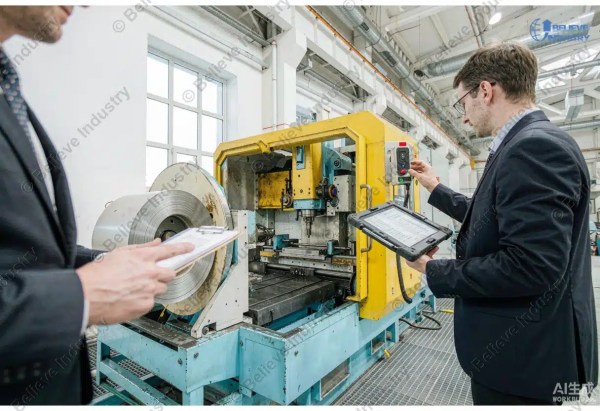










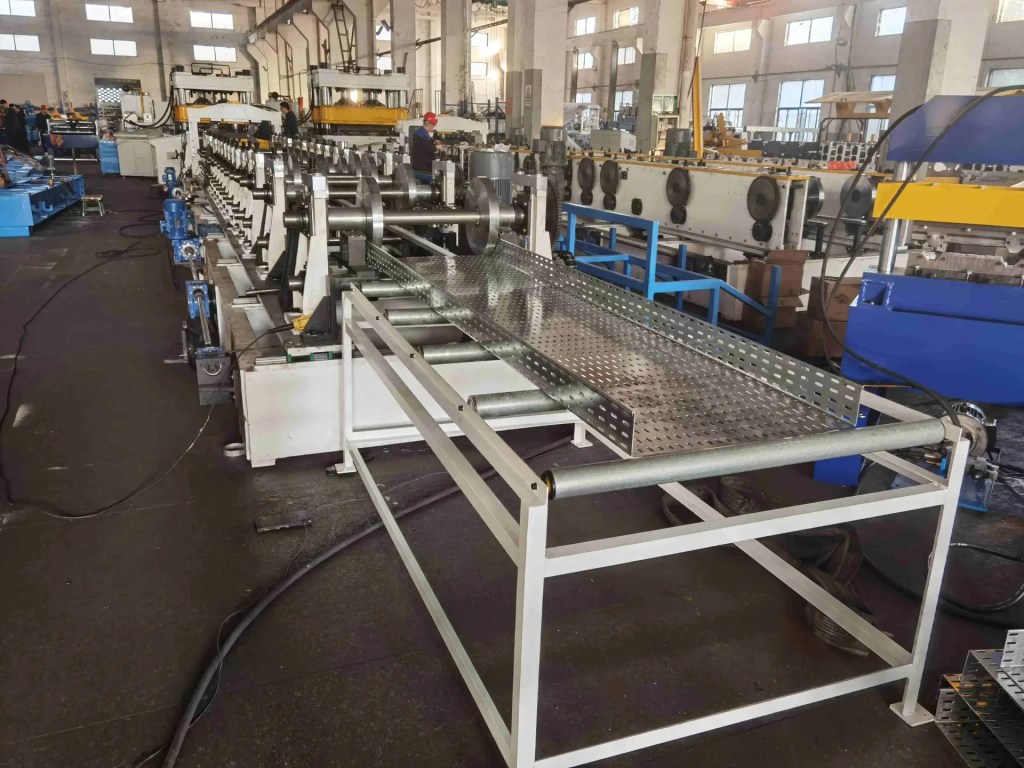
An automatic cable tray machine is a highly specialized industrial roll forming system designed to manufacture perforated and solid-bottom cable management trays at production speeds up to 25 meters per minute. Believe Industry Company, a leading global machinery manufacturer based in Wuxi, China, engineers these systems with PLC-controlled automation, servo-driven flying punches, and quick-change tooling cassettes to ensure maximum structural integrity and NEMA compliance while minimizing operator intervention.
Redefining Industrial Output in 2026
The global push for upgraded electrical infrastructure, data centers, and renewable energy grids has created an unprecedented demand for robust cable management systems. In 2026, relying on semi-manual, disjointed manufacturing lines is a fast track to obsolescence. To truly capture market share, manufacturers must fully optimize their Automatic Cable Tray Machine to run at peak efficiency, minimizing scrap and maximizing throughput.
Before diving into advanced operational strategies, it is critical to understand the foundational mechanics of continuous metal bending, yield strengths, and machine deflection. For a deep dive into these physical principles, we highly recommend reading our comprehensive analysis of roll forming machine technology. Building on that technical foundation, here are the 7 top tactics to extract maximum profitability from your equipment.
Tactic 1: Optimize Servo-Driven Punching Synchronization
The primary bottleneck in any perforated tray production line is the hole-punching process. If your punch press relies on a “stop-and-punch” hydraulic mechanism, you are artificially capping your daily output. The top tactical upgrade is embracing true roll forming automation by synchronizing a servo-driven flying punch.
By continuously tracking the encoder feedback from the uncoiled strip, the flying die accelerates to match the precise speed of the moving metal. This ensures flawless ventilation and mounting hole patterns are stamped without ever halting the coil feed, easily increasing your Automatic Cable Tray Machine throughput by up to 40%.
Tactic 2: Master Material Yield and Springback Compensation
Drawing from advanced metallurgical forming handbooks, one of the most persistent challenges in heavy-duty tray manufacturing is managing “springback”—the tendency of high-strength steel (typically 350 MPa to 550 MPa yield strength) to partially unbend after passing through the roller stations.
To combat this, your Automatic Cable Tray Machine must utilize over-bending techniques in the final 3 to 4 passes. By strategically designing the roller flower pattern to bend the flange slightly past the target 90-degree angle (e.g., to 92 degrees), the metal naturally relaxes into a perfect right angle. This guarantees that your trays will easily align during field installation.
Tactic 3: Implement Quick-Change Cassette Tooling
Downtime is the enemy of profitability. When shifting production from a 150mm wide tray to a 300mm wide tray, manually unbolting and restacking roller spacers can consume an entire shift. A highly profitable tactic is utilizing a quick change roll forming machine architecture.
By mounting entire roller assemblies onto modular, pre-aligned cassettes, operators can simply hoist out the old tooling and drop in the new cassette. To ensure longevity during these high-speed changeovers, ensure your rollers are machined from premium GCr15 bearing steel and vacuum-quenched to a hardness of HRC58-62.
Tactic 4: Upgrade to PLC-Controlled Automated Width Adjustment
Taking changeover efficiency a step further, the most advanced 2026 configurations eliminate physical tool changes for width adjustments entirely. By integrating dual-cantilever roller stands mounted on precision linear guideways, operators can adjust the profile width directly from the HMI (Human-Machine Interface) touchscreen.
This level of sophistication is a hallmark of a modern turnkey cable tray production line, allowing the Automatic Cable Tray Machine to precisely move the entire left or right roller assembly via servo motors to accommodate different coil widths in under 5 minutes.
Tactic 5: Calibrate the Flying Shear Cut-Off
A poorly calibrated cut-off shear will warp the ends of your finished cable trays, requiring manual deburring and drastically increasing labor costs. To achieve a perfectly flat, distortion-free cut, the hydraulic flying shear must be perfectly synchronized with the line speed.
Furthermore, utilizing a specialized cutting die (often referred to as a “slugless” or “profile-matched” die) that perfectly hugs the contours of the formed tray prevents the flanges from collapsing inward during the shearing stroke. For more insights into engineering high-precision cutting dies, you can review the corporate engineering standards at Believe Industry Company.
Tactic 6: Track Overall Equipment Effectiveness (OEE)
You cannot improve what you do not measure. A critical tactic for modern plant managers is utilizing the IoT capabilities of your Automatic Cable Tray Machine to track OEE. This metric calculates Availability, Performance, and Quality in real-time. By connecting your machine’s PLC to your factory’s ERP system, you can instantly identify micro-stops, material starvation, or tooling wear before they lead to catastrophic downtime. For broader industry standards on OEE and metal fabrication metrics, resources from the Fabricators & Manufacturers Association (FMA) provide excellent benchmarks.
Tactic 7: Prioritize Predictive Maintenance
An Automatic Cable Tray Machine is a massive investment that requires proactive care. Relying on “run-to-failure” maintenance will result in shattered drive chains, burnt-out servos, and scored rollers. Implement a strict schedule for checking hydraulic fluid viscosity, lubricating universal joints, and inspecting punch die clearances. If you are currently in the market to upgrade your aging infrastructure to a low-maintenance, high-output system, exploring a modern cable tray roll forming machine is the definitive next step.
Roll Forming OEE Calculator
To help you measure the true efficiency of your manufacturing line, use our interactive Overall Equipment Effectiveness (OEE) calculator below. This tool will help you pinpoint whether your production losses are stemming from downtime, slow running speeds, or rejected scrap.
Production Speed Estimator
(Totaling 0 Linear Meters)
Contact Believe Industry Company (Wuxi, China)
WhatsApp: +86 186 1692 7760
Email: enquiry@belirollforming.com
Web: belirollforming.com
Conclusion & Call to Action
Dominating the industrial sector requires more than just basic machinery; it requires intelligent, high-speed engineering. By implementing these 7 top tactics—ranging from servo-driven punching to predictive PLC maintenance—you transform your Automatic Cable Tray Machine from a simple metal bender into a highly profitable, autonomous production powerhouse. Stop letting manual changeovers and material scrap eat into your bottom line.
Are you ready to engineer absolute perfection into your manufacturing process? The elite engineers at BELI Rollforming are standing by to design your custom, high-speed automated line. Contact our technical sales team right now via WhatsApp at +8618616927760 or email us for an exclusive 2026 custom machinery quote!
FAQ
When optimized with a flying servo punch and flying shear, a modern automatic line typically operates between 15 to 25 meters per minute, depending heavily on the complexity and density of the punched hole patterns.
Instead of manually swapping spacers, the machine utilizes an intelligent PLC system. The left and right roller stands are mounted on heavy-duty linear guideways. When a new width is typed into the touchscreen, servo motors simultaneously drive the stands inward or outward to the exact millimeter required.
Yes. An advanced Automatic Cable Tray Machine is highly versatile. By simply adjusting the roller clearance (the vertical gap between the top and bottom rollers) to account for different material thicknesses and yield strengths, you can seamlessly transition between galvanized steel, stainless steel, and aluminum coils.
With proper lubrication and alignment, our premium Cr12MoV or SKD11 punching dies can process hundreds of thousands of strokes. We recommend a scheduled grinding/sharpening every 500,000 to 1,000,000 strokes to maintain a burr-free, clean cut.