Nous utilisons des cookies pour nous assurer que nous vous offrons la meilleure expérience possible sur notre site.
Restez informé avec Believe Industry News
24 000 abonnés
Abonnez-vous dès aujourd'hui pour recevoir des guides exclusifs sur le profilage à froid, les tendances du secteur et un accès prioritaire à nos dernières innovations, le tout directement dans votre boîte de réception.
Restez informé(e) Croire à l'industrie’Les analyses d'expert de s !
Saudi Arabia is building fast. New cities, data centers, factories, and power plants need safe cable routing. A cable tray roll forming machine for Saudi Arabia helps local manufacturers produce perforated trays, ladder trays, trunking, and covers at scale. The right line cuts labor costs, meets regional standards, and keeps pace with Vision 2030 infrastructure goals.
This guide explains what makes a machine de profilage à rouleaux pour chemins de câbles ready for the Saudi market. We focus on Believe Industry’s proven advantages: automatic width adjustment, three punch speed options, and multi-profile output from one line.
Why Saudi Arabia Needs Local Cable Tray Production
The Kingdom is diversifying beyond oil. Mega-projects like NEOM, the Red Sea Project, and Qiddiya are driving demand for electrical support systems. Imported trays are costly and slow. Local production solves both problems.
A Cable Tray Roll Forming Machine for Saudi Arabia offers a faster payback than relying on imported trays. A ligne de production de chemins de câbles built for Saudi conditions should handle galvanized steel, hot-rolled coils, and stainless steel. It should also produce profiles that match local contractor preferences. Short delivery times matter. So does compliance with SASO and international standards.
What a Cable Tray Roll Forming Machine Does
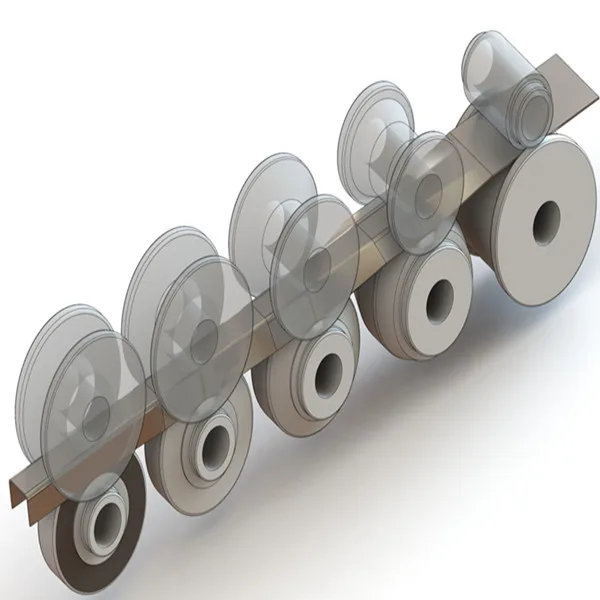
A machine de profilage à rouleaux pour chemins de câbles turns a flat metal coil into a finished cable tray. The process includes uncoiling, leveling, punching, forming, cutting, and stacking. Each station bends the strip a little more until the final cross-section is ready.
Modern machines use PLC control. Operators enter length, width, and hole patterns on a touchscreen. The line then runs automatically. This reduces setup time and human error.
Supplier Comparison: Believe Industry vs China vs US/EU
Not all cable tray machine suppliers offer the same value. Below is a side-by-side comparison of Believe Industry, typical China suppliers, and US/EU suppliers.
Facteur
Croire à l'industrie
Autres fournisseurs chinois
US/EU Suppliers
Prix
Competitive, factory-direct
Lower possible, but inconsistent
Premium, often 2–3x higher
Personnalisation
High, profile-specific tooling
Variable, sometimes limited
Standardized, limited custom
Max forming speed
Jusqu'à 15 m/min
Typically 5–8 m/min
Jusqu'à 20 m/min
Width range
50–1000 mm
50–300 mm common
50–600 mm common
Délai de livraison
60–90 days
45–120 days
120–180 days
Assistance après-vente
On-site global commissioning
Often remote only
Strong but expensive
Standards
CE, ISO, NEMA, IEC, SASO ready
Cela varie considérablement
Full local certifications
Believe Industry sits in the middle. It offers China-level pricing with export-grade support and flexible customization.
Believe Industry Equipment Advantages
Believe Industry has shipped machines de profilage à rouleaux to more than 50 countries. Their cable tray systems are designed for export markets, including the Middle East. Here are the three key advantages.
1. Automatic Width Adjustment from 50 mm to 600 mm (Up to 1000 mm)
Cable tray widths vary by project. Some jobs need 50 mm trays for light control cables. Others need 600 mm trays for heavy power bundles. Believe Industry’s machine covers 50–600 mm as standard. Optional setups can reach 1000 mm.
The width adjustment is automatic. Operators do not need to change rollers manually. This saves hours during changeovers. It also improves repeatability from batch to batch. For Saudi manufacturers serving multiple contractors, this flexibility is a major cost advantage.
2. Three Punch Options for Different Speed Requirements
Punching is often the bottleneck in a cable tray line. Believe Industry offers three punching solutions. Each balances speed, tooling cost, and hole quality.
Le unité de poinçonnage uses servo motors for precise hole placement. Hydraulic systems handle thicker material. Mechanical punch presses deliver the highest speed for long runs. Buyers can choose the option that matches their order mix and budget.
3. One Machine Produces Multiple Cable Tray Types
A single Believe Industry line can produce several products. This reduces capital investment and factory floor space. Supported profiles include:
Profil
Shape
Utilisation typique
Inner bend cable tray
Inward return edges
Compact cable runs, tight corners
Outer bend cable tray
Outward return edges
Standard commercial installations
Cable tray cover
Flat or slightly formed cover
Dust and overhead protection
Cable tray trunk
Deep channel profile
High-density cable routing
Switching between profiles is fast. Quick-change tooling and saved recipes on the PLC make it practical. For a Saudi factory, this means one machine can serve construction, oil and gas, data center, and power plant customers.
Saudi Standards and International Compliance
Cable trays in Saudi Arabia must meet safety and quality requirements. Local projects often reference NEMA, IEC, and NFPA standards. A NEMA standard cable tray roll former ensures compatibility with North American specifications used in many oil and gas projects.
Le NFPA 70 National Electrical Code defines installation rules. IEC standards cover international performance requirements. Buyers should confirm that the machine can produce trays that meet the relevant standard before signing a contract.
Good material handling prevents coil jams and profile distortion. A machine de profilage à rouleaux niveleuse removes coil curvature before punching. This improves hole accuracy and final profile quality.
Installation and After-Sales Support
Buying a machine from abroad is only the start. installation de la machine de profilage à rouleaux and commissioning must be planned carefully. Believe Industry provides on-site support, operator training, and spare parts. Their experience with export packaging and shipping reduces customs delays.
Long-term support matters too. A maintenance préventive du profilage à rouleaux plan keeps uptime high. D2 or GCr15 rollers last longer when lubrication and inspection schedules are followed.
Cable Tray vs Cable Ladder: Know the Difference
Some buyers confuse cable trays with cable ladders. They serve similar purposes but have different designs. A Chemin de câbles vs échelle à câbles comparison helps you choose the right product line.
Fonctionnalité
Chemin de câbles
Échelle à câbles
Base
Solid or perforated sheet
Open rungs between two side rails
Idéal pour
Power and control cables, dust protection
Heavy cables, long spans, ventilation
Typical widths
50–1000 mm
150–900 mm
Ventilation
Modéré
Haut
Common markets
Commercial, data centers, industrial
Oil and gas, power plants, heavy industry
Some factories produce both to maximize market coverage.
The price of a Cable Tray Roll Forming Machine for Saudi Arabia depends on width range, punching speed, automation level, and auxiliary equipment. A basic perforated tray line starts lower. A high-speed automatic line with multi-profile tooling costs more but pays back faster.
The Saudi market is price-sensitive but quality-driven. Cheap machines often have hidden costs: poor tooling, weak frames, and limited support. A machine à chemins de câbles acheter guide helps you compare real total cost of ownership, not just the invoice price.
Conclusion
A cable tray roll forming machine for Saudi Arabia must handle wide trays, punch fast, and switch profiles quickly. Believe Industry’s design meets these needs with automatic width adjustment from 50 mm to 600 mm (extendable to 1000 mm), three servo punch options from 2–3 m/min up to 12–15 m/min, and multi-profile output from one machine.
Local manufacturing in Saudi Arabia is growing. The right equipment helps you win contracts, reduce lead times, and meet local and international standards. Contact a fabricant de machines de profilage à rouleaux with proven export experience to discuss your specific profile and speed requirements.
Foire aux questions
What width range should a cable tray machine for Saudi Arabia handle?
Most projects need 50–300 mm. Heavy industrial and power plant jobs may require 600 mm or more. A machine rated up to 1000 mm future-proofs your investment.
Can one machine make both cable trays and covers?
Yes. Believe Industry’s line produces inner bend trays, outer bend trays, covers, and trunking by changing tooling and selecting the recipe on the PLC.
Which punch option is best for high-volume production?
The servo high-speed mechanical punch press runs at 12–15 m/min. It is ideal for long runs with standard hole patterns.
How long does installation take?
Typical installation and commissioning take 2–4 weeks, depending on line complexity and local preparation. Experienced suppliers provide on-site support throughout the process.
What certifications should I look for?
Look for ISO 9001 and CE certification. Also confirm that the machine can produce profiles matching NEMA, IEC, or SASO requirements for your target market.












 2. Three Punch Options for Different Speed Requirements


