










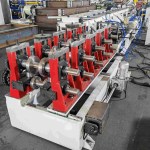
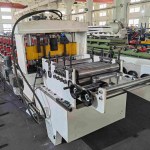

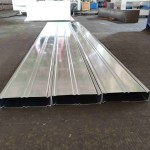
¿Qué es una máquina perfiladora de vigas de sección rectangular?
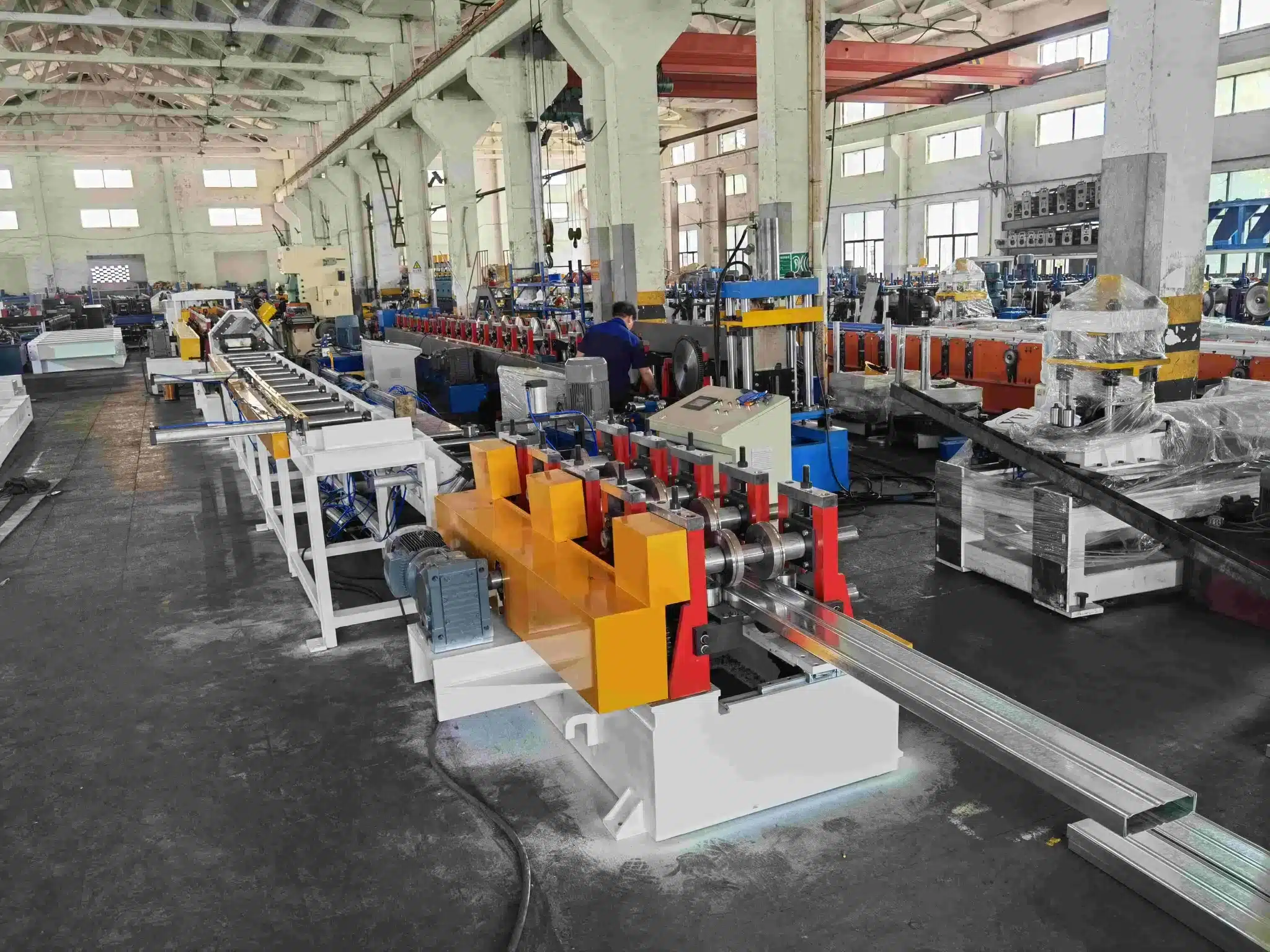
A perfiladora de vigas cajón Se trata de una línea de producción industrial de alta resistencia diseñada para fabricar vigas estructurales de sección rectangular cerrada. Esta línea transforma bobinas de acero plano en perfiles de viga cajón de alta resistencia mediante estaciones de rodillos secuenciales, y la sección final se cierra y asegura mediante un sistema de enclavamiento.
Este equipo es esencial para los fabricantes que producen montantes para estanterías de almacenamiento de alta resistencia, ya que ofrece:
- Velocidad de producción: 10-20 m/min
- Grosor del material: 1,5-3,0 mm
- Estaciones de formación: 16 para conformado por rodillos en sección C y 5 para unir
- Potencia del motor: 15 kW + 11 kW
- Material del rodillo: GCR 15 / CR12 Mov
- Rango de precios típico: 50,000−100,000+
- Vida útil de la máquina: Más de 20 años
Qué es la viga cajón para estanterías de almacenamiento
A viga cajón es un perfil de acero estructural con una sección transversal rectangular hueca. A diferencia de las vigas de sección abierta como los canales en C o las correas en Z, la forma de "caja" cerrada crea un bucle cerrado que proporciona una rigidez torsional y una capacidad de carga superiores. En los sistemas de estanterías para paletas, las vigas de caja sirven como vigas transversales horizontales de carga que conectan columnas verticales y soportan paletas directamente.
Cómo se fabrican las vigas cajón:
Las vigas cajón se fabrican típicamente a partir de dos perfiles en U entrelazados. Los bordes superior e inferior de estos perfiles se sueldan para formar una sección rectangular cerrada. A continuación, se sueldan conectores (clips) en ambos extremos, lo que permite fijar la viga a los montantes.
Dibujos de perfil de diferentes diseños de vigas cajón


Características clave de las vigas cajón:
| Característica | Viga cajón | Viga escalonada |
|---|---|---|
| Forma | Rectangular cerrado | Perfil de escalón soldado |
| Función estructural | Travesaños horizontales (vigas de soporte) | Vigas horizontales (vigas de estantería) |
| Rigidez torsional | ★★★ Excelente | ★★ Bueno |
| Capacidad de carga por pulgada cuadrada | Más alto | Moderado |
| Diseño de barra de soporte | En forma de U (externa, puede engancharse) | Estilo clip (integrado, sin interrupciones) |
| Compatibilidad con cubiertas de malla | Universal solamente | Universal + Paso + En el paso |
| Fabricación | 2 piezas de perfil en U, soldadas | Conformado por rodillos de una sola pieza |
| Disponibilidad en el mercado | Amplio stock disponible, plazos de entrega cortos. | Menos común, plazo de entrega más largo |
| Coste por metro | Más alto | Moderado |
Aplicaciones comunes:
- Vigas horizontales para estanterías de almacenamiento en almacén
- Sistemas automatizados de almacenamiento y recuperación (AS/RS)
- Estanterías para palets de alta resistencia
- Sistemas de estanterías industriales
- Estructuras de montaje solar
- Marco de construcción
Componentes de la perfiladora de vigas cajón
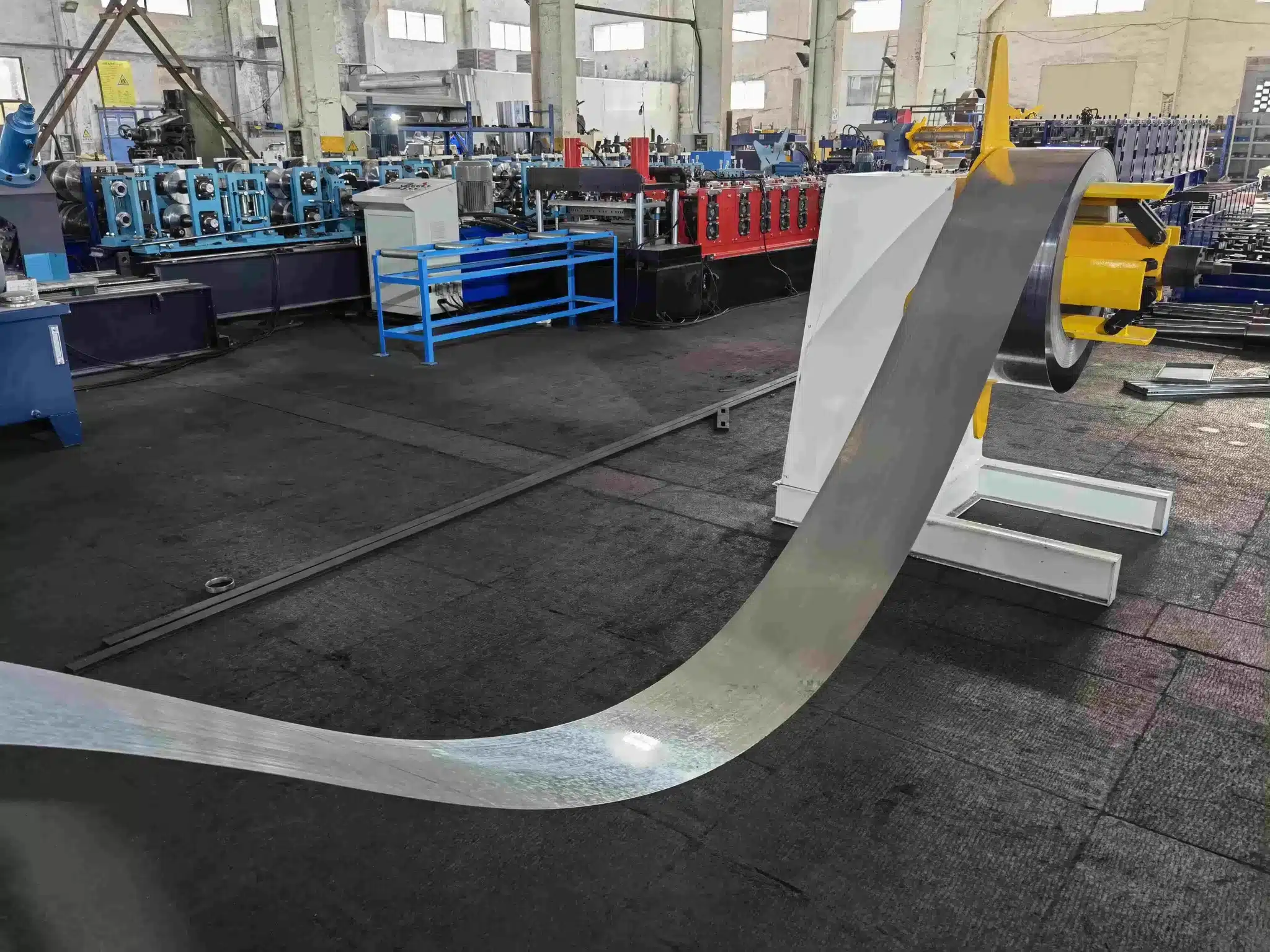
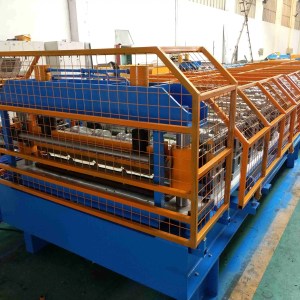
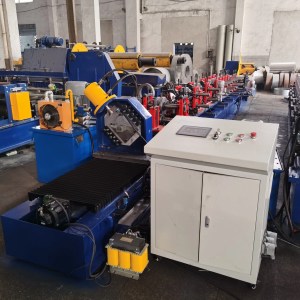
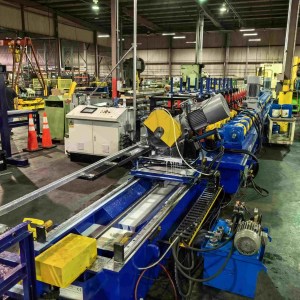
Las perfiladoras de vigas de caja constan normalmente de: desenrollador, alimentador-guía, perfiladora, cortadora, transportador-estante de volteo y autocerradora. Estos componentes colaboran para transformar la chapa metálica en vigas de caja uniformes de forma eficaz, garantizando la precisión y la uniformidad de la producción:
- Desenrollador: desenrolla chapas enrolladas, alimentando tiras planas a las siguientes etapas de una máquina de vigas cajón para una producción constante.
- Alimentador-Guiador: Alimenta y alinea la chapa desde el desenrollador hasta la laminadora, evitando los errores de alimentación y garantizando un procesamiento constante.
- Formador de rollos: Rodillos de precisión que conforman la chapa en el perfil de la viga cajón, garantizando secciones transversales uniformes y precisas.
- Cortador hidráulico: Corta secciones C laminadas a las longitudes deseadas, garantizando productos finales uniformes y precisos.
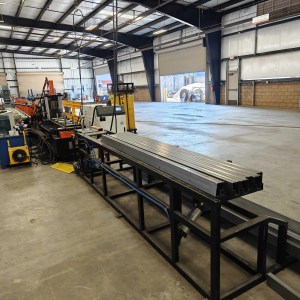
- Transportador y bastidor de volteo: Mueve las secciones C cortadas y las voltea, luego las empuja hacia la cosedora automática.
- Cerradora automática: Une los bordes de la viga cajón para formar un perfil cerrado y resistente, vital para el rendimiento estructural.
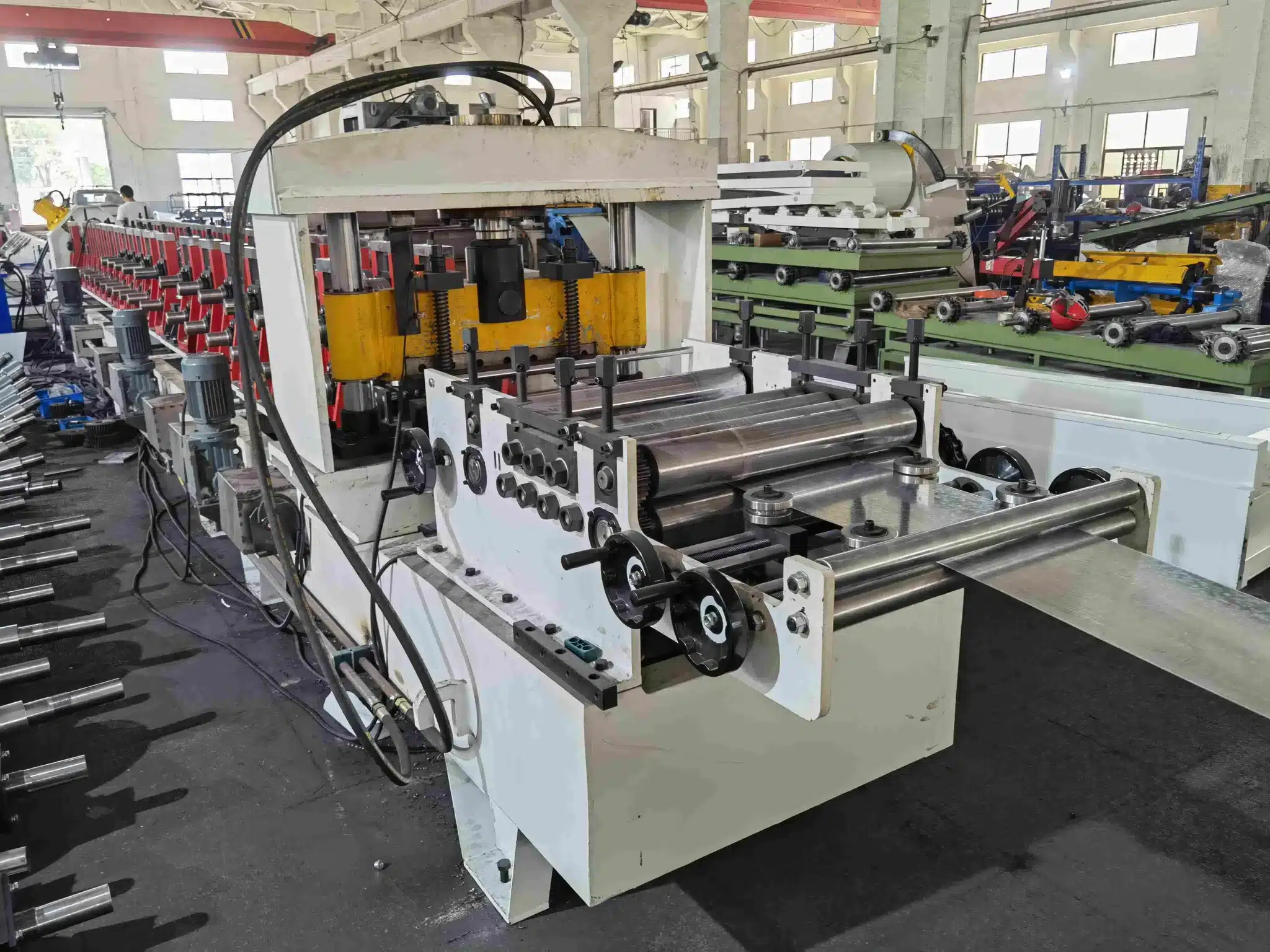
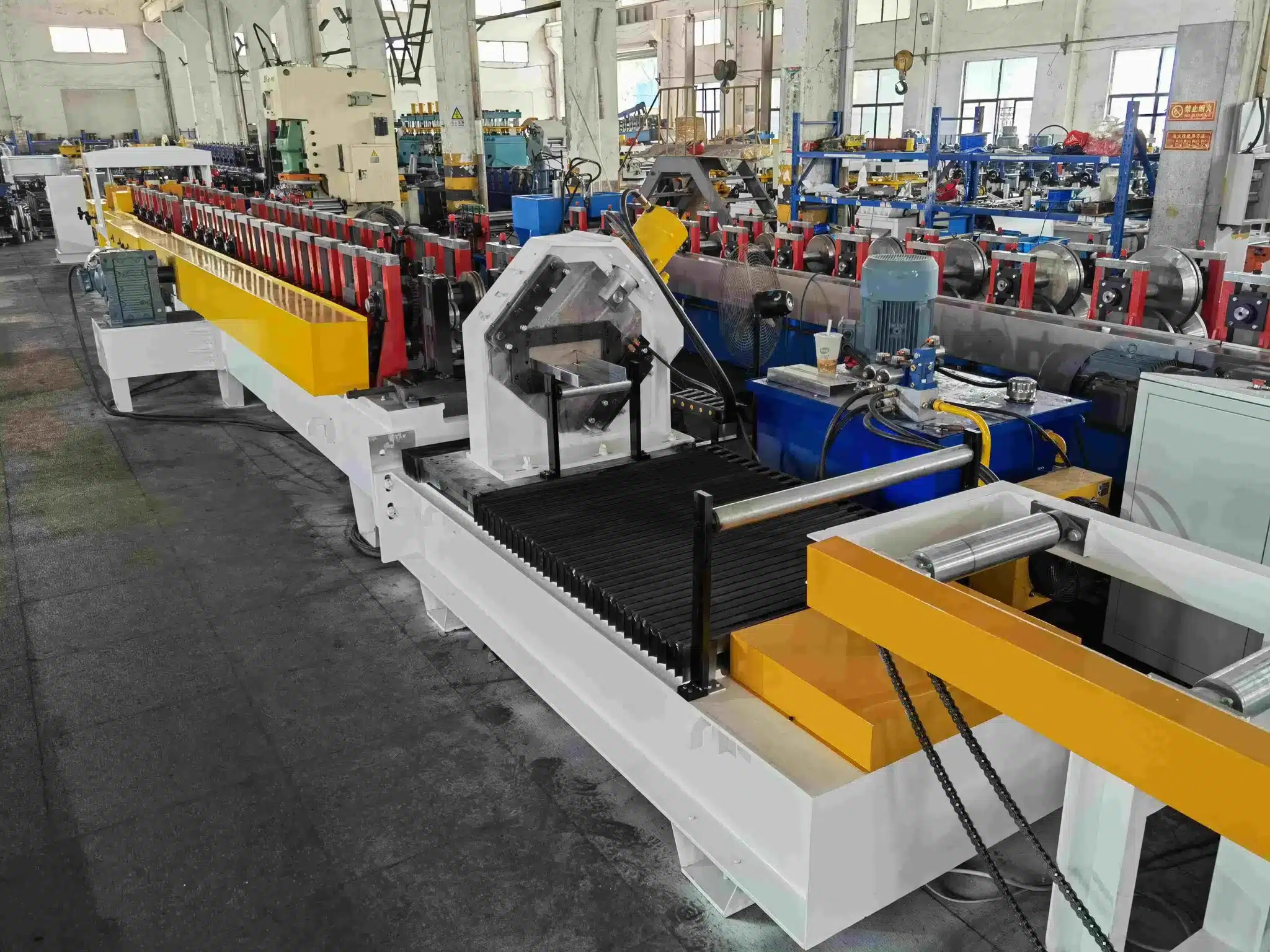
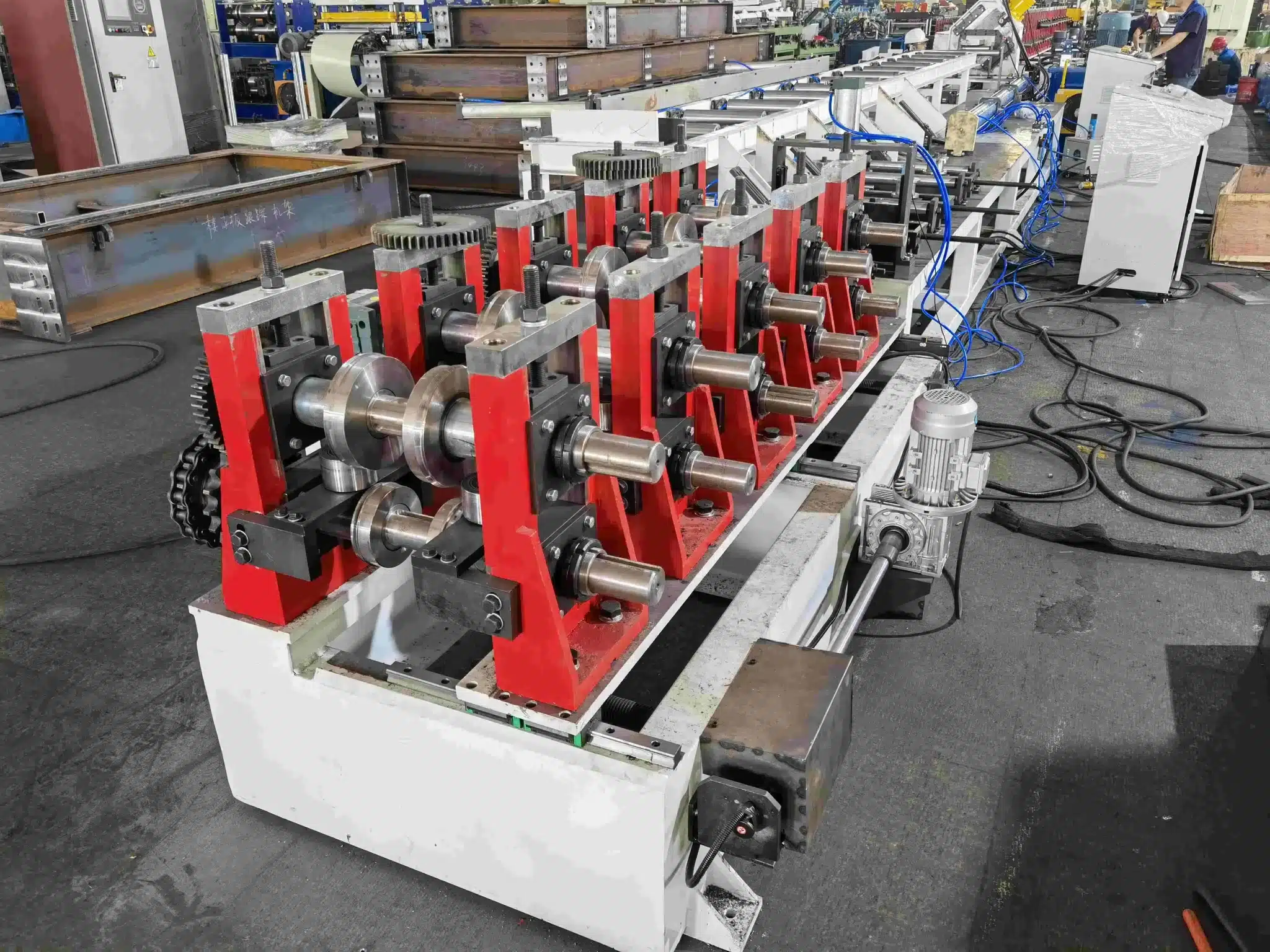
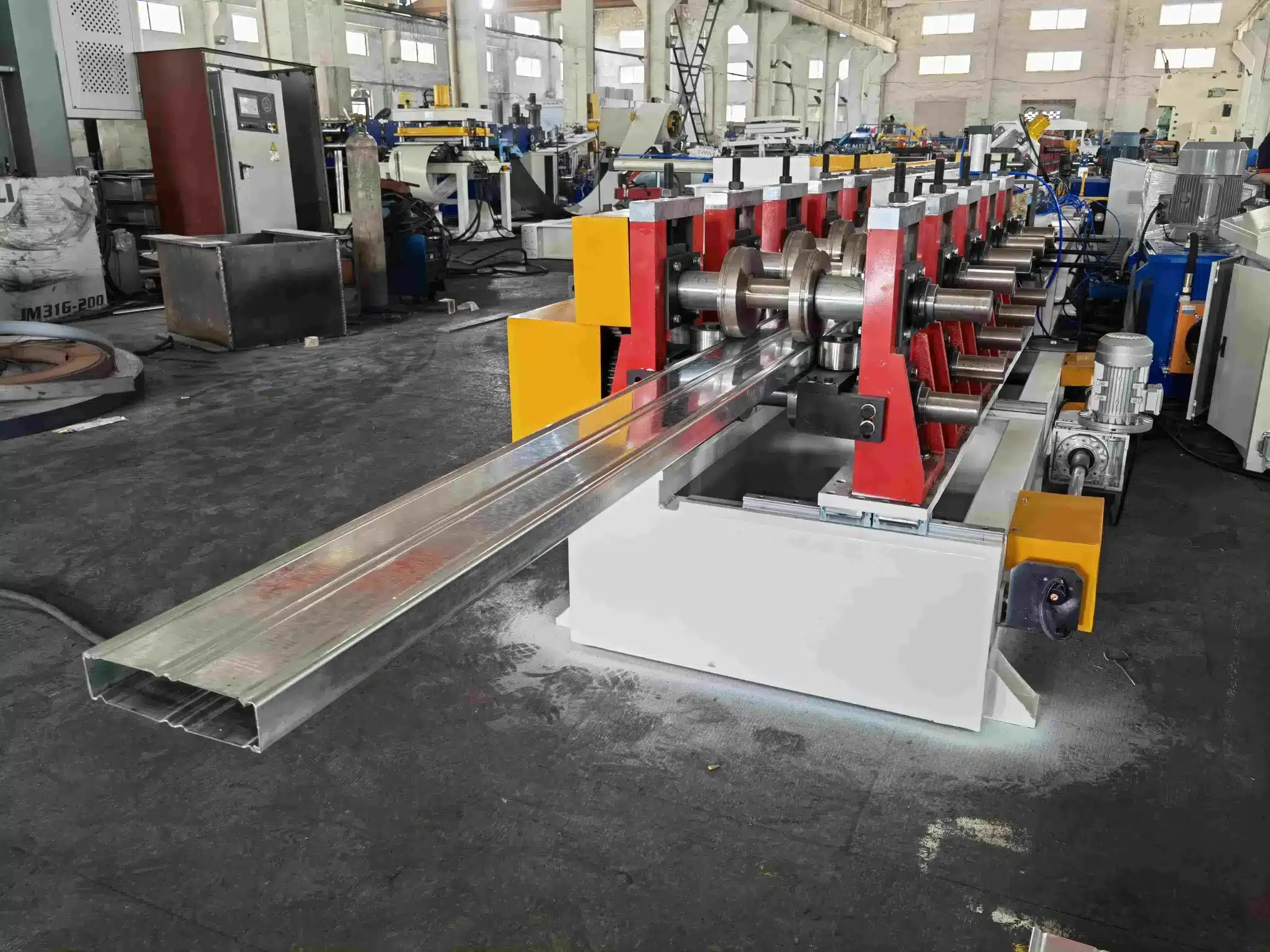

Tecnología de soldadura de conectores finales
Soldadora en línea para el conjunto de conector de extremo de viga de sección rectangular
En perfiladora de vigas cajón presenta un Soldadora de conectores de extremo en línea que suelda automáticamente los conectores de extremo (clips) al perfil de la viga cajón durante el proceso de conformado por rodillos. Esta estación de soldadura integrada elimina la necesidad de operaciones de soldadura secundarias.
Cómo funciona:
La soldadora en línea posiciona con precisión los conectores de los extremos en la viga cajón y aplica soldaduras de alta calidad para asegurar la conexión. Esto se realiza directamente en la línea de producción, lo que garantiza una calidad de soldadura uniforme y reduce los costos laborales.
Principales ventajas de la soldadura de conectores de extremo en línea:
| Característica | Sin soldador en línea | Con soldadora en línea |
|---|---|---|
| Método de soldadura | Procesamiento posterior manual | Automatizado en línea |
| eficiencia de producción | Inferior (operación secundaria) | Mayor (paso único) |
| Consistencia de la soldadura | Variable | Calidad uniforme |
| Requisitos de mano de obra | 1-2 trabajadores por turno | Reducido a solo monitoreo |
| Tiempo de ciclo | 5-10 segundos adicionales por pieza | Integrado |
Especificaciones del conector final:
- Patrón de agujeros: Estándar Estándares de la industria MHI
- Tamaños de orificio: 8 mm, 10 mm, 12 mm, 16 mm
- Tipos de conectores: Soportes planos, clips angulares, clips sísmicos
- Materiales: Acero galvanizado en caliente, acero inoxidable (opcional)

Especificaciones de la máquina perfiladora de vigas de sección rectangular
| Parámetro | Configuración estándar | Configuración de alta velocidad |
|---|---|---|
| Espesor del material | 1,5 mm – 3,0 mm | 1,5 mm – 3,0 mm |
| Ancho de la tira | 80 mm – 160 mm | 80 mm – 160 mm |
| Fuerza de fluencia | 235-345 MPa (blando) / 550-700 MPa (totalmente duro) | 235-345 MPa (blando) / 550-700 MPa (totalmente duro) |
| Velocidad de formación | 15-20 m/min | 20-30 m/min |
| Tipo desenrollador | Manual | Automático |
| Transmisión | Cadena y piñón | Caja de cambios y junta universal |
| Material del rodillo | IGC 15 | CR12 Movimiento (D2) |
| Tipo de soportes | Placas de acero soldadas | Hierro fundido |
| Abriéndonos paso | Corte hidráulico estacional | Corte hidráulico volante |
| Fuente de alimentación | 380 V, 50 Hz | 415 V, 50/60 Hz / 480 V, 60 Hz |
| Estaciones de rodillos | 12-16 estaciones | 12-16 estaciones |
| Sistema de control | PLC + HMI | PLC + HMI (Siemens, Schneider o Delta) |
| Proceso de dar un título | CE | CE / ISO 9001 |
Configuraciones opcionales:
- Estación de punzonado hidráulico en línea para orificios de soportes
- Perfiladora de doble rodillo con ajuste de ancho motorizado
- Sistema automático de apilamiento y embalaje
- Sistema automático de soldadura de conectores finales
¿Por qué elegir Beli Rollforming?
Beli Rollforming frente a otras fábricas chinas frente a fabricantes estadounidenses/europeos
| Factor | Beli Rollforming | Otras fábricas chinas | Fabricantes de EE. UU. y la UE |
|---|---|---|---|
| Gama de precios | 50,000−100,000 | 30,000−60,000 | 150,000−300,000+ |
| Plazo de entrega | 60-90 días | 45-120 días | 120-180 días |
| Personalización | Personalización completa | Opciones limitadas | Personalización completa |
| Control de calidad | Certificado ISO, conforme a la normativa CE | Variable | Certificado ISO |
| Piezas de repuesto | Entrega rápida | Entrega lenta | Rápido pero caro |
| Apoyo técnico | Instalación in situ incluida | Limitado | Servicio de pago |
| Experiencia en exportación | Más de 20 países, desde 2008. | Variable | Enfoque nacional |
| Soporte de idiomas | Inglés, varios idiomas | Normalmente solo para chinos | Idioma local |
Por qué Beli Rollforming destaca:
Más de 18 años de experiencia en exportación. – Desde 2008, hemos realizado envíos Máquinas perfiladoras para perfiles logísticos a más de 10 países en todo el mundo, incluidos Estados Unidos, Australia y el sudeste asiático.
Soluciones integrales llave en mano – Nuestra máquina perfiladora de vigas de sección rectangular incluye no solo la perfiladora, sino también desenrolladora, alimentador, sistema de sellado, cortadora hidráulica, apiladora y soldadora en línea.
Condiciones de pago flexibles – Aceptamos cartas de crédito, transferencias bancarias y ofrecemos opciones de pago a plazos para compradores cualificados.
Soporte técnico de por vida - Todo máquinas perfiladoras Incluye suministro de repuestos de por vida y asistencia técnica remota.
Ventaja de la viga cajón - El perfiladora de vigas cajón Produce vigas con una rigidez torsional superior para estanterías de alta resistencia, zonas sísmicas y aplicaciones AS/RS de gran altura donde la capacidad de carga máxima es fundamental.
Vídeo: Máquina perfiladora de vigas de sección rectangular en acción
Este vídeo muestra el proceso de producción completo de nuestra máquina perfiladora de vigas de sección rectangular, desde la carga de la bobina hasta el apilamiento de la viga terminada con conectores soldados en los extremos.
Vídeo con los momentos más destacados:
- Desenrollado y alimentación automáticos de la bobina
- Proceso de conformado por rodillos secuencial
- Corte con cizalla volante hidráulica
- Costura entrelazada en acción
- Transporte automático
- Sistema de soldadura robótica y conector final de alimentación automática
- Apilamiento automático


Preguntas frecuentes
Una máquina perfiladora de vigas cajón es una línea de producción industrial de alta resistencia que desenrolla, nivela, perfora y da forma continuamente a bobinas de metal planas para convertirlas en perfiles rectangulares o cuadrados huecos y cerrados, comúnmente conocidos como vigas cajón.
La aplicación más común para estos perfiles es en la industria de manejo de materiales, específicamente como vigas transversales horizontales de soporte de carga en sistemas de estanterías para palets. También se utilizan ampliamente en estructuras metálicas, construcción y estanterías de alta resistencia.
Para formar una caja cerrada es necesario unir los bordes de la tira de metal. Normalmente, las máquinas logran esto utilizando uno de dos métodos:
Enclavamiento (enclavamiento con remaches): La máquina da forma a los bordes con un perfil específico de labio y ranura, y luego utiliza rodillos de alta presión para doblarlos y unirlos formando una costura mecánica ajustada.
Soldadura: La línea está equipada con una soldadora de inducción de alta frecuencia (HF) integrada o una soldadora de costura continua que fusiona permanentemente los dos bordes al unirse, creando un tubo sólido y sin costuras.
Debido a que las vigas cajón deben soportar enormes cantidades de peso, estas máquinas están construidas para manejar acero al carbono de alto límite elástico, acero laminado en frío y acero galvanizado. El espesor típico del material varía desde 1,5 mm a 3,0 mm (calibre aproximado de 16 a 11).
Sí. Dado que los sistemas de estanterías requieren vigas de diferentes alturas y anchos (por ejemplo, de 80 mm a 160 mm de altura), estas máquinas son altamente ajustables. A menudo se construyen como formadoras de rodillos dúplex, Esto significa que uno de los lados de los soportes de rodillos está montado sobre una base móvil. El operario puede utilizar un sistema motorizado para ampliar o reducir la distancia entre los rodillos y así producir vigas de diferentes tamaños sin tener que desmontar y volver a montar todas las herramientas.
La mayoría de las líneas de vigas de caja incorporan un sistema en línea. estación de punzonado hidráulico Ubicada entre la desenrolladora/aplanadora y la sección de conformado por rodillos. Esta estación perfora automáticamente los orificios necesarios para los pasadores de seguridad o las ranuras para los conectores en la tira de acero plana antes de que se pliegue para formar una caja.
Las velocidades de producción estándar generalmente oscilan entre De 10 a 20 metros por minuto (aproximadamente de 33 a 65 pies por minuto). La velocidad exacta depende en gran medida del espesor del acero, la frecuencia de punzonado requerida y el método utilizado para cerrar la viga (soldadura o entrelazado).
El corte de un perfil hueco de paredes gruesas requiere un mecanismo especializado y de alta resistencia. Estas máquinas utilizan un cizalla volante hidráulica o una cortadora de seguimiento equipada con una matriz de corte multipieza fabricada a medida. La matriz sujeta firmemente el exterior de la caja mientras una cuchilla corta el metal, asegurando un corte limpio sin deformación ni aplastamiento de los extremos huecos.
El retorno de la inversión para la perfiladora de vigas cajón depende del volumen de producción y de los precios del mercado local, pero la mayoría de los fabricantes ven una recuperación de la inversión en De 12 a 24 meses. Una sola máquina que funcione a 15-20 m/min puede producir miles de metros de viga cajón por turno. Para contextualizar, el precio inicial de una máquina de calidad ronda los 72,000,wHolale a finished box besoy lenCEun generate 500.000-$1.000.000+ en ingresos anuales dependiendo de la escala.
Instalación de un perfiladora de vigas cajón y la puesta en marcha normalmente lleva De 2 a 3 semanas en el lugar, incluyendo:
- Preparación de la base y nivelación mecánica
- Conexión eléctrica e hidráulica
- Prueba piloto con materiales de muestra
- Formación de operadores
- Inspección de calidad final
Beli Rollforming incluye Instalación y puesta en marcha in situ En el paquete estándar, con ingenieros presentes hasta que la línea alcance una producción estable.
Mantener el perfiladora de vigas cajón Es sencillo y mantiene la línea funcionando al máximo rendimiento:
- A diario: Inspección visual de los rodillos, comprobación de los niveles de aceite, eliminación de material de desecho.
- Semanalmente: Lubricar los cojinetes de rodillos, inspeccionar las matrices de punzonado, comprobar la tensión de la correa.
- Mensual: Inspeccione el desgaste de los rodillos, compruebe la alineación, verifique la presión hidráulica.
- Anualmente: Revisión completa del sistema, sustitución de rodillos desgastados, recalibración de las estaciones de conformado.
En Sistema de control PLC + HMI Registra datos de funcionamiento para ayudar a predecir las necesidades de mantenimiento antes de que se produzcan fallos.
Consulta la guía completa: Guía de mantenimiento preventivo para el conformado por rodillos
Sí. El perfiladora de vigas cajón Beli Rollforming ofrece personalización completa de:
- Dimensiones de la viga: Alturas (80-300 mm), anchos (50-100 mm) y espesores (1,0-3,5 mm) personalizados.
- Geometría del perfil: Formas rectangulares cerradas, cuadradas o de sección cerrada personalizadas.
- Conectores de extremo: Patrones de orificios, tipos de soportes y geometrías de conectores personalizados según los estándares de MHI o del fabricante de equipos originales (OEM).
- Cierre de costura: Enclavamiento (estándar) o soldadura por alta frecuencia (opcional) según los requisitos de resistencia.
Los perfiles personalizados normalmente requieren un Plazo de entrega de herramientas de 3 a 5 semanas Además de la entrega estándar de la máquina.
Conclusión
En perfiladora de vigas cajón Representa una inversión de gran valor para los fabricantes de estanterías para palets, sistemas automatizados de almacenamiento y recuperación (AS/RS) y almacenamiento de alta resistencia. Su perfil de sección cerrada ofrece una rigidez torsional y una capacidad de carga superiores, lo que la convierte en la opción preferida para sistemas de gran altura y aplicaciones sísmicas.
En comparación con las vigas escalonadas, las vigas cajón ofrecen una mayor capacidad de carga por pulgada cuadrada, una mayor disponibilidad en el mercado y plazos de entrega más cortos.
¿Listo para comenzar?
Comparta las especificaciones de su haz (altura, ancho, grosor, salida objetivo) y le enviaremos un informe detallado. perfiladora de vigas cajón propuesta dentro 48 horas. Se incluye la instalación in situ, la puesta en marcha y el soporte técnico de por vida.
Solicitar presupuesto | Ver máquina de viga escalonada | Ver video
Registro de cambios y próxima revisión
2025-09-28 | 1.0 | Subir la página del producto |
2026-04-24 | 1.1 |
|
Siguiente reseña: 24/07/2026 (Revisión trimestral: verificar la exactitud de las especificaciones técnicas, actualizar los precios si es necesario, agregar nuevos temas de preguntas frecuentes en función de las consultas de los clientes)
Valoraciones
No hay valoraciones aún.