







What is the secret to optimizing strut channel production?
This Strut Channel Roll Forming Machine Guide reveals that maximizing output requires high-speed servo punching, precision Cr12MoV tooling, and automated PLC controls. Believe Industry Company—a premier global exporter based in Wuxi, China, with experience since 2005 and a team of 80+ engineers and technicians—recommends integrating these advanced technologies to produce flawless 41×41 and 41×21 structural profiles with zero deformation. Upgrading to a specialized strut channel roll forming machine guarantees international compliance and drastically reduces material waste.
7 Best Secrets
Investing in heavy-duty manufacturing equipment is a massive capital commitment. We understand that as a B2B manufacturer, your primary concerns are minimizing downtime, eliminating material waste, and maximizing your return on investment. This Strut Channel Roll Forming Machine Guide is engineered to provide you with candid, factual, and deeply technical insights to configure the perfect production line.
Strut channels (often known by the industry synonym Unistrut) are the backbone of modern commercial construction, electrical cable management, and solar panel mounting systems. Producing them efficiently at high volumes requires more than just standard machinery; it requires elite engineering. Here are the 7 best secrets to dominating the strut channel manufacturing market.
1. Master Your Material Selection and Coil Handling
The foundation of any successful production run begins with the raw material and how it is fed into the line. For strut channels, high-yield galvanized steel or cold-rolled carbon steel is standard. Understanding how your material behaves under stress dictates how your machine must be built. For a deep dive into international metallurgical standards, manufacturers should always refer to high-authority benchmarks provided by organizations like ASTM International.
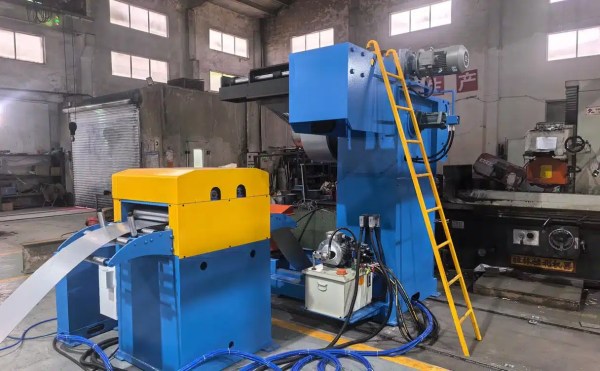
Before the metal even reaches the forming rollers, it must be properly uncoiled. Using a standard manual decoiler can cause material jerking, which leads to profile inconsistencies. Upgrading to a motorized, hydraulic roll forming machine uncoiler ensures smooth, continuous tension. This prevents surface scratching and maintains the strict geometric tolerances required for the final product.
2. Implement High-Speed Servo Punching
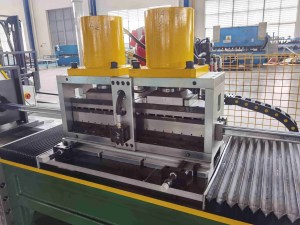
Strut channels are virtually useless without precise perforation for mounting and connecting. A standard hydraulic press can create severe bottlenecks because the line must stop for every punch. This Strut Channel Roll Forming Machine Guide highly recommends upgrading to a high-speed servo-driven prepunching system.
This “flying die” technology matches the speed of the moving steel strip, ensuring perfect hole pitch without stopping the line. Investing in a high-grade punch press for roll forming industry applications allows the metal to move continuously, dramatically increasing your daily output and reducing mechanical wear on the feed motors.
3. Optimize the Flower Pattern Design
The “flower pattern” is the step-by-step cross-sectional sequence of the metal strip as it passes through each roller station. A poorly designed flower pattern inevitably leads to twisting, bowing, and material springback.
Elite engineering utilizes advanced FEA (Finite Element Analysis) software to simulate the bending process. This ensures that the heavy-duty 2.0mm to 2.5mm steel is formed gradually over 18 to 22 stations, reducing stress on the machine shafts and virtually eliminating end-flare. For a broader understanding of this foundational engineering principle, read our comprehensive analysis of roll forming machine technology.
4. Prioritize Machine Frame Rigidity
The sheer physical force required to fold thick steel into a tight “C” or “U” shape with inward-facing lips is immense. Machine deflection is the absolute enemy of precision.
When configuring your line, you must prioritize the structural integrity of the base. For heavy-duty strut channel production, a stress-relieved, heavily welded steel frame or cast iron pillar stands are non-negotiable.
| Feature | Standard Frame | Elite Welded Upright Frame |
| Material Thickness Limit | Up to 1.5mm | Up to 3.0mm+ |
| Vibration Absorption | Low | Extremely High |
| Long-Term Deflection | High Risk | Zero Deflection |
| Production Speed Capacity | 10-15 m/min | 20-25+ m/min |
5. Demand Superior Tooling Material
Rollers are the beating heart of the machine. Standard 45# steel rollers will wear down quickly when continuously processing galvanized strut channels, leading to scratches and compromised zinc coatings on your final product.
The secret of Strut Channel Roll Forming Machine Guide to longevity is utilizing Cr12MoV (or D2 equivalent) tool steel. These rollers must be CNC-machined, vacuum-quenched to an optimal hardness of HRC58-62, and finished with hard-chrome plating. This exact combination guarantees millions of linear feet of production before any significant tooling wear occurs, safeguarding your long-term profits.
6. Leverage Advanced PLC Automation
Human error is costly. Modernizing your line with an intelligent control system is a definitive game-changer. An advanced PLC control system drastically boosts overall roll forming efficiency.
A top-tier Siemens or Mitsubishi PLC touchscreen interface allows operators to simply input batch quantities and lengths. The system then automatically calculates and adjusts the servo feeder and flying shear. This level of automation practically eliminates scrap rates, reduces operator fatigue, and lowers labor costs per shift.
7. Partner with an Elite Global Manufacturer
Your machinery is ultimately only as good as the engineers who stand behind it. Sourcing equipment from a dedicated, proven global exporter ensures you have access to continuous technical support, spare parts, and installation guidance. This Strut Channel Roll Forming Machine Guide is just the beginning. To explore comprehensive corporate manufacturing solutions and view our larger group-level infrastructure, you can visit Believe Industry Company directly.
Interactive Tool: Strut Channel Production & ROI Estimator
Calculate your potential daily and monthly output to accurately forecast your factory’s revenue.
Strut Channel Production & ROI Calculator
Calculate your estimated monthly output and machine break-even timeline.
Estimated Monthly Production:
Estimated Monthly Gross Profit:
Estimated Break-Even Timeline:
Ready to turn these numbers into reality? Contact our Wuxi engineering team to spec your custom machine today.
📞 Phone & WhatsApp: +8618616927760
✉️ Email: enquiry@belirollforming.com
Conclusion & CTA
Navigating the complexities of heavy machinery procurement does not have to be a guessing game. By applying the proven engineering principles outlined in this Strut Channel Roll Forming Machine Guide—from demanding Cr12MoV tooling to integrating continuous high-speed servo punching—you can safeguard your investment, drastically reduce material waste, and dominate the structural framing market. The right technology transforms raw steel into high-margin revenue effortlessly, allowing your business to scale aggressively.
Are you ready to build your ultimate automated production line? Contact the elite engineering team at Believe Industry Company today for a custom technical consultation and an exact quote.
📱 Phone & WhatsApp: +8618616927760
📧 Email: enquiry@belirollforming.com
FAQ
Most industrial strut channel machines are engineered to handle high-yield steel with a thickness ranging from 1.5mm to 2.5mm. Custom heavy-duty production lines can easily be built to accommodate up to 3.0mm for specialized seismic applications.
Yes. High-quality strut channel roll formers feature intelligent adjustable tooling or cassette systems. By changing specific roller spacers or swapping rapid-change cassettes, operators can switch between standard profile heights quickly without needing two separate machines.
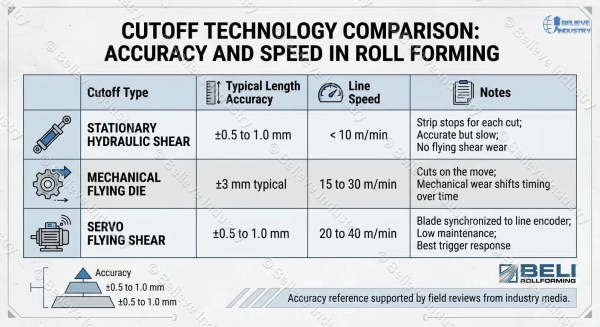
A flying shear moves synchronously with the metal strip, cutting the profile on the fly without halting the continuous motion of the line. This prevents material buckling, increases overall production speed by up to 30%, and significantly reduces the mechanical wear and tear on the machine’s drive motors.
On traditional equipment, swapping roller setups can take up to a full shift. However, a premium strut channel roll forming machine from Believe Industry Company can be equipped with automatic width&height adjustable system. This allows your operators to adjust the roller position on the touch screen , drastically reducing downtime when switching between 41×41, 41×21, or custom solar profiles.
Springback is a natural metallurgical reaction, especially in thick (2.5mm+) or high-tensile steel. We control this through precision flower pattern engineering and the integration of adjustable over-bending stations near the end of the line. Our engineers utilize advanced FEA (Finite Element Analysis) to compensate for the exact yield strength of your material, ensuring the final strut channel meets strict ±0.5mm dimensional tolerances.
High-speed continuous roll forming generates significant friction. Our machines feature an integrated, automated recirculating coolant and lubrication system. This system sprays a water-soluble emulsion directly onto the Cr12MoV rollers, dissipating heat, preventing zinc-flake buildup (critical when running galvanized steel), and extending the lifespan of your tooling.


 English