









Why PLC Control Matters for Roll Forming Efficiency?
When it comes to optimizing roll forming operations, one technology is non-negotiable for manufacturers serious about roll forming efficiency: PLC control. But why does PLC control matter so much for roll forming? From reducing material waste to minimizing downtime, Programmable Logic Controllers (PLCs) transform how roll forming machines operate—making them faster, more precise, and easier to scale.
In this guide, we’ll break down everything you need to know about PLC control in roll forming, including its benefits, applications, and why choosing a PLC-equipped machine from Beli RollForming is the smartest move for your business.
What Is PLC Control in Roll Forming?
PLC control refers to using a Programmable Logic Controller—a digital computer designed for industrial automation—to manage a roll forming machine’s functions. Unlike manual or relay-based systems, PLCs execute pre-programmed logic to control tasks like:
Material feeding
Roll stand adjustment for different width profiles( e,g., cable tray roll forming machine, c purlin roll forming machine, strut channel roll forming machine)
Speed regulation
Production monitoring and aleart message while operation.
Think of a PLC as the “brain” of your roll forming machine. It takes input from sensors (e.g., for limit switch, laser sensor) and outputs commands to actuators (e.g., motors or valves) to ensure consistent, high-quality production.

Types of PLC Systems Used in Roll Forming
Not all PLCs are created equal—especially for roll forming. Manufacturers typically choose between two types:
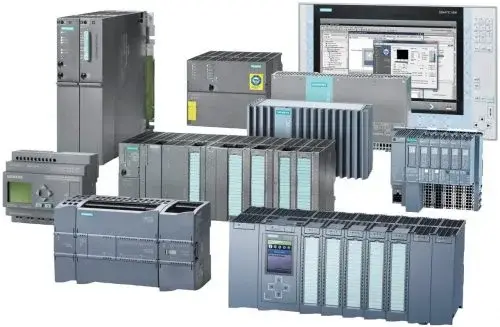
1. Modular PLCs
These systems use separate modules for inputs, outputs, and processing. They’re ideal for large-scale roll forming lines where scalability and customization are key. Brands like Allen-Bradley and Siemens offer modular PLCs that integrate seamlessly with Beli’s machines.
2. Compact PLCs
Smaller and more affordable, compact PLCs are perfect for small to medium-sized roll forming operations. They’re easy to program and maintain, making them a popular choice for startups or businesses expanding their production capacity.
For a deeper dive into PLC types, check out Rockwell Automation’s guide to PLC Automation ↗︎
Key Features of PLC Control That Boost Roll Forming Efficiency
Why does PLC control matter for roll forming efficiency? The answer lies in its game-changing features:
1. Real-Time Monitoring & Adjustments
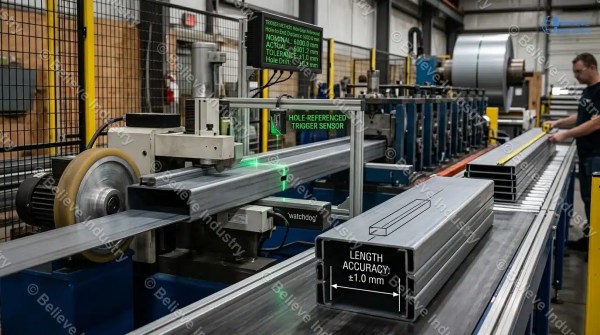
PLCs track production metrics (e.g., speed, material usage, part dimensions) in real time. Operators can quickly adjust settings to reduce waste—for example, tweaking roll speed if material thickness varies.
2. Programmable Logic for Consistency
Once programmed, PLCs execute the same logic every time—eliminating human error and ensuring uniform part quality. This reduces scrap rates by up to 30% compared to manual controls.
3. Predictive Maintenance Alerts
Modern PLCs integrate with IoT sensors to monitor machine health. They send alerts for issues like cutter balde have not been back to the top position, encoder tolerace is bigger, etc.
4. Remote Access & Control
PLCs allow operators to monitor and adjust machines from anywhere—ideal for multi-site facilities or on-call maintenance teams.
These features combine to make PLC-controlled roll forming machines far more efficient than their traditional counterparts.
How to Choose and Buy a PLC-Controlled Roll Forming Machine
Ready to invest in PLC control for your roll forming operation? Here’s what to consider:
1. Match PLC Capabilities to Your Needs
If you make complex parts, choose a modular PLC with advanced programming features. For simple parts, a compact PLC will suffice.
2. Prioritize Vendor Support
Look for manufacturers (like Beli) that offer training, 24/7 technical support, and easy access to spare parts.
3. Ensure Integration
Make sure the PLC system works with your existing ERP or MES software. This streamlines data flow and reduces administrative work.
Check out Beli’s roll forming machine buying guide↗︎for more tips
Why Choose Beli RollForming for PLC-Controlled Solutions?
When you choose Beli RollForming for your PLC-controlled roll forming machine, you get more than just equipment—you get a partner in roll forming fficiency:
1. Expertise You Can Trust
Our team has designed and built over 100 PLC-controlled roll forming machines for clients worldwide.
2. Custom Solutions
We tailor our PLC systems to your specific part requirements—whether you’re making automotive components or construction materials.
3. Unmatched Support
From installation to ongoing maintenance, Beli offers 24/7 technical support and training to ensure your team maximizes efficiency.
4. Energy-Efficient Designs
Our PLC-controlled machines use less energy than competitors—cutting your operating costs over time.
Explore our PLC-controlled machines: Beli RollForming Product Line↗︎
Final Thoughts: Why PLC Control Matters for Your Roll Forming Business
PLC control isn’t just a “nice-to-have”—it’s a necessity for manufacturers looking to stay competitive in today’s market. By investing in a PLC-equipped machine from Beli RollForming, you’ll:
Reduce material waste and downtime
Increase output and consistency
Scale your business with ease
Ready to take your roll forming efficiency to the next level? Contact Beli RollForming today to learn more about our PLC-controlled solutions.
Call us: +86-186-1692-7760
Email us: enquiry@beliforming.com