









Roll forming is far more than a simple bending process; it is a highly specialized and continuous metal fabrication technique essential for modern, large-scale manufacturing. It involves feeding a long strip of coiled metal through successive sets of precisely aligned rolls, which gradually bend the material until the final desired cross-section profile is achieved. This article dives deep into the strategic importance of high volume roll forming and the pivotal role played by the high speed roll forming machine in today’s demanding industrial landscape.
What is a Roll Forming Machine? (Target Expansion: Detailed Mechanics and Tooling)
A roll forming machine, at its core, is an assembly of specialized equipment designed for cold-forming metal. The defining characteristic is the progressive nature of the bending operation. Instead of forming a profile in a single, heavy press stroke, the machine uses multiple passes, with each roll stand contributing a small, controlled degree of angle and shape change.
This gradual method offers significant technical advantages:
Stress Management: By distributing the forming stress across many stations, the risk of material tearing, wrinkling, or spring-back is minimized. This is critical when dealing with high-strength or thin-gauge materials.
Precision Tooling: The heart of the machine lies in its tooling—the contoured rolls. These are typically manufactured from high-grade steel (often D2 or similar tool steels), precision machined, and hardened to withstand the immense pressures and wear inherent in high volume roll forming. The design of these rolls is complex, requiring specialized software and engineering expertise to calculate the flower pattern—the geometric path the metal takes from flat strip to finished profile.
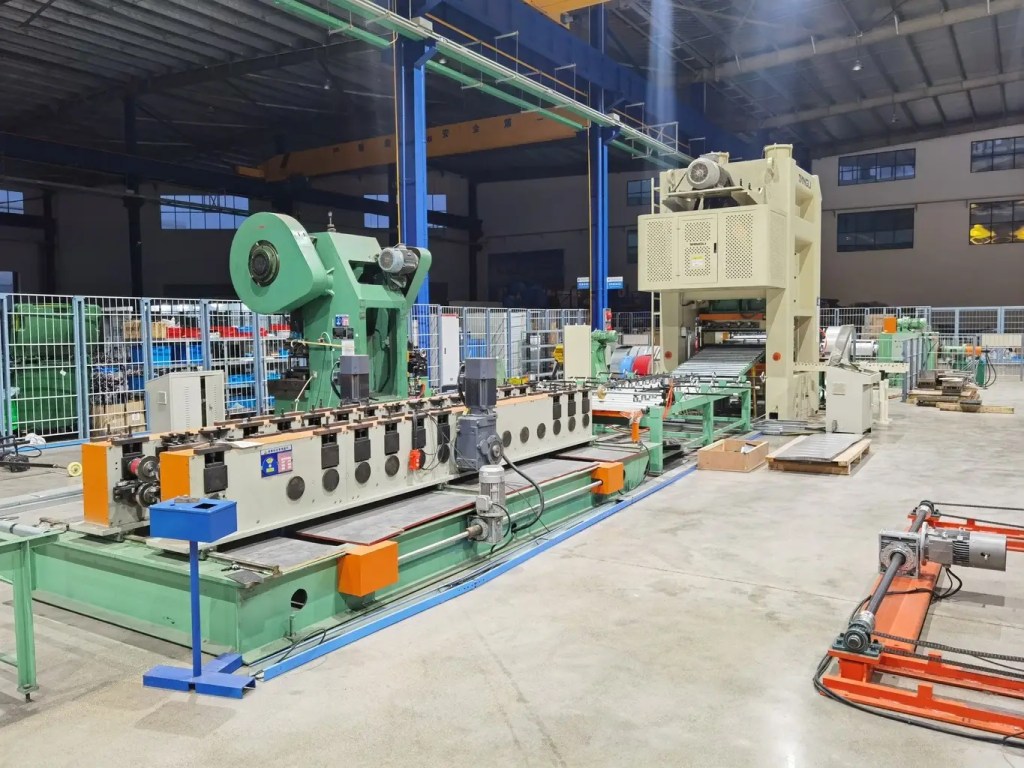
Machine Components: A typical line includes a coil handler/uncoiler, a leveling/straightening unit (to remove coil set), the main roll stands (often 10 to 40 stations depending on profile complexity), a flying shear or cutoff unit, and a run-out table or stacking system.
For engineers seeking detailed technical understanding, analyzing the complex forces at play is essential. We recommend consulting our specialized resource on the compressive analysis of roll forming machine, which discusses how material flow and internal stress distribution are managed during high-speed operation.
Why High Volume Roll Forming? (Target Expansion: Economic & Operational Drivers)
The decision to adopt a high volume roll forming strategy is driven primarily by compelling economic and operational necessities that favor speed, consistency, and scale. When production demands exceed the capacity of traditional press braking or stamping, a dedicated roll forming line, particularly a high speed roll forming machine, becomes indispensable.
Economic Drivers:
Lowest Unit Cost: The most significant advantage is the drastic reduction in cost per piece. While the initial investment in tooling and a sophisticated line is high, the sustained, high output rate means the capital cost is amortized over millions of parts, pushing the marginal cost of production to an absolute minimum.
Minimal Scrap Loss: Roll forming is highly material-efficient. Since the process uses a continuous strip, scrap is primarily limited to the initial and final ends of the coil and minor punching slugs (if inline punching is used), leading to superior material utilization compared to stamping or progressive die methods.
Labor Efficiency: A fully automated high speed roll forming machine requires minimal operator intervention once set up. One or two operators can manage an entire line producing thousands of feet of product per hour, significantly lowering labor costs per unit compared to manual press braking operations.
Operational Drivers:
Exceptional Production Speed: Modern high speed roll forming machines can operate at speeds ranging from 100 to over 300 feet per minute (FPM), or even faster for simpler profiles. This speed is unmatched by other continuous metal forming methods.
Infinite Length Capability: Unlike stamping, roll forming can produce profiles of virtually unlimited length, restricted only by transportation limits, making it ideal for construction beams, rail components, and long automotive side members.
Reliable Consistency: The fixed geometry of the hardened rolls ensures that the 10,000th part is dimensionally identical to the 1st, guaranteeing the quality and interchangeability required for demanding industries like aerospace and automotive.
Compare High Volume Roll Forming and Lower or Medium Volume Roll Forming (Target Expansion: Machine Design and Flexibility)
The fundamental difference between high volume and lower volume roll forming lies not just in the quantity of parts, but in the design, robustness, and automation level of the machinery itself.
| Feature | High Volume Roll Forming (The High Speed Roll Forming Machine) | Lower/Medium Volume Roll Forming |
| Machine Frame & Drive | Heavy-duty, rigid welded frames; high-horsepower gearboxes and centralized drive systems for continuous, high-speed stress. | Lighter frames; simpler drive systems (e.g., chain drive) adequate for lower torque demands. |
| Tooling Material | Premium tool steels (D2, M2) with specialized surface treatments (e.g., TiN coating) for maximum wear resistance and lifespan. | Less expensive tool steels (e.g., 4140) or aluminum, suitable for intermittent use. |
| Automation & Inline Processes | Comprehensive automation: inline piercing, punching, welding, advanced flying cut-offs (shear or saw), and robotic stacking. Integrated with sophisticated PLC controls. | Often uses off-line punching or simple static cut-offs; more reliance on manual loading/unloading. |
| Flexibility | Lower profile change flexibility; changeover can take hours or even a full shift, thus requiring extremely long production runs to justify downtime. | Higher flexibility; quick change tooling (rafting or cassette systems) allows for fast changeovers to accommodate smaller batch sizes. |
| Cost Justification | Justified by millions of parts over several years. | Justified by niche markets, prototyping, or varied product mixes. |
For companies with predictable, massive demand (e.g., solar panel mounting or drywall studs), the sacrifice in flexibility for the massive gains in speed and cost reduction offered by a high speed roll forming machine is the clear winning strategy.
Application of High Volume Roll Forming (Target Expansion: Sector Specific Examples)
The capabilities of high volume roll forming have fundamentally shaped several key global industries by allowing for the mass production of complex, long, and structurally vital components.
Automotive Industry: The need for lightweighting and enhanced safety drives the use of high-strength low-alloy (HSLA) steel. Roll forming produces critical structural components such as bumper beams, side impact members, seat slides, and door components. The high speed lines are critical for keeping pace with vehicle assembly rates.
Construction and Infrastructure: The entire modern pre-engineered building sector relies on roll forming for consistency and volume. Products include light-gauge steel framing (LGSF) studs and tracks, roof and wall cladding, purlins, highway guardrails, and drainage channels.
Solar Energy: The explosive growth in solar power demands billions of feet of aluminum and steel racking and mounting components. High volume roll forming provides the highly corrosion-resistant, structurally sound, and cost-effective frames needed for utility-scale solar farms.
HVAC and Appliance: Roll forming produces the inner and outer casings for refrigerators, ovens, washing machines, and the vast amount of ductwork and air handling unit frames essential for commercial and residential ventilation systems.
The underlying manufacturing principle that supports these sectors is Roll Forming Technology. which continually advances to handle new materials and tighter tolerances.
Why Choose Beli Roll Forming for High Volume Roll Forming (Target Expansion: Specific Technological Advantage)
Choosing the right machine builder is paramount when making a large capital investment in high volume roll forming. Beli Roll Forming stands out as a leader in delivering bespoke, reliable high speed roll forming machines that meet the most stringent production demands.
Beli’s Competitive Edge:
Advanced Control Systems: Our machines utilize state-of-the-art PLC (Programmable Logic Controller) and HMI (Human-Machine Interface) systems, featuring integrated profile tracking, automatic speed adjustment, and predictive maintenance diagnostics. This ensures maximum uptime and consistent quality, even when running at 300 FPM.
Precision Flying Cut-off: For high speed roll forming, the cutting process is the primary bottleneck. Beli employs advanced closed-loop hydraulic or servo-driven flying shears that match the line speed perfectly during the cut, minimizing deformation and maximizing efficiency without stopping the strip.
Quick-Change Systems: While designed for high volume, our machines incorporate optimized tooling management systems (such as cantilevered shafts or quick-change rafts) to reduce changeover downtime from days to hours, mitigating the risk inherent in single-purpose machinery.
Material Expertise: We specialize in configuring lines to handle challenging materials crucial for high-performance applications, including high-strength steels (up to 120,000 PSI yield strength), stainless steel, and pre-painted metals, ensuring the finished product integrity is preserved.
We believe in transparent partnerships. Understanding the potential Hidden cost of roll forming machine is vital, and Beli ensures that our clients are equipped with robust, durable machines that minimize long-term operational expenditures.
Conclusion (Target Expansion: Future Outlook)
High volume roll forming, powered by the continuous innovation of the high speed roll forming machine, is the undeniable backbone of modern high-volume, precision metal component manufacturing. It offers a strategic combination of speed, scale, and cost-effectiveness that traditional forming methods simply cannot match.
For enterprises looking to scale production, reduce unit costs dramatically, and ensure long-term product consistency, investing in a leading-edge roll forming solution from a trusted partner like Beli Roll Forming is not just an expense—it is an investment in future competitiveness. As the demands of the Roll Forming Industry continue to evolve with new materials and complex designs, the importance of high-speed, automated lines will only grow.
Contact us now for more information