





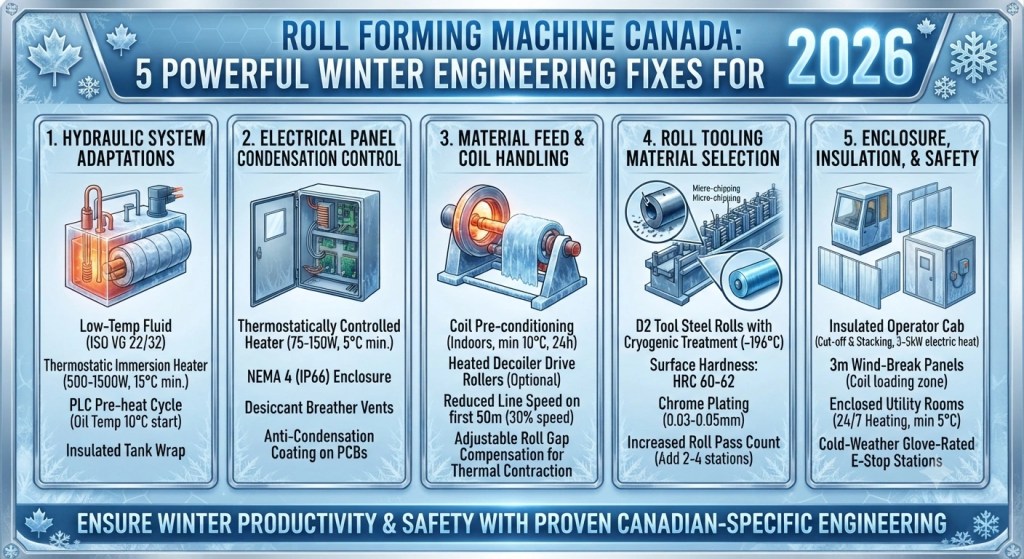
Cold plants do not break a forming line in one afternoon. They wear it down over a handful of cold starts. Oil thickens overnight, moisture settles inside the control cabinet, and a line that ran fine in October trips on a Monday morning.
Winterizing roll forming machines is a short, repeatable routine that pays for itself in avoided downtime. This guide covers 6 steps that protect the hydraulic, electrical, lubrication and feed systems in a plant with no heating, plus the oil grades and temperature limits behind each one.
If you are new to the equipment itself, start with our Überblick über die Rollformmaschine. It explains the main sections this routine touches.
What cold actually does to a forming line
Each system reacts to low temperature in a different way. Knowing the mechanism tells you which step of winterizing roll forming machines matters most in your plant.
| Area | What changes below freezing | Failure it causes |
|---|---|---|
| Hydraulic oil | Viscosity climbs sharply; VG 46 is above 200 cSt at 20 °C | Pump cavitation, slow or erratic actuator movement |
| Control cabinet | Air drops below dew point, moisture settles on relays and boards | Intermittent PLC and drive faults |
| Gearbox oil and grease | Thickens and channels instead of flowing to contact points | Bearing wear, high starting torque |
| Concrete base and grout | Wet grout can freeze before it cures | Frame settles and alignment drifts |
| Strip steel | Ductility falls as temperature drops | Edge cracking on tight radii |
Two numbers do most of the damage. Viscosity rises as oil cools, and relative humidity inside a sealed cabinet rises as the steel shell cools faster than the air. Both are manageable with planning.
For background on the steel side, the World Steel Association publishes guidance on how low temperature affects formed products. The machine side is what this article handles.
The 6 winterizing steps
The 6 steps below make up a complete winterizing roll forming machines routine. Work through them before the first sustained cold spell, not during it.
- Change to a winter-grade hydraulic oil. Pick the lowest ISO VG grade the pump maker allows, and prefer a high viscosity index fluid. VG 32 with a high VI is a common winter choice where VG 46 is used in summer. Confirm the pour point on the data sheet, not just the VG number.
- Fit anti-condensation heaters in the electrical cabinets. Mount the heater low in the cabinet so convection carries heat upward. Hold the interior about 10 °F (5.5 °C) above ambient, which keeps relative humidity under the 60 percent level where moisture starts to settle. A thermostat or humidistat cycles the heater only when needed.
- Drain water traps and check the oil condition. Water in hydraulic oil changes its real viscosity and can form ice crystals in a cold line. If the oil looks milky on the sight glass, investigate before startup. The hydraulic system maintenance guide covers the drain and filter routine in detail.
- Review gearbox oil and bearing grease. Use a low-temperature grease with a suitable NLGI consistency for cold starts. Do not pack more grease into a bearing than the maker specifies; excess grease adds drag when it is stiff. Our lubrication strategy guide explains how to set intervals by operating hours rather than by the calendar.
- Recheck foundation level and machine alignment. Temperature swings move concrete, especially in a plant where wet grout froze during the first winter. A frame that settled a few millimetres shows up as twist in the profile. The frame alignment methods guide gives the measurement sequence.
- Write a cold-start procedure and train the operators. A winter routine only works if every shift follows it. Post the startup sequence at the control station and log the oil temperature before the line is loaded.
Step 1 and step 2 prevent the two failures that cause most unplanned winter downtime: pump starvation on startup and electrical faults from condensation.
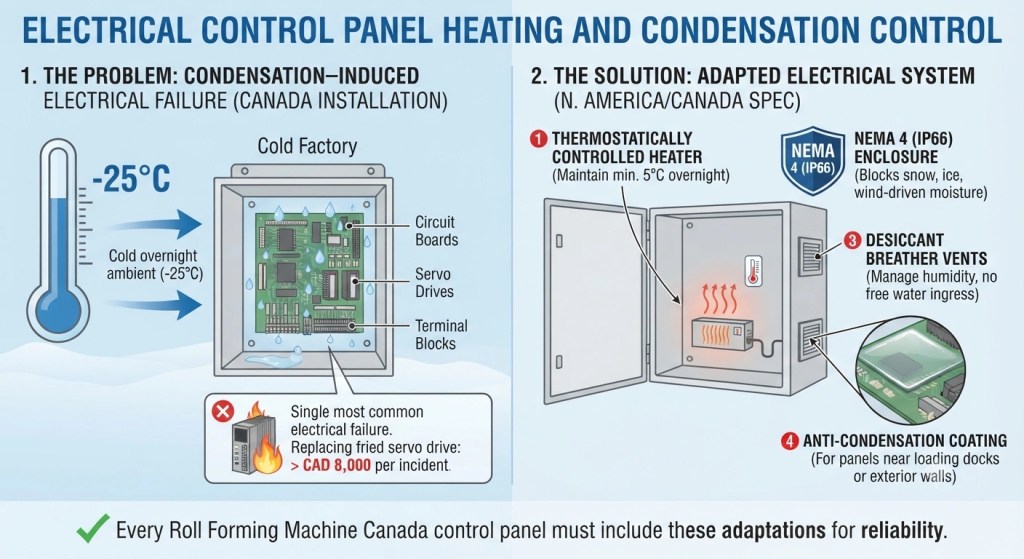
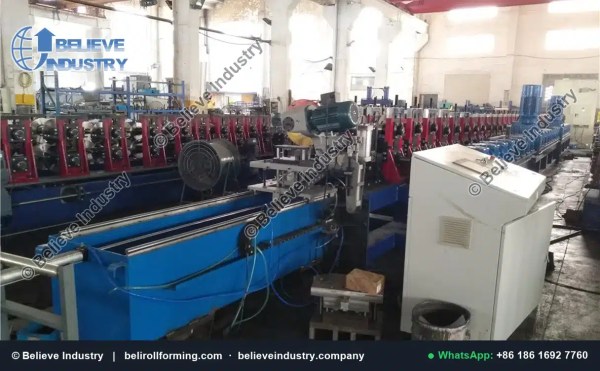
An anti-condensation heater keeps the control cabinet above the dew point in a cold plant.
Choosing the right hydraulic oil for cold starts
When winterizing roll forming machines, ISO VG is the first grade to check. ISO VG is a viscosity classification under ISO 3448. The number is the oil’s kinematic viscosity at 40 °C in centistokes, with a tolerance of plus or minus 10 percent. It does not describe the additive package or the low-temperature behavior. The Society of Automotive Engineers publishes widely used viscosity and lubrication standards that complement the ISO grades.
| ISO VG grade | Viscosity at 40 °C | Typische Anwendung |
|---|---|---|
| VG 32 | 28.8 to 35.2 cSt | Cooler plants, cold starts, tight pump clearances |
| VG 46 | 41.4 to 50.6 cSt | Default grade at normal operating temperature |
| VG 68 | 61.2 to 74.8 cSt | Hot, heavily loaded, older equipment with wider clearances |
Two extra figures matter more than the VG grade in winter. The viscosity index, calculated by ASTM D2270, tells you how little the oil thickens as it cools. A high VI fluid, often above 140 in a cold-climate product, stays closer to its target viscosity across the swing. The pour point tells you the lowest temperature at which the oil still flows. As a working rule, choose a pour point at least 10 °C below the coldest temperature your plant sees.
Pump makers specify a target viscosity window at running temperature, commonly around 16 to 36 cSt for vane and piston pumps. The VG grade is only the standard bracket that lands the oil in that window. Match the manual first, then adjust for the climate. For a deeper look at pressure and flow checks, see our electrical and hydraulic troubleshooting guide.
Electrical cabinets and cold-weather humidity
A cabinet does not need a leak to collect moisture. When the plant cools over a weekend, the sheet-steel enclosure cools faster than the trapped air. If the steel drops below the air’s dew point, water condenses on relays, bus bars and circuit boards. That is the starting point for corrosion and flashover failures.
An enclosure heater holds the interior a few degrees above ambient so the air stays dry. It is a small but critical part of winterizing roll forming machines in an unheated building. Sizing is usually estimated at roughly 100 to 200 watts per cubic metre of cabinet volume, with the higher end for outdoor or very cold locations. A humidistat that switches on around 60 percent relative humidity and off near 40 percent avoids running the heater all winter. Keep heat-sensitive components at least 50 mm away from the element.
Seal the cable entries as well. Small gaps are the fastest route for damp air, and a good heater cannot keep up with a cabinet that is being fed moist air continuously. Check door gaskets and gland seals before the cold season starts.
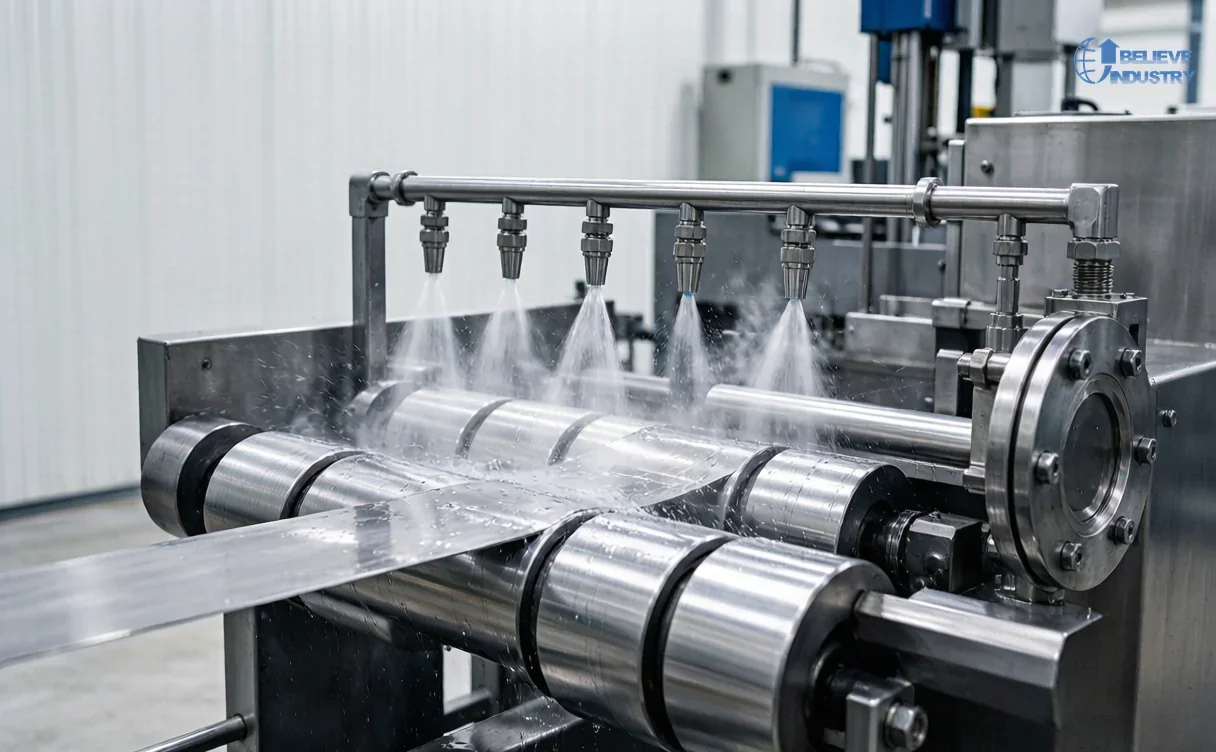
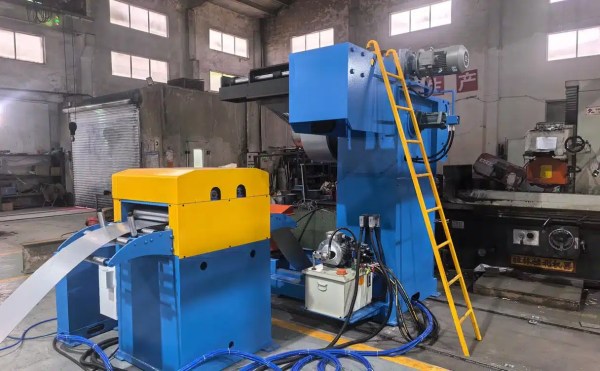
The lubrication system is checked before winter startup to avoid stiff grease at bearing points.
A startup sequence for cold mornings
Once the winter setup is in place, the first hour of operation still needs care. This sequence completes winterizing roll forming machines and protects the pump during its most vulnerable minutes. Use this order after a cold weekend or a long shutdown.
- Energize the cabinet heaters first and let the panel dry before the main drive starts.
- Circulate hydraulic oil at low pressure. Do not load the machine while the oil is thick.
- Wait until the oil reaches about 25 °C before running at production speed.
- Jog the line and listen for pump noise, which is the first sign of cavitation.
- Check strip tracking and the first few profiles before accepting a full coil.
- Ramp speed gradually rather than stepping straight to the setpoint.
The warm-up step feels slow when an order is due. It is still cheaper than replacing a pump that was starved on a cold start. Strip condition matters at this stage too, so inspect the coil before threading. Our guide on coil processing and material handling covers storage and loading checks.
Beli Rollforming has built roll forming equipment since 2005 and delivered 500+ machines to 50+ countries. Our team includes 80+ engineers and technicians working from a 15,000 m² facility. Every complete machine ships with a 24-month warranty on the complete machine, covering mechanical, hydraulic and electrical systems, with wear parts excluded.
Häufig gestellte Fragen
1. What is winterizing a roll forming machine?
Winterizing a roll forming machine means adjusting oil grades, cabinet heating, lubrication and startup procedure so the line runs reliably in a plant without heating. The goal is to prevent cold-start pump damage and condensation faults.
2. Which hydraulic oil grade suits cold weather?
Use the lowest ISO VG grade the pump maker allows, often VG 32 where VG 46 is used in summer. A high viscosity index fluid and a pour point at least 10 °C below your lowest plant temperature matter as much as the grade.
3. Why does hydraulic oil cause cold-start problems?
Oil thickens as temperature falls. Thick oil starves the pump inlet, which creates vapour pockets that collapse and damage internal parts. It also raises system pressure and slows actuator response.
4. Do I need a heater in the control cabinet?
In an unheated plant, usually yes. An anti-condensation heater holds the cabinet a few degrees above ambient, keeping interior humidity below the level where water settles on electrical parts. Size it around 100 to 200 W per cubic metre.
5. Can I keep the same grease in winter?
Only if its low-temperature consistency still lets it reach the bearing. Stiff grease channels and leaves contact points dry. Check the NLGI grade and the maker’s temperature range before deciding.
6. How warm should hydraulic oil be before full speed?
Aim for about 25 °C. Circulate the oil at low pressure until it reaches that range, then load the line gradually. Running at production speed with cold oil risks pump cavitation.
7. Does cold affect the steel strip?
Yes. Steel loses ductility as temperature drops, so tight radii are more likely to crack at the edge. Coated products need extra care, since the zinc layer behaves differently in the cold. The American Galvanizers Association documents how galvanized coatings respond to temperature. Bring coils into the plant ahead of time when possible and check the first profiles carefully.
8. How do I stop moisture in hydraulic oil?
Drain water traps on schedule, check the sight glass for a milky appearance, and keep breathers in good condition. Water changes the effective viscosity of the oil and can form ice in a cold line.
9. Should foundation level be rechecked in winter?
Yes, especially in a plant where grout froze during an earlier winter. A frame that settled a few millimetres produces twist in the profile. Measure alignment before blaming the rolls.
10. Is winterizing a one-time job?
No. Treat winterizing roll forming machines as an annual routine: change oil before the cold spell, inspect heaters and seals, then log oil temperature and cabinet condition through the season so you can refine the procedure each year.
Zuletzt aktualisiert: 2026-11-26
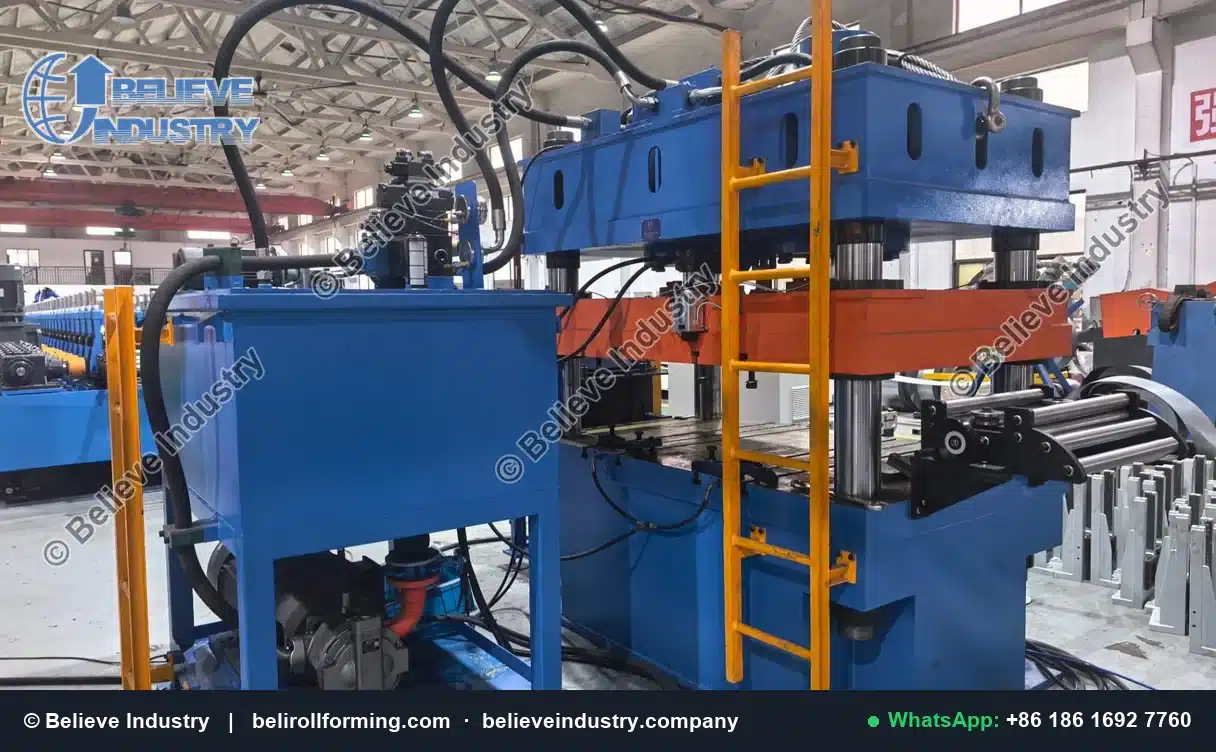
Hydraulic components are inspected for leaks and oil condition before a cold shift.
Artikel-Änderungsprotokoll
- 2026-11-26: Published. 6 winterizing steps, hydraulic oil grade table, cabinet condensation guidance and a cold-start sequence, 10 FAQs.
Auslöser für die nächste Überprüfung
- Pump maker changes its recommended viscosity window or approved winter oil grade.
- A winter season produces repeat electrical faults despite cabinet heating.
- New ASTM or ISO standard changes how low-temperature oil performance is specified.



 Deutsch