







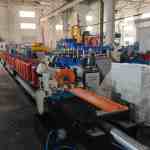

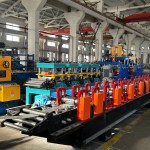
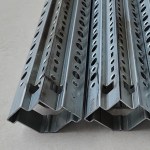
Sie benötigen Säulen, die jedes Mal kerzengerade sind und an den richtigen Stellen Löcher aufweisen. Genau das leistet diese Maschine.
Unser Rollformmaschine für elektrische Gehäusesäulen Genau das tut es.
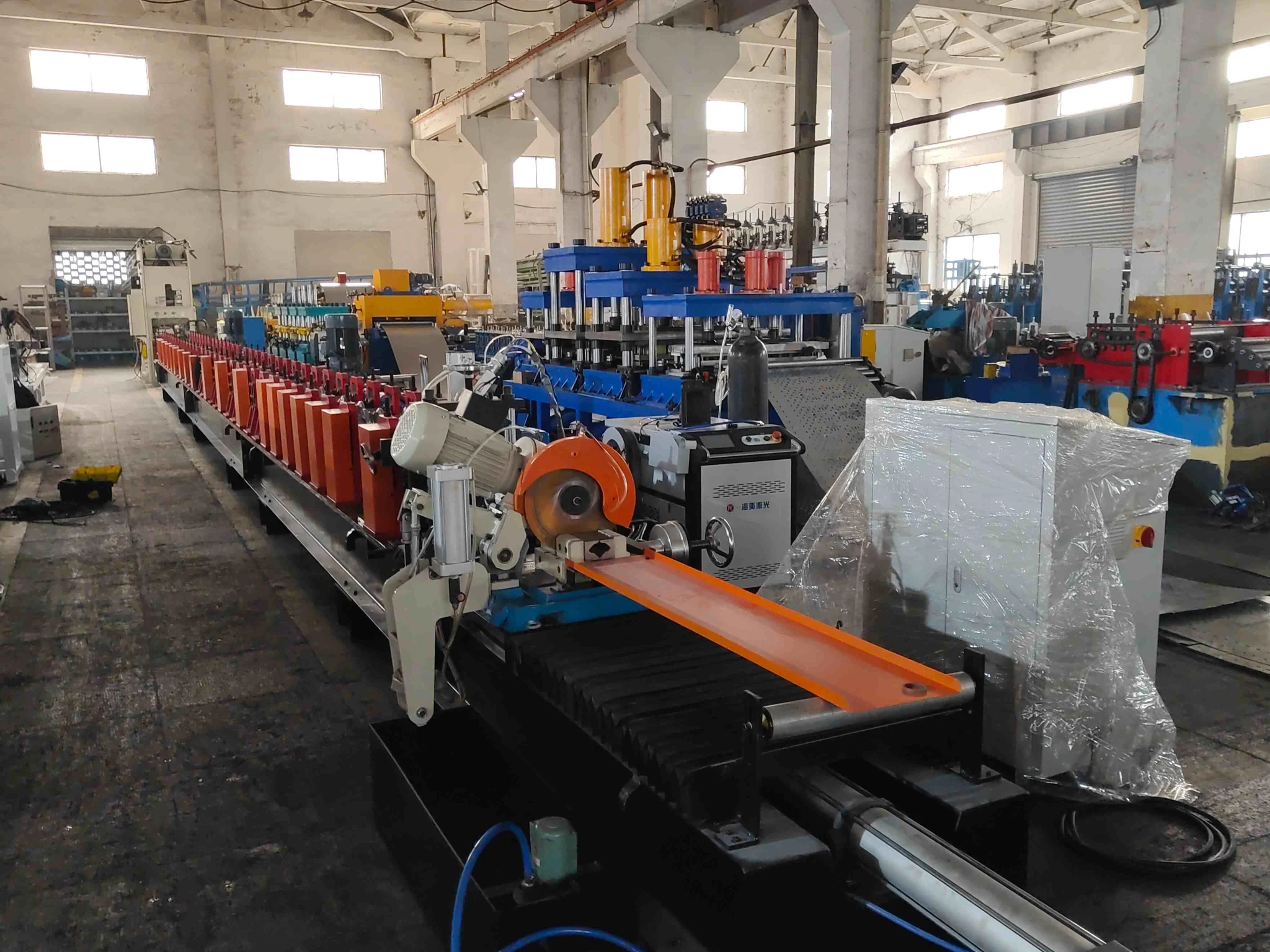
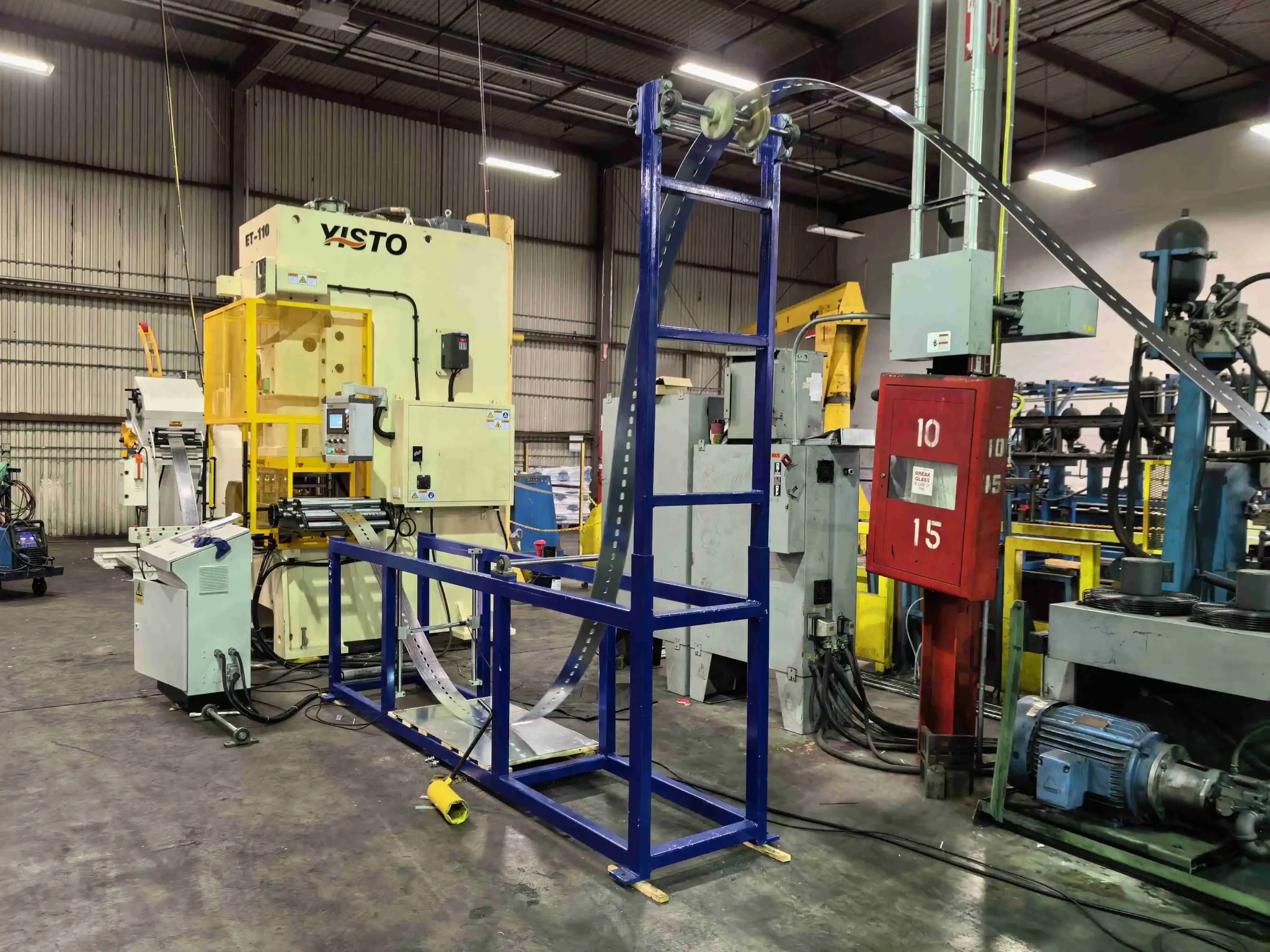
Die Anlage nimmt Stahlcoils vom Abwickler, richtet sie aus, stanzt das vorgegebene Muster, formt das Profil durch einen getriebegetriebenen Walzensatz, schneidet es mit einer fliegenden Säge auf Länge und verschweißt es bei Bedarf. Alles in einer einzigen Linie.
Wir verwenden CR12-Walzen (entspricht D2). Die Wärmebehandlung erfolgt auf HRC 58–62. Die Gestelle sind aus Gusseisen – nicht aus geschweißtem Blech. Das ist entscheidend im 24/7-Betrieb. Jede noch so kleine Durchbiegung wirkt sich auf das Endprodukt aus.
Hersteller von Elektroschränken verwenden dieses Produkt. Schaltanlagenbauer verwenden dieses Produkt. Gehäusehersteller verwenden dieses Produkt. Wenn Standardrahmen nicht ausreichen, ist dieses Produkt die Lösung.
Wenn Sie einen Lieferanten suchen Rollformmaschine für elektrische Gehäusesäulen, Wie Sie bereits wissen: Die Präzision der Rahmenkonstruktion entscheidet darüber, ob ein Schrank die Qualitätskontrolle besteht oder zurückgeschickt wird.
Angebot anfordern — Antwort innerhalb von 24 Stunden
Was ist ein elektrisches Gehäuse?
Ein Schaltschrank ist ein Gehäuse oder Kasten, der elektrische Bauteile beherbergt.
Leistungsschalter. Schalter. Sammelschienen. Klemmen. Steuergeräte. Ihre Aufgabe ist einfach: Personen vor spannungsführenden Teilen schützen. Spannungsführende Teile vor Staub, Wasser und Stößen schützen.
Wenn Sie auf der Suche nach einem Rollformmaschine für elektrische Gehäusesäulen, Das Verständnis des Endprodukts hilft Ihnen bei der Auswahl der richtigen Ausrüstung.
Man sieht überall elektrische Schaltschränke.
Der graue Kasten an der Fabrikwand. Das Bedienfeld im Maschinenraum eines Aufzugs. Der Serverschrank in einem Rechenzentrum. Die Schaltanlagen in einem Umspannwerk.
Sie sind in verschiedenen Schutzarten erhältlich. NEMA 1 für trockene Innenräume. NEMA 4X für Umgebungen, die regelmäßig abgespritzt werden. NEMA 12 für staubige Industrieböden.
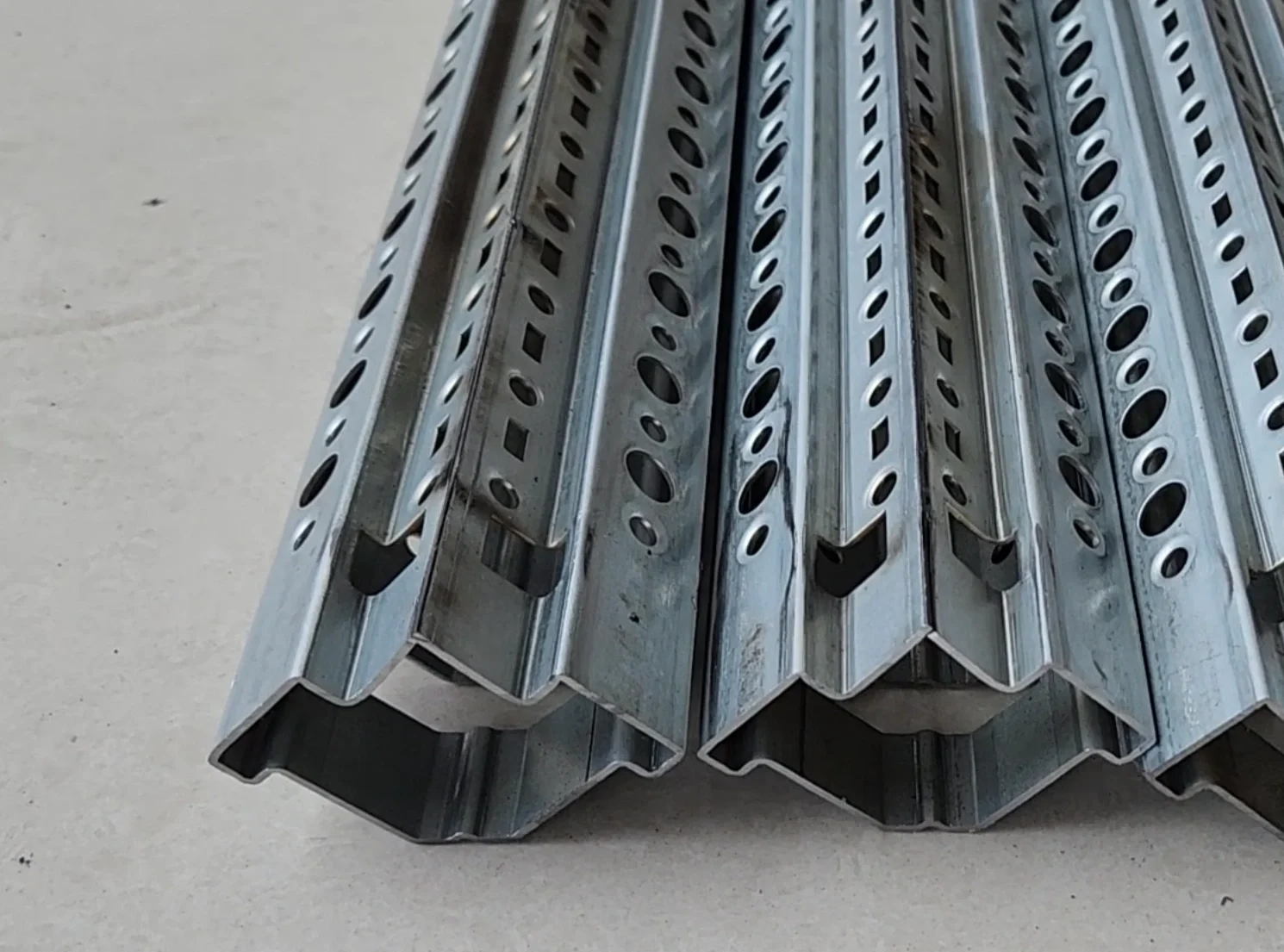
In jedem Gehäuse befindet sich ein Rahmen. Dieser Rahmen besteht aus vertikalen Säulen und horizontalen Schienen – dem Gerüst, an dem die Paneele befestigt sind.
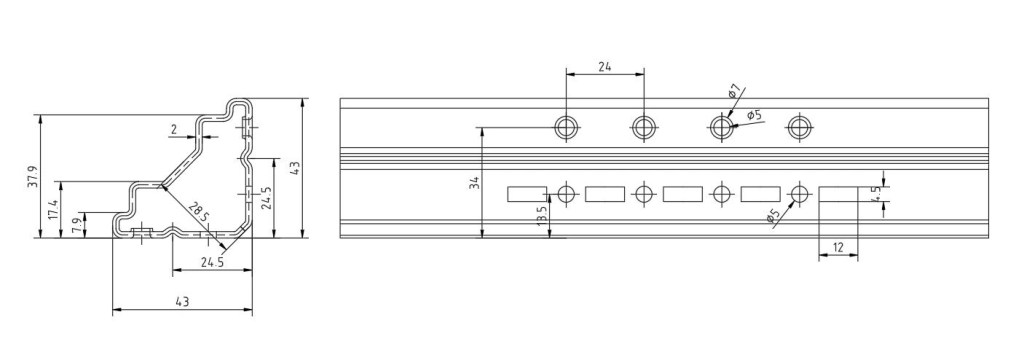
Diese Säulen müssen gerade sein. An exakten Positionen mit Löchern versehen. Gleichmäßig von Teil zu Teil. Genau da liegt der Punkt. Rollformmaschine für elektrische Gehäusesäulen kommt herein.
Die Gehäuseherstellung ist ein Wachstumssektor. Der globale Markt wurde auf über 100 Millionen US-Dollar geschätzt. 7 Milliarden US-Dollar Im Jahr 2023. Das Wachstum wird durch den Ausbau von Rechenzentren, die Modernisierung der Stromnetze und die industrielle Automatisierung angetrieben. Mehr erfahren: Walzprofilieren im Energie- und Elektrizitätssektor.
Was ist eine Rollformmaschine für elektrische Gehäusesäulen?
Ein Rollformmaschine für elektrische Gehäusesäulen ist eine Produktionslinie. Sie verarbeitet Stahlcoils zu vertikalen Säulen und Rahmenprofilen, die in elektrischen Gehäusen verwendet werden.
Stellen Sie es sich so vor: Sie legen eine Stahlspule an einem Ende ein. Die Maschine wickelt sie ab, flacht sie ab und stanzt das für Ihre Konstruktion vorgesehene Lochmuster. Anschließend biegt sie den flachen Streifen mithilfe mehrerer Walzenständer schrittweise zur fertigen Säulenform.
Zum Schluss schneidet eine fliegende Säge jedes Teil auf die gewünschte Länge – ohne die Produktionslinie anzuhalten. Falls Ihre Konstruktion ein geschlossenes Kastenprofil erfordert, versiegelt ein Laserschweißgerät die Naht direkt in der Linie.
Der entscheidende Unterschied zu einer herkömmlichen Profiliermaschine: Präzision. Die Gehäusesäulen tragen Montageschienen, Türscharniere und Paneelhalterungen. Schon ein um einen halben Millimeter versetztes Loch bedeutet für die Monteure, dass sie mit jedem einzelnen Paneel kämpfen müssen.
Deshalb Rollformmaschine für elektrische Gehäusesäulen ist mit engeren Toleranzen konstruiert als herkömmliche Walzprofilieranlagen.
Diese Maschine dient Herstellern, die Folgendes herstellen:
- Elektrische Gehäuse nach NEMA-Norm (für den Innen- und Außenbereich)
- Schaltanlagen und Schaltschränke
- Motorsteuerzentrum (MCC) Rahmen
- Serverschränke und Rechenzentrumsgehäuse
- Anschlusskästen und Verteilerkästen
Auch genannt Rollformmaschine für elektrische Schaltschranksäulen oder ein Walzenformer für elektrische Gehäusesäulen, Die Maschine ist für einen einzigen Zweck gebaut: die gleichbleibende und wiederholbare Säulenproduktion in industrieller Geschwindigkeit. Lesen Sie unseren Leitfaden: Walzformlösungen für die Elektroindustrie.
So funktioniert die Maschine
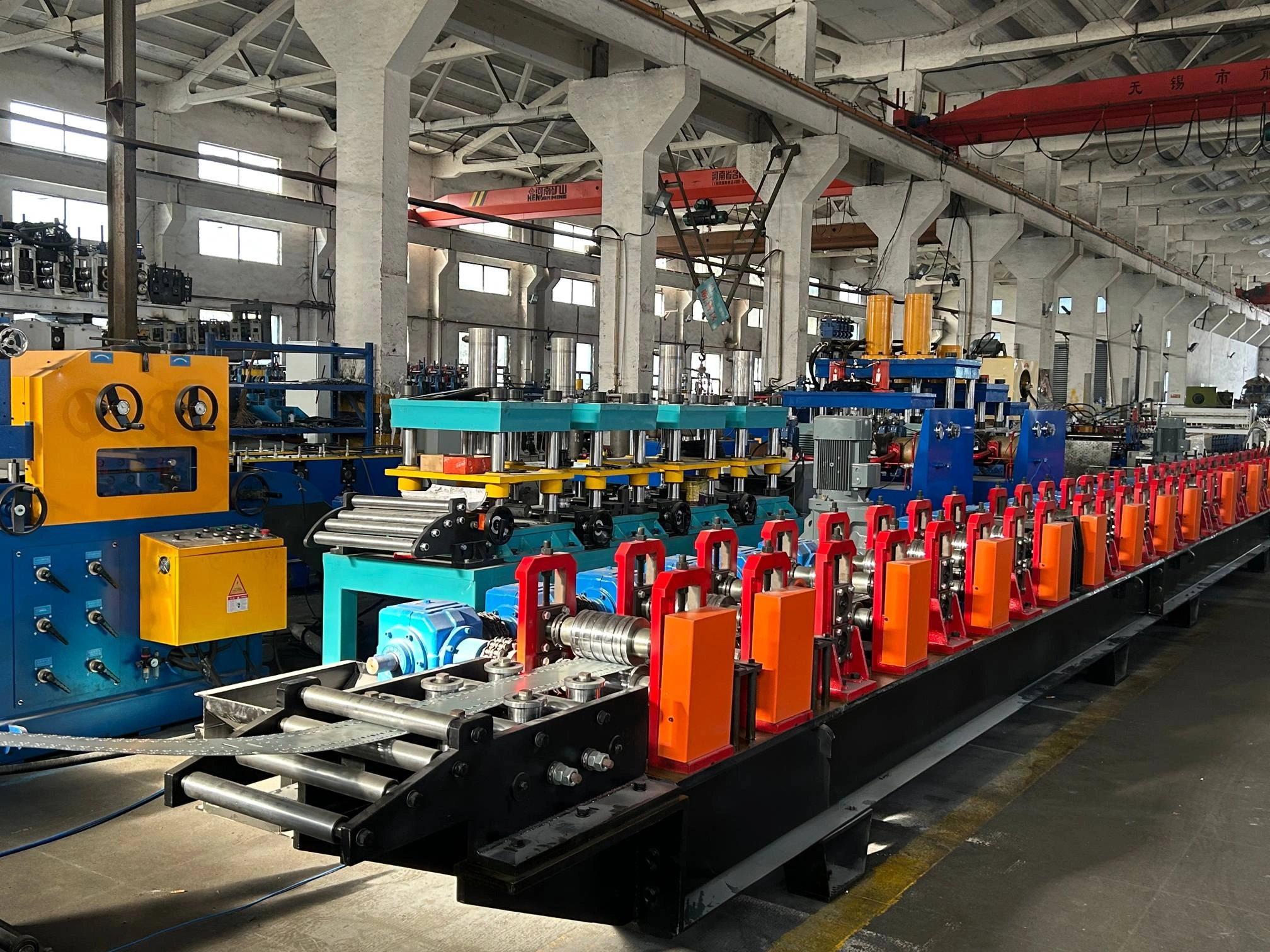
Ein Rollformmaschine für elektrische Gehäusesäulen Es handelt sich nicht um eine einzelne Einheit, sondern um eine Produktionslinie mit sechs bis acht Stationen. Jede Station erfüllt eine bestimmte Aufgabe präzise. Die Spule wird an einem Ende zugeführt, die fertigen Gehäusesäulen kommen am anderen Ende heraus.
Aufschlüsselung nach Stationen
| Station | Komponente | Was es bewirkt |
|---|---|---|
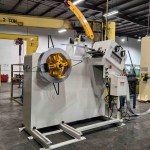
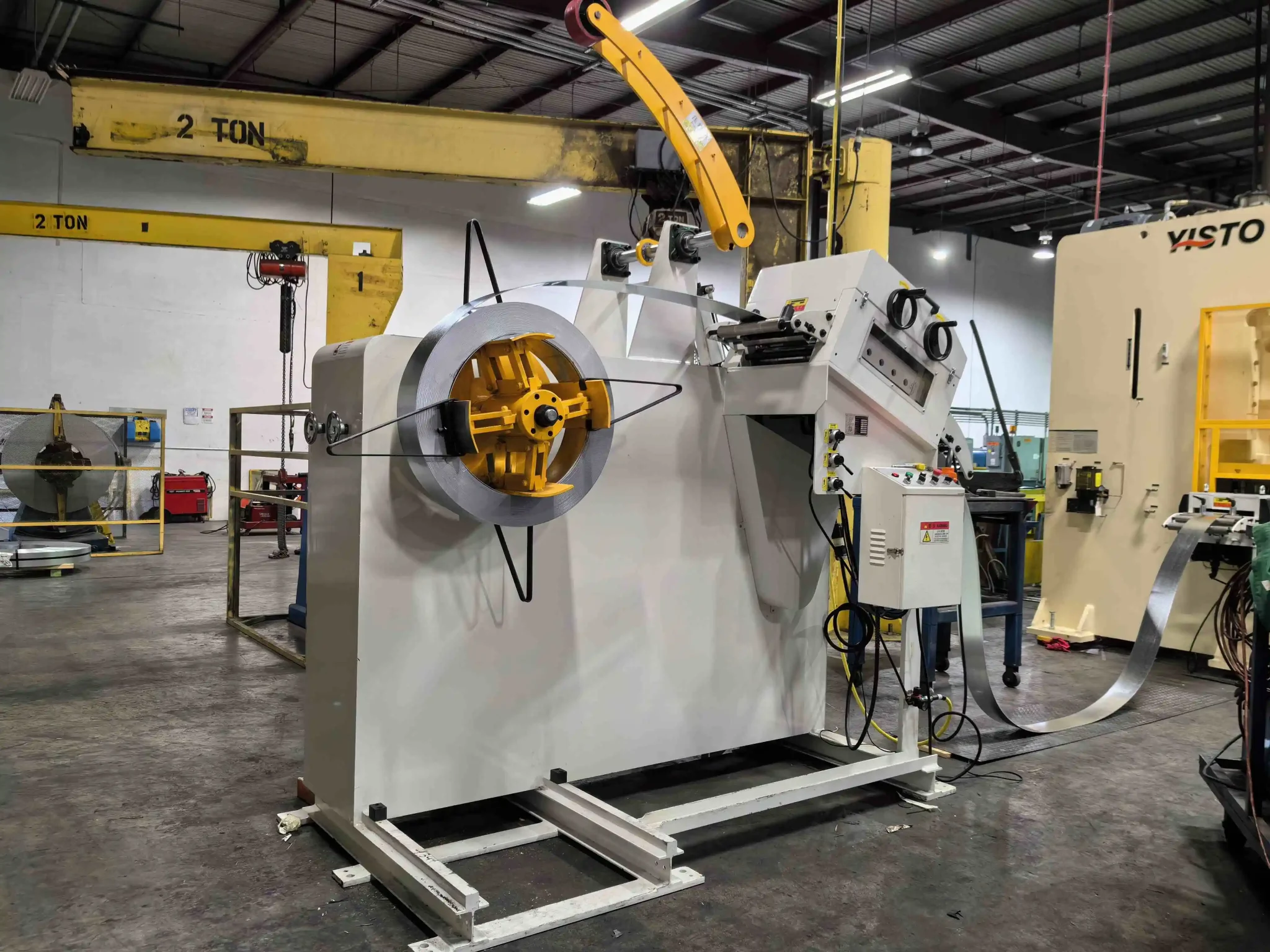
| 1 | Abwickler & Richtmaschine | Hält die Stahlcoil (bis zu 5/8 Tonnen), führt sie der Anlage zu und glättet das Band vor dem Umformen. Ohne eine geeignete Vorrichtung Walzprofiliergerät, Die Materialgedächtniswirkung führt zu Profilverformungen. |
| 2 | Servo-Zuführer und Stanzvorrichtung | A Servo-Zuführung positioniert den Streifen mit einer Genauigkeit von ±0,1 mm. Schlagpresse Erzeugt Befestigungslöcher, Ausbrechöffnungen und Schlitze – alles in einer Linie. |
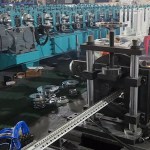
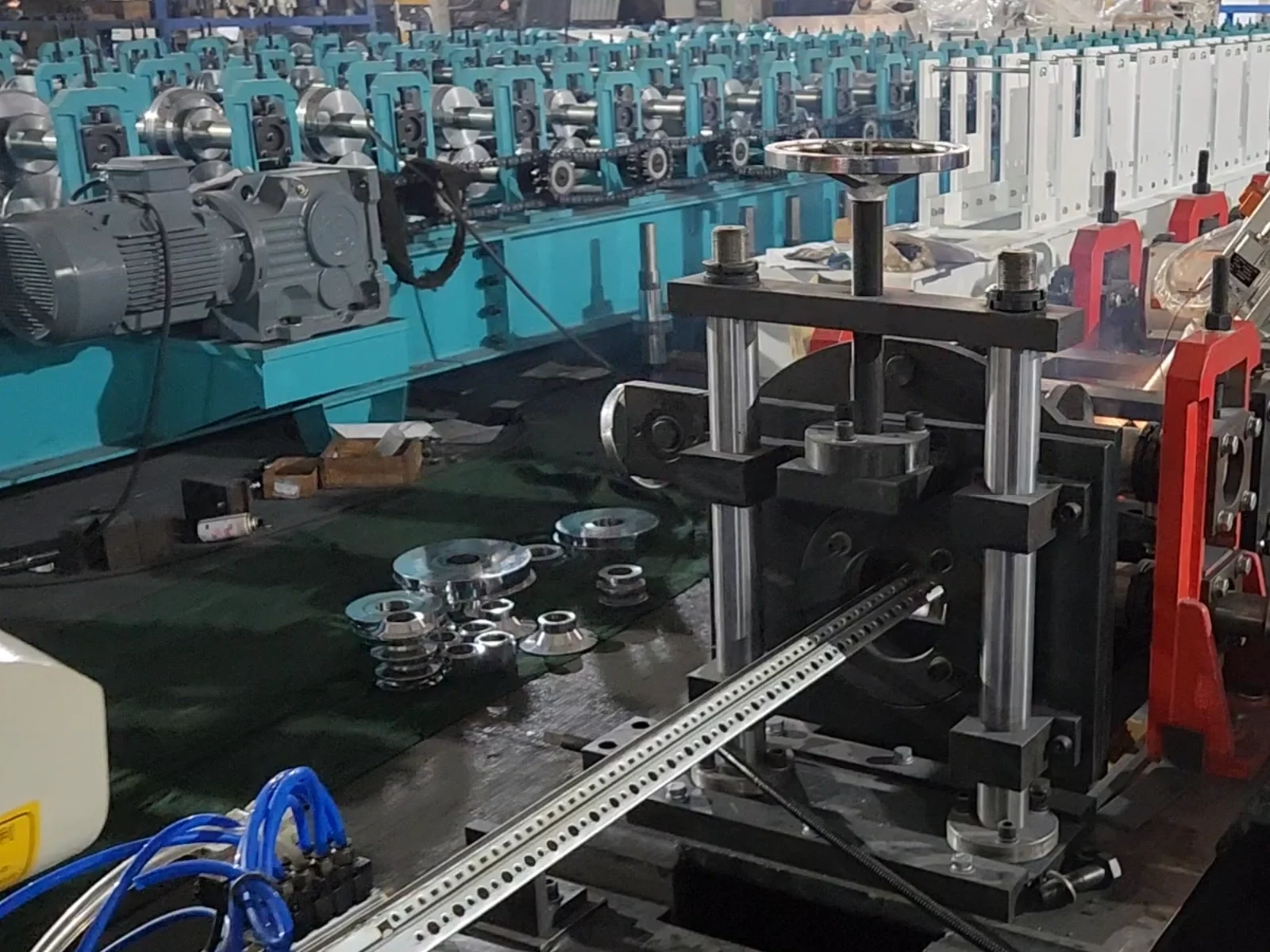
| 3 | Walzprofilierungsabschnitt | Das Herzstück des Walzenformer für elektrische Gehäusesäulen. Die einzelnen Ständer werden über ein Getriebe angetrieben. Die Ständer aus Gusseisen sind vibrationsbeständig. CR12 (D2)-Walzen gewährleisten die Einhaltung der Profiltoleranzen bei jedem Lauf. |
| 4 | Glätteisen | Korrigiert jegliche Verdrehung oder Verformung, die beim Formen entstanden ist. Entscheidend für die Geradheit der Säule. |
| 5 | Fliegende Säge | Servo-Flugschere Schnitte im laufenden Betrieb – kein Anhalten der Linie erforderlich. Längentoleranz: ±0,5 mm. |
| 6 | Laserschweißgerät | Inline-Laserschweißen Verschließt Nähte für geschlossene Abschnitte, wenn dies im Design erforderlich ist. |
| 7 | SPS-Steuerung | Der SPS-Steuerungen Alle Stationen. Touchscreen-Oberfläche, Rezeptspeicher für verschiedene Säulenprofile und Ferndiagnosezugriff. |
Maschinenkomponenten und Werkstoffe
Jede Komponente an diesem Rollformmaschine für elektrische Gehäusesäulen Es ist für den industriellen Einsatz spezifiziert. Keine Kompromisse.
Abwickler und Richtmaschine: Hydraulischer Aufweitdorn. Kapazität: 5–8 Tonnen. Die Richtvorrichtung entfernt das Coil-Set vor dem Umformen. Siehe Abwickler-Auswahlhilfe.
Servo-Zuführ- und Stanzvorrichtung für Löcher: AC-Servomotorantrieb. Positioniergenauigkeit ±0,1 mm. Hydraulischer oder Servostanzer – die Spezifikation richtet sich nach Ihrer Lochanzahl. Mehr: Stanzeinheitentechnologie.
Walzprofilieren (Getriebeübertragung, Gusseisenständer, Material CR12 / D2): Getriebeantrieb – kein Kettenspiel. Gusseisengestelle (FC25) absorbieren Vibrationen. CR12-Walzen (entspricht D2), vakuumwärmebehandelt auf HRC 58–62. Nachbearbeitung nach über 10 Jahren erforderlich.
Glätteisen: Türkischer Kopftyp. Verstellbare Rollen korrigieren Durchbiegung, Wölbung und Verdrehung. Unverzichtbar für Säulen über 2 Meter.
Fliegendes Sägen: Servogetrieben. Schneidet im laufenden Betrieb – ohne Unterbrechung. Keine Grate, keine Verformung. Lebensdauer der Klinge: über 50.000 Schnitte.
Laserschweißgerät: Faserlaser, 1–2 kW. Verschweißt geschlossene Querschnittsnähte inline. Keine separate Station erforderlich.
SPS-Steuerung: Siemens oder Mitsubishi. Touchscreen-HMI. 100 Rezeptprofile. Fernwartung über Ethernet. Ein Bediener steuert die gesamte Anlage. Siehe Automatisierung des Walzprofilierens.
Technische Parameter
Dies sind die Standardvorgaben. Jeder Parameter kann an Ihr Profil und Ihre Produktionsanforderungen angepasst werden. Rollformmaschine für elektrische Gehäusesäulen Die Schiffe von Beli werden mit allen Spezifikationen dokumentiert – kein Rätselraten, keine groben Schätzungen.
Rollformmaschine für elektrische Gehäusesäulen – Technische Spezifikationen
| Parameter | Spezifikation |
|---|---|
| Materialstärke | 1,2 mm – 3,0 mm (Standard); bis zu 4,0 mm optional |
| Materialbreite | 80 mm – 350 mm (Bandbreite vor der Umformung) |
| Materialart | Kaltgewalzter Stahl (CR), verzinkter Stahl (GI), Edelstahl (SS304/SS316) |
| Streckgrenze | Bis zu 550 MPa (Standardwerkzeug); bis zu 780 MPa mit verbesserten Rollen |
| Umformgeschwindigkeit | 10 – 20 m/min (einstellbar über SPS) |
| Walzenmaterial | CR12 (entspricht D2), vakuumwärmebehandelt |
| Walzenhärte | HRC 58 – 62 |
| Walzenoberflächenbearbeitung | Ra 0,4 μm nach dem Polieren |
| Anzahl der Formiergerüste | 14–18 Stände (profilabhängig); mehr dazu Walzformdesign |
| Standkonstruktion | FC25-Gusseisen, Getriebeantrieb pro Ständer (kein Kettenantrieb) |
| Wellendurchmesser | 60 mm (Standard); 75 mm für Schwerlastprofile |
| Rollenabstandshalter / Einstellung | Manuelle Distanzring-Variante oder Schnellwechselkassette (optional) |
| Stanztyp | Servoförderer + Hydraulikpresse (Standard); Vollservopresse optional |
| Schlaggenauigkeit | ±0,1 mm Positionierung mittels AC-Servomotor |
| Stempeltonnage | 40 – 63 Tonnen (basierend auf der Anzahl der Bohrlöcher und der Steigung) |
| Schneidart | Servogetriebene fliegende Schere (schneidet ohne Produktionsstopp) |
| Schnitttoleranz | ±0,5 mm in der Länge |
| Produktlängenbereich | 500 mm – 6.000 mm (einstellbar, kein mechanischer Anschlag) |
| Laserschweißgerät (optional) | Faserlaser, 4 kW, für das Nahtschweißen von Säulen mit geschlossenem Querschnitt |
| SPS-Steuerung | Siemens S7-1200 / S7-1500 oder Mitsubishi FX5U-Serie |
| HMI-Touchscreen | 10-Zoll-Farbbildschirm, mehrsprachig (EN, ES, FR, AR, RU verfügbar) |
| Rezeptspeicher | Bis zu 100 Profilrezepte können auf dem HMI gespeichert werden. |
| Hauptformungsmotor | 22 – 37 kW, Frequenzumrichter (FU) |
| Installierte Gesamtleistung | 55 – 100 kW (abhängig von der Leitungskonfiguration) |
| Stromversorgung | 380 V / 50 Hz, 3-phasig (kundenspezifische Spannungen auf Anfrage) |
| Spulenkapazität (Abwickler) | 5 – 8 Tonnen, hydraulischer Expansionsdorn |
| Nivellierrollen | Präzisionsrichtmaschine mit 7 Walzen, ø80 mm, gehärtet auf HRC 55+ |
| Glätteisen-Typ | Türkischer Kopf, 4-Rollen-Einstellung zur Korrektur von Wölbung, Krümmung und Verwindung. |
| Linienabmessungen (L x B x H) | Ca. 18.000 x 1.800 x 1.600 mm (variiert je nach Anzahl der Ständer) |
| Schnurgewicht | Ungefähr 12 – 18 Tonnen |
| Kühlsystem | Ölumlaufkühlung für Walzprofilier- und Hydraulikstationen |
| Schmierung | Zentrale automatische Schmierpumpe mit einstellbaren Intervallen |
| Sicherheitsgehäuse | Vollständige Umzäunung mit verriegelten Zugangstüren (CE-konform) |
| Not-Aus | Not-Aus-Taster alle 2 m entlang der Leitung + Zugseiloption |
| Geräuschpegel | ≤ 80 dB(A) in 1 m Entfernung |
| Zertifizierungen | ISO 9001, CE-Kennzeichnung, IEC-Konformität |
| Gewährleistung | 24 Monate mechanische Garantie, 12 Monate elektrische Garantie |
Benötigen Sie eine individuelle Konfiguration? Wir passen jeden Parameter – Walzendurchmesser, SPS-Hersteller, Werkzeugspezifikation – an Ihr Profil an. Siehe Komponentenauswahl oder vollständiger Einkaufsführer.
Lieferantenvergleich: Beli Rollforming vs. China vs. EU & USA
Nicht alle Rollformmaschine für elektrische Gehäusesäulen Die Lieferanten sind dieselben. Hier ist unser Fazit nach 20 Jahren am Markt.
Beim Vergleich von Angeboten sollten Sie drei Dinge besonders beachten: das Walzenmaterial, die Gestellkonstruktion und die integrierte SPS. Diese drei Punkte entscheiden darüber, ob Ihre Produktionslinie zehn Jahre lang zuverlässig läuft oder Ihnen schon im zweiten Jahr Probleme bereitet.
Beli Rollforming im Vergleich zum durchschnittlichen chinesischen Lieferanten im Vergleich zum EU/US-Lieferanten
| Faktor | Beli Rollforming | Durchschnittlicher Lieferant aus China | EU-/US-Lieferant |
|---|---|---|---|
| Walzenmaterial | CR12 / D2, HRC 58–62 | Cr12MoV oder GCr15, HRC 55–60 | D2 / A2 Werkzeugstahl, HRC 58–62 |
| Stände | Gusseisen, Getriebeantrieb | Geschweißtes Blech oder Guss, Kette oder Getriebe | Geschweißte Stahlplatte, Getriebeantrieb |
| Stanzsystem | Servoförderer + Hydraulik-/Servopresse, ±0,1 mm | Pneumatisch oder hydraulisch, ±0,3–0,5 mm | Servohydraulisch, ±0,1 mm |
| Leitungsgeschwindigkeit | 10–20 m/min (stabil) | 8–15 m/min | 12–25 m/min |
| Regler | Siemens / Mitsubishi SPS | Delta / Xinje / generische SPS | Siemens / Allen-Bradley |
| Zertifizierungen | ISO 9001-, CE- und IEC-Konformität | CE (variiert), eingeschränkte Dokumentation | CE-, UL- und vollständige Dokumentation |
| Installationsunterstützung | Weltweit vor Ort | Online-Anleitung oder Bezahlung vor Ort | Vor Ort (regional) |
| Preisspanne (USD) | 45,000–120,000 | 25,000–80,000 | 120,000–350,000 |
| Lieferzeit | 45–75 Tage | 30–60 Tage | 90–180 Tage |
| Kundendienst | 24/7-Fernbedienung + Ersatzteile innerhalb von 72 Stunden | E-Mail-Support, Teile variabel | Servicevertrag erforderlich |
Beli bietet Ihnen Komponenten und Zertifizierungen in EU-/US-Qualität zum halben Preis. Vollständige Aufschlüsselung: Hersteller von Walzprofiliermaschinen.
Warum Sie sich für Beli als Säulenwalzformmaschine für Ihre Elektrogehäuse entscheiden sollten
Wenn Sie einen kaufen Rollformmaschine für elektrische Gehäusesäulen Das erhalten Sie von uns:
Eine Produktionslinie, ein Lieferant. Wir kümmern uns um alles. Rollformmaschine für elektrische Gehäusesäulen Linie – vom Abwickler bis zum Stapler. Keine Schuldzuweisungen zwischen den Anbietern.
Werkzeuge, die auf Ihr Profil zugeschnitten sind. Senden Sie uns Ihre Zeichnung. Wir entwerfen das Blumenmuster und simulieren es. Software zum Walzprofilieren, und die Walzen kürzen. Keine zusätzlichen Ingenieurkosten.
D2-Werkzeuge serienmäßig. CR12/D2-Rollen sind in der Anschaffung teurer. Sie halten aber auch 3- bis 5-mal länger als GCr15. Über einen Zeitraum von 10 Jahren ist das die einzig relevante Berechnung.
Wir erscheinen. Unsere Techniker besitzen gültige Visa für Australien, die USA und Europa. Installation vor Ort, Schulung und Erstabnahme sind im Leistungsumfang enthalten.
Ersatzteile innerhalb von 72 Stunden. Wir behalten die kritischen Punkte im Auge. Komponenten einer Rollformmaschine Auf Lager. DHL Expresslieferung bis an Ihre Haustür.
Echte Garantie. 24 Monate auf mechanische Teile. 12 Monate auf elektrische Teile. Keine Garantie – wir sind telefonisch für Sie da.
Schauen Sie sich unsere FAQ-Seite Antworten auf häufig gestellte Fragen finden Sie hier. Oder lesen Sie unsere [Link zu unseren Artikeln]. Leitfaden zur vorbeugenden Wartung bevor Sie sich festlegen.
Die Maschine in Aktion sehen
Sehen Sie sich unser Video an Rollformmaschine für elektrische Gehäusesäulen Betrieb in unserer Fabrik – vom Abwickler bis zum fertigen Teil:
Produktionsablauf: Abwickeln, Richten, Servostanzen, Walzprofilieren, fliegendes Scherenschneiden und Stapeln.
Häufig gestellte Fragen
Eine Produktionslinie, die Stahlcoils zu geformten, gestanzten und auf die gewünschte Länge zugeschnittenen Säulen für elektrische Gehäuse verarbeitet. Ein Coil rein, fertige Säulen raus. Abwickeln, Richten, Stanzen, Formen, Schneiden und optionales Schweißen erfolgen in einem Arbeitsgang.
Kaltgewalzter Stahl. Verzinkter Stahl (GI). Edelstahl. Standarddicke: 1,2–3,0 mm. CR12/D2-Walzen eignen sich für hochfeste Werkstoffe. Aluminium? Wir bieten verschiedene Walzenbeschichtungen an – fragen Sie einfach nach.
10–20 m/min. Die Leistung hängt von der Profilkomplexität und den Lochmustern ab. In einer 8-Stunden-Schicht werden etwa 3.000–5.000 fertige Säulen produziert.
Der Servo-Zuführer positioniert den Streifen unter dem Schlagpresse. Die Presse wird hydraulisch oder servogesteuert betätigt. Vorstanzen, anschließend Walzen – so bleibt die Lochposition präzise. Wir fertigen den Werkzeugsatz passend zu Ihrem Lochlayout.
Ja. Unsere Techniker kommen zu Ihnen. Mechanische Einrichtung. Elektrische Inbetriebnahme. Bedienerschulung. Planen Sie 5–7 Tage für eine Standardanlage ein. Ferninbetriebnahme ist ebenfalls möglich. Weitere Informationen: Installationsservice.
45–75 Tage ab Anzahlung bis ab Werk. Versanddauer zusätzlich 15–30 Tage. Exportdokumente inklusive – HS-Codes, Packlisten, Ursprungszeugnisse. Siehe Exportleitfaden für Walzprofile.
Täglich: Schmierstoff prüfen, Stanzbereich reinigen, Ausrichtung prüfen. Wöchentlich: Walzen prüfen, Schnitte kontrollieren, Not-Aus-Schalter testen. Monatlich: Getriebeöl, elektrisches Drehmoment prüfen. Vollständiger Zeitplan: Wartungsleitfaden.
Branchenstandards und Ressourcen
Wenn Sie einen kaufen Rollformmaschine für elektrische Gehäusesäulen, wissen Sie, welche Standards Ihre Profile erfüllen müssen. Hier ist, worauf wir uns beim Design beziehen:
NEMA-Gehäusenormen — Nordamerikanische Schutzart für elektrische Gehäuse (NEMA 1, 3R, 4, 4X, 12). Wir entwickeln Werkzeuge zur Herstellung von Rahmen, die diesen Maßvorgaben entsprechen.
ASTM A1008 / A1008M — Standard Specification for Steel Sheet — Die am häufigsten verwendete Werkstoffspezifikation für kaltgewalzten Stahl, der in der Gehäuseherstellung verwendet wird.
Qualitätsmanagement nach ISO 9001:2015 — Beli Rollforming ist ISO 9001-zertifiziert. Jedes Rollformmaschine für elektrische Gehäusesäulen Lieferungen mit vollständiger QC-Dokumentation.
Walzformen – Wikipedia — Ein technischer Überblick über den Walzformprozess, das Materialverhalten und die industriellen Anwendungen.
FABTECH International — Nordamerikas größte Messe für Metallumformung. Wir stellen regelmäßig aus. Besuchen Sie uns und sehen Sie sich unsere Maschinen persönlich an.
Fordern Sie ein Angebot für Ihre Rollformmaschine für elektrische Gehäusesäulen an.
Senden Sie uns Ihre Säulenprofilzeichnung. Wir antworten Ihnen innerhalb von 24 Stunden mit einem vollständigen Angebot. Rollformmaschine für elektrische Gehäusesäulen Zitat:
- Eine auf Ihr Profil abgestimmte Maschinenkonfiguration
- Linienlayoutzeichnung
- Detailliertes Angebot mit Komponentenspezifikation
- Voraussichtlicher Liefertermin
Senden Sie Ihre Zeichnung ein — Holen Sie sich noch heute ein Angebot!
Oder stöbern Sie Hilfsausrüstung Für Upgrades von Zuführungs-, Abwickel- oder Stanzmaschinen. Erstkäufer? Dann starten Sie hier: vollständiger Einkaufsführer.
Rezensionen
Es gibt noch keine Rezensionen.