









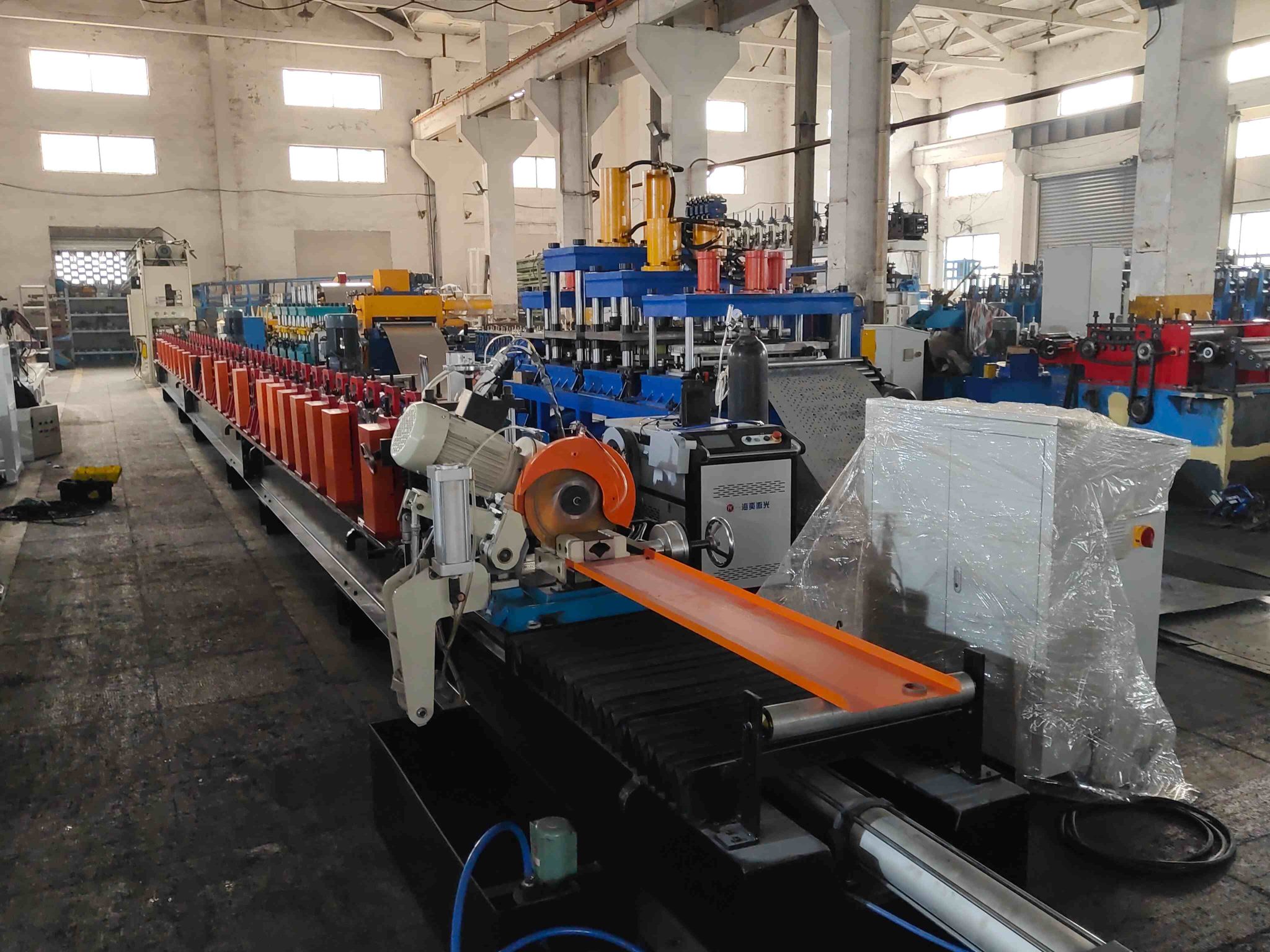



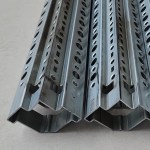
You need columns that come out straight, with holes in the right places, every single time. That is what this machine delivers.
Notre machine de profilage à rouleaux pour colonnes d'enceintes électriques does exactly that.
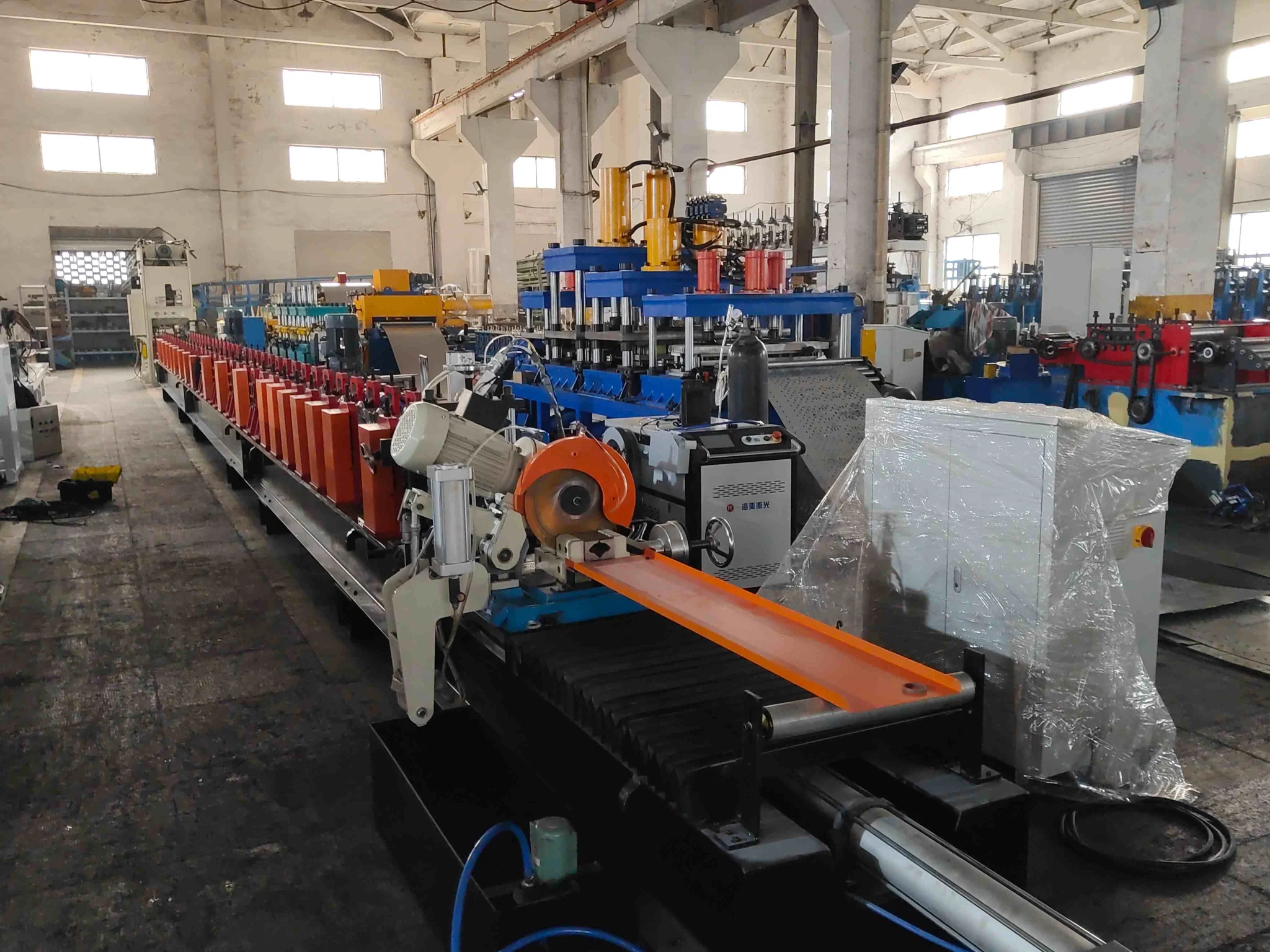
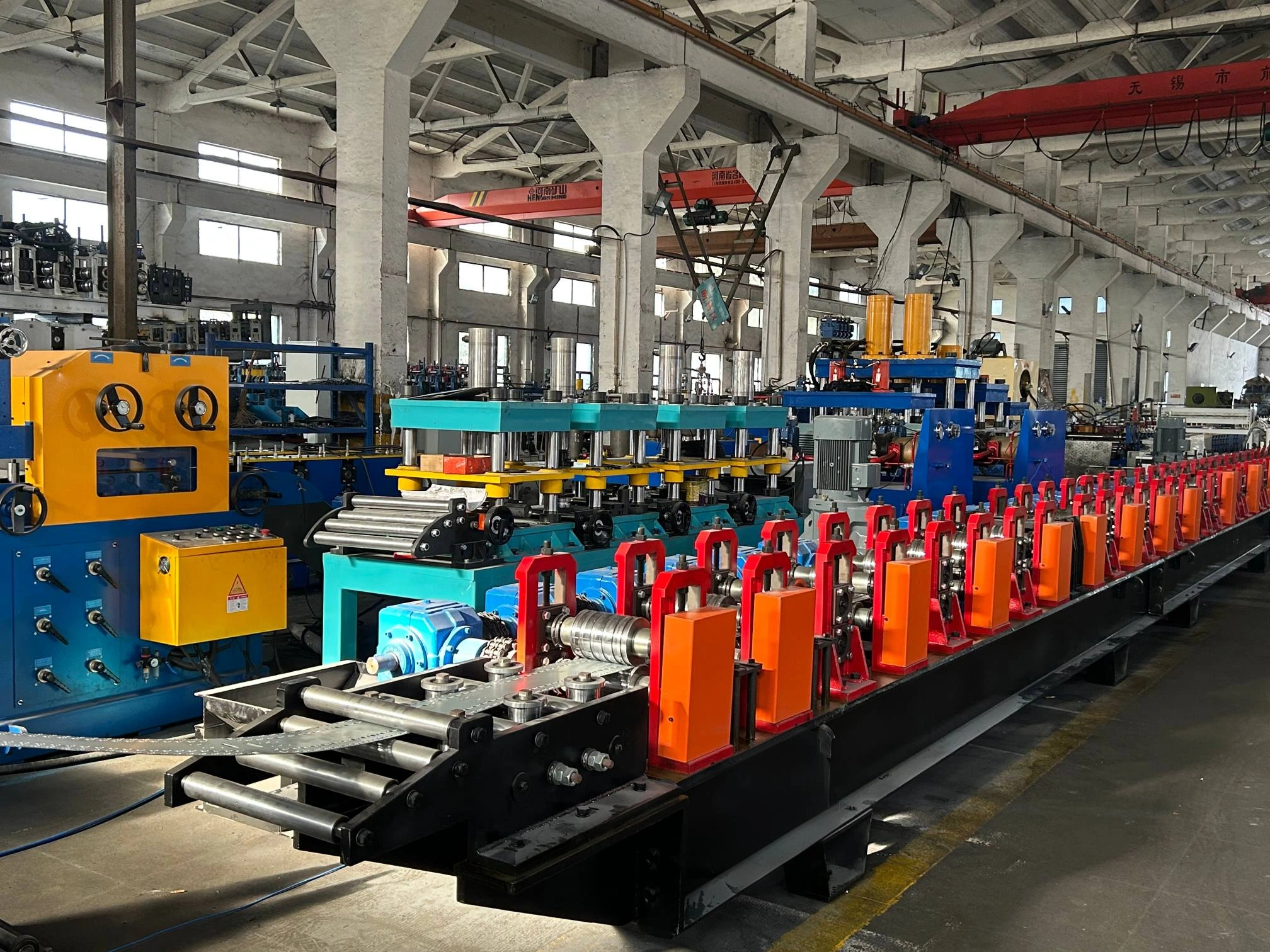
It takes steel coil from the uncoiler. Levels it. Punches the pattern you specified. Forms the profile through a gearbox-driven roll set. Cuts it to length with a flying saw. Welds where needed. All on one line.
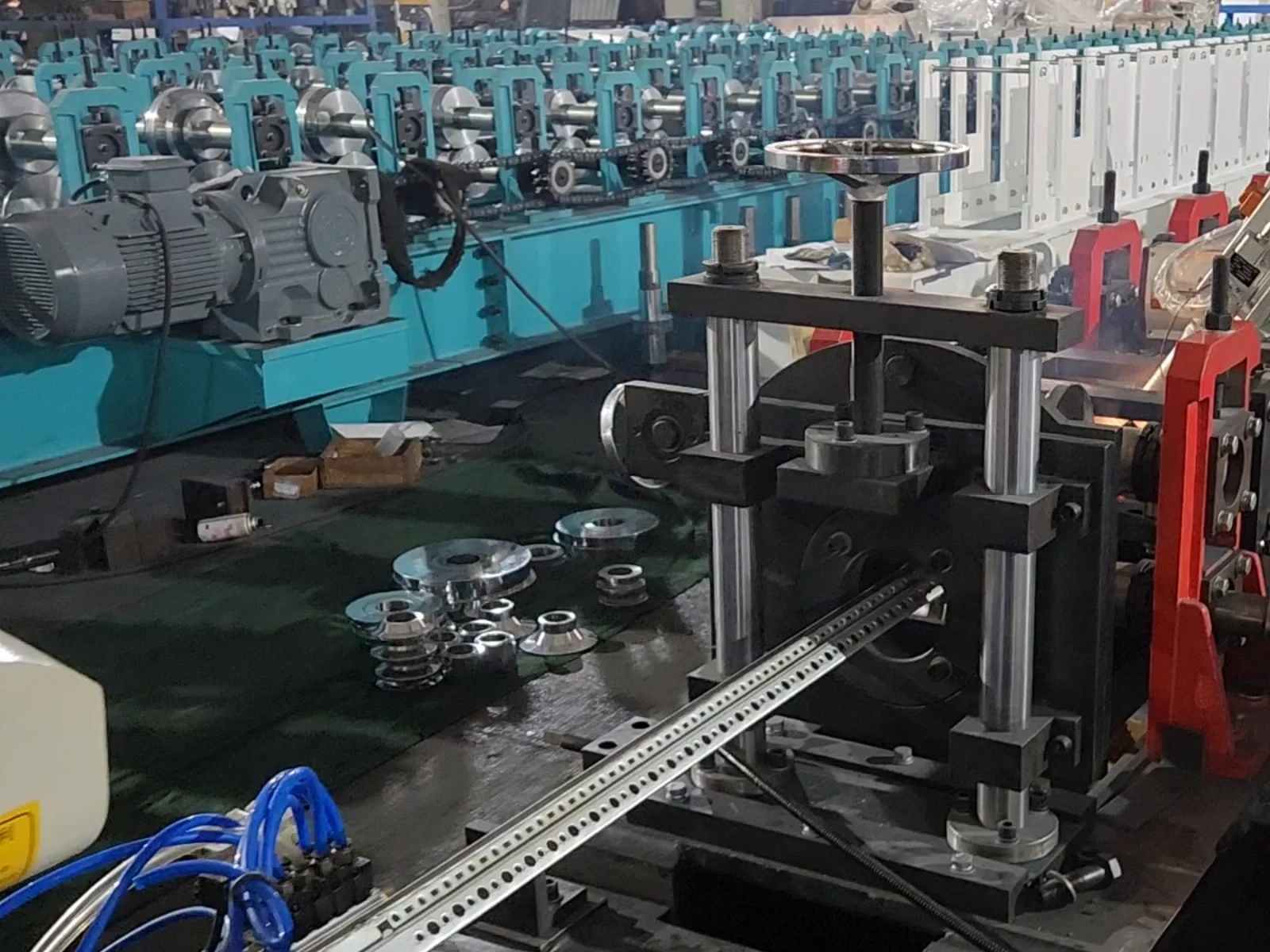
We use CR12 (D2 equivalent) rollers. Heat treatment to HRC 58–62. The stands are iron cast — not welded plate. That matters when you run 24/7. Every micron of deflection shows up in the final product.
Electrical cabinet manufacturers use this. Switchgear builders use this. Enclosure fabricators use this. When off-the-shelf framing does not cut it, this does.
If you are sourcing an machine de profilage à rouleaux pour colonnes d'enceintes électriques, you already know: precision framing determines whether a cabinet passes inspection or gets returned.
Demander un devis — Response Within 24 Hours
What Is an Electrical Enclosure
An electrical enclosure is a cabinet or box that houses electrical components.
Circuit breakers. Switches. Busbars. Terminals. Control gear. Its job is simple: keep people safe from live parts. Keep live parts safe from dust, water, and impact.
When you are in the market for an machine de profilage à rouleaux pour colonnes d'enceintes électriques, understanding the end product helps you spec the right equipment.
You see electrical enclosures everywhere.
The gray box on the factory wall. The panel inside an elevator machine room. The server rack in a data center. The switchgear lineup at a substation.
They come in different ratings. NEMA 1 for indoor dry locations. NEMA 4X for washdown environments. NEMA 12 for dusty industrial floors.
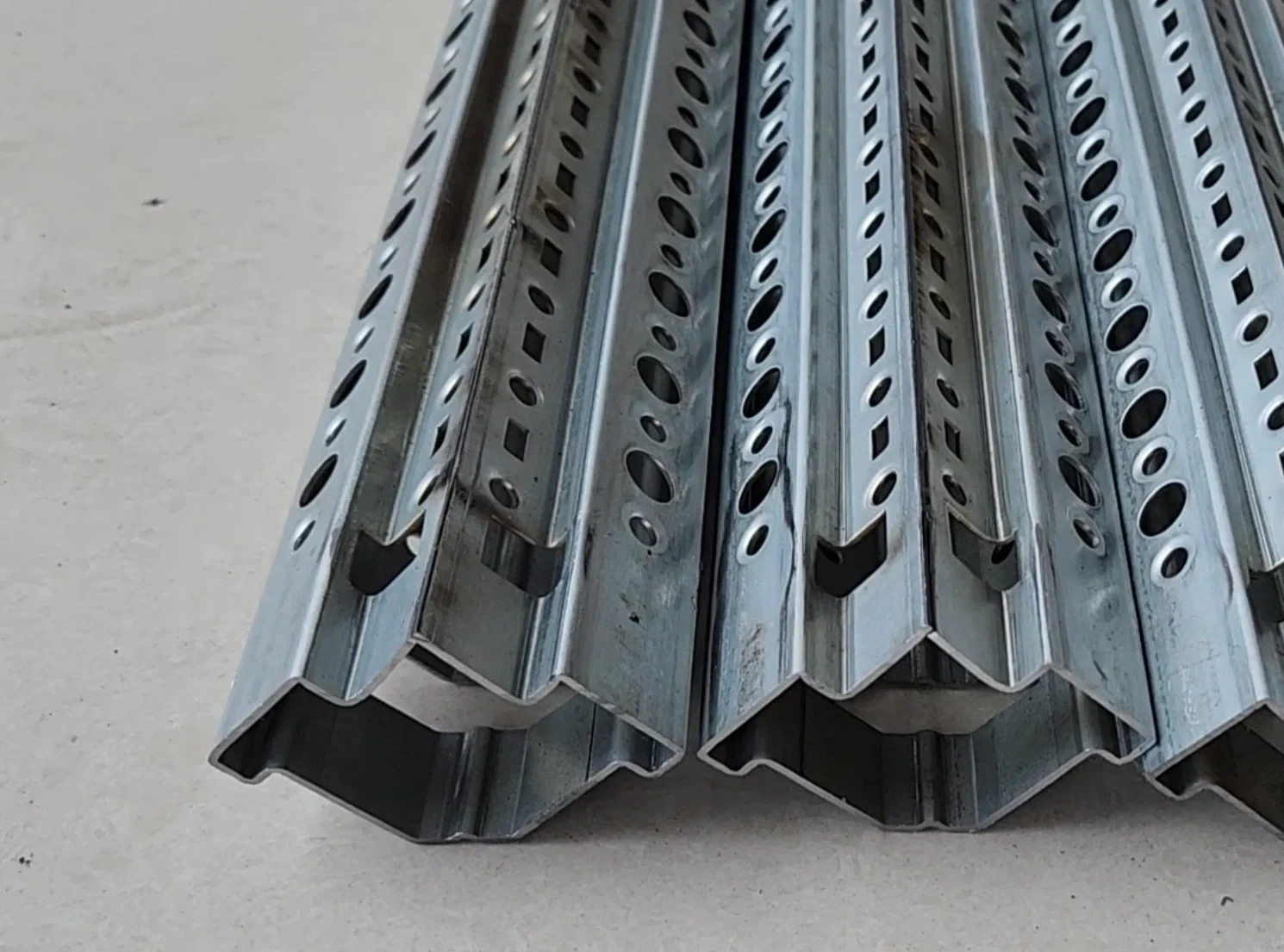
Inside every enclosure, there is a frame. That frame is built from vertical columns and horizontal rails — the skeleton the panels mount to.
Those columns need to be straight. Punched with holes at exact positions. Consistent from part to part. That is where the machine de profilage à rouleaux pour colonnes d'enceintes électriques comes in.
Enclosure manufacturing is a growing sector. The global market was valued at over USD 7 billion in 2023. Growth is driven by data center expansion, grid modernization, and industrial automation. Learn more: roll forming in the energy and electric sector.

What Is an Electrical Enclosure Column Roll Forming Machine
Un machine de profilage à rouleaux pour colonnes d'enceintes électriques is a production line. It turns steel coil into the vertical columns and frame profiles used inside electrical enclosures.
Think of it this way: you load a steel coil on one end. The machine uncoils it. Flattens it. Punches the mounting hole pattern your design calls for. Then gradually bends the flat strip into the finished column shape through a series of roller stands.
At the end, a flying saw cuts each piece to length — without stopping the line. If your design requires a closed box section, a laser welder seals the seam inline.
The key difference between this and a generic roll former: precision. Enclosure columns carry mounting rails. Door hinges. Panel brackets. A hole off by half a millimeter means assembly workers fight every panel they install.
That is why an machine de profilage à rouleaux pour colonnes d'enceintes électriques is built to tighter tolerances than standard roll forming lines.
This machine serves manufacturers who make:
- NEMA-rated electrical enclosures (indoor and outdoor)
- Switchgear and control panel cabinets
- Motor control center (MCC) frames
- Server rack and data center enclosures
- Junction boxes and distribution boards
Also called an electrical cabinet column roll forming machine or an electrical enclosure column roll former, the machine is built for one purpose: consistent, repeatable column production at industrial speed. Read our guide: roll forming solutions for the electrical industry.
How the Machine Works
Un machine de profilage à rouleaux pour colonnes d'enceintes électriques is not a single unit. It is a production line with six to eight stations. Each does one job well. Coil goes in one end. Finished enclosure columns come out the other.
Station-by-Station Breakdown
| Station | Composant | What It Does |
|---|---|---|
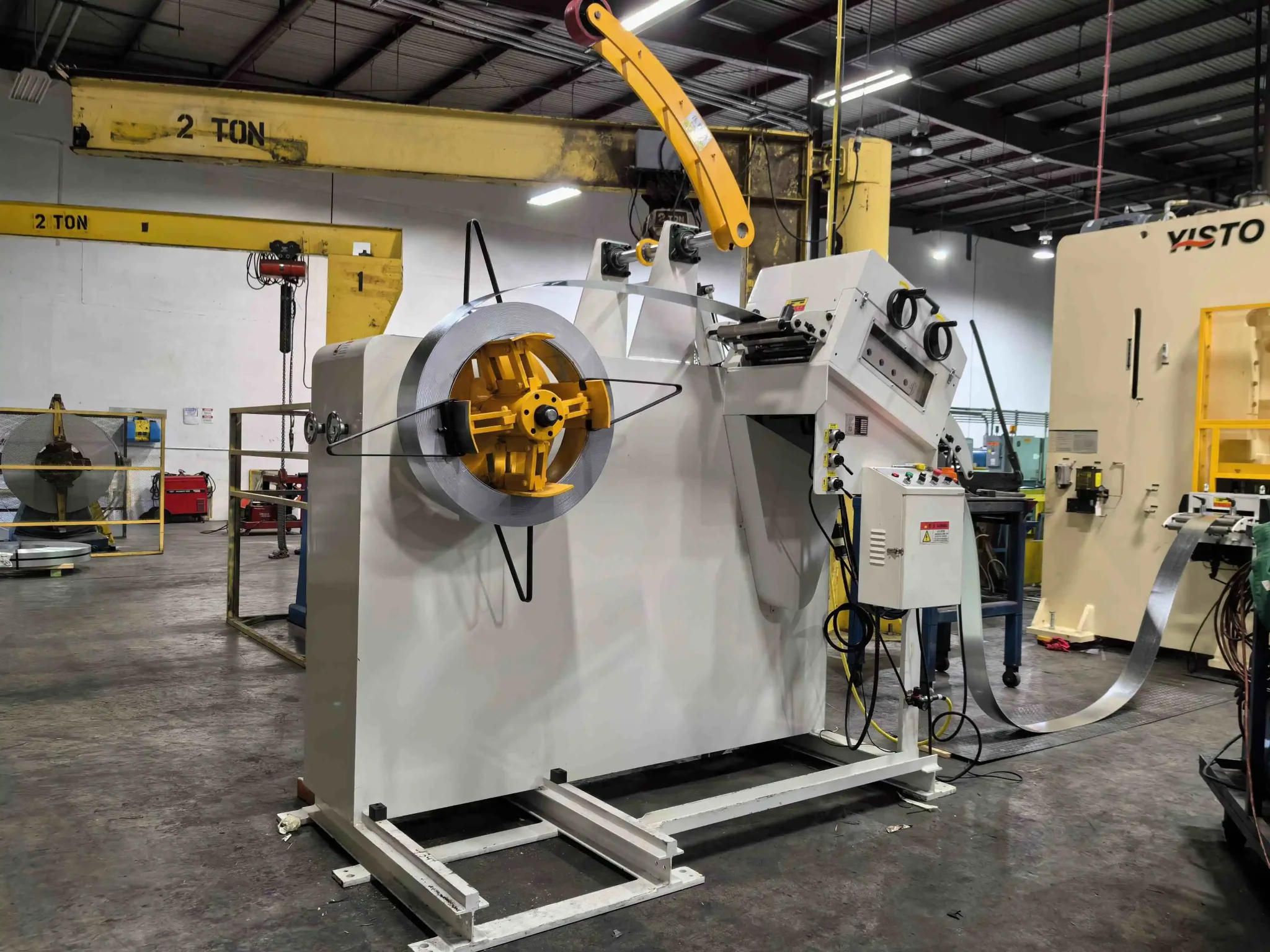
| 1 | Uncoiler & Leveler | Holds the steel coil (up to 5/8 ton), feeds it into the line, and flattens strip before forming. Without a proper niveleuse de profilage à rouleaux, material memory causes profile warping. |
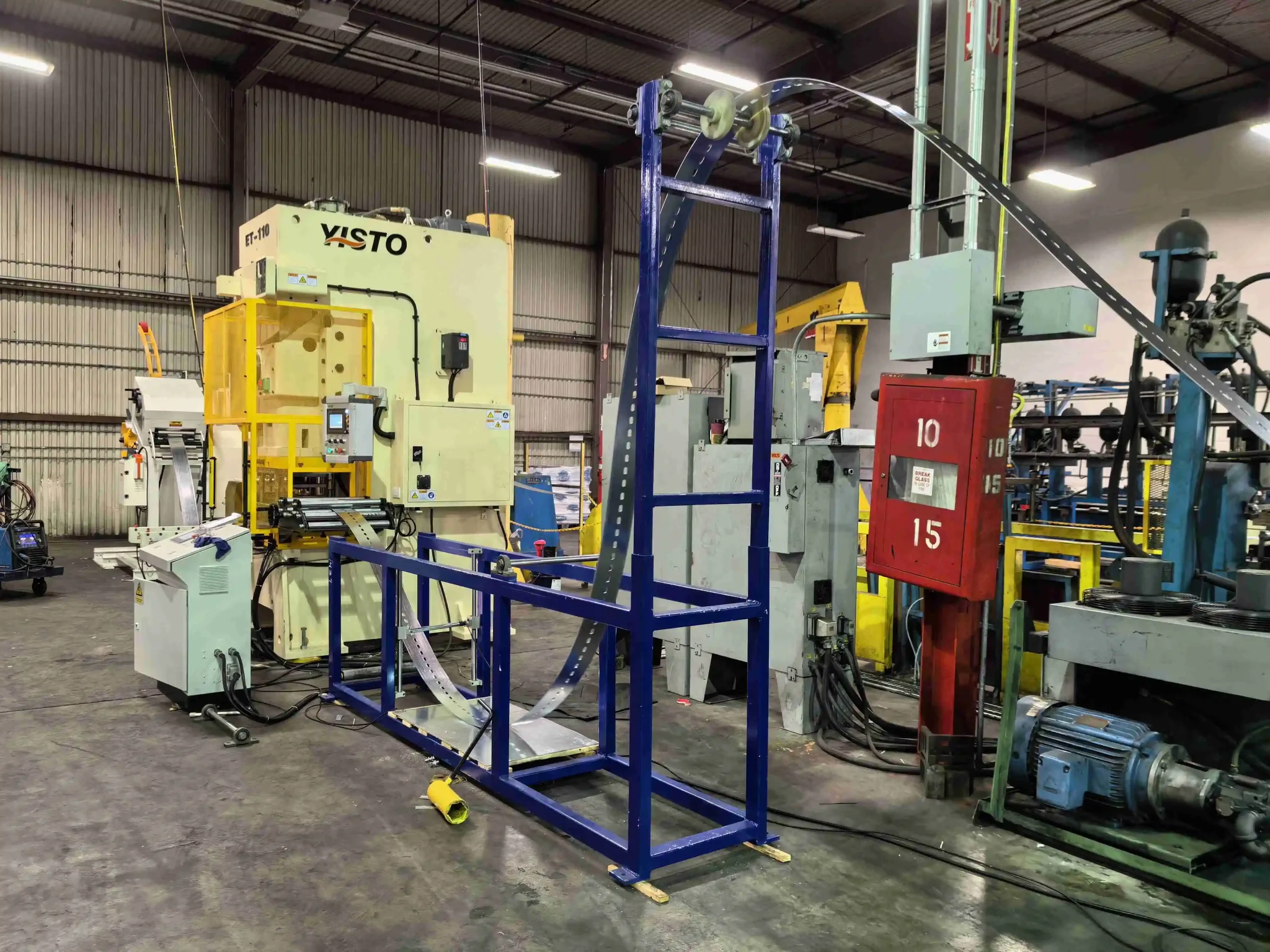
| 2 | Dispositif d'alimentation et de perforation servo-commandé | A servo-alimentateur positions the strip with ±0.1mm accuracy. The poinçonneuse creates mounting holes, knockouts, and slots — all inline. |
| 3 | Section de profilage à froid | Le cœur du electrical enclosure column roll former. Gearbox transmission drives each stand. Iron cast stands resist vibration. CR12 (D2) rollers maintain profile tolerance run after run. |
| 4 | Lisseur | Corrects any twist or bow introduced during forming. Critical for column straightness. |
| 5 | Flying Saw Cutting | Cisaille volante servo cuts on the move — no stopping the line. Length tolerance: ±0.5mm. |
| 6 | Laser Welder | In-line laser welding joins seams for closed sections when the design calls for it. |
| 7 | Contrôleur PLC | Le PLC controls all stations. Touchscreen interface, recipe storage for different column profiles, and remote diagnostic access. |
Machine Components & Materials
Every component on this machine de profilage à rouleaux pour colonnes d'enceintes électriques is spec’d for industrial use. No shortcuts.
Uncoiler and Leveler: Hydraulic expansion mandrel. Capacity: 5–8 tons. Leveler removes coil set before forming. See uncoiler selection guide.
Servo Feeder and Punch Device for Holes: AC servo motor drive. Position accuracy ±0.1mm. Hydraulic or servo punch — we spec based on your hole count. More: punching unit technology.
Roll Forming (Gearbox Transmission, Iron Cast Stands, CR12 Material / D2): Gearbox-driven — no chain slop. Iron cast stands (FC25) absorb vibration. CR12 rollers (D2 equivalent), vacuum heat-treated to HRC 58–62. 10+ years before rework.
Lisseur : Turkish-head type. Adjustable rollers correct bow, camber, and twist. Critical for columns over 2 meters.
Flying Saw Cutting: Servo-driven. Cuts on the run — no stopping. No burrs, no deformation. Blade life: 50,000+ cuts.
Laser Welder: Fiber laser, 1–2kW. Welds closed-section seams inline. No separate station needed.
PLC Controller: Siemens or Mitsubishi. Touchscreen HMI. 100 profile recipes. Remote support via Ethernet. One operator runs the whole line. See Automatisation du profilage à rouleaux.
Technical Parameters
These are the standard specifications. Every parameter can be adjusted to your profile and production requirements. An machine de profilage à rouleaux pour colonnes d'enceintes électriques from Beli ships with every spec documented — no guessing, no ballpark numbers.
Electrical Enclosure Column Roll Forming Machine — Technical Specifications
| Paramètre | Spécification |
|---|---|
| Épaisseur du matériau | 1.2 mm – 3.0 mm (standard); up to 4.0 mm optional |
| Material Width | 80 mm – 350 mm (strip width before forming) |
| Type de matériau | Cold-rolled steel (CR), galvanized steel (GI), stainless steel (SS304/SS316) |
| Limite d'élasticité | Up to 550 MPa (standard tooling); up to 780 MPa with upgraded rollers |
| Vitesse de formation | 10 – 20 m/min (adjustable via PLC) |
| Matériau de rouleau | CR12 (D2 equivalent), vacuum heat-treated |
| Dureté du rouleau | HRC 58 – 62 |
| Roller Surface Finish | Ra 0.4 μm after polish |
| Number of Forming Stands | 14 – 18 stands (profile-dependent); more on conception de profilage |
| Stand Construction | Iron cast FC25, gearbox-driven per stand (no chain drive) |
| Diamètre de l'arbre | 60 mm (standard); 75 mm for heavy-duty profiles |
| Roller Spacer / Adjustment | Manual spacer ring type or quick-change cassette (optional) |
| Punch Type | Servo feeder + hydraulic press (standard); full servo press optional |
| Punch Accuracy | ±0.1 mm positioning via AC servo motor |
| Punch Tonnage | 40 – 63 tons (based on hole count and pitch) |
| Type de découpe | Servo-driven flying shear (cuts without stopping the line) |
| Tolérance de coupe | ±0.5 mm on length |
| Product Length Range | 500 mm – 6,000 mm (adjustable, no mechanical stop) |
| Laser Welder (optional) | Fiber laser, 4 kW, for closed-section column seam welding |
| Contrôleur PLC | Siemens S7-1200 / S7-1500 or Mitsubishi FX5U series |
| HMI Touchscreen | 10-inch color screen, multi-language (EN, ES, FR, AR, RU available) |
| Archives de recettes | Up to 100 profile recipes stored on HMI |
| Main Forming Motor | 22 – 37 kW, variable frequency drive (VFD) |
| Puissance totale installée | 55 – 100 kW (line configuration dependent) |
| Alimentation | 380V / 50Hz, 3-phase (custom voltage available) |
| Coil Capacity (Uncoiler) | 5 – 8 metric tons, hydraulic expansion mandrel |
| Leveler Rollers | 7-roller precision leveler, ø80 mm, hardened to HRC 55+ |
| Straightener Type | Turkish-head, 4-roller adjustable for bow/camber/twist correction |
| Line Dimensions (L x W x H) | Approx. 18,000 x 1,800 x 1,600 mm (varies by stand count) |
| Line Weight | Approx. 12 – 18 metric tons |
| Cooling System | Recirculating oil cooling for roll forming and hydraulic stations |
| Lubrification | Centralized automatic lubrication pump with adjustable intervals |
| Safety Enclosure | Full perimeter guarding with interlocked access doors (CE compliant) |
| Emergency Stop | E-stop buttons every 2 m along the line + pull-cord option |
| Noise Level | ≤ 80 dB(A) at 1 m distance |
| Certifications | ISO 9001, CE marking, IEC electrical compliance |
| Garantie | 24 months mechanical, 12 months electrical |
Need a custom configuration? We adjust every parameter — roller diameter, PLC brand, tooling spec — to match your profile. See component selection ou complete buying guide.
Supplier Comparison: Beli Rollforming vs China vs EU & US
Not all machine de profilage à rouleaux pour colonnes d'enceintes électriques suppliers are the same. Here is what we see after 20 years in the market.
When comparing quotes, focus on three things: roller material, stand construction, and the PLC inside. Those three calls determine whether your line runs 10 years or gives you headaches in year two.
Beli Rollforming vs Average China Supplier vs EU/US Supplier
| Facteur | Profilage Beli | Average China Supplier | EU / US Supplier |
|---|---|---|---|
| Matériau de rouleau | CR12 / D2, HRC 58–62 | Cr12MoV or GCr15, HRC 55–60 | D2 / A2 tool steel, HRC 58–62 |
| Stands | Iron cast , gearbox drive | Welded plate or cast, chain or gearbox | Welded steel plate, gearbox drive |
| Punch System | Servo feeder + hydraulic/servo press, ±0.1mm | Pneumatic or hydraulic, ±0.3–0.5mm | Servo-hydraulic, ±0.1mm |
| Vitesse de la ligne | 10–20 m/min (stable) | 8–15 m/min | 12–25 m/min |
| Contrôleur | Siemens / Mitsubishi PLC | Delta / Xinje / generic PLC | Siemens / Allen-Bradley |
| Certifications | ISO 9001, CE, IEC compliance | CE (varies), limited documentation | CE, UL, full documentation |
| Assistance à l'installation | On-site worldwide | Online guidance or paid on-site | On-site (regional) |
| Fourchette de prix (USD) | 45,000–120,000 | 25,000–80,000 | 120,000–350,000 |
| Délai de mise en œuvre | 45–75 days | 30 à 60 jours | 90 à 180 jours |
| After-Sales | 24/7 remote + spare parts in 72h | Email support, parts variable | Service contract required |
Beli gives you EU/US-grade components and certifications at roughly half the price. Full breakdown: fabricants de machines de profilage à rouleaux.
Why Choose Beli for Your Electrical Enclosure Column Roll Former
When you buy an machine de profilage à rouleaux pour colonnes d'enceintes électriques from us, here is what you get:
One line, one supplier. We handle the whole machine de profilage à rouleaux pour colonnes d'enceintes électriques line — uncoiler through stacker. No finger-pointing between vendors.
Tooling engineered for your profile. Send us your drawing. We design the flower pattern, simulate it in logiciel de profilage à rouleaux, and cut the rollers. No extra engineering fee.
D2 tooling as standard. CR12 / D2 rollers cost more upfront. They also last 3–5× longer than GCr15. Over 10 years, that is the only math that matters.
We show up. Our technicians have active visas for Australia, the US, and Europe. On-site installation, training, and first-article sign-off are part of the deal.
Spare parts in 72 hours. We keep critical composants de machine de profilage à rouleaux in stock. DHL express to your door.
Real warranty. 24 months on mechanical. 12 months on electrical. Not a piece of paper — we answer the phone.
Check our FAQ page for common questions. Or read our guide d'entretien préventif before you commit.
See the Machine in Action
Regardez notre machine de profilage à rouleaux pour colonnes d'enceintes électriques running in our factory — uncoiler through finished part:
Production footage: uncoiling, leveling, servo punching, roll forming, flying shear cutting, and stacking.
Foire aux questions
A production line that turns steel coil into formed, punched, cut-to-length columns for electrical enclosures. One coil in, finished columns out. Handles uncoiling, leveling, punching, forming, straightening, cutting, and optional welding — all inline.
Cold-rolled steel. Galvanized steel (GI). Stainless steel. Thickness: 1.2–3.0mm standard. CR12/D2 rollers handle high-strength material. Aluminum? We spec different roller coatings — just ask.
10–20 m/min. Output depends on profile complexity and hole patterns. An 8-hour shift produces roughly 3,000–5,000 finished columns.
Servo feeder positions the strip under the poinçonneuse. Press fires hydraulically or via servo. Pre-punch, then roll — keeps hole position accurate. We design the die set to your hole layout.
Yes. Our engineers travel to your site. Mechanical setup. Electrical commissioning. Operator training. Budget 5–7 days for a standard line. Remote commissioning also available. Full details: service d'installation.
45–75 days from deposit to ex-factory. Shipping adds 15–30 days. Export docs included — HS codes, packing lists, certificates of origin. See guide d'exportation du profilage à rouleaux.
Daily: check lube, clean punch area, inspect alignment. Weekly: check rollers, verify cuts, test e-stops. Monthly: gearbox oil, electrical torque. Full schedule: maintenance guide.
Industry Standards & Resources
When you buy an machine de profilage à rouleaux pour colonnes d'enceintes électriques, know what standards your profiles need to meet. Here is what we reference during design:
NEMA Enclosure Standards — North American electrical enclosure ratings (NEMA 1, 3R, 4, 4X, 12). We design tooling that produces frames meeting these dimensional requirements.
ASTM A1008 / A1008M — Standard Specification for Steel Sheet — The most common material spec for cold-rolled steel used in enclosure manufacturing.
Gestion de la qualité ISO 9001:2015 — Beli Rollforming is ISO 9001 certified. Every machine de profilage à rouleaux pour colonnes d'enceintes électriques ships with full QC documentation.
Roll Forming — Wikipedia — A technical overview of the roll forming process, material behavior, and industry applications.
FABTECH International — North America’s largest metal forming event. We exhibit regularly. Come see our machines in person.
Get a Quote for Your Electrical Enclosure Column Roll Forming Machine
Send us your column profile drawing. We respond within 24 hours with a complete machine de profilage à rouleaux pour colonnes d'enceintes électriques quotation:
- A machine configuration matched to your profile
- Line layout drawing
- Detailed quotation with component spec
- Estimated delivery schedule
Send Your Drawing — Get a Quote Today
Or browse équipement auxiliaire for feeder, uncoiler, or punch upgrades. First-time buyer? Start here: complete buying guide.
Avis
Il n’y a pas encore d’avis.