Mantenha-se atualizado com Notícias da Indústria Believe

24 mil inscritos
Assine hoje mesmo para receber guias exclusivos sobre conformação de rolos, tendências do setor e acesso antecipado às nossas últimas inovações — tudo entregue diretamente na sua caixa de entrada.

Fique por dentro de tudo Acredite na Indústria’As percepções de especialistas!

Índice

Como comprar uma máquina de perfilagem

How to Buy a Roll Forming Machine: Complete Buyer’s Guide (2026)

Learning Como comprar uma máquina de perfilagem means understanding types, specifications, pricing, manufacturer evaluation, and shipping logistics. Prices range from 30,000 para 350,000+ depending on automation level and material capacity. This guide walks you through every stage — from defining your profile requirements to conducting factory acceptance tests — so you can make a confident, well-informed purchase decision.

O que é um Máquina formadora de rolos?

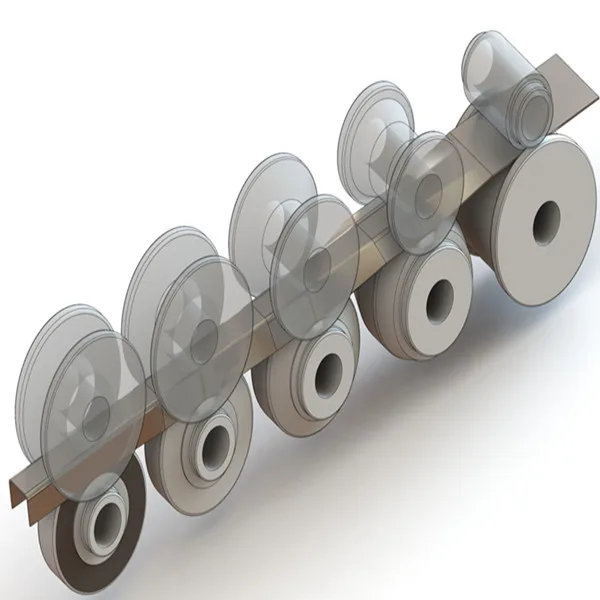
A roll forming machine is a continuous metal forming system that transforms flat metal coils into specific cross-section profiles by passing the material through a sequence of roller stations. Each station incrementally bends the metal until the desired shape is achieved, followed by automatic cutting to length. Anyone asking Como comprar uma máquina de perfilagem should start here — understanding what the equipment does and how it works determines every downstream decision.

Unlike press braking or stamping — which form metal one piece at a time — a máquina de perfilagem de rolos processes material in a continuous flow, achieving production speeds of 10 to 60 meters per minute depending on profile complexity. This continuous processing advantage is why Como comprar uma máquina de perfilagem is such an important question for metal product manufacturers seeking higher throughput. For a deeper technical breakdown of the forming process, see How a Roll Forming Machine Works.

Acredite na Indústria is a máquina de perfilagem de rolos manufacturer based in Wuxi, China, with over 15 years of engineering experience. Since 2012, the company has designed and delivered more than 3,000 production lines to customers in over 50 countries, covering building construction, warehouse storage, solar energy, and infrastructure applications.  If you want to understand Como comprar uma máquina de perfilagem from a trusted source, knowing the manufacturer’s track record is the first step.

Core Components of a Máquina formadora de rolos

When researching Como comprar uma máquina de perfilagem, you should understand the seven main components that determine performance:

  1. Desbobinador — Holds and feeds the metal coil into the line. For heavy coils up to 5 tonnes, a Desbobinador hidráulico de 5 toneladas provides stable, motorized feeding.
  2. Nivelador — Flattens the coil strip to eliminate curvature before forming. A precision Nivelador de conformação de rolos is critical for consistent profile tolerance.
  3. Estações de Formação — Sequential roller sets that progressively bend the metal into the target profile (typically 10–32 stations)
  4. Sistema de perfuração — Creates holes, slots, or notches in the profile (pre-punch or post-punch)
  5. Sistema de corte — Shears the formed profile to the required length (hydraulic shear, servo cutter, or flying saw)
  6. Sistema de controle — PLC-based interface (Siemens, Delta, or Mitsubishi) with touchscreen HMI
  7. Mesa de saída — Supports the finished product after cutting

Types of Máquinas de perfilagem (2026)

The first step in Como comprar uma máquina de perfilagem is identifying which type matches your production requirements:

Tipo de máquinaTypical StationsSpeed (m/min)Profile ProductsPrice Range (USD)
Corrugated Roof Panel12–1620–40Corrugated sheets, trapezoidal panels30,000–80,000
IBR Roofing Sheeting18–2415–30IBR panels, standing seam, concealed-fix roofs50,000–120,000
C/Z Purlin (interchangeable)16–2210–60C and Z purlins, 80–300mm sizes80,000–200,000
Purlina Sigma18–248–18Sigma profiles for racking & structures90,000–180,000
Viga escalonada22–305–12Step beams for warehouse racking100,000–250,000
Steel Floor Deck18–2415–30Composite floor decking panels60,000–150,000
Stud & Track (drywall)14–2020–40Steel studs, tracks, U-channels40,000–110,000
Gutter & Downspout12–1815–25Half-round, rectangular, K-style gutters25,000–60,000
Solar Mounting Structure14–2012–25Solar rails, brackets, clamps50,000–130,000
Storage Rack Upright18–286–20Rack uprights, beams, shelf panels80,000–200,000

Each type requires specific roller design, and most manufacturers can customize the forming stations to match your exact profile drawings. Como comprar uma máquina de perfilagem that fits your exact profile starts with comparing the types above and matching them to your end product. If your production needs two different profiles from a single machine, consider a Máquina de perfilagem de rolos de dupla camada for maximum capital efficiency.

Key Specifications to Evaluate Before Buying

Material Thickness & Compatibility

A critical factor in Como comprar uma máquina de perfilagem is matching material capacity to your actual production needs. According to The Fabricator’s roll forming overview, material springback behavior is the primary variable that determines the number of forming passes required.

MaterialCommon Thickness RangeTensile Strength (MPa)Notes
Galvanized steel (GI)0.3 – 3.0 mm250–400Most widely used
Pre-painted steel (PPGI)0.3 – 1.2 mm250–400Color coating requires protective rollers
Cold-rolled steel (CRS)0.5 – 4.0 mm300–550Higher strength needs heavier shafts
Aço inoxidável0.3 – 2.0 mm500–700Requires hardened rollers
Alumínio0.5 – 3.0 mm70–310Lower friction, different forming pass design
High-strength steel1.0 – 4.0 mm550–900Requires more stations and heavier frame

Number of Forming Stations

When figuring out Como comprar uma máquina de perfilagem, the station count directly affects profile quality:

  • Simple profiles (corrugated panels, flat profiles): 10–14 stations
  • Medium profiles (C/Z purlins, gutters): 14–20 stations
  • Complex profiles (sigma purlins, step beams, closed sections): 18–30 stations
  • High-precision profiles (automotive components): 24–40 stations

More stations distribute the forming force across more passes, resulting in smoother profiles, less internal stress, and tighter dimensional tolerances. However, each additional station increases machine length, cost, and maintenance requirements.

Velocidade de produção

Production speed varies significantly by profile complexity:

  • Simple corrugated panels: 20–40 m/min (1,200–2,400 m per 8-hour shift)
  • Purlins and structural profiles: 8–20 m/min (480–1,200 m per shift) — Beli’s High Speed C Z Purlin Máquina formadora de rolos achieves 60+ m/min
  • Heavy step beams and closed sections: 5–12 m/min (300–720 m per shift)

Speed matters, but not at the cost of accuracy. A unit running at 60 m/min with ±3mm tolerance is less valuable than one running at 15 m/min with ±1.5mm tolerance for structural applications. When considering Como comprar uma máquina de perfilagem, always prioritize speed-accuracy balance over raw speed alone.

Drive System Comparison

The drive system is one of the most important — and often overlooked — specifications when learning Como comprar uma máquina de perfilagem:

Tipo de acionamentoComo funcionaBest ForTypical Cost ImpactService Life
Transmissão por correnteRoller chains connect sprockets on each shaftLight-duty machines, simple profilesBaseline (lowest)5–10 years
Gearbox DriveIndividual gearboxes on each station shaftStructural profiles, medium-heavy duty+15–25% vs chain10–15 years
Servo DriveIndividual servo motors with electronic synchronizationHigh-precision profiles, variable speed+30–50% vs chain15–20 years

For equipment producing structural components (purlins, step beams, floor decks), gearbox drive is the recommended minimum. Servo drive is worth the investment when you need exact synchronization between stations or frequent profile changeovers. Understanding these drive options is a key part of Como comprar uma máquina de perfilagem that delivers long-term reliability.

Frame Structure

Understanding frame construction is another essential aspect of Como comprar uma máquina de perfilagem that will withstand years of heavy use:

  • Wall plate frame: Welded steel plates. Suitable for light to medium-duty applications. Lower cost.
  • Cast iron frame: Cast as a single piece for maximum rigidity. Preferred for high-speed and heavy-duty machines. Higher vibration absorption extends roller life.
  • Heavy welded H-beam frame: Used for very heavy profiles (6mm+ steel). Custom designed per application.

Máquina formadora de rolos Prices in 2026

Understanding pricing is essential when studying Como comprar uma máquina de perfilagem. The following data reflects current 2026 market rates from established Chinese manufacturers. For an independent benchmark, MachineMatcher’s 2026 price guide provides useful third-party reference ranges.

Price Range by Machine Category

Machine CategoryBasic (Manual/Semi-Auto)Standard (PLC, Hydraulic)Full Auto (Servo, Stacking)
Corrugated Roof Panel15,000–25,00030,000–55,00060,000–120,000
C/Z Purlin Line40,000–70,00080,000–150,000160,000–250,000
Sigma Purlin Line50,000–80,00090,000–160,000170,000–250,000
Step Beam Former60,000–100,000100,000–200,000210,000–350,000
Floor Deck Line35,000–60,00060,000–120,000130,000–200,000
Stud & Track Line25,000–45,00045,000–85,00090,000–150,000
Gutter Machine15,000–25,00025,000–45,00050,000–80,000

What Drives the Price?

When studying Como comprar uma máquina de perfilagem within budget, understanding price drivers helps you negotiate smarter:

FatorImpact on PriceExample
Automation level+20% to +100%Adding servo cutter + auto stacker vs. manual run-out
Number of stations+5% per additional station20 stations vs. 14 stations = roughly +30%
Material thickness capacity+15% to +40%Upgrading from 2mm to 4mm capacity
Brand of electrical components+10% to +25%Siemens PLC vs. domestic Chinese PLC
Roller material+5% to +15%Forged steel vs. 45# carbon steel
Shaft diameter+5% to +10%70mm shaft vs. 90mm shaft for heavy profiles
Shipping & installation+8% to +15%Sea freight + on-site installation support

Hidden Costs to Budget For

Part of Como comprar uma máquina de perfilagem wisely is accounting for expenses beyond the quoted price:

  • Spare parts package: 1,500–5,000 for a recommended first-year parts kit
  • Sea shipping: 3,000–12,000 depending on machine size and destination port
  • Import duties: 0–15% depending on your country’s tariff schedule (check the WTO Tariff Database for your HS code)
  • Factory inspection: 500–2,000 for a third-party inspection before shipment
  • Foundation preparation: 2,000–8,000 for concrete base and alignment
  • Operator training: Often included free, but budget for 3–7 days of lost production

Automation & Smart Technology in 2026

Modern roll forming technology has advanced significantly. In 2026, automation is no longer optional for competitive production. Understanding these features is part of Como comprar uma máquina de perfilagem that will remain productive for years.

Automation Levels

When exploring Como comprar uma máquina de perfilagem, understanding automation levels is critical for matching the equipment to your production volume:

LevelCaracterísticasTypical Cost PremiumBest For
ManualManual decoiler, hand measurement, manual stackingBaselineSmall workshops, low volume
Semi-AutoHydraulic decoiler, PLC control, length counter+15–25%Medium production, growing businesses
Full AutoServo feed, auto punch, servo cutter, auto stacker+40–70%High-volume factories, 24/7 operation
Smart / Industry 4.0IoT monitoring, remote diagnostics, production analytics+60–100%Large manufacturers, multi-line operations

2026 Technology Features Worth Considering

Modern buyers asking Como comprar uma máquina de perfilagem should also evaluate these technology features:

  • Automatic stacking and packaging — Reduces labor by 2–3 operators per line
  • PLC control systems — Touchscreen HMI with program storage for multiple profiles (Siemens, Delta, Mitsubishi)
  • Servo-driven punching — Faster, more accurate hole placement than hydraulic punching. See it in action on the Máquina de perfilagem de canaletas.
  • Servo tracking cutter — Achieves ±1.5mm length tolerance at high speed
  • IoT remote monitoring — Track production data, machine status, and error alerts from your phone

Automatic size change — CNC-adjustable rollers for switching between purlin sizes in under 30 minutes, as featured on the Máquina de perfilagem de canaletas de média velocidade

ROI Calculator

Investing in a roll forming machine is a major capital decision, but the leap in efficiency often pays for itself rapidly. Use this interactive calculator to compare your current production costs against the speed and labor savings of automation. Adjust the sliders below to instantly reveal your projected annual net benefit, Year-1 ROI, and exact payback period.


Roll Forming ROI Simulator

Total Investment
$0
Annual Net Benefit
$0
ROI Percentage
0%
Payback Period
0 Months

What You Need to Enter:

  • Machine Price: Base cost of the equipment.
  • Installation & Training: Freight, setup, and operator training costs.
  • Current Labor: Your existing annual labor spend to make these parts.
  • New Labor: Expected annual labor cost once automated.
  • Annual Maintenance: Estimated yearly budget for upkeep and tooling.
  • Added Profit: Extra yearly revenue gained from increased production capacity.

What the Calculator Tells You:

  • Total Investment: Your total upfront cost (Machine + Installation).
  • Annual Net Benefit: Total yearly financial gain (Labor Savings - Upkeep + New Profit).
  • Payback Period: How many months until the machine completely pays for itself.
  • ROI (Year 1): The percentage of your investment returned to you in the first 12 months.

How to Choose the Right Manufacturer

Choosing the right manufacturer is arguably the most important decision in Como comprar uma máquina de perfilagem. Here are the six criteria that matter most:

1. Engineering & Design Capability

Ask if the manufacturer has in-house roll forming engineers who can design the flower pattern (the sequence of forming passes). A capable manufacturer should provide detailed forming drawings before production begins. According to Metal Construction News, engineering support quality is the single most cited factor in post-purchase satisfaction among roll forming equipment buyers.

2. Production Capacity

Visit the factory if possible. Key indicators of manufacturing capability include:

  • CNC machining centers for precision roller fabrication
  • At least 3,000+ square meters of workshop space
  • Existing machines running on the factory floor (demonstrates active production)

3. Project References

Request a list of delivered projects similar to your requirements. A credible manufacturer should provide:

  • Photos and videos of the machine running during testing
  • Customer contact references (at least 2–3 in your region)
  • Profile samples from previous orders

4. Quality Assurance & Testing

Every production line should undergo a Factory Acceptance Test (FAT) before shipment. Knowing Como comprar uma máquina de perfilagem means insisting on a FAT — this is your best protection against receiving non-conforming equipment. The FAT should verify:

  • Profile dimensions match the approved drawings
  • Length tolerance is within specification (typically ±1.5mm)
  • Surface finish has no scratches or marks
  • All safety systems function correctly
  • PLC programs are tested for all production modes

MachineMatcher Factory Inspection Guide provides a useful independent checklist for what to verify during FAT.

5. After-Sales Support

When evaluating Como comprar uma máquina de perfilagem, after-sales support can make or break your long-term experience. A reputable manufacturer should provide:

  • 12–18 months warranty on main components
  • Free lifetime PLC program support
  • Spare parts availability for at least 10 years
  • Online technical support within 2 hours of request
  • On-site installation supervision (1–2 engineers for 3–7 days)

6. Certifications

Checking certifications is a fundamental step in Como comprar uma máquina de perfilagem safely. Standard certifications for manufacturers include:

  • TUV certification (optional but adds credibility)
  • CE certification (mandatory for European customers — issued by the European Commission)
  • ISO 9001 (quality management system — issued by the International Organization for Standardization)
  • SGS inspection report (third-party quality verification)

Common Buying Mistakes to Avoid

Based on over 15 years of experience delivering production lines worldwide, these are the most costly mistakes buyers make:

  1. Choosing the wrong material capacity. Buying a machine rated for 1.5mm maximum thickness when you need to produce 2.5mm profiles. Always specify 20–30% above your current maximum requirement.
  2. Skipping the Factory Acceptance Test. Inspecting your equipment in person (or via a third-party inspector) before it leaves the factory catches 90% of issues before they become your problem.
  3. Prioritizing price over engineering quality. A cheaper machine with thin shafts (50mm vs. 70mm) or a chain drive when you need gearbox drive will cost far more in downtime and re-rollering within 2 years.
  4. Not providing complete profile drawings. Manufacturers need accurate cross-section dimensions, material specifications, and tolerance requirements. Ambiguous drawings lead to machines that don't produce the correct profile.
  5. Forgetting about spare parts. Always order a first-year spare parts kit (cutting blades, roller seals, PLC components). Waiting 3 weeks for a spare part from China while your line sits idle is expensive.
  6. Underestimating foundation requirements. A heavy production line (step beam former, floor deck line) needs a reinforced concrete foundation. Poor foundation causes misalignment, profile distortion, and premature roller wear.
  7. Ignoring operator training. Even with PLC automation, trained operators produce better output and handle minor issues before they become major problems. Refer to Beli's Roll Forming Machine Operation Guide for a step-by-step reference.

Buying from China: What You Need to Know

China is the world's largest manufacturer of this type of equipment, offering competitive pricing with quality that ranges from budget to premium depending on the supplier. For many buyers, understanding Como comprar uma máquina de perfilagem from China is the most practical path to a cost-effective investment.

Why Buy from China?

For most buyers researching Como comprar uma máquina de perfilagem, China offers the best combination of price, customization, and export experience:

  • Cost savings: 40–60% lower than equivalent European or American machines
  • Manufacturing scale: China has the largest concentration of factories producing these systems, with complete supply chains
  • Personalização: Chinese manufacturers are generally more willing to build custom machines
  • Export experience: Established manufacturers have shipped to 50+ countries and understand import requirements

The Buying Process Step by Step

Here is a practical 8-step framework for Como comprar uma máquina de perfilagem from China:

  1. Define your profile requirements — Prepare detailed cross-section drawings with material specs and tolerances
  2. Request quotes from 3–5 manufacturers — Include the same specifications for fair comparison
  3. Evaluate proposals — Compare machine configurations, not just prices. Check forming station count, shaft diameter, drive type, and electrical brand
  4. Place order and pay deposit — Standard terms: 30% deposit, 70% before shipment or by Letter of Credit (L/C)
  5. Conduct Factory Acceptance Test — Visit in person or send a third-party inspector
  6. Arrange shipping — FOB (you handle shipping) or CIF (seller handles shipping to your port). Consult Incoterms 2020 guidelines for trade term definitions.
  7. Receive and install — Clear customs, prepare foundation, manufacturer engineers arrive for installation (3–7 days)
  8. Training and trial production — Learn machine operation, maintenance, and troubleshooting

Total Lead Time

PhaseDuration
Design and engineering confirmation1–2 weeks
Fabricação40–55 working days
Factory testing (FAT)1–3 days
Sea shipping20–35 days
Customs clearance and delivery5–10 days
Installation and training3–7 days
Total10–15 weeks

Perguntas mais frequentes

How much does a máquina de perfilagem de rolos cost?

In 2026, prices range from 15,000 para 350,000+ depending on the type and automation level. Basic corrugated panel machines start around 15,000–25,000. Mid-range C/Z purlin machines cost 80,00080,000–200,000. Fully automated step beam production lines range from 100,000to100,000para350,000+. Chinese manufacturers typically offer 40–60% lower prices than European or American suppliers.

What is a máquina de perfilagem de rolos?

máquina de perfilagem de rolos is a continuous metal forming system that shapes flat metal coils into specific profiles by passing the material through a sequence of roller stations. Each station progressively bends the metal until the desired cross-section is achieved, followed by automatic cutting to length. Production speeds range from 8 to 60 meters per minute depending on profile complexity.

How long does a máquina de perfilagem de rolos last?

A well-maintained unit has an operational lifespan of 15–20 years. Roller sets typically need replacement after 5–8 years depending on material hardness and production volume. Regular lubrication, shaft alignment checks, and timely spare parts replacement are critical to achieving maximum machine life.

How many forming stations do I need?

Simple profiles like corrugated panels require 10–14 stations. Medium-complexity profiles such as C/Z purlins and gutters need 14–20 stations. Complex profiles including sigma purlins, step beams, and closed sections require 18–30 stations. More stations generally produce smoother profiles with less internal stress, but increase machine length and cost.

Is it worth buying a máquina de perfilagem de rolos from China?

Yes, sourcing from China can offer 40–60% cost savings compared to European or American manufacturers, with comparable quality from established factories. Key success factors include verifying manufacturer certifications (CEISO 9001, SGS), conducting factory acceptance tests before shipment, and confirming after-sales support including installation supervision and operator training.

What is the difference between C purlin, Z purlin, and Sigma purlin machines?

C purlin machines produce C-shaped profiles for simple structural support. Z purlin machines create interlocking Z-sections preferred for overlapping spans in large buildings. Sigma purlin machines form Σ-shaped profiles that offer 15–25% higher load-bearing capacity than equivalent C or Z sections, making them ideal for heavy-duty warehouse racking and mezzanine floor systems.

What materials can a máquina de perfilagem de rolos process?

Most production lines process galvanized steel (GI), pre-painted galvanized steel (PPGI), cold-rolled steel, aluminum, and stainless steel. Material thickness typically ranges from 0.3mm to 4.0mm depending on capacity. Higher tensile strength materials (550–900 MPa) require more forming stations and heavier shaft diameters. See Steel Construction Institute material guidance for specification frameworks.

How fast can a máquina de perfilagem de rolos produce?

Production speed ranges from 5–12 m/min for complex structural profiles (step beams, closed sections) to 20–40 m/min for simple corrugated panels. A typical purlin line operates at 10–20 m/min, producing approximately 600–1,200 meters per 8-hour shift. Beli's Máquina Formadora de Rolos de Perfil C Z de Alta Velocidade achieves 60+ m/min for maximum throughput.

What is a Factory Acceptance Test (FAT)?

A Factory Acceptance Test (FAT) is an on-site inspection performed at the manufacturer's facility before shipment. The FAT includes running test materials through the machine, verifying profile dimensions against drawings, checking cutting accuracy (±1.5mm standard), testing PLC program functions, and confirming all safety systems work properly.

How do I choose between chain drive and gearbox drive?

Chain drive is suitable for light-duty equipment producing simple profiles at lower speeds, and costs the least. Gearbox drive offers higher torque transfer, better station synchronization, and longer service life, making it the recommended choice for structural profiles. Servo drive provides the highest precision and is ideal for high-speed or multi-profile machines, but comes at a higher price.

How long does delivery take from China?

Manufacturing typically takes 40–55 working days. Sea shipping adds 20–35 days depending on destination. Customs clearance and inland delivery takes 5–10 days. On-site installation and training requires 3–7 days. Total lead time from order to full production is approximately 10–15 weeks.

What after-sales support should I expect?

A reliable manufacturer should provide 12–18 months warranty on main components, free lifetime PLC program support, spare parts availability for at least 10 years, online technical response within 2 hours, and on-site installation supervision with 1–2 engineers for 3–7 days of setup and training.

Calculate Your Material

Metal Coil Calculator

Descubra mais sobre Believe Industry Company | Roll Forming Machine Manufacturer & Exporter

Assine agora para continuar lendo e ter acesso ao arquivo completo.

Continue lendo