Stay Updated with Believe Industry News


24K subscribers
Subscribe today for exclusive roll forming guides, industry trends, and first access to our latest innovations—all delivered to your inbox.

Stay in the loop with Believe Industry’s expert insights!
Global Roll Forming: 7 Powerful Strategies for World-Class Manufacturing Precision

In the high-stakes world of industrial manufacturing, global roll forming has emerged as the definitive process for high-volume, precision-engineered metal profiles. Achieving excellence in global roll forming requires more than just machinery; it demands a deep architectural understanding of material behavior, machine dynamics, and simulation-driven design. This article explores how global roll forming technology is revolutionizing the production of structural components across international markets.

The Evolution of Global Roll Forming in Industry 4.0

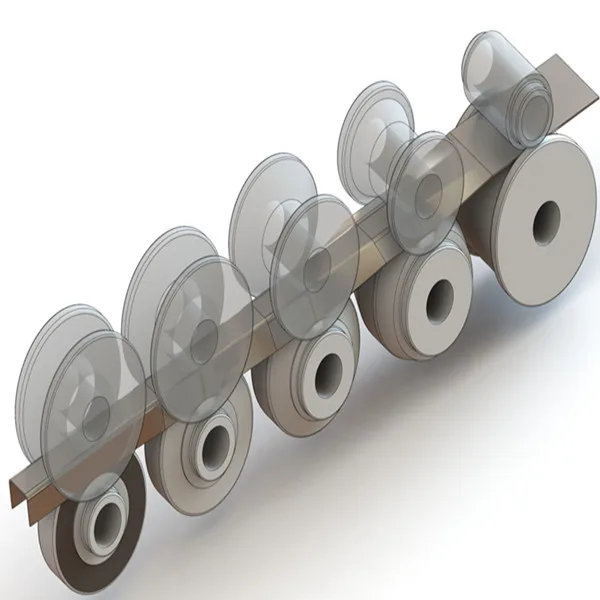
The modern manufacturing landscape has shifted toward “continuous forming,” where 2D sheet metal is transformed into complex 3D profiles—such as rooftops, window frames, and structural columns—through a series of mated rollers. The rise of global roll forming is driven by the need for speed and consistency in large-scale infrastructure projects.

What is Global Roll Forming?

Global roll forming is a continuous manufacturing process that bends sheet metal into specific profiles using sequential sets of mated rollers. It is the preferred method for international industrial projects requiring high-volume production, long part lengths, and extreme dimensional consistency across diverse material grades. By implementing global roll forming standards, manufacturers can ensure that parts produced in different regions maintain identical tolerances.

For a deeper dive into machine specifications, see our comprehensive analysis of roll forming machine technology.

Overcoming Machine Deflection in Tight-Tolerance Global Projects

One of the most significant “information gaps” in standard manufacturing is the impact of machine deflection on global roll forming accuracy. As metal is bent, the forming forces exert pressure on the roll stands, causing them to deflect.

  • The Deflection Phenomenon: This elastic deformation increases the roll gap, which, if not accounted for in your global roll forming setup, leads to higher springback angles, part distortions, and accelerated tool wear.

  • Precision Modeling: According to research found in the Journal of Materials Processing Technology, advanced simulation models for global roll forming now combine deflection calculations with fixed roll surfaces to improve stability.

  • Industrial Impact: Even when exact machine stiffness isn’t known, modeling deflection in global roll forming operations is beneficial for predicting defects. For broader industry standards, the American Iron and Steel Institute (AISI) provides extensive documentation on material behavior under stress.

Advanced Flower Pattern Design for International Standards

The “flower pattern”—the superimposed sequence of profile cross-sections—is the blueprint of any successful global roll forming operation. Mastering the flower pattern is essential for any company looking to lead in global roll forming.

  • Constant Arc Method: To ensure world-class precision in global roll forming, engineers often utilize the constant bend allowance (arc) method. This ensures that web lengths, flange lengths, and radii are consistently calculated.

  • Pass Optimization: It is essential to keep the number of forming stations at an optimal level. You can learn more about digital design in our guide on Roll Forming Software: Clever 7 Programs for Profile Simulation.

  • Software Integration: Using tools like Ubeco PROFIL allows designers to calculate the neutral line and the exact stress on the band edge, reducing the “trial and error” phase significantly for global roll forming projects.

Optimizing Coil Handling and Material Selection

Global success in global roll forming depends on managing the variables of the raw material. The properties of the coil—such as yield strength and thickness tolerances—directly influence the global roll forming roll design.

  • Material Yield: High-strength steels offer great structural benefits for global roll forming but require specialized designs to manage increased springback.

  • Surface Protection: For materials with metallic coatings, global roll forming designers must minimize speed differentials between the rolls to prevent coating damage.

  • Supply Chain Compliance: When sourcing equipment or materials internationally, ensure you review our China Roll Forming: Critical 10 Compliance Checks for Importing.

6 FAQs on Global Roll Forming

What factors influence the number of passes in a global roll forming line?

It depends on material properties (yield strength) and profile complexity for the specific global roll forming application.

How does machine deflection affect part quality?

Deflection increases the roll gap, which can cause the profile to deviate from its intended dimensions in global roll forming.

Why is flower pattern design critical?

It determines the gradual strain; a poor flower pattern in global roll forming can cause edge waves.

What are the standard production speeds?

Industrial global roll forming lines typically operate between 5 and 150 m/min.

Can global roll forming handle pre-painted materials?

Yes, but the global roll forming design must minimize friction to protect the surface finish.

What software is used for simulation?

Leading engineers in global roll forming use specialized CAD/CAE software like COPRA or Ubeco PROFIL.

Conclusion: Dominating the Global Roll Forming Landscape

The transition toward global roll forming as a primary manufacturing standard is not merely a trend—it is a technical necessity for industries requiring scale, precision, and material efficiency. As we have explored, mastering global roll forming requires a multi-dimensional approach: from mitigating machine deflection through advanced simulation to perfecting the flower pattern using the constant arc method.

By prioritizing these high-level engineering strategies, manufacturers can transition from “standard production” to “world-class excellence.” For Beli Rollforming, the goal is clear: to bridge the gap between complex engineering theory and high-output industrial reality, ensuring that every profile meets the rigorous demands of the international market.

Call to Action (CTA)

Elevate Your Production with Beli Rollforming

Are you ready to implement high-precision global roll forming strategies in your next project? At Believe Industry Company, we provide more than just machinery; we provide industrial solutions backed by rigorous technical analysis.

  • Request a Technical Audit: Get a comprehensive analysis of roll forming machine requirements for your specific profiles.

  • Optimize Your Design: Consult with our engineers on flower pattern simulation and material yield optimization.

  • Global Compliance: Ensure your equipment meets international safety and quality standards.

Contact Believe Industry Company Today to discuss how our global roll forming expertise can drive your manufacturing ROI in 2026.

Table of Contents

Discover more from Roll Forming Machine

Subscribe now to keep reading and get access to the full archive.

Continue reading