










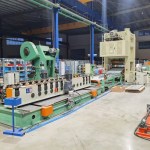
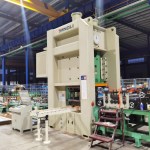
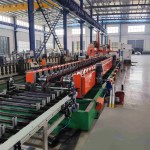

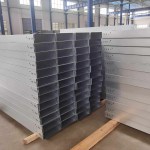
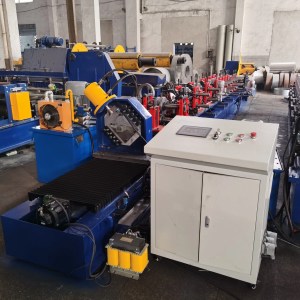
A perfiladora de bandejas portacables Se trata de una línea de producción totalmente automatizada que transforma flejes metálicos en bandejas portacables terminadas —perforadas, tipo escalera, de fondo sólido o de tipo ruso— en una sola pasada continua. La línea integra desenrollado, nivelación, punzonado, conformado, corte con cizalla volante y apilamiento. No requiere operaciones secundarias.
Desde 2005, Beli Rollforming ha fabricado y enviado líneas de bandejas portacables a más de 50 países. Las velocidades de línea varían desde 8 m/min (con punzonado en línea) hasta 25 m/min (sin punzonado). El ancho de conformado abarca de 50 a 600 mm, con un espesor estándar de 0,8 a 2,0 mm y hasta 3,0 mm para aplicaciones de alta resistencia.
☀️Tipo de bandeja portacables fabricada por la máquina de bandejas portacables BELI
En una única línea configurable se ejecutan cuatro tipos principales de bandejas portacables:
| Tipo de bandeja | Rango de amplitud | Material | Aplicación típica |
|---|---|---|---|
| Perforado | 50–600 mm | Acero galvanizado | Edificios comerciales, centros de datos |
| Escalera | 50–600 mm | Galvanizado / Acero inoxidable | Centrales eléctricas, industria pesada |
| Fondo sólido (canal) | 50–600 mm | Acero inoxidable | Plantas químicas, atención médica |
| Perforado ruso | 50–600 mm | Acero galvanizado | Mercado de Europa del Este, tapa con cerradura |
El cambio de perfil tarda aproximadamente 10 minutos con el sistema de herramientas de cambio rápido.
Para los compradores que buscan una sola máquina que maneje tanto bandejas como tapas, consulte la Máquina formadora de bandejas de cables perforadas de tipo popular ruso — Produce cuerpos de bandejas y tapas a juego en una configuración 2 en 1.
Como su nombre indica, las bandejas portacables de fondo macizo tienen un fondo macizo sin celosías, agujeros ni perforaciones.

La bandeja portacables perforada es el tipo de bandeja portacables Diseñado con orificios en la parte inferior para facilitar la circulación del aire y el drenaje del agua..

Los sistemas de bandejas portacables de escalera constan de dos elementos laterales longitudinales conectados por elementos transversales individuales, y están diseñados para su uso como sistema de soporte de cables eléctricos o de control.

Las bandejas portacables de canal también se conocen como bandejas portacables de canal y tienen un diseño estrecho en forma de U que puede tener un fondo perforado o sólido.

Bandejas portacables estándar rusas conperforaciones(para una mejor ventilación y guiado de los cables).tapas con cerradura(acceso seguro y sin herramientas para el mantenimiento), yconexiones solapadas macho-hembra(integridad estructural rígida y duradera

Aplicaciones integrales para bandejas portacables
Las bandejas portacables fabricadas por Believe Industry dan servicio a diversos sectores industriales en todo el mundo:
🔌 Aplicaciones principales:
- Energía y electricidadCentrales eléctricas, subestaciones, sistemas de transmisión
- ConstrucciónEdificios comerciales, instalaciones industriales, proyectos residenciales
- TransporteFerrocarriles, aeropuertos, autopistas, puertos
- Centros de datosSalas de servidores, instalaciones de telecomunicaciones, infraestructura en la nube
- IndustrialPlantas de fabricación, instalaciones químicas, petróleo y gas.
- Energía renovable: Parques solares, aerogeneradores, centrales hidroeléctricas
📊 Especificaciones clave por aplicación:
| Solicitud | Tipo de bandeja típica | Materiales clave | Características especiales |
|---|---|---|---|
| Centros de datos | Ventilado | Aluminio | Blindaje EMI, disipación de calor |
| Centrales eléctricas | Escalera | Acero galvanizado | Resistente al fuego y a la corrosión. |
| Industrial | Fondo sólido | Acero inoxidable | Resistente a productos químicos, a prueba de explosiones |
| Exterior | Canal | Aluminio | Resistente a los rayos UV y a la intemperie. |
| Cuidado de la salud | Fondo sólido | Acero inoxidable | Higiénico, fácil de limpiar |
🌍 Cumplimiento de las normas globales:
- Internacional: IEC 61537, BS EN 61537
- América del norte: NEMA VE 1, listado por UL
- EuropaMarcado CE, normas EN
- Específico de la industriaCumplimiento con las normas NEC, ATEX y RoHS.
🚀 Mercados emergentes:
- Ciudades inteligentesInfraestructura de IoT, redes 5G
- Energía renovableInstalaciones de parques solares/eólicos
- Infraestructura para vehículos eléctricosRedes de estaciones de carga
- Computación de bordeProcesamiento distribuido de datos
Todas las máquinas de Believe Industry fabrican bandejas portacables que cumplen con los estándares internacionales, con la posibilidad de personalización para los requisitos específicos de cada proyecto.

Carga y tipo de motor de la bandeja portacables
Este Carga y tipo de motor de la bandeja portacables es una herramienta estructural de grado profesional diseñada para las industrias eléctrica y de conformado por rodillos. Calcula la Carga de trabajo segura (kg/m) y Desviación basado en los estándares NEMA VE 1, lo que permite a los usuarios cambiar entre Escalera, perforada y base sólida arquitecturas.
Al introducir las alturas específicas de los rieles laterales, los anchos de las bandejas y los espesores del material, los ingenieros pueden determinar si un perfil soportará determinados pesos de cable en un tramo determinado. Se trata de una herramienta esencial para optimizar el uso del material, garantizando al mismo tiempo el cumplimiento de los requisitos de seguridad industrial e integridad estructural.
Selección de bandejas portacables y motor de carga
Herramienta de especificación para el conformado de rodillos industriales
💡Componentes clave de una máquina formadora de rollos para bandejas portacables
La línea de producción se envía en 7 módulos integrados:
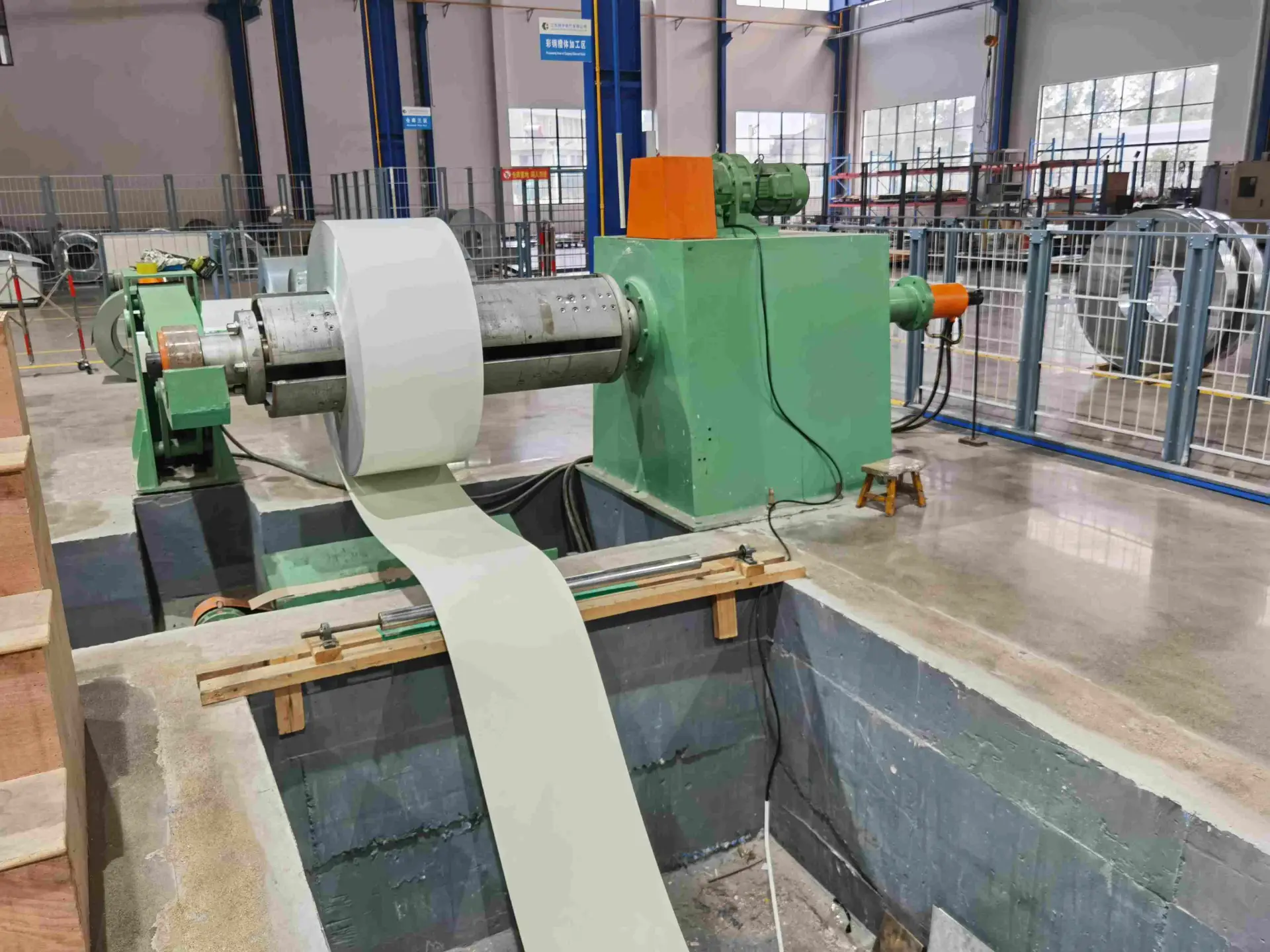
1. Desenrollador — Desenrollador hidráulico de mandril de 3T a 20T. Alimenta la tira a tensión constante independientemente de los cambios en el diámetro de la bobina. Para preguntas sobre sistemas de alimentación de bobinas, nuestro Guía de equipos auxiliares para máquinas perfiladoras Cubre toda la gama de tipos de desenrolladores.
2. Unidad de nivelación — Enderezadora de 7 o 9 rodillos. Elimina el conjunto de bobinas antes del punzonado. Este es el paso que la mayoría de los compradores subestiman: omitirlo provoca una desviación en la posición de los agujeros. Nuestra Página de nivelación de la máquina perfiladora Explica por qué la nivelación integrada es importante para las tolerancias de las bandejas portacables.
3. Prensa perforadora — Accionamiento hidráulico o servoaccionado. Ranuras, agujeros redondos y patrones personalizados. Matriz volante sincronizada con la velocidad de la tira: no se requiere bucle ni parada. Para obtener un desglose detallado de los tipos de unidades de punzonado, consulte Unidad de perforación: 7 ventajas comprobadas.
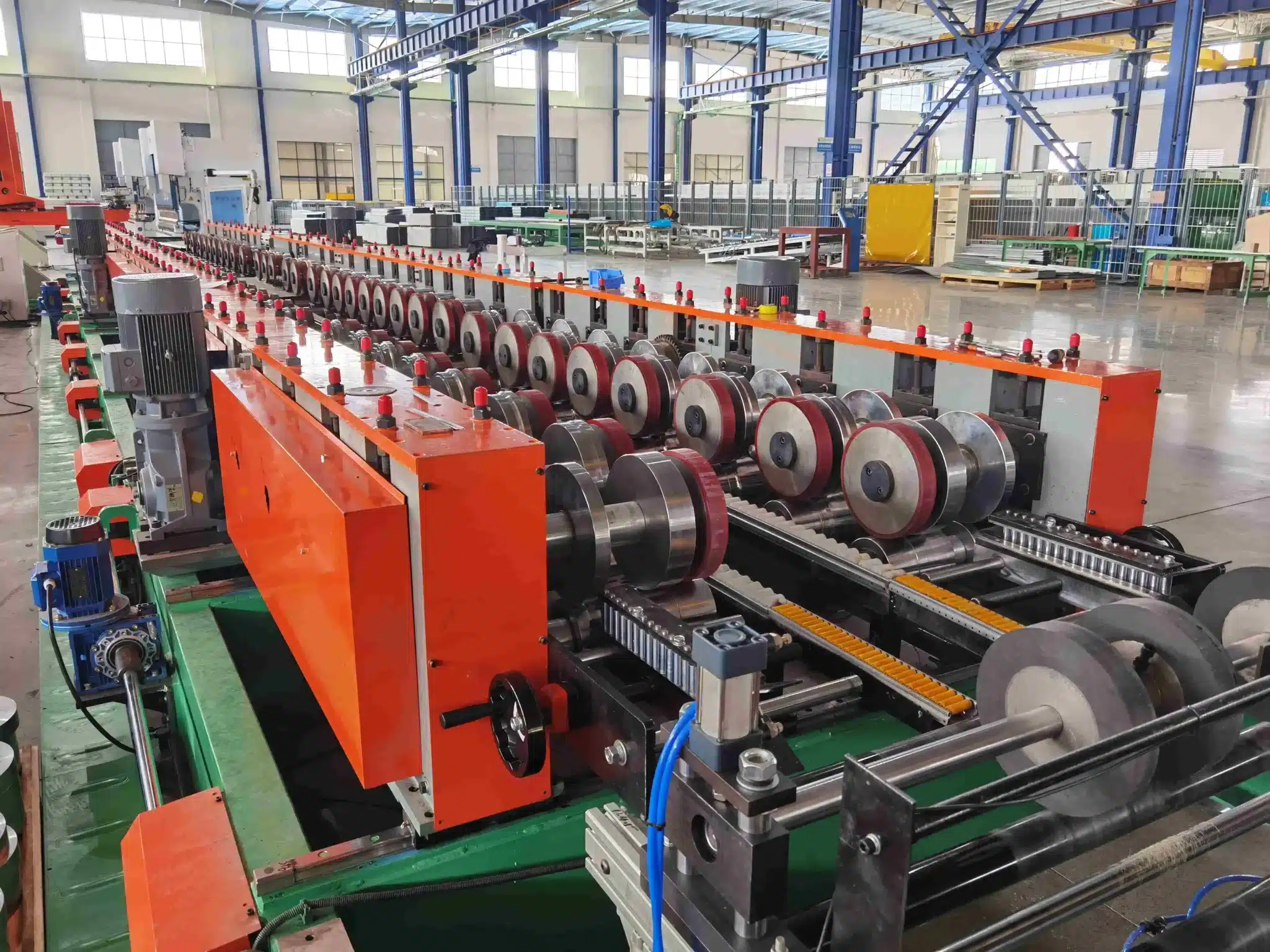
4. Laminadora de conformado de rodillos — 18–26 estaciones. Ejes de acero 45#, rodillos GCR15, templados al vacío a HRC 58–62. El espaciado entre estaciones y el diseño de la disposición están diseñados para el perfil de bandeja específico solicitado.
5. Cizalla volante hidráulica — Recorta a la longitud programada sobre la marcha. Sin ciclo de parada y arranque. La longitud se ajusta mediante HMI; admite listas de longitud variable para pedidos mixtos.
6. Sistema de control PLC — PLC Siemens, Delta o Panasonic con pantalla táctil HMI de 7 o 10 pulgadas. Control de conteo de producción, control de lotes y diagnóstico de fallas. Acceso remoto disponible para soporte posventa.
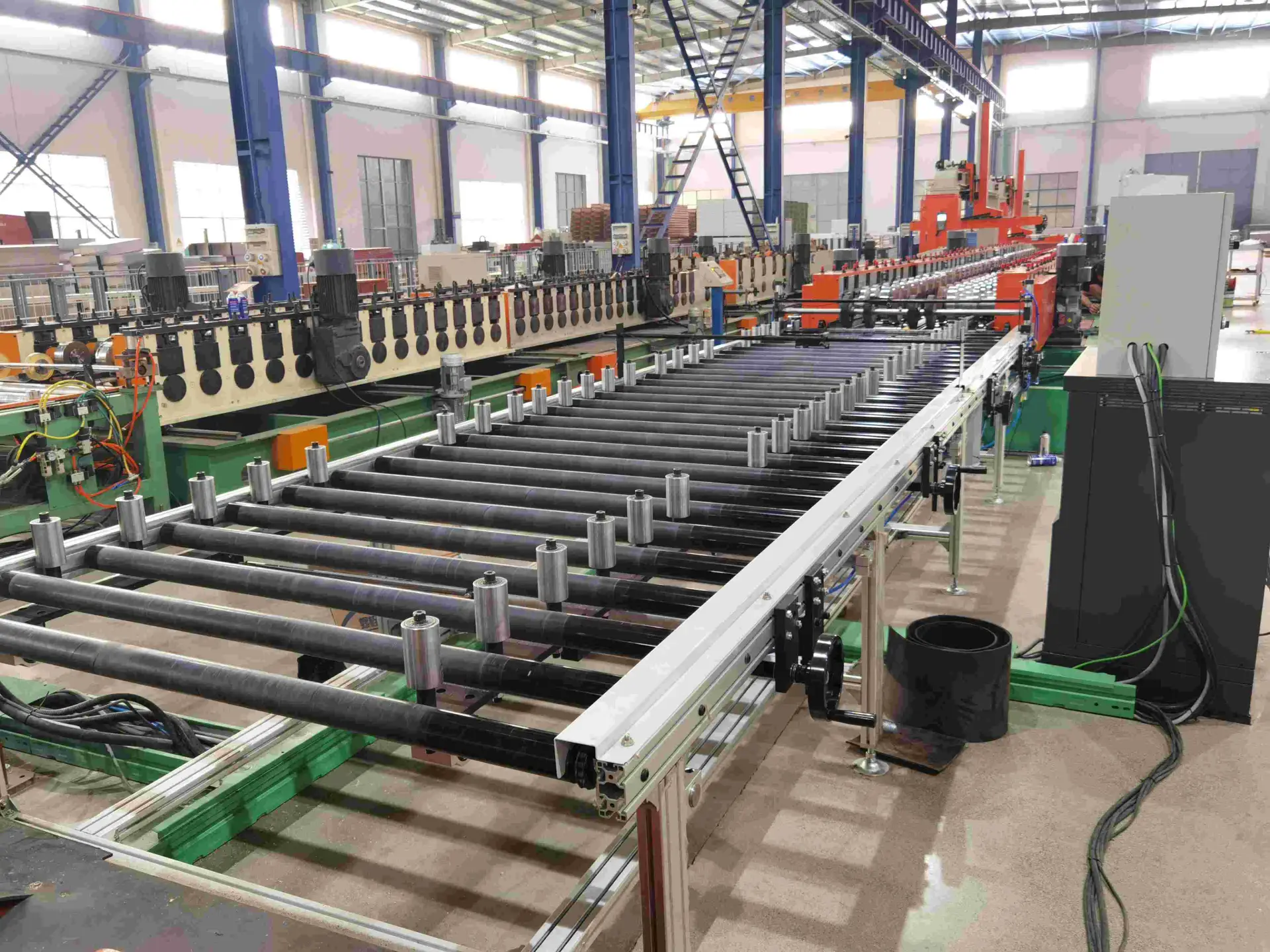
7. Mesa de salida y apilador — Apilador neumático o motorizado. Agrupa las bandejas terminadas para facilitar su retirada con montacargas. Reduce la mano de obra al final de la línea en aproximadamente 60%.

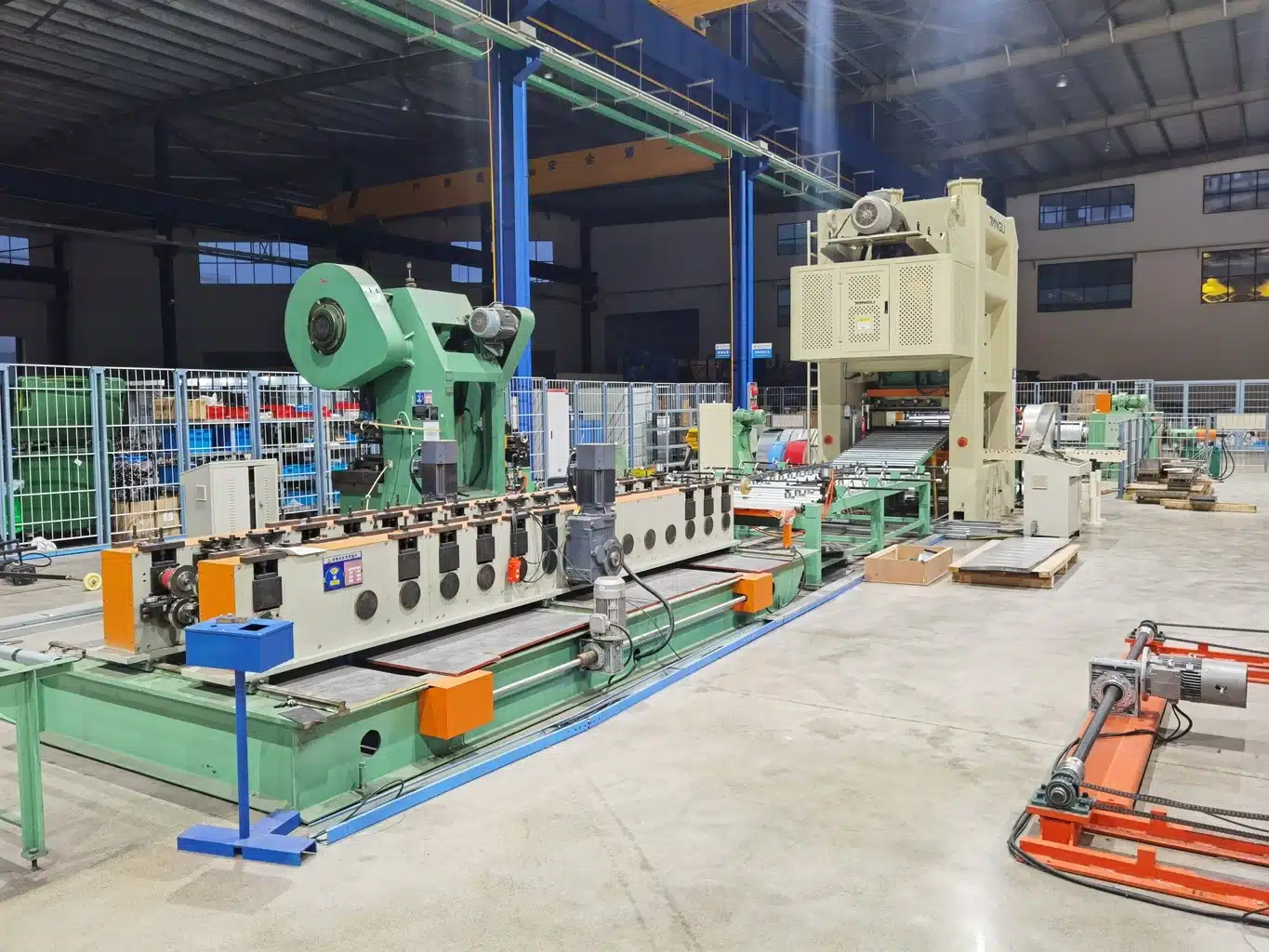

⚙️ Máquina formadora de rollos para bandejas portacables: Especificaciones técnicas
I. Rendimiento general de la máquina
| Especificación | Rango/Valor típico | Opciones/Observaciones |
| Velocidad de trabajo (conformado) | 8-15 m/min | Hasta 25 m/min (es posible una velocidad mayor sin acciones de perforación/corte). |
| Velocidad de golpeo en línea | 4-8 m/min | La velocidad suele ser menor al perforar agujeros sobre la marcha. |
| Potencia total instalada | 15-75 kW | Varía significativamente en función del espesor del material, la velocidad y el tamaño de la unidad de punzonado. |
| Voltaje/Frecuencia | 380 V/50 Hz/3 fases | Personalizable según los estándares del país del cliente (por ejemplo, 480 V/60 Hz). |
| Dimensiones de la línea (L x A x H) | 14 m × 2,2 m × 1,8 m (mín.) | Varía mucho dependiendo del número de estaciones y de la configuración del acumulador/perforación. |
| Peso de la máquina | 10-26 toneladas | Depende de la capacidad de espesor del material y de la estructura del marco (por ejemplo, hierro fundido frente a viga H soldada). |
II. Parámetros de materiales y productos
| Especificación | Rango/Valor típico | Opciones/Observaciones |
| Material Grosor | 0,8-2,0 mm | El rango habitual es de 0,8 a 1,5 mm. Para materiales más gruesos se requiere una máquina más robusta. |
| Ancho del material (bobina de entrada) | 300−1250 mm (Máx.) | Depende del ancho máximo requerido de la bandeja portacables. |
| Material adecuado | Acero galvanizado, acero inoxidable, acero laminado en frío/caliente, aluminio | Límite elástico especificado (por ejemplo, G300 – G550 MPa). |
| Ancho del producto terminado (A) | 50-600 mm | El ajuste automático de ancho es una característica clave para máquinas de varios tamaños. |
| Altura del producto terminado (B) | 50-150 mm | También suelen ser ajustables, requiriendo normalmente el cambio de algunas herramientas de conformado. |
| Tolerancia del producto (longitud) | ≤±2 mm | Tolerancia de longitud típica para sistemas de corte volante/de seguimiento. |
III. Componentes y opciones clave del sistema
| Componente | Especificación estándar | Opciones/Personalización |
| Desenrollador (Uncoiler) | Desenrollador hidráulico de 5T o 10T | Desenrollador de doble cabezal con capacidad de 3T/8T/15T/20T (para funcionamiento continuo). |
| Alimentación y nivelación | Niveladora de 7 o 9 rodillos, sistema de alimentación servo | Permite una alimentación de alta precisión antes del proceso de punzonado. |
| Sistema de perforación | Prensa punzonadora hidráulica con múltiples juegos de troqueles | Prensa punzonadora mecánica (mayor velocidad), punzonado continuo (sin parar), patrones de punzonado ajustables. |
| Soportes de perfilado de rodillos | Estaciones 18-26 | El número varía en función de la complejidad del perfil y el grosor del material. |
| Material de rodillos | GCr15 (acero para rodamientos) con temple y cromado duro | SKD11 (acero para herramientas de alto carbono y alto cromo) para mayor durabilidad/grosor. |
| Sistema de corte | Postcorte (parada para cortar), cizalla hidráulica | Cizalla de seguimiento/volante (corte continuo para mayor rendimiento), precorte. |
| Sistema de accionamiento | Transmisión por cadena o transmisión por engranajes/piñones | Transmisión por engranajes (más robusta, de mayor precisión, con menor mantenimiento). |
| Ajuste de tamaño | Ajuste manual mediante espaciadores/tornillos | Ajuste automático PLC (guías motorizadas para cambio de ancho). |
| Sistema de control (PLC) | DELTA, Panasonic o Siemens | Siemens (gama alta), Allen-Bradley. Incluye pantalla táctil (HMI) y codificador (Omron, Kubler). |
| Sistema de salida | Estantería simple para productos sin alimentación (4-8 m) | Sistema de apilamiento automático o paletizador para la recogida totalmente automatizada. |
Precios y plazos de entrega
| Línea estándar (perforada/sólida) | 150,000-180,000 | 90–100 días |
| Línea de bandejas de escalera | 170,000-210,000 | 100–110 días |
| Línea completa llave en mano con apilador automático | 200,000-250,000 | 110–120 días |
A modo de comparación, las líneas equivalentes de los proveedores estadounidenses suelen tener un precio de 350,000-450.000. La diferencia de precio se debe a la estructura de costes de fabricación, no a la calidad de los componentes: el PLC de Siemens, los rodamientos SKF y los sistemas hidráulicos de Rexroth son los mismos independientemente de dónde se ensamble la línea.
Para obtener un desglose completo de cómo evaluar el costo total de propiedad, consulte Costes ocultos de la maquinaria de perfilado.
Los compradores que deseen una configuración de producción completa desde el primer día, incluyendo apilamiento, cinta transportadora y embalaje, pueden consultar la Línea de producción llave en mano de bandejas portacables presupuesto.
¿Por qué elegir Believe Industry?
- Más de 30 líneas de bandejas portacables instaladas En más de 40 países desde 2005.
- Certificación ISO 9001 y CE — Documentación disponible bajo petición
- precisión de conformado de ±0,1 mm — verificado mediante inspección por terceros antes del envío
- Garantía de tiempo de actividad del 98,5% — respaldado por soporte técnico multilingüe las 24 horas del día, los 7 días de la semana
- Precios directos de fábrica — sin margen de distribuidor, sin intermediarios
Para los compradores que investigan el panorama general de proveedores, Fabricante de máquinas perfiladoras de bandejas portacables: 6 modelos de alta velocidad Describe los criterios de evaluación que utilizan los ingenieros de compras.
Para comprender el proceso de fabricación completo que ejecutará su máquina, Proceso de fabricación de bandejas portacables: 5 secretos clave Explica cada etapa, desde la bobina hasta la bandeja terminada.
Comparación: Believe Industry vs. Competidor chino vs. Competidor estadounidense
| Elemento de comparación | Industria Believe (China) | Competidor chino A | Competidor estadounidense B |
|---|---|---|---|
| Antecedentes de la empresa | 15 años de experiencia, más de 50 instalaciones. | 10 años de experiencia, más de 30 instalaciones. | 25 años de experiencia, más de 100 instalaciones. |
| Fuente técnica | Investigación y desarrollo internos + colaboración alemana | Tecnología doméstica | Tecnología original estadounidense |
| Gama de productos | Serie 8, más de 30 modelos | Serie 5, más de 15 modelos | Serie 6, más de 20 modelos |
| Nivel de precios | Medio (La mejor relación calidad-precio) | Menor (competencia de precios) | Mayor (Precio de marca superior) |
| El tiempo de entrega | 90-120 días laborables (estándar) | 120-180 días | 180-240 días |
| Política de garantía | 12 meses completos + 24 meses básicos | 12 meses completos | 12 meses completos |
| Apoyo técnico | Soporte en inglés las 24 horas, los 7 días de la semana + diagnóstico remoto | Soporte durante 8 horas de lunes a viernes | Soporte en inglés las 8 horas de lunes a viernes |
Vea nuestros equipos en acción: Caso de éxito de un cliente en China
Lo que dicen nuestros clientes

Esta máquina perfiladora de bandejas portacables transformó por completo nuestra planta de producción. Los ajustes automatizados de ancho y altura a través de la pantalla táctil PLC hacen que los cambios de perfil ahora tarden minutos en lugar de horas. Con cortes limpios, alta precisión de punzonado y un aumento de 40% en la producción diaria, es altamente recomendable para escalar
Omar HA
ITCC SA
Construida con una estructura robusta y rodillos de alta calidad, esta máquina perfiladora de bandejas portacables maneja acero de gran calibre sin esfuerzo y sin deformaciones. El software es sorprendentemente fácil de usar, lo que permite a nuestros operarios dominar la línea en tan solo dos días. Una inversión robusta y de alta fiabilidad que cumple exactamente con lo prometido.
Sarah M
Bandeja de cables Pty Ltd
""La precisión dimensional es impecable lote tras lote, lo que reduce drásticamente nuestros residuos de metal y los problemas de montaje de nuestros clientes. El sistema de alimentación servoaccionada garantiza orificios perfectamente alineados en todo momento. Es increíblemente rápido y ya se ha amortizado gracias al ahorro en mano de obra y materiales durante el primer año.
Julia Pinto
CTM Inc
¿Listo para especificar tu línea?
Envíenos las dimensiones de su bandeja, la producción deseada y el mercado (NEMA / IEC / CE), y le enviaremos una configuración detallada y un precio en un plazo de 24 horas.
Preguntas frecuentes
Una máquina perfiladora de bandejas portacables es una línea de producción industrial automatizada diseñada para desenrollar, aplanar, perforar y dar forma continuamente a tiras metálicas planas, transformándolas en canales en forma de U. Estos perfiles acabados se utilizan en la construcción comercial e industrial para soportar, guiar y proteger el cableado eléctrico y los cables de datos.
Estas máquinas suelen estar diseñadas para producir dos tipos principales de bandejas:
Bandejas de fondo sólido: Canaletas estándar en forma de U con bases sólidas para una máxima protección de los cables.
Bandejas perforadas (ventiladas): Bandejas con perforaciones marcadas en la parte inferior y los laterales para permitir la circulación del aire y evitar el sobrecalentamiento de los cables. (Nota: Las bandejas portacables tipo "escalera" suelen requerir un tipo diferente de línea de producción que implica soldar peldaños individuales a rieles laterales).
Las bandejas portacables deben soportar pesados haces de cables en tramos largos, por lo que las máquinas están construidas para manejar materiales de grado estructural. Los materiales comunes incluyen acero galvanizado, acero laminado en frío, acero inoxidable y aluminio. El espesor típico del material varía desde De 1,0 mm a 2,5 mm (o hasta 3,0 mm para aplicaciones industriales de alta resistencia).
Debido a que las bandejas portacables varían enormemente en tamaño (por ejemplo, anchos desde 50 mm hasta 1000 mm o más), las modernas máquinas perfiladoras de bandejas portacables cuentan con un sistema ajustable. diseño de conformado por rodillos dúplex (de doble cara) o en voladizo. En lugar de cambiar los pesados rodillos troquelados, el operario utiliza el panel de control motorizado para ensanchar o estrechar mecánicamente la distancia entre los soportes de rodillos izquierdo y derecho, lo que permite realizar cambios de tamaño rápidos en cuestión de minutos.
Las bandejas portacables perforadas requieren una gran cantidad de perforación. La línea de conformado por rodillos está equipada con una máquina en línea de alta resistencia. prensa punzonadora mecánica o hidráulica, Generalmente ubicada entre la niveladora y la formadora de rodillos, una máquina alimentadora servo CNC de alta precisión empuja el metal plano a través de la prensa, que estampa los complejos patrones de agujeros antes de que el metal se pliegue en su forma final de U.
Debido al punzonado continuo y pesado que se requiere para las bandejas ventiladas, estas líneas generalmente operan un poco más lento que las formadoras de rodillos estándar. Las velocidades de producción promedio varían desde De 10 a 15 metros por minuto (aproximadamente de 33 a 50 pies por minuto). Si se utilizan bandejas de fondo sólido sin perforación, la velocidad puede aumentar.
La máquina formadora de bandejas portacables utiliza un sistema hidráulico de postcorte Equipada con una matriz de corte especializada. Esta matriz está mecanizada a medida para adaptarse perfectamente a la forma de U de la bandeja portacables terminada (incluidas las bridas laterales y los labios de retorno). Durante los ciclos de corte, la matriz atraviesa el perfil manteniendo las paredes en su lugar, asegurando que los extremos queden limpios, sin rebabas y sin aplastar.
Sí. Toda la línea, desde el alimentador servoaccionado y la prensa punzonadora hasta la formadora de rodillos y la cizalla de corte, está sincronizada por un sistema avanzado. PLC (Controlador Lógico Programable) y una interfaz hombre-máquina (HMI) con pantalla táctil. Los operarios pueden programar la cantidad específica del lote, la longitud de cada bandeja e incluso la distancia entre los orificios perforados. Una vez configurado, la máquina procesará todo el lote de forma totalmente automática.
- Mantenimiento diarioLimpiar los rodillos, comprobar el sistema de lubricación, apretar los tornillos.
- Mantenimiento semanal: Comprobar el nivel de aceite hidráulico, limpiar el armario eléctrico, probar los dispositivos de seguridad
- Mantenimiento mensual: Reemplazar filtros, revisar el sistema de transmisión, calibrar sensores
- Mantenimiento anualRevisión completa, reemplazo de piezas desgastadas, actualización del sistema.
Believe Industry ofrece:
- Instalación in situEquipo de ingenieros profesionales para brindar orientación sobre la instalación en el sitio.
- Formación de operadores: 3-5 días de formación integral que garantiza la competencia del operador.
- Capacitación en mantenimientoCapacitación en mantenimiento y resolución de problemas de equipos
- Soporte remotoServicio de soporte técnico remoto 24/7
- Suministro de repuestos: Suministro rápido de repuestos originales
- Garantía completa de la máquina: 12 meses (a partir de la fecha de aceptación de la instalación)
- Garantía de componentes principales: 24 meses (motores, reductores de velocidad, PLC)
- Soporte técnico de por vidaConsultas técnicas y actualizaciones de software gratuitas
- Respuesta rápidaSoluciones de soporte técnico en 48 horas.
- Optimizar la selección de materialesUtilice bobinas de alta calidad para reducir el riesgo de rotura.
- Mantenimiento regular de los equiposEl mantenimiento preventivo reduce el tiempo de inactividad.
- Formación de operadoresLos operadores cualificados aumentan la eficiencia en un 15-20%
- Optimización de procesos: Ajustar los parámetros del rodillo, optimizar la velocidad de conformado
- Actualización de automatización: Añadir sistemas automáticos de alimentación y apilamiento
📞 Solicita tu presupuesto hoy
¿Listo para optimizar la eficiencia de su producción y comenzar a fabricar bandejas portacables de primera clase?
No esperes para aumentar tu capacidad. Contáctanos ahora para analizar sus requisitos de perfil específicos (grosor, ancho, patrones de perforación) y solicitar un presupuesto detallado y personalizado para una máquina formadora de rollos para bandejas portacables construida precisamente para las necesidades de su negocio.
Believe Industry Company -
¡Deje sus requisitos antes de marcharse para obtener un presupuesto rápido ahora!