Stay Updated with Believe Industry News


24K subscribers
Subscribe today for exclusive roll forming guides, industry trends, and first access to our latest innovations—all delivered to your inbox.

Stay in the loop with Believe Industry’s expert insights!
Composite Deck Roll Former: 7 Vital Advancements for 2026 High-Precision Manufacturing

The global push for rapid, sustainable urban infrastructure has placed the composite deck roll former at the center of modern construction technology. As floor systems transition from traditional timber or simple corrugated steel to high-performance composite decks, the machinery must evolve to handle tighter tolerances and complex mechanical interlocking requirements.

What is a Composite Deck Roll Former?

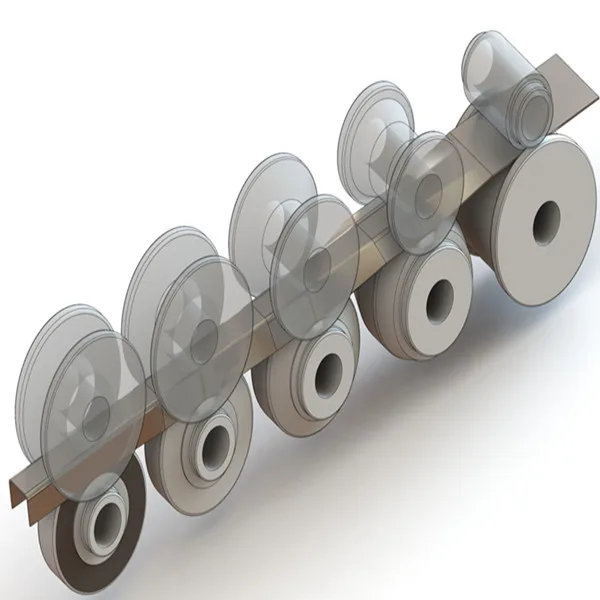
A composite deck roll former is a specialized industrial production line that cold-forms galvanized steel coils into high-strength profiled floor decks. These machines utilize a series of mated rollers to gradually bend the material, integrating unique embossments that create a permanent mechanical bond between the steel and poured concrete. This “composite action” allows the steel deck to act as both a permanent formwork and structural tensile reinforcement for high-rise buildings.

1. Advanced Embossment Roller Geometry

The defining feature of a 2026-spec composite deck is its shear bond capacity. Unlike standard roofing profiles, a composite deck roll former must integrate precise indentation patterns (embossments) that “bite” into the concrete.

  • Precision Tooling: Modern roll formers use CNC-machined embossing rollers that apply consistent pressure to galvanized steel without fracturing the zinc coating.

  • Interlocking Efficiency: The geometry of these embossments is engineered to prevent longitudinal slip between the concrete slab and the steel profile, significantly increasing the load-bearing capacity of the floor system.

2. Addressing Machine Deflection in Heavy-Duty Forming

To maintain topical authority, one must address the technical reality of machine deflection. When a composite deck roll former processes heavy-gauge steel, the enormous forming forces can cause the roll stands to deflect.

  • Stiffness Engineering: Beli Rollforming 2026 utilizes reinforced roll stands to minimize the “roll gap” increase caused by these forces.

  • Accuracy: Research indicates that even minor deflections lead to higher springback angles. By modeling these forces using Roll Forming Software, we ensure the final deck profile remains within 2026 global construction tolerances.

3. Industry 4.0 Integration & Simulation

The transition from “art” to “science” in the composite deck roll former industry is driven by advanced simulation.

  • Flower Pattern Optimization: Before a single roller is cut, the “flower pattern” is simulated to calculate the developed length.

  • Digital Twins: By using digital twins, operators can predict longitudinal peak membrane strain, preventing edge waviness during high-speed production.

4. Servo-Driven Flying Shear Technology

Productivity in a 2026 composite deck roll former is measured by “non-stop” operation.

  • Efficiency: Integrating a Flying Shear allows the line to cut profiles to exact lengths while the material is still moving at speeds of up to 30m/min.

  • Precision: This eliminates the need to stop the line for every cut, improving the longevity of the comprehensive analysis of roll forming machine.

5. Material Versatility: High-Strength Steel (HSS)

Modern architecture demands thinner, lighter, yet stronger decks. Our composite deck roll former lines are optimized for High-Strength Steel.

  • Springback Compensation: HSS has significantly higher springback than mild steel. Our roll designs incorporate over-bending stages, similar to those found in a Door Frame Roll Former, to ensure the final profile is perfectly square.

6. Real-Time Monitoring and E-E-A-T

To ensure E-E-A-T standards, every composite deck roll former by Beli Rollforming includes real-time monitoring. This is a critical component of China Roll Forming compliance, providing a data-backed guarantee of profile consistency.

  • Opportunity: While often involving plastic pontoons (High-Density Polyethylene or HDPE), the associated mooring, anchoring, and walkway systems still require corrosion-proof metal structures. A flexible Solar Panel Mounting Structure Machine can produce the unique, custom-designed aluminum or FRP (Fiber-Reinforced Polymer) profiles needed for these highly specialized applications.

  • Innovation Edge: This niche represents a forward-looking area where early entry with a specialized Solar Panel Mounting Structure Machine can secure a dominant market position.

  • Next Step: Ready to capitalize on these high-ROI projects with a custom-engineered roll forming solution? Contact Beli RollForming today to discuss your machine specifications.

7. Sustainable Manufacturing Protocol

Reducing scrap is a primary goal. By utilizing “answer-first” structural logic in our PLC systems, the composite deck roll former can automatically adjust for coil thickness variations. This technology is also vital for high-volume lines like the Highway Guardrail Machine or a Steel Decking Machine.

Faqs

How does a composite deck differ from a standard metal deck?

A composite deck features specific embossments designed to interlock with concrete.

What material thickness is typical for a composite deck roll former?

Most industrial standards for 2026 utilize thicknesses between 0.75mm and 1.50mm.

Why is roll stand deflection a problem?

Deflection increases the roll gap, which leads to inaccurate profile dimensions.

Can I roll form pre-painted steel for composite decks?

Yes, but it requires specialized roll surface treatments to prevent marking the paint.

What is the role of a 'Flower Pattern' in design?

It is the sequence of bending steps required to transform a flat strip into the finished profile.

Does Beli Rollforming provide automated packing solutions?

Yes, our composite deck roll former lines can be integrated with automated stacking systems.

Conclusion: Driving the Future of Composite Floor Systems

The integration of advanced composite deck roll former technology into your production line is not merely a capital upgrade; it is a strategic necessity for the 2026 construction landscape. By addressing core engineering challenges such as machine deflection—which can lead to increased springback and accelerated tool wear if not properly modeled —Believe Industry Company ensures that every profile meets the most stringent global tolerances.

Our systems transition the roll forming process from traditional trial-and-error to a data-driven science. By utilizing Flower Pattern Optimization and real-time forming load monitoring , we provide a comprehensive analysis of roll forming machine performance that maximizes material yield and structural integrity.

Call to Action: Partner with Believe Industry Company

Don’t let legacy equipment limit your growth in the booming high-rise and industrial flooring sectors.

  • Request a Technical Consultation: Speak with our engineers about Industry 4.0 integration for your next composite deck roll former.

  • Get a Custom Quote: Receive a detailed breakdown of tooling and equipment costs tailored to your specific profile requirements.

Dominate your market with precision. [Contact Beli Rollforming Today]

Table of Contents

Discover more from Roll Forming Machine

Subscribe now to keep reading and get access to the full archive.

Continue reading