Introduction
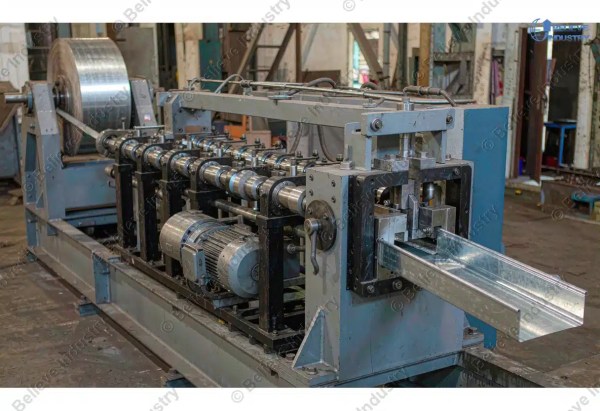
In the fast-paced world of roll forming machinery, the choice of upright frame can impact everything from production speed to long-term costs. Two of the most debated options—bolted upright frame vs welded upright frame—offer distinct advantages for different manufacturing needs. Whether you’re setting up a new line or upgrading an existing one, understanding these differences is critical to maximizing efficiency and ROI.
What Are Bolted Upright Frames and Welded Upright Frames?
Before diving into comparisons, let’s define each option:
Bolted Upright Frames
These frames are assembled using high-strength bolts, making them modular and reusable. They consist of pre-fabricated components (columns, beams, bracing) that are bolted together on-site. Think of them like LEGO blocks—easy to adjust or disassemble.
Welded Upright Frames
As the name suggests, these frames are fully welded in a factory into a single, monolithic unit. There are no bolts or joints, creating a rigid, permanent structure.
7 Key Differences Between Bolted and Welded Upright Frames
When comparing bolted upright frame vs welded upright frame, these factors will decide which is best for you:
1. Rigidity and Precision
Welded frames are unmatched in rigidity—their monolithic design eliminates flex, making them ideal for high-speed roll forming lines (e.g., automotive parts) where precision is non-negotiable.
Bolted frames have slight flexibility at bolt points, but modern designs use precision-machined components to minimize this. They’re still accurate but better for low-to-medium speed applications.
2. Durability
Welded frames excel in harsh environments (e.g., steel mills, heavy debris) because there are no bolts to loosen or corrode. They’re built to last decades with minimal upkeep.
Bolted frames are durable but require periodic torque checks to prevent bolt loosening—especially in high-vibration settings.
3. Customization
Bolted frames win here. Since they’re modular, you can easily:
4. Installation Time
Bolted frames are fast to install—you can assemble a 10-foot section in a day with basic tools.
Welded frames need heavy machinery (cranes) for shipping and installation. On-site labor is longer, and mistakes during shipping can delay setup.
5. Maintenance
Bolted frames are low-maintenance. If a component fails, you replace just that part—no need to dismantle the entire frame.
Welded frames require cutting out damaged sections and welding replacements. This leads to longer downtime and higher repair costs.
6. Total Cost of Ownership (TCO)
Upfront, welded frames may seem cheaper (they’re a single unit). But when you factor in:
7. Flexibility
Bolted frames are perfect for:
Businesses that change production volume frequently
Temporary/seasonal lines (e.g., holiday decor)
Facilities with limited space (easy to store when not in use)
Welded frames are best for:
Fixed, high-volume production
- Businesses where downtime is costly
Harsh environments (minimal upkeep)
Applications of Bolted and Welded Upright Frames
Choosing the right frame depends on your industry and needs:
Bolted Frames | Welded Frames |
|---|
Temporary packaging lines | Automotive part manufacturing |
E-commerce fulfillment | Construction material production |
Small-scale metal fabrication | Steel mill roll forming |
Prototyping new products | Heavy machinery components |
For example, a company that makes seasonal patio furniture would benefit from bolted frames (easy to disassemble after summer). A business producing 10,000 steel beams a month needs welded frames (rigid, low maintenance).
How to Choose Between a Bolted or Welded Upright Frame
Use these questions to guide your decision:
What’s your production volume? High-volume = Welded; variable = Bolted.
Do you need to customize your line? Yes = Bolted; no = Welded.
What’s your budget for installation/maintenance? Tight = Bolted (lower TCO); willing to invest = Welded.
Is your facility permanent? Permanent = Welded; temporary = Bolted.
How critical is downtime? Low tolerance = Welded; can afford minor downtime = Bolted.
Know more Bolted Pallet Racking vs. Welded Pallet Racking
10 FAQs About Bolted Upright Frame vs Welded Upright Frame
Conclusion
Choosing between a bolted upright frame vs welded upright frame depends on your production needs, budget, and flexibility requirements. Bolted frames are perfect for customizable, temporary, or variable production. Welded frames excel in high-volume, permanent settings.
At Beli RollForming, we’re here to help you pick the right frame—and we back it up with quality, expertise, and export support. Ready to get started? Contact us today for a free quote(internal link) or learn more about our roll forming solutions