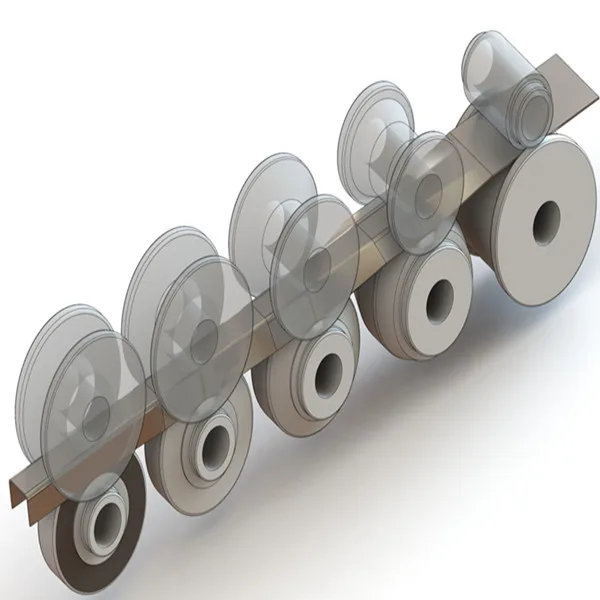
Let’s be honest: in the world of metal roofing, the profile shape gives you the strength, but the joint is what guarantees your roof will last a lifetime. There’s nothing worse than a tile that looks perfect coming off the line, only to fail at the seam later—that’s a huge liability for your business. When you invest in a high-quality Tile Roofing Machine, your main goal isn’t just to form a nice aesthetic curve; it’s engineering a bulletproof interlocking system that shrugs off wind uplift, thermal expansion, and, most importantly, keeps the water out. Getting those watertight joints right—consistently—is the true mark of a successful machine.
The durability of the final roof relies entirely on the precision your roll forming line delivers. Even a tiny deviation can set up capillary action or leave a gap, inviting water intrusion. That’s why you absolutely must choose a machine with minimal mechanical play and advanced, reliable control systems.
At Beli RollForming, we design our Tile Roofing Machine systems by focusing on specific, often-missed stages of the forming process to eliminate these critical failure points. This guide unveils the ultimate 5 technical secrets you need to master those perfect watertight joints on every single profile you produce.
Secret 1: Precision Hem Design and Interlocking Geometry
The secret to a great joint from your Tile Roofing Machine starts with the shape of the overlap itself. We’re not talking about a simple surface lap. The best tile profiles utilize complex hem designs that create a weather-tight labyrinth—think of it as a defensive maze against water.
This design involves multiple internal folds and a capillary break—that tiny channel or gap specifically engineered to interrupt the surface tension that tries to draw water inward. Your roll tooling has to form this intricate geometry without thinning the metal or causing micro-fractures. The final tolerance needs to be incredibly tight. This means you need zero-tolerance tooling and, frankly, religious maintenance of your roll forming machine components. If you’re dealing with high-strength materials, which are common in roofing, the tooling challenges are severe; you can learn more in our article: Roll Forming Material: Key 8 Differences Between Steel and Aluminum.
Secret 2: Why Edge Creasing is Critical for Profile Stability
Leaks often don’t happen because the joint design is bad, but because the profile moves under load, like a strong gust of wind. If a tile profile lacks stiffness, its edges can flutter or slightly gape under stress. That momentary shift compromises the seal and, boom, water gets in.
The solution is to strategically use edge creasing or ribbing implemented by the Tile Roofing Machine. This involves incorporating small, high-density bends along the length of the flat sections of the tile. These ribs significantly increase the sectional moment of inertia, effectively locking the profile’s shape and preventing the crucial joint edge from shifting. This design focus on physical strength is similar to the principles we discuss when reinforcing other profiles, like in: Strut Channel Roll Former: Amazing 3 Design Tricks for Superior Strength.
Secret 3: Mastering Material Consistency for Flawless Seams
You could have the greatest tooling design in the world, but if your raw coil material is unstable, your joints will still fail. Why? Because slight variations in thickness, flatness, or internal stress cause unpredictable ‘springback,’ meaning the joint fit-up will be inconsistent along the profile’s entire length.
This issue is fundamental to great roll forming technology. To guarantee a perfectly watertight joint, the material must be perfectly leveled before forming. The coil needs to pass through a precision leveling system to strip out those internal residual stresses, often called “coil memory.” Without this essential preparatory step, springback becomes a wild card, subtly distorting the final tile profile and creating those tiny, water-inviting micro-gaps at the joint. If unpredictable forces are giving you trouble, check out our guide on managing them: Serious Challenge: Control Springback in Roll Forming with 4 Key Techniques.
Secret 4: Zero-Tolerance Tooling for a Perfect Tile Roofing Machine Lock
Achieving joint precision demands that the machine maintains alignment even under sustained high-speed production. This means the quality of the machine’s foundational construction—not just the individual rolls—is absolutely paramount.
High-precision Tile Roofing Machine systems need automated, micro-adjustable roll stands. This capability allows the machine to instantly compensate for tiny dimensional changes, ensuring the delicate final passes form the joint geometry perfectly every single time. Beyond the rolls, the machine’s overall design must be incredibly rigid—a topic detailed further in our compressive analysis of roll forming machine structure. When it comes down to it, the difference between a joint that leaks and one that lasts for decades is often just a few microns of tolerance maintained by truly superior machinery.
Secret 5: The Post-Forming Cut and Finish
It’s often shocking how many perfect joints are ruined right at the end when the profile is cut. Traditional fly cuts or shears can sometimes induce a slight distortion or burr at the profile end. If this imperfect end becomes the overlapping portion of the final installed roof, it will absolutely compromise the tight, watertight joint with the next panel.
The secret here is using a precise, synchronized cut-off system that minimizes mechanical shock and deformation. This ensures a clean, square end that mates perfectly with the adjacent panel. This is critical for maximizing efficiency and minimizing defects, much like the operational goals we discuss in Massive Savings: Implement 3 Strategies with Quick Change Roll Forming Machine. Getting the finished product perfect right off the line reduces expensive post-production trimming and guarantees a superior finished assembly.
Conclusion
Mastering watertight joints on your Tile Roofing Machine isn’t magic; it’s a multi-faceted process that requires excellence at every single stage—from leveling your material to the final, precise cut. By implementing these 5 secrets—focusing on advanced hem geometry, stiffening the profile, ensuring material consistency, demanding zero-tolerance tooling, and executing a clean cut—you guarantee a final product that not only meets but dramatically exceeds industry standards for weather resistance. For an authoritative understanding of the performance requirements for metal roof systems, consult the International Code Council Evaluation Service (ICC-ES) acceptance criteria.
Choosing the right Tile Roofing Machine manufacturer who truly understands these technical intricacies is your first step. We specialize in engineering machines that deliver this precision and can help guarantee the smooth shipment and delivery of this high-value equipment. Consult our guide on Roll Forming Export: Essential 1 Tip to Guarantee Seamless China Shipping for logistical expertise.
Contact Beli RollForming today, and let’s talk about building a machine engineered for ultimate joint integrity—one that solves your toughest roofing challenges.