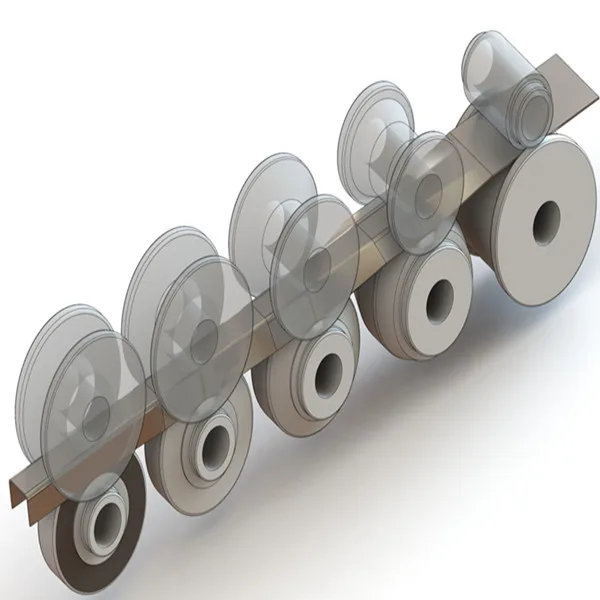
Choosing the correct Roll Forming Material is arguably the most critical decision a manufacturer makes. This choice dictates the design of the entire production line, from the selection of the coil handling system to the complexity of the tooling. Mistakes made at the material selection stage can result in excessive tooling wear, inconsistent profile quality, and costly downtime.
The two giants of the Roll Forming Material world are undoubtedly steel and aluminum. While both metals can be successfully formed into complex geometries, their distinct metallurgical properties require drastically different machine setups, speeds, and maintenance protocols. The final Roll Formed Material performance is a direct reflection of these initial differences.
At Beli RollForming, we specialize in building machinery optimized for both material types. This guide breaks down the amazing 8 key technical differences between steel and aluminum as Roll Forming Material, helping you make an informed decision that secures your product quality and machine longevity.
Why Material Selection Impacts Your Roll Forming Machine
Every material interacts differently with the forming process. The material’s hardness, yield strength, and malleability influence the required force and the severity of spring-back. A successful operation, therefore, depends on a detailed understanding of these properties—a concept we explore further in our comprehensive analysis of roll forming machine performance.
Key 8 Differences Between Steel and Aluminum as Roll Forming Material
1. Yield Strength and Spring-back Management
Steel, especially high-strength steel (HSS), boasts a significantly higher yield strength than most aluminum alloys. This means steel requires substantially more force to deform permanently.
Steel: High yield strength translates to severe spring-back. The tooling must be designed with over-bending compensation to counteract this effect.
Aluminum: Lower yield strength results in less spring-back, making the final profile geometry easier to predict and control.
To manage the internal stresses that cause spring-back in high-strength materials, proper coil preparation is essential. Read our guide on how to Optimize Material Input with the Leveling Machine Key for best practices.
2. Weight and Handling Requirements
The difference in density is one of the most obvious factors affecting the Roll Forming Material process.
Aluminum: Weighs roughly one-third of steel. This impacts coil size (a larger diameter coil can hold the same tonnage), and crucially, the load management on specific roll forming machine components like the decoiler and flying cut saw.
Steel: Higher weight necessitates more robust, higher-torque handling systems and heavier components to manage inertia during acceleration and braking.
3. Tooling Wear and Friction
Aluminum is softer than steel, but it presents a unique challenge: galling.
Aluminum: Tends to cold-weld or stick to the tooling surface (galling) due to friction. This requires non-stick coatings, continuous lubrication, and specialized tooling materials to prevent material buildup and scratching on the Roll Formed Material.
Steel: Causes abrasive wear due to its hardness. This demands high-wear-resistant tool steel (e.g., D2, SKD11) to maximize the lifespan of the roll forming dies.
4. Ductility and Minimum Bend Radius
Ductility determines how tightly the material can be bent before fracturing.
Aluminum: Certain aluminum alloys (e.g., 6061) are less ductile than common cold-rolled steel, especially in temper-hardened states. Forming tight radii can cause cracking.
Steel: Generally highly ductile, allowing for smaller minimum bend radii, offering greater flexibility in custom roll forming machine profile design.
5. Corrosion Resistance and Finishing Needs
Corrosion resistance is a key consideration for the application of the Roll Formed Material.
Aluminum: Naturally forms a protective oxide layer, providing excellent inherent corrosion resistance without additional finishing.
Steel: Requires coating (galvanizing, Galvalume, or painting) to prevent rust. This pre-finished state introduces an additional layer of complexity, as the coating must not crack or flake during forming. According to the National Association of Corrosion Engineers (NACE) International, aluminum alloys often exhibit superior performance in marine and chemically aggressive environments compared to uncoated steel.
6. Thermal Expansion and Post-Processing
Aluminum: Higher coefficient of thermal expansion (expands and contracts more dramatically with temperature changes). This must be accounted for in long profiles and fixed installations.
Steel: Lower thermal expansion, making it dimensionally stable. It generally requires more energy for cutting (higher shear force required) but less post-processing stabilization.
7. Cost, Density, and Economic Efficiency
While steel often has a lower cost per pound than aluminum, the price per linear foot of Roll Formed Material can be misleading due to density differences.
Aluminum: Higher material cost per weight, but since it is lighter, manufacturers often use thinner gauges to achieve the required strength, balancing the final product cost.
Steel: Lower initial material cost, but the heavier weight means higher shipping costs and greater tonnage required for a given structural performance.
8. Required Surface Preparation and Leveling Equipment
Due to its propensity for surface defects (like “coil set” and “oil-canning”), steel often benefits significantly from advanced leveling.
Steel: Requires precision leveling before forming to equalize internal stresses and remove flatness defects. A high-quality leveler is essential.
Aluminum: While still requiring leveling, it is less prone to severe coil set due to its lower yield strength, though surface blemishes require meticulous handling.
Conclusion
The decision between steel and aluminum as your primary Roll Forming Material is not interchangeable. It involves a trade-off between weight, cost, corrosion performance, and required machine investment. Steel demands robust, heavy-duty machinery and complex spring-back compensation, while aluminum requires specialized tooling and lubrication to prevent galling.
By understanding these 8 key differences, you can select the right material for your application and partner with Beli RollForming to design a production line—from the decoiler to the flying cut saw—that is perfectly optimized for your chosen Roll Formed Material.
Contact us today to discuss how our machine configurations can be tailored to handle the unique demands of your high-performance materials.