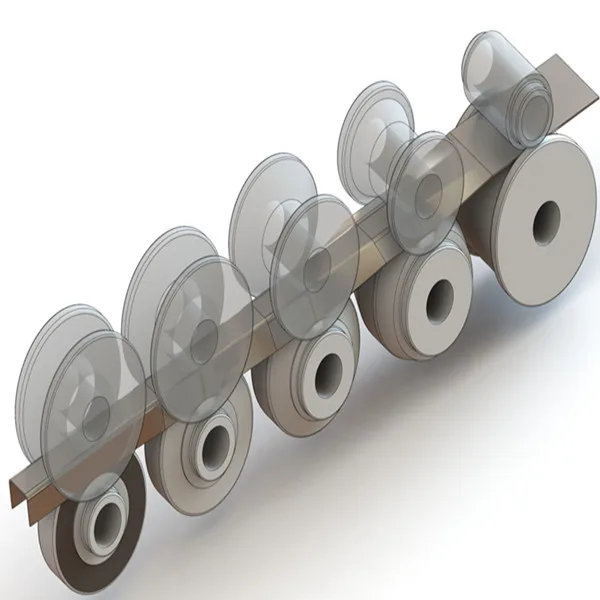
Roll forming machine trends in 2025 are signaling a massive shift toward intelligent, automated, and sustainable manufacturing. As the global metal processing industry evolves, staying ahead of these roll forming machine trends is no longer optional for manufacturers—it is a necessity for survival and growth. At Beli RollForming, we are closely monitoring these shifts to ensure our clients in Wuxi and around the world are equipped with future-proof technology.
In this post, we will dissect the most critical roll forming machine trends influencing the market this year and explain how they impact your production line efficiency.
1. The Era of Hyper-Automation and Cognitive Manufacturing
In the past decade, “automation” meant a machine that could run a program without manual feeding. In 2025, automation means “cognitive manufacturing.” This is the integration of Artificial Intelligence (AI) directly into the logic controllers (PLC) of the roll forming line.
Closed-Loop Feedback Systems
The most exciting development for roll forming machine trends 2025 is the democratization of closed-loop feedback systems. In a traditional setup, if a coil has a slight variation in thickness or hardness (which causes “springback”), the operator might not notice until a batch of defective profiles is produced.
Newer trends point toward inline laser measurement systems placed immediately after the forming station. These sensors measure the profile geometry in real-time. If a deviation is detected, the AI processor calculates the necessary adjustment and signals the motorized stands to adjust the roll gap or the straightening head—automatically and instantly. This reduces scrap rates to near zero.
Predictive Maintenance (PdM)
Unplanned downtime is the enemy of profitability. By 2025, premium roll forming machines will come standard with vibration and temperature sensors on critical components like gearboxes, bearings, and hydraulic stations. These sensors feed data to a central dashboard. AI algorithms analyze this data to predict when a bearing is about to fail, alerting your maintenance team weeks in advance.
To understand the technical mechanics behind these systems, we recommend reading our comprehensive analysis of roll forming machine technology, where we dissect the anatomy of modern, sensor-equipped lines.
2. Handling Advanced Materials: The High-Strength Challenge
The automotive and construction industries are pushing for lighter, stronger components. This demand is driving the use of Advanced High-Strength Steels (AHSS) and Ultra-High-Strength Steels (UHSS).
The Metallurgy of roll forming machine trends 2025
Processing these materials requires a completely different approach to machine design. Standard machines cannot handle the yield strength of modern automotive chassis parts or seismic-resistant racking. The trend for 2025 is Rigidity and Torque.
Shaft Material: We are seeing a shift from standard 45# steel to high-grade 40Cr or even Cr12MoV for shafts to prevent deflection under immense loads.
Stand Design: The “cast iron” stands of the past are being upgraded to heavy-duty steel plate fabrications or precision-machined independent stands to maintain tolerance under high stress.
Coping with Springback
The harder the steel, the more it wants to spring back to its original shape after forming. Roll forming designs in 2025 utilize advanced “over-bending” strategies and additional forming stations to counteract this. As a leading roll forming machine manufacturer, Beli RollForming utilizes COPRA software to simulate these stresses before a single piece of metal is cut, ensuring the machine handles the material correctly from day one.
3. Flexibility: The "Batch Size One" Revolution
The days of running a single profile for weeks at a time are fading. The modern market demands “Just-In-Time” (JIT) production with high variability. Trends in 2025 focus heavily on reducing changeover times (the time it takes to switch the machine from producing Product A to Product B).
Auto-Adjustable Widths
For C and Z purlin machines, and even door frame lines, the trend is fully automatic width adjustment. Instead of manually loosening bolts and sliding spacers—a process that can take hours—operators in 2025 will simply type the new width into the HMI (Human Machine Interface). Servo motors then drive the stands to the new position in seconds.
Rafted (Cassette) Technology
For profiles that are vastly different, “rafted” or “cassette” tooling is becoming the gold standard. The entire set of rollers and stands is mounted on a sub-plate. When a product change is needed, the overhead crane lifts the entire raft off and replaces it with the new one. This reduces changeover time from 8 hours to 30 minutes.
While these features increase the initial investment, they dramatically reduce the Total Cost of Ownership (TCO) by increasing uptime. Failing to account for changeover labor is a common hidden cost of roll forming machine operations that savvy buyers must avoid.
4. Sustainability and Energy-Efficient Profiling
As global carbon taxes and sustainability mandates tighten, the energy footprint of manufacturing equipment is under the microscope.
The Rise of Servo-Electric Drives
Traditional hydraulic systems are powerful but energy-inefficient; they run pumps continuously even when the machine is idling. The 2025 roll forming machine trends is the replacement of hydraulic punches and shears with Servo-Electric technology. Servo motors only consume power when they are moving. They offer:
Higher Precision: Control down to the micron.
Cleaner Operation: No oil leaks or hydraulic fluid disposal.
Lower Energy Bills: Up to 50% reduction in power consumption compared to hydraulic equivalents.
The Solar Boom
The application of roll forming is also driving sustainability. The explosive growth of the solar energy sector has created massive demand for roll formed solar strut channels and mounting structures. Beli RollForming has seen a spike in inquiries for high-speed, heavy-gauge lines specifically designed for the photovoltaic industry.
5. The Global Supply Chain: The "China Plus" Advantage
In roll forming machine trends 2025, the geopolitical and economic landscape of manufacturing is complex. Buyers are looking for stability, quality, and value. The narrative regarding Chinese manufacturing has matured. It is no longer about finding the “cheapest” option; it is about finding the “best value engineering.”
High-End Chinese Engineering
Leading Chinese manufacturers are now competing directly with European and North American brands on quality, while maintaining a significant cost advantage. The trend is towards transparency and integration. Buyers are now able to video-conference with engineers in Wuxi, view real-time 3D simulations of their machine, and monitor Factory Acceptance Tests (FAT) via high-definition streams.
However, navigating this market requires knowledge. Knowing how to buy a roll forming machine from overseas involves understanding Incoterms, voltage compatibility, and after-sales support structures. Beli RollForming bridges this gap by acting not just as a vendor, but as a consultant.
6. Software Integration and the Digital Twin
The machine is only as good as the software that powers it. In roll forming machine trends 2025, we expect to see the widespread adoption of “Digital Twins.”
A Digital Twin is a virtual replica of the physical machine. Before Beli RollForming cuts a single piece of steel for your order, we build a functioning Digital Twin. We run virtual coils through it to test for crashes, material stress, and cycle times.
Remote Connectivity
IoT gateways allow our engineers to remotely connect to your machine (with your permission) to troubleshoot issues. If a PLC code needs an update or a servo drive needs tuning, we can do it from our office in China while your machine is in Brazil or the USA. This capability drastically reduces the reliance on flying technicians out for minor software adjustments.
7. Safety and Ergonomics (The Human Element)
Lorem ipsum dolor sit amet, consectetur adipiscing elit. Ut elit tellus, luctus nec ullamcorper mattis, pulvinar dapibus leo.
Despite the rise of automation, the human element remains vital. 2025 roll forming machine trends place a heavy emphasis on operator safety and ergonomics, driven by stricter international safety standards (CE, OSHA, UL).
Laser Safety Curtains: Replacing physical cages with optical barriers that stop the machine instantly if a human enters the hazard zone, allowing for easier access during loading without compromising safety.
Noise Reduction: Enclosures designed to dampen the decibel levels of punching and cutting stations, creating a better working environment.
Intuitive HMIs: Control panels that look and feel like smartphone apps. The goal is to lower the skill barrier required to operate complex machinery.
Strategic Sourcing: Making the Right Choice
Strategic Sourcing: Making the Right Choice
With these trends in mind, how do you navigate the purchase process?
Assess Your Needs: Do you need a high-speed dedicated line (Trend 1) or a flexible rafted machine (Trend 3)?
Vet the Manufacturer: Look for a partner who understands your material. Ask about their experience with high-strength steels (Trend 2).
Calculate TCO: Don’t just look at the sticker price. Factor in energy savings (Trend 4) and maintenance costs.
For a detailed roadmap on procurement, we strongly suggest reviewing our guide on how to buy a roll forming machine. It covers the essential questions you must ask before signing a contract.
Furthermore, when comparing quotes, ensure you are comparing apples to apples. A machine with a servo-electric drive and cloud connectivity will cost more upfront than a basic hydraulic unit, but the hidden cost of roll forming machine maintenance on the cheaper unit may bankrupt your efficiency in the long run.
Conclusion: Embracing the Future with Beli RollForming
The year 2025 represents a tipping point. The technologies that were once considered “premium add-ons”—AI monitoring, servo drives, fast-change systems—are becoming the baseline requirements for a competitive manufacturing operation.
At Beli RollForming, we are committed to bringing these advanced technologies to the global market at a competitive price point. We combine the industrial might of Chinese manufacturing with the precision engineering required by modern industry standards.
Don’t let your production line become a relic of the past. Embrace the roll forming machine trends of 2025.
Ready to discuss your project? ติดต่อ Beli RollForming ได้เลยวันนี้ for a consultation on your next high-performance production line.
External Resources
The Fabricator: Stay updated on general metal forming news.
IndustryWeek: Insights into manufacturing leadership and technology.
ISO Standards: Review international standards relevant to machinery.