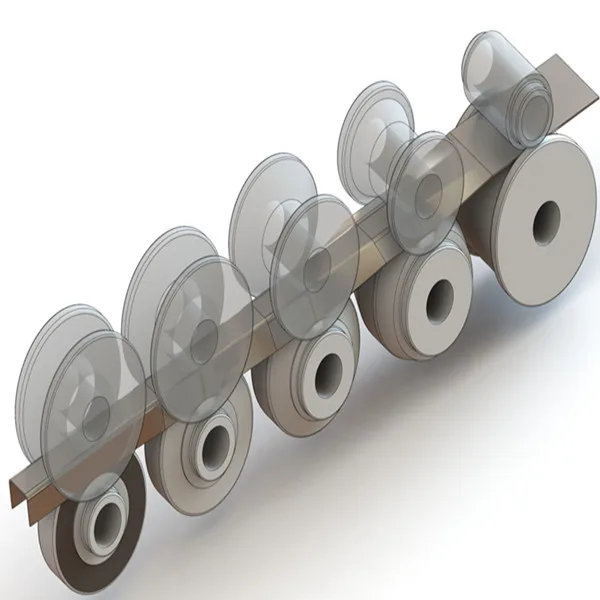
A roll forming machine leveler—also called a flattener—is a precision metalworking accessory designed to correct warping, buckling, or unevenness in coiled stock. Using a series of closely spaced rolls (typically 7–11 for thick materials), it applies gradual, controlled pressure to straighten metal by stretching and compressing its surface. Unlike basic flatteners (which use fewer rolls), levelers deliver superior flatness for demanding applications—critical when working with thick, high-strength materials like 6mm steel or 4mm stainless steel. This step ensures material feeds uniformly into roll forming stations, preventing costly defects down the line.
Why Roll Forming Machine Levelers Are Non-Negotiable for Thick Material
Thick metal coils carry significant internal stresses from manufacturing—rolling, annealing, or transportation can cause edge drop (where edges curve downward) or center buckle (a convex warp in the middle). These imperfections seem minor, but they wreak havoc on roll forming lines:
Downstream Defects: Uneven material leads to misaligned bends, inconsistent hole punching, or jammed forming rolls—resulting in scrapped parts (up to 25% of production for untreated thick coil, per the Metal Forming Magazine).
Tool Wear: Thick, warped material forces roll forming dies to work harder, shortening their lifespan by 30–50%.
Safety Risks: Buckled coil can slip during feeding, causing equipment damage or operator injury.
A roll forming machine leveler solves this by restoring flatness to ±0.1mm/m²—even for 10mm thick aluminum. For example, a construction client using our leveler reduced beam scrap by 40%: “Before, 1 in 5 beams had misaligned flanges. Now, we get perfect flatness every time,” says a plant manager.
3 Essential Roll Forming Machine Leveler Types for Every Thick-Material Line
Choosing the right leveler depends on your production volume, material variability, and space constraints. Here’s how to pick:
1. Integrated Uncoiler + Leveler: Space-Saving Efficiency for High Volume
This all-in-one unit combines coil unwinding and leveling into a single frame—ideal for lines processing 50+ tons of thick coil monthly. The uncoiler’s hydraulic expansion adjusts to coil widths up to 1,500mm, while the leveler’s 9-roll design tackles severe warpage in 8mm steel. Benefits:
Reduced Labor: No need to transfer coils between machines—operators load once, and the system feeds directly to forming.
Consistent Tension: Integrated controls keep coil tightness uniform, preventing slack that causes jams.
Perfect for automotive frame manufacturers or HVAC duct producers running high-volume, thick-material jobs.
2. Standalone Single Leveler: Versatile Retrofit for Variable Thicknesses
If you already have a roll former but need to upgrade flatness, a standalone leveler is your best bet. These units feature adjustable roll spacing (e.g., 300–1,200mm) and can handle 2–12mm thick materials. They’re ideal for job shops running small batches of thick aluminum or stainless steel. For example, a custom metal fabricator uses ours to switch between 4mm steel beams and 6mm aluminum extrusions—no retooling required. Bonus: Many models include CNC controls for precise roll adjustments, cutting setup time by 50%.
3. All-in-One (Uncoiler/Leveler/Feeder): Maximum Automation for Precision
For facilities prioritizing lean manufacturing, this three-in-one system merges uncoiling, leveling, and feeding into one seamless process. The feeder uses servo motors to control material speed, matching the roll former’s rate—eliminating speed mismatches that cause wrinkles. It’s a game-changer for aerospace or defense contractors working with 10mm titanium: “Our scrap rate dropped to 2% after installing this,” shares an engineer. The downside? Higher upfront cost—but it pays for itself in 12–18 months via scrap savings and labor reduction.
How to Choose the Right Roll Forming Leveler for Your Thick-Material Line
Ask these questions:
What’s my coil thickness? Thicker materials (≥6mm) need levelers with 9+ rolls.
Do I run variable thicknesses? A standalone leveler with adjustable rolls is better than integrated.
How much space do I have? Integrated units save floor space; all-in-one systems need more room but reduce handling.
Pairing the right leveler with our strut channel roll forming machine↗️ ensures you get defect-free parts, lower costs, and faster throughput. For more tips, read “Leveling Thick Coil: A Guide to Reducing Scrap↗️ from the Metal Forming Association.
Invest in a roll forming leveler today—and turn thick, warped coil into profitable, precise parts.