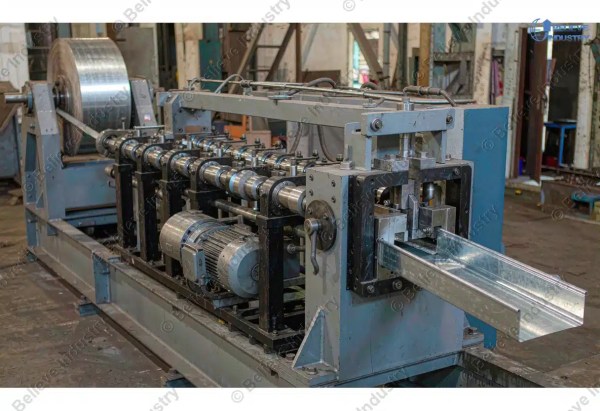



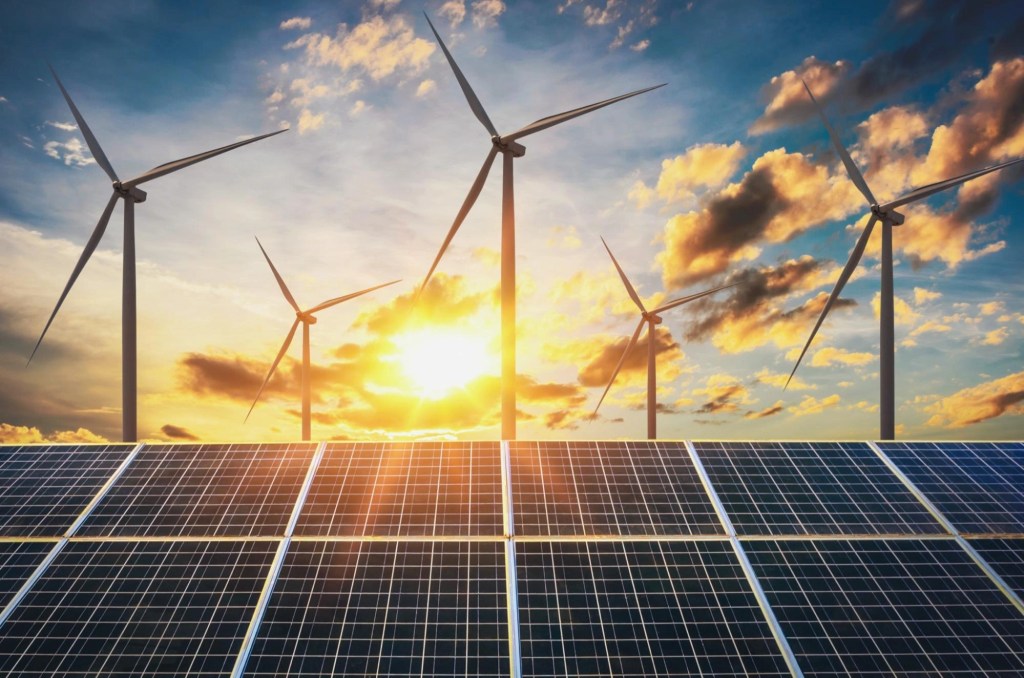
Solar power is expanding faster than ever. Global capacity is projected to reach over 3,000 GW by the end of 2026. Every gigawatt requires thousands of mounting structures, frames, and support components. Manual fabrication cannot keep up. A máquina formadora de rolos para centrais solares has become essential equipment for solar plant construction in 2026 because it delivers the volume, precision, and cost efficiency that utility-scale and commercial solar projects demand.
This guide explains why solar plant roll forming machines are now a necessity for solar plant development, what components they produce, how to evaluate machines for solar applications, and what trends are shaping procurement decisions in 2026.
The Scale of Solar Expansion in 2026
Solar installations are breaking records each quarter. According to industry tracking, more than 400 GW of new solar capacity was added worldwide in 2025. That pace is expected to continue through 2026. Each megawatt of ground-mount solar requires roughly 40 to 60 tons of steel or aluminum profiles for racking and mounting. For a 500 MW solar plant, that translates to 20,000 to 30,000 tons of profiles.
Traditional fabrication methods — cutting, punching, and welding individual parts — cannot produce at this scale economically. A máquina formadora de rolos para centrais solares converts steel or aluminum coils into continuous, precise profiles at speeds of 10 to 30 meters per minute, with minimal material waste. For solar plant developers and EPC contractors, this capability directly affects project timelines and margins.
| Solar Plant Size | Mounting Steel/Aluminum Required | Profiles Needed |
|---|---|---|
| 10 MW | 400–600 tons | C/U channels, rails, splices |
| 50 MW | 2,000–3,000 tons | Frames, clamps, mounting rails |
| 200 MW | 8,000–12,000 tons | Full racking system profiles |
| 500 MW | 20,000–30,000 tons | High-volume continuous production |
For high-volume profile production, learn how conformação de rolos de alto volume delivers consistent output across large project pipelines.
What a Solar Plant Roll Forming Machine Produces for Solar Plants
Solar Panel Frames
Most utility-scale solar panels use aluminum frames. A máquina formadora de rolos para centrais solares produces these frames from 6005 or 6063 aluminum alloy coils. The profile must maintain tight tolerances so that panels fit securely into mounting clamps. Dimensional deviation of more than 0.5 mm can cause installation delays. Roll forming delivers repeatable accuracy that extrusion or welding cannot match at high volume. For material selection guidance, see our comparison of roll forming material: steel vs aluminum.

Mounting Rails and Channels
Ground-mount solar plants use C-channels, U-channels, and custom Z-profiles as mounting rails. A máquina formadora de rolos para centrais solares can produce these profiles in continuous lengths, then cut them to specified sizes with flying shear or punching systems. A typical solar rail profile has pre-punched holes for bolt connections. Inline punching eliminates a separate punching operation and reduces handling. Our máquina de canaleta de suporte solar is specifically configured for solar mounting channel production with pre-punched holes and adjustable widths.

Pile Driving Profiles (Ground Screws and Posts)
In many utility-scale projects, the racking structure is anchored with driven posts or ground screws. These are produced from galvanized steel coil using a máquina formadora de rolos para centrais solares configured for thicker gauge material (2–4 mm). The profiles must withstand wind loads exceeding 140 km/h in some regions. Consistent profile shape is critical for structural integrity. Learn more about roll forming for energy and electric applications, which covers heavy-gauge structural profile production.
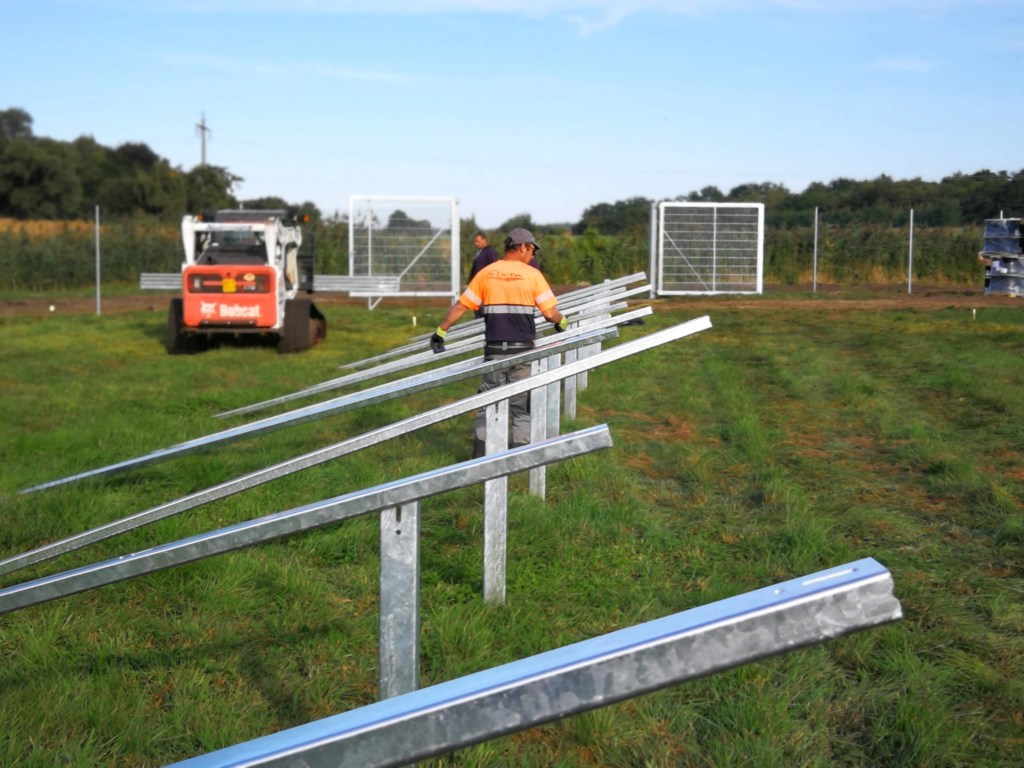
Tracker System Components
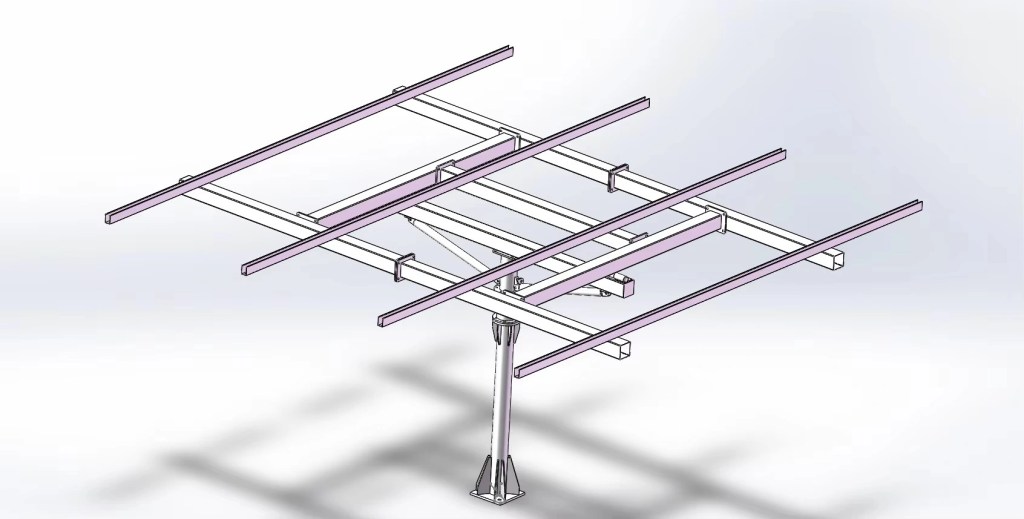
Single-axis and dual-axis solar trackers use articulated profiles that follow the sun. These systems require specialized profiles with complex cross-sections. A máquina formadora de rolos para centrais solares with 15 to 25 roller stations can form these shapes from high-strength steel while maintaining the flatness and twist tolerances that tracker manufacturers require. The roll forming efficiency guide covers how PLC-controlled lines maintain precision across long production runs.
Why Solar Plants Specifically Need Roll Forming in 2026
1. Volume Requirements Have Outpaced Fabrication Capacity
EPC contractors report lead times of 12 to 20 weeks for structural steel in 2026. A máquina formadora de rolos para centrais solares allows solar developers or their suppliers to produce mounting profiles in-house or through dedicated capacity agreements. A single roll forming line can produce 3,000 to 5,000 tons of profiles per year, depending on profile complexity and material thickness. For solar plant projects with tight construction schedules, this in-house capability is a significant competitive advantage.
2. Material Cost Pressures Demand Waste Reduction
Steel and aluminum prices remain volatile. In 2026, galvanized steel coil prices have fluctuated between 650and650umd850 per ton. A máquina formadora de rolos para centrais solares achieves material utilization rates above 95%. Traditional cutting and welding typically waste 8 to 15% of purchased material. On a 200 MW project, reducing waste from 10% to 3% saves 100,000to100,000to200,000 in material costs alone.
3. On-Site Production Reduces Logistics Cost
Shipping fabricated steel profiles over long distances adds significant cost, especially for remote solar sites. Container shipping from Asian manufacturers to solar farms in the Middle East, Africa, or Latin America can account for 15 to 25% of total mounting system cost. A máquina formadora de rolos para centrais solares can be installed at or near the project site, converting locally sourced coil into finished profiles and eliminating trans-oceanic shipping for bulky steel components. See our Linha de produção de eletrocalhas chave na mão as an example of how complete in-line production reduces dependency on external suppliers.
4. Solar Tracker Adoption Increases Profile Complexity
Single-axis trackers now account for approximately 65% of new utility-scale solar installations in 2026, up from roughly 50% in 2022. Tracker systems use more complex profiles than fixed-tilt racking. A máquina formadora de rolos para centrais solares with programmable width adjustment (using servo-driven rollers) can switch between profile widths without changing tooling, making it suitable for tracker manufacturers who serve multiple project specifications. Our quick-change roll forming machine guide covers how fast tooling changeovers support multi-profile solar production.
5. Quality and Certification Requirements Are Stricter
Solar mounting systems must comply with structural codes (such as IBC, ASCE 7, or Eurocode 1) and pass third-party certification (such as TÜV or UL 2703). Inconsistent profile dimensions can cause certification failures. A máquina formadora de rolos para centrais solares with inline measurement and feedback systems maintains dimensional tolerances within ±0.3 mm, supporting consistent certification compliance across production runs.
Key Components of a Solar Roll Forming Line in 2026
Um completo máquina formadora de rolos para centrais solares line for solar applications typically includes the following sections. Understanding these helps solar plant procurement teams evaluate suppliers and specify the right configuration.
Desbobinador
Holds the steel or aluminum coil (typically 3 to 10 tons). Hydraulic decoilers with automatic tension control prevent coil collapse and maintain consistent feed tension, which is important for thin-gauge aluminum used in panel frames.
Feeding and Leveling Unit
Ensures the coil strip enters the roll forming mill flat and straight. Misalignment at this stage causes twist in the finished profile, which compromises the structural performance of solar mounting systems.
Main Roll Forming Mill
O núcleo do máquina formadora de rolos para centrais solares. Each station bends the metal a small amount. For solar profiles, 12 to 20 stations are typical. More complex profiles (such as solar tracker rails) may require 25 or more stations. The rollers are typically made from Cr12MoV steel with heat treatment to maintain dimensional accuracy over millions of linear meters.
Inline Punching System
Solar profiles require holes for bolt connections. Inline hydraulic or servo punching integrates this operation into the roll forming line, increasing throughput and reducing handling. Modern systems can punch at line speeds of up to 25 m/min. Our prensa de estampagem para indústria de conformação de rolos guide covers the technical differences between punching systems.
Cutting System (Flying Shear)
Cuts the profile to length without stopping the line. A máquina formadora de rolos para centrais solares with servo flying shear maintains continuous production, which is essential for the volumes required by utility-scale solar projects. Read our breakdown of tecnologia de tesoura voadora servo to understand why servo drives outperform hydraulic systems in solar profile production.
Control System (PLC with HMI)
Moderno solar plant roll forming machines use PLC-based control systems with touchscreen interfaces. Operators can store multiple profile recipes, adjust line speed, and monitor production counts. Remote diagnostics via Ethernet or 4G allow machine suppliers to troubleshoot issues without visiting the site — a valuable feature for solar projects in remote locations.
| Line Component | Função | Typical Specification |
|---|---|---|
| Desbobinador | Unwinds coil | 5–10 ton hydraulic |
| Unidade de nivelamento | Flattens coil strip | 7–9 roller leveler |
| Laminador de perfilagem | Shapes the profile | 12–46 stations, GCr15 rollers |
| Inline Punch | Creates bolt holes | Hydraulic or servo, 10–25 m/min |
| Tesoura voadora | Cuts to length | Servo driven, continuous cut |
| Controle PLC | Manages operation | Siemens or Mitsubishi, 7–12″ HMI |
For full production line planning, see our Equipamento auxiliar para máquina de perfilagem de rolos visão geral.
How to Select a Solar Plant Roll Forming Machine for Solar Applications
Solar plant developers and EPC contractors evaluating solar plant roll forming machines in 2026 should consider the following factors. The wrong machine selection can result in profile quality issues that affect the entire solar plant’s structural warranty.
Profile Range and Flexibility
A máquina formadora de rolos para centrais solares dedicated to a single profile shape has the highest speed and precision. However, solar projects vary in specification. Machines with quick-change tooling or adjustable rollers can produce multiple profile widths from the same basic setup. For solar tracker manufacturers, this flexibility is often more valuable than maximum line speed. Before purchasing, review our buyer’s guide to buying a roll forming machine.
Material Thickness Capacity
Solar mounting profiles range from 1.5 mm aluminum (panel frames) to 4 mm galvanized steel (ground-mount posts). The máquina formadora de rolos para centrais solares must be structurally rigid enough to form thicker materials without deflection. Check the machine frame thickness and roller shaft diameter. For steel above 3 mm, shafts should be at least 80 mm in diameter.
Production Speed vs. Profile Complexity
There is a trade-off between line speed and profile complexity. Simple C-channels can be formed at 20–30 m/min. Complex solar tracker profiles with multiple bends may be limited to 8–15 m/min to avoid material stress and springback. Ask the machine supplier for forming simulations that predict achievable line speeds for your specific profile drawings.
Inline Quality Monitoring
In 2026, more solar plant roll forming machines include inline laser measurement systems that check profile dimensions continuously. If a dimension drifts outside tolerance, the system alerts the operator or automatically adjusts roller positions. For solar profiles that must meet certification requirements, this capability reduces the risk of producing out-of-spec material.
After-Sales Support and Spare Parts
A máquina formadora de rolos para centrais solares often runs 16 to 24 hours per day during project peak periods. Downtime directly delays solar plant construction. Evaluate the machine supplier’s local service presence, spare parts inventory, and remote diagnostics capability. For projects outside China, Europe, or North America, machine suppliers with regional service teams can significantly reduce downtime risk. Believe Industry provides Instalação de máquina de perfilagem and commissioning support worldwide, with a track record of 3,000+ lines installed across 50+ countries.
Solar Mounting Roll Forming vs. Alternative Fabrication Methods
Solar mounting roll forming is the process of producing mounting structures for solar plants using roll forming technology. The alternative methods each have trade-offs.
Solar Mounting Roll Forming vs. Extrusion (for Aluminum Profiles)
Aluminum solar panel frames are sometimes produced by extrusion followed by cutting and punching. Extrusion can produce complex shapes, but it requires dies for each profile shape and has higher per-part cost at high volumes. Solar mounting roll forming has lower tooling cost for profile variations and higher production rates for long-run solar projects. For high-volume solar frame production, roll forming is generally more economical.
Solar Mounting Roll Forming vs. Press Brake Forming
Press brakes can form C-channels and Z-profiles by making discrete bends. This approach is flexible for low volumes but slow for the quantities required by utility-scale solar. A máquina formadora de rolos para centrais solares produces finished profile continuously, while a press brake forms one piece at a time. For solar plants above 50 MW, roll forming is typically the lower-cost method.
Solar Mounting Roll Forming vs. Welded Fabrication
Some solar mounting structures use welded steel sections. Welding introduces heat distortion, which must be corrected. It also requires skilled labor, which is increasingly difficult to source for remote solar project sites. Solar mounting roll forming produces cold-formed profiles without heat, maintaining dimensional stability and reducing labor requirements.
| Método | Melhor para | Limitations for Solar |
|---|---|---|
| Solar Mounting Roll Forming | High-volume, consistent profiles | Higher initial machine investment |
| Extrusion | Complex aluminum shapes, medium volume | Higher per-part cost at very high volume |
| Press Brake | Low volume, high mix | Too slow for utility-scale solar |
| Welded Fabrication | Custom one-off structures | Labor-intensive, heat distortion, inconsistent |
Solar Racking Roll Forming: Market Trends in 2026
Solar racking roll forming refers to the production of complete racking systems — the structural frameworks that support solar panels on ground-mount and rooftop installations.
Thinner, Stronger Materials
Steel mills and aluminum producers are offering high-strength, thinner-gauge materials that reduce the weight of solar mounting systems without sacrificing structural performance. Solar racking roll forming must be capable of forming these high-strength materials, which have different springback characteristics than standard grades. Machine suppliers in 2026 are offering roller designs optimized for high-strength steel (S350GD, S450GD) and aluminum alloys (6005-T5, 6063-T6).
Automation and Industry 4.0 Integration
Solar racking roll forming lines in 2026 increasingly include IoT connectivity, allowing remote monitoring of production counts, line speed, and error logs. Some machines integrate with factory management systems, automatically adjusting production schedules based on project delivery timelines. For large EPC contractors, this integration supports better project planning and reduces the risk of mounting system delivery delays. Explore our automação de conformação de rolos solutions for how Industry 4.0 features improve solar production lines.
Localized Production Near Solar Farms
To reduce logistics costs and lead times, more solar project developers are sourcing mounting structures from regional Conformação a rolo para estruturas solares operators rather than importing finished steel. This trend is particularly visible in the Middle East, India, and Brazil, where large solar farms are being built in regions with limited local steel fabrication capacity. Installing a máquina formadora de rolos para centrais solares near these project sites is becoming a common strategy.
Dual-Use Machines for Solar and Construction
Some Conformação a rolo para estruturas solares machine manufacturers now offer machines that can produce both solar mounting profiles and construction profiles (such as purlins or girts). This dual-use capability improves machine utilization and return on investment, particularly for fabricators serving both the solar and construction markets. In 2026, several suppliers offer quick-change tooling packages that allow profile changeovers in under 30 minutes. Learn how a perfiladeira vertical de alta velocidade handles both solar and storage rack production.
Cost Considerations for Solar Plant Developers
The decision to invest in a máquina formadora de rolos para centrais solares or to source profiles from a roll-formed parts supplier depends on project pipeline and financing structure.
Machine Purchase vs. Outsourced Supply
Purchasing a máquina formadora de rolos para centrais solares makes sense when a developer or EPC contractor has a multi-year solar project pipeline exceeding 500 MW. The machine cost (typically 150,000 to 500,000 depending on configuration) can be amortized across multiple projects. For single projects or sporadic solar work, outsourcing to an established roll-formed parts supplier is usually more economical.
Operating Cost Factors
Once installed, a máquina formadora de rolos para centrais solares line typically requires 2 to 4 operators per shift, depending on the level of automation. Energy consumption is modest (30–75 kW for a typical solar profile line). The primary operating cost is tooling maintenance — rollers must be re-ground or replaced after forming approximately 5 to 10 million linear meters, depending on material abrasiveness. Read our manutenção preventiva de conformação de rolos guide for maintenance schedules that maximize line uptime.
Return on Investment Timeline
Solar developers who have purchased solar plant roll forming machines for in-house profile production typically report payback periods of 18 to 36 months, assuming utilization above 60%. The calculation depends heavily on steel/aluminum price differentials between local coil purchase and imported fabricated structures.
Perguntas mais frequentes
A máquina formadora de rolos para centrais solares can produce C-channels, U-channels, Z-profiles, solar panel frames, mounting rails, ground-mount posts, and tracker system components. The specific profiles depend on the roller tooling installed on the machine. Our roll forming capacity guide covers how to calculate throughput for different profile types.
Production speed depends on profile complexity and material thickness. Simple C-channels run at 20–30 m/min. Complex solar tracker profiles typically run at 8–15 m/min. Inline punching and cutting systems affect achievable speed.
In 2026, lead times for solar plant roll forming machines range from 10 to 20 weeks, depending on machine complexity and the supplier’s order backlog. Machines with inline punching and flying shear systems typically require longer lead times than basic profile-forming lines.
Yes, but the machine must be specified for both materials. Aluminum requires more forming stations (because it work-hardens) and different roller finishes to prevent surface damage. Some conformação de rolos de montagem solar lines are configurable for both materials with changeable tooling cassettes.
Roller inspection and re-grinding, lubrication system checks, punch and die maintenance, and electrical system diagnostics are required. Most manufacturers recommend a major maintenance interval after every 1 to 2 million linear meters of production. For detailed schedules, see our Perguntas frequentes sobre conformação de rolos.
Moderno Conformação a rolo para estruturas solares lines with properly designed rollers hold dimensional tolerances of ±0.3 to ±0.5 mm. This level of precision is sufficient for solar mounting systems that must comply with structural building codes and pass third-party certification.
Solar mounting roll forming produces the brackets, clamps, and rail connectors that attach panels to the racking structure. Solar racking roll forming produces the main structural beams, posts, and framework that support the entire solar array. Both are produced on roll forming machines, but solar racking profiles are generally heavier-gauge and have larger cross-sections.
120,000 to 450,000. Basic lines with manual tooling changeover cost less. Lines with servo-driven rollers, inline punching, and flying shear cost more but offer faster changeovers and higher throughput — critical for utility-scale solar projects. See our buyer’s guide for full cost breakdowns.
Solar racking profiles must typically meet structural certifications such as UL 2703 (Standard for Mounting Systems), TÜV, or regional codes like Eurocode 3. These certifications verify wind load resistance, corrosion performance, and structural integrity. A máquina formadora de rolos para centrais solares that maintains tight dimensional tolerances helps ensure profiles pass these certification tests consistently.
Yes. Many máquina formadora de rolos para centrais solares suppliers offer dual-use configurations that can produce both solar mounting profiles (C-channels, Z-profiles, solar rails) and construction profiles (purlins, girts, door frames). Quick-change roller cassettes allow switching between profile families in under 30 minutes. This flexibility is valuable for fabricators serving both the solar and commercial construction markets.
A well-maintained Conformação a rolo para estruturas solares line typically operates for 15 to 25 years. Roller tooling life depends on material volume and abrasiveness — typically 5 to 10 million linear meters before re-grinding is needed. Regular preventative maintenance (lubrication, alignment checks, punch die replacement) extends machine life and maintains profile quality. See our roll forming tooling guide for details on maximizing tooling lifespan.
A máquina formadora de rolos para centrais solares for solar mounting profiles typically processes coils with widths of 150–600 mm and thicknesses of 1.5–4.0 mm. Common grades include galvanized steel (Z275, Z450), Galvalume, and aluminum alloys (6005-T5, 6063-T6). Coil inner diameter is typically 508 mm or 610 mm. Our calculadora de bobina helps estimate material yield for different coil specifications.
Conclusão
Solar plant construction in 2026 operates at a scale and pace that makes solar plant roll forming machines indispensable. The volume of profiles required, the need to control material waste, and the structural precision demanded by certification standards all point to roll forming as the most economical and reliable fabrication method for solar mounting and racking systems.
For solar developers, EPC contractors, and mounting system manufacturers, the question is no longer whether to use solar plant roll forming machines, but which machine configuration best matches their project pipeline, profile specifications, and localization strategy.
As solar capacity continues to grow through the decade, Conformação a rolo para estruturas solares e conformação de rolos de montagem solar will remain critical production capabilities — enabling the solar industry to scale while maintaining the cost curves that make solar power competitive with conventional generation.