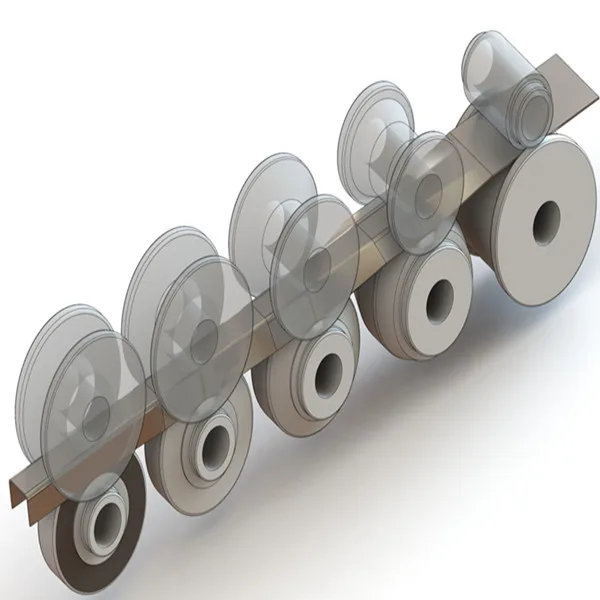
The Highway Guardrail Machine stands apart from typical roll forming equipment. It doesn’t just produce metal shapes; it manufactures life-saving infrastructure. Every W-beam or Thrie-beam section must meet rigorous, non-negotiable road safety standards—like the U.S.’s AASHTO/NCHRP 350 or Europe’s EN 1317. When procuring a Highway Guardrail Machine, the primary concern shifts from mere output to absolute compliance.
As Beli RollForming, we understand that precision in this sector is critical. The quality of your machine directly impacts public safety and the legality of your final product. This guide details the 6 vital specifications you must scrutinize to guarantee your Highway Guardrail Machine is up to the task and fully compliant with international road safety standards.
1. Material Yield Strength and Thickness Capacity
Guardrails are designed to deform and absorb energy during impact. This absorption capacity is directly tied to the steel’s yield strength (e.g., Gr. 36 or S355JR). Your Highway Guardrail Machine must be structurally robust enough to handle the specified maximum material thickness (often 2.67mm to 4.0mm) and high yield strength steel without excessive vibration or machine wear. Furthermore, the rolls must be designed to form these high-strength materials accurately without micro-cracking the zinc coating, which is vital for corrosion resistance and longevity.
2. Profile Geometric Accuracy (W-Beam/Thrie-Beam)
Global standards define the exact dimensions and tolerances of the W-beam and Thrie-beam profiles. The machine’s mill stands and roller design must maintain extremely tight tolerances across the profile’s depth and flange width. A deviation of even 0.5mm can compromise the rail’s crash-test rating. When reviewing your equipment documentation, insist on detailed proof of compliance, including roll design simulations and measured tolerance charts.
3. Precision Punching and Slotted Hole Alignment
The slotted bolt holes are arguably the most critical feature for structural integrity, allowing the guardrail to slide and dissipate energy during impact. The punching unit on your Highway Guardrail Machine must deliver:
This level of repetitive, high-speed accuracy often necessitates advanced control systems, which is why we rely on the precise motion control discussed in Flying Shear: Powerful 4 Reasons Beli RollForming Uses Servo Technology.
4. Servo Flying Shear Cut-Length Accuracy
For high-volume production, the cutting mechanism is key. While we’ve discussed the importance of the cutter for profile machines, guardrails have unique demands. The Highway Guardrail Machine must ensure the cut length (often 3.81m or 4.0m) is precise, and the cut itself is square, maintaining the final beam’s effective length without distortion. Only high-speed Servo Flying Shear technology can deliver sub-millimeter length accuracy at high line speeds, ensuring every finished beam is usable and compliant.
5. Line Speed Capability and Synchronized Output
Guardrails are typically long, heavy profiles. A modern Highway Guardrail Machine should achieve synchronized line speeds of 10 to 20 meters per minute for full compliance. Speed must be balanced with accuracy; if the line runs too fast for the punching or cutting units, precision drops, leading to non-compliant products. This balance is managed by the central PLC and automation architecture. For insights into ensuring smooth delivery of such large equipment, please refer to our logistics checklist: Roll Forming Export: Essential 1 Tip to Guarantee Seamless China Shipping.
6. International Safety Standard Compliance Documentation
This is the ultimate compliance check. Your supplier must provide a technical file that explicitly confirms the machine’s ability to produce profiles compliant with the standards relevant to your market. The key standards include:
Europe: EN 1317 (European Standard for Road Restraint Systems).
USA: AASHTO / MASH (Manual for Assessing Safety Hardware).
Australia/New Zealand: AS/NZS 3845.
We recommend importers consult the Federal Highway Administration (FHWA) Roadside Hardware Guide for detailed specifications on guardrail design and testing requirements.
Sourcing a Highway Guardrail Machine is an investment in road safety and public trust. By focusing on these 6 vital specifications—especially material handling capacity, punching precision, and verified compliance documentation—you ensure your production output is not just fast, but legally and structurally sound.
To guarantee that your imported machine meets all regulatory requirements upon arrival, remember to follow the necessary steps detailed in our guide on customs: China Roll Forming: Critical 10 Compliance Checks for Importing.
Contact Beli RollForming today to receive detailed technical specifications and compliance documentation for our robust guardrail manufacturing lines.