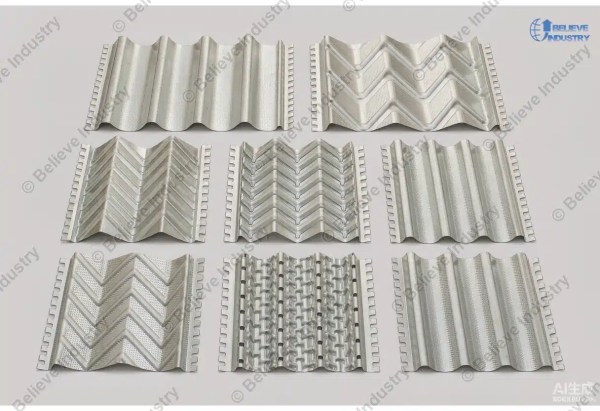










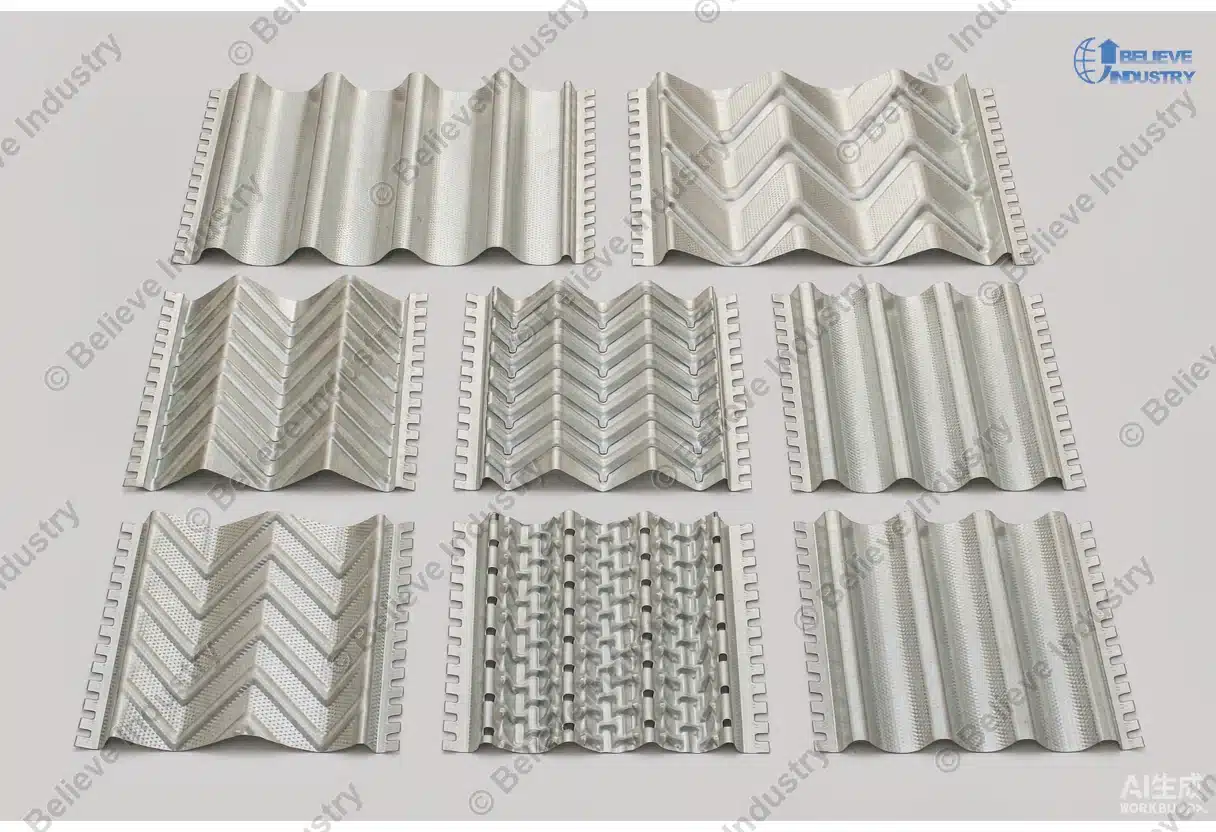
# Floor Deck Profiles: 6 Types from Dovetail to Deep Rib Compared
Metadata
Title options:
- Floor Deck Profiles: 6 Types from Dovetail to Deep Rib Compared
- Floor Deck Profiles: 6 Types Compared for Buyers
- Floor Deck Profile Types: 6 Options from Dovetail to Deep Rib
Meta descriptions:
- Floor deck profiles come in 6 types from dovetail to deep rib. Compare rib depth, span and weight to choose the right steel deck for your project.
- Which floor deck profile fits your project? See 6 types from dovetail to deep rib with rib depth and span data.
- Floor deck profile types: 6 options compared on rib depth, span, weight and composite action for steel deck buyers.
URL slug: floor-deck-profile-6-types-dovetail-deep-rib Categories: Technology, Roll Forming Machine Tags: floor deck profile types, steel deck profile comparison, dovetail deck, deep rib floor deck, re-entrant deck, shallow rib deck, composite floor deck, Beli Rollforming, Believe Industry
Six Floor Deck Profile Types at a Glance
A quick way to frame a steel deck profile comparison is to line the six types up on the same axes. Rib depth sets stiffness, deck thickness sets weight and yield, and the trough shape sets how the concrete locks in. The table below uses typical unshored span values for 0.9 to 1.5 mm sheet, following the span logic published by the Steel Deck Institute (SDI) at sdi.org.
| Profile Type | Rib Depth | Typical Span (unshored) | Deck Weight | Best Use |
|---|---|---|---|---|
| Dovetail | 50 to 60 mm | 2.0 to 3.0 m | 18 to 22 kg/m2 | Vibration prone floors, thin slabs |
| Re-entrant | 38 to 50 mm | 1.8 to 2.7 m | 15 to 20 kg/m2 | Office floors, dense reinforcement |
| Shallow rib (B deck) | 38 mm (1.5 in) | 1.8 to 2.4 m | 15 to 19 kg/m2 | Re-roofing, short span concrete on steel |
| Deep rib (N deck) | 76 mm (3 in) | 2.7 to 3.6 m | 20 to 25 kg/m2 | Parking, long unshored spans |
| Wide rib or narrow rib | 50 to 75 mm | 2.4 to 3.0 m | 17 to 21 kg/m2 | Wide trough for rebar, fewer sheets |
| Cellular or vented | 50 to 75 mm | 2.0 to 3.0 m | 18 to 24 kg/m2 | Service integration, acoustic floors |
B deck at 38 mm and N deck at 76 mm are the two reference points most North American engineers know. The other families are geometry variations built to solve specific site problems. Our metal floor deck roll forming machine buying guide shows how each profile maps to a machine configuration.
How Rib Geometry Builds Composite Action and Shear Bond
Composite action is what lets a thin steel sheet and a thick concrete slab act as one beam. The link between them is shear bond, the horizontal shear transferred across the steel concrete interface. The American Society for Testing and Materials (ASTM) and SDI evaluate that bond with the m-k method, where m is the embossment contribution and k is the chemical bond.
Rib geometry changes how much of that bond comes from mechanical keying versus embossment friction. A flat trapezoidal rib relies almost entirely on rolled embossments. A dovetail or re-entrant rib adds a physical undercut that traps concrete. The table shows the mechanism per profile.
| Profile | Rib Shape | Shear Bond Mechanism | Composite Action Driver |
|---|---|---|---|
| Dovetail | Under-cut dovetail | Mechanical lock plus embossment | Trapezoidal key traps concrete |
| Re-entrant | Trapezoidal re-entrant | Mechanical lock plus embossment | Undercut holds concrete in tension |
| Shallow rib | Flat trapezoidal | Embossment friction | Large embossed web area |
| Deep rib | Tall re-entrant | Embossment plus deep re-entrant | High section modulus |
| Wide rib | Open wide trough | Embossment friction | Wide horizontal shear plane |
| Cellular | Closed cell | Embossment plus cell bond | Service void shapes slab |
For machine buyers this matters because embossment rolls must be cut to match the bond the profile promises. Our SDI standard roll forming tolerances note explains why rib height control protects that bond.
Dovetail, Re-Entrant, Shallow Rib and Deep Rib
Dovetail and re-entrant decks are the mechanical interlock family. The dovetail profile has a flared under-cut rib that locks concrete from below, which is why it performs well on floors with vibrating machinery or strict deflection limits. Re-entrant decks use a trapezoidal trough with an undercut near the top, giving strong composite action with a thinner slab than a flat rib allows.
Shallow rib profiles, the classic B deck at 38 mm, are the workhorses for short spans and re-roofing. They roll fast, use less steel, and suit concrete on steel where beams sit close together. Deep rib profiles, the N deck at 76 mm, push the same sheet to 2.7 to 3.6 m spans by placing steel farther from the neutral axis.
The trade is weight and concrete volume. A deep rib floor deck weighs 20 to 25 kg/m2 and needs more concrete to reach a level finish than a 38 mm sheet. On a parking structure the longer span usually pays back in saved beams and shoring. On a tight office bay it is wasted steel. The floor deck fire compliance UL ASTM standards guide adds the fire rating angle that deep ribs often help with.
Wide Rib, Narrow Rib and Cellular Deck
Wide rib and narrow rib are not separate depths so much as different trough widths at a similar rib depth of 50 to 75 mm. A wide rib opens a broad trough, often 200 to 300 mm, that makes rebar placement and concrete placement easier and cuts the number of sheets per bay. A narrow rib, 40 to 50 mm at the top, concentrates steel and raises stiffness per metre of cover width for the same depth.
Cellular and vented decks close or perforate the rib to do more than carry load. A cellular deck forms a continuous void for electrical and mechanical services, or for air flow in a raised floor. A vented deck adds slots that let air move during a fire, which supports smoke control and cooling of the steel. Both rely on embossments for shear bond and on a re-entrant top edge for composite action.
These three profiles are where the steel grade choice matters most. Most sheet is ASTM A653 Structural Grade 33, 40 or 50, and moving up a grade lets a wide or cellular trough span a little farther without adding rib depth. The roll forming floor deck machine price 5 cost tiers article shows how cellular tooling lifts machine cost.
Span, Deck Thickness and Rib Depth Trade-Offs
Span is the output engineers care about, but rib depth and deck thickness are the inputs they control. For a given profile, thicker sheet and higher steel grade extend the span. For a given span target, deeper ribs let you use thinner sheet, which lowers deck weight from 15 to 25 kg/m2 back toward the lower end.
The deflection limit usually decides the result before strength does. SDI based practice caps deck deflection under wet concrete at span over 180 or 20 mm absolute, whichever is smaller. A 38 mm shallow rib hits that wall near 2.4 m, so pushing it farther only adds sag, not safety. A 76 mm deep rib reaches 2.7 to 3.6 m because the deeper section resists bending far better.
Deck thickness of 0.9 to 1.5 mm covers nearly every project in this comparison. Below 0.9 mm the sheet is hard to handle and emboss poorly. Above 1.5 mm the roll forming force climbs and the machine must grow. Pick the thinnest sheet that meets the span, then confirm the heavy gauge still forms cleanly in the same tooling set.
What Profile Choice Means for the Roll Forming Machine
Profile shape drives the roll forming machine as directly as it drives the structure. Shallow ribs bend through gentle angles and form in 14 to 18 stands. Deep ribs need 24 to 30 stands so each pass bends the steel a little more, avoiding twist and rib root springback. Re-entrant and dovetail ribs add side roll stations that press the undercut precisely, because a few tenths of a millimetre off ruins the concrete lock.
The table shows the typical station count and tooling focus per profile family.
| Profile | Roll Stations | Tooling Notes |
|---|---|---|
| Shallow rib (B deck) | 14 to 18 | Simple trapezoidal passes, fast line speed |
| Re-entrant or dovetail | 18 to 22 | Side rolls form the undercut with tight tolerance |
| Deep rib (N deck) | 24 to 30 | Gradual deep bends, 80 to 100 mm shafts |
| Wide rib | 18 to 24 | Wide pitch, lower rib forming force |
| Cellular or vented | 22 to 28 | Extra station closes or vents the rib |
Shaft diameter scales with rib depth too, from 60 to 75 mm on shallow lines to 80 to 100 mm on deep ones. Under-sized shafts deflect under load and the rib height drifts past tolerance. A floor deck roll forming machine built for the deepest profile you sell, with quick change cassettes, also runs the shallow ones, which is the most cost effective route for a deck producer serving mixed projects.
Conclusion
Floor deck profile types split into six families, each trading rib depth, trough width and deck thickness against span and composite action. Dovetail and re-entrant ribs win on mechanical lock, shallow and deep ribs on span range, wide and cellular on placement and services. Pick the thinnest sheet that meets the span, then match the roll forming machine stand count and shaft size to the deepest rib you will run. Beli Rollforming builds lines for all six profiles, so talk to our team for a span table and tooling quote.
FAQ
1. What are the six common floor deck profile types? The six common floor deck profile types are dovetail, re-entrant, shallow rib, deep rib, wide rib or narrow rib, and cellular or vented. Rib depth runs from 38 to 76 mm across the group.
2. What is a dovetail deck and where is it used? A dovetail deck has an under-cut rib that locks concrete from below for strong mechanical composite action. It suits vibrating machinery floors and hospitals needing tight deflection control.
3. What is a re-entrant deck profile? A re-entrant deck profile is a trapezoidal rib with an undercut near the top that traps concrete and improves shear bond. It gives good composite action with a thinner slab than a flat rib.
4. What is a deep rib floor deck and how far does it span? A deep rib floor deck, called N deck at 76 mm (3 inch), spans 2.7 to 3.6 m unshored with 0.9 to 1.5 mm sheet. The deeper rib gives longer spans with less shoring.
5. What is a shallow rib deck and what span does it cover? A shallow rib deck, the B deck at 38 mm (1.5 inch), covers 1.8 to 2.4 m unshored spans at 15 to 19 kg/m2. It suits concrete on steel, re-roofing and closely spaced beams.
6. How does rib geometry affect composite action and shear bond? Rib geometry sets how much shear bond comes from mechanical keying versus embossment friction. Dovetail and re-entrant ribs add an undercut, while flat and wide ribs rely on rolled embossments.
7. What deck thickness should I specify for these profiles? Specify deck thickness of 0.9 to 1.5 mm using ASTM A653 Grade 33, 40 or 50 steel. Pick the thinnest gauge that meets the span, then verify the heavy gauge still forms in tolerance.
8. How does profile choice change the roll forming machine? Profile choice sets stand count and shaft size on the roll forming machine. Shallow ribs need 14 to 18 stands, deep ribs need 24 to 30 stands, and undercut ribs need extra side rolls.
9. Can one machine form both shallow and deep deck profiles? Yes, one machine can form both when built with enough stands and shaft stiffness for the deepest rib planned. Quick change cassette tooling swaps B deck and N deck without a second line.
10. Where can I find standard span data for these deck profiles? Standard span data comes from the Steel Deck Institute (SDI) span tables and the ASTM A653 material standard. Beli Rollforming supplies span table reviews aligned with SDI practice.