










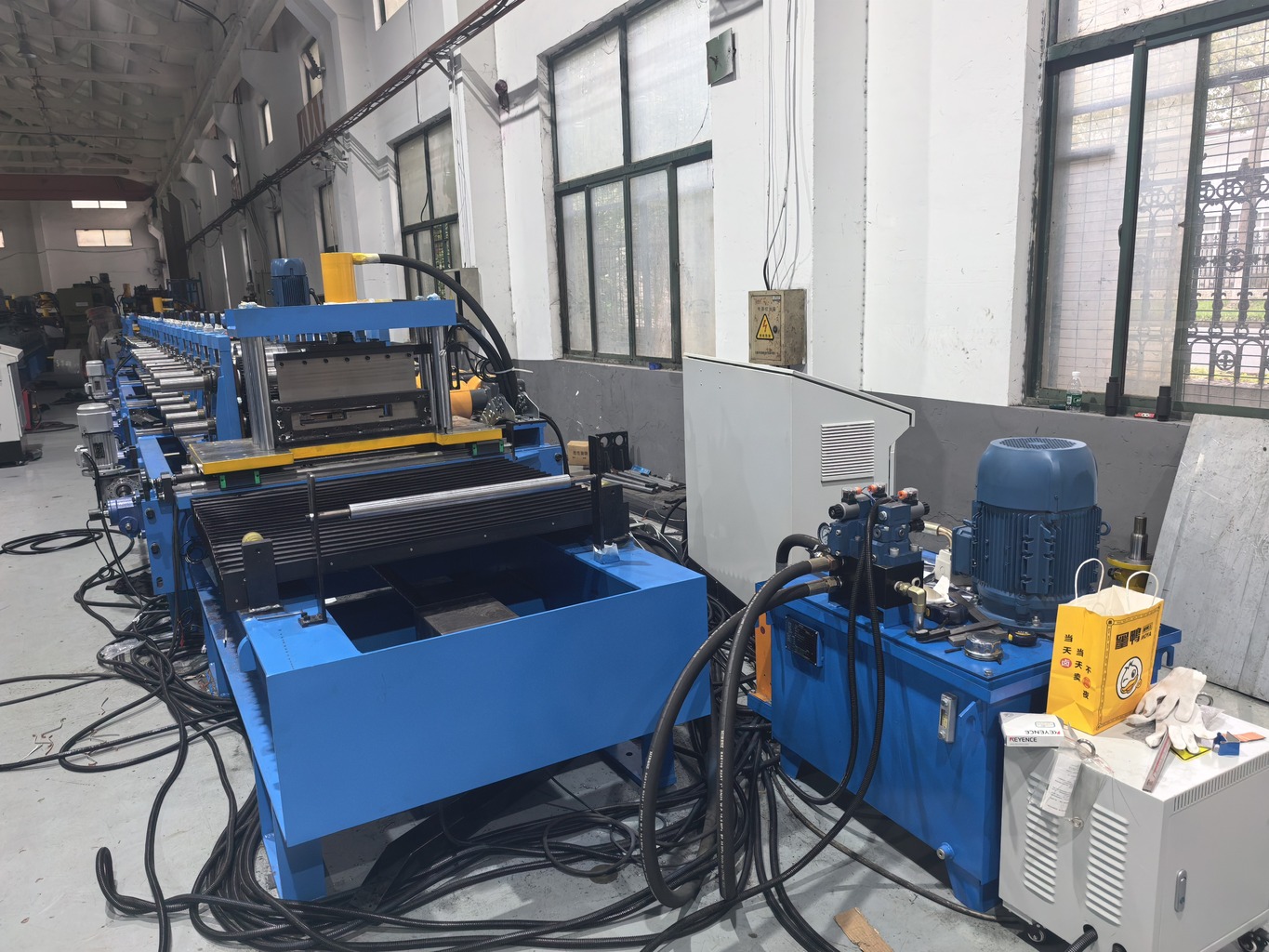



Μηχανή σχηματισμού ρολού τοίχου είναι μια μηχανή κατασκευής μετάλλων που μετατρέπει επίπεδα χαλύβδινα, αλουμίνια ή σύνθετα πηνία σε δομικά πάνελ τοίχου μέσω συνεχούς ψυχρής διαμόρφωσης. Σε αντίθεση με πιέσεις φρένων ή διαμόρφωση φρένων, μια μηχανή διαμόρφωσης ρολού φύλλων τοίχου παράγει πάνελ συνεχώς με ταχύτητες έως και 45 μέτρα ανά λεπτό με ανοχή μήκους ±0,5 mm.
A Ρολλός τοίχου λειτουργεί μέσω 12-24 διαδοχικών σταθμών διαμόρφωσης, καθένας από τους οποίους διαμορφώνει σταδιακά το υλικό μέχρι να φτάσει στην τελική γεωμετρία του προφίλ. Αυτή η διαδικασία προτιμάται έναντι των παραδοσιακών μεθόδων κατασκευής για παραγωγές μεγάλου όγκου όπου η συνέπεια και η ταχύτητα είναι κρίσιμες.
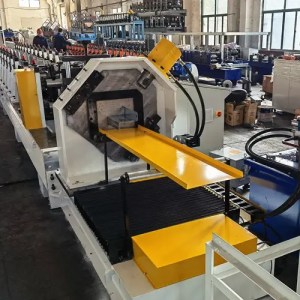
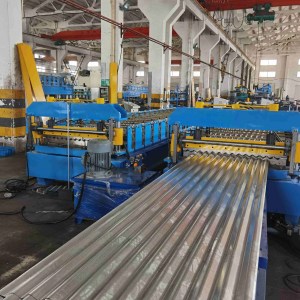
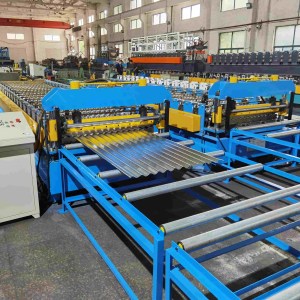
Μηχανή σχηματισμού ρολού τοίχου με αριθμούς
- Εύρος ταχύτητας: Ρυθμός παραγωγής 0–45 m/min
- Πάχος υλικού: Δυνατότητα 0,3mm–1,2 mm
- Σταθμοί σχηματισμού: 12–24 σταθμοί ανάλογα με την πολυπλοκότητα του προφίλ
- Ακρίβεια ανοχής: Μήκος ±0,5 mm, προφίλ ±0,2 mm
- Ετήσια παραγωγική ικανότητα: 1 μηχανή παράγει 500.000–2.000.000 γραμμικά μέτρα ετησίως
- Τυπική περίοδος απόδοσης επένδυσης (ROI): 12–24 μήνες για παραγωγή μεσαίου όγκου
- Χρόνος παράδοσης: 45–60 ημέρες κατασκευής + 7–15 ημέρες αποστολής
Τεχνικές Προδιαγραφές & Προαιρετικές Διαμορφώσεις
| Προσδιορισμός | Καθέκαστα |
|---|---|
| Υλικό | Χάλυβας ψυχρής έλασης, γαλβανισμένος χάλυβας, αλουμίνιο, ανοξείδωτος χάλυβας |
| Πάχος | 0,3 χιλιοστά – 1,2 χιλιοστά |
| Πλάτος | 600 χιλιοστά – 1.500 χιλιοστά |
| Ταχύτητα | 0 – 45 m/min (ελεγχόμενο από VFD) |
| Σταθμοί σχηματισμού | 12 – 24 σταθμοί |
| Σκληρότητα κυλίνδρου | HRC 58-62, χάλυβας GCr15, επιχρωμιωμένος με σκληρό χρώμιο |
| Εξουσία | 380V / 50Hz / 3-Φάση (220V/60Hz προαιρετικά) |
| Μοτέρ | Κύριο: 7,5kW – 22kW· Υδραυλικό: 3kW – 7,5kW |
| Ελεγχος | PLC + οθόνη αφής HMI (Delta / Siemens / Mitsubishi) |
| Τομή | Υδραυλική αδιάκοπη διακοπή πτήσης (προαιρετική διάτμηση σερβοκινητήρα) |
| Ανοχή | Μήκος ±0,5 mm; Προφίλ ±0,2 mm |
| Παραγωγή | 500.000 – 2.000.000 γραμμικά μέτρα/έτος |
| Αποκολλητής | Υδραυλικό αυτόματο αποκοχλιωτικό 3T – 10T |
| Στοίβαξη | Αυτόματο πνευματικό στοιβακτικό (υδραυλικό / ρομποτικό προαιρετικό) |
| Βάρος / Μέγεθος | 8.000 – 20.000 κιλά· 8.000 × 1.500 × 2.200 χιλιοστά |
| Ασφάλεια | Πιστοποίηση CE. Θόρυβος ≤ 75 dB. Λειτουργία: -10°C έως 50°C |
| Χρώμα | Προσαρμοσμένο RAL (στάνταρ: RAL 5012 μπλε) |
Προαιρετικές αναβαθμίσεις
| Κατηγορία | Διαθέσιμες επιλογές |
|---|---|
| Σίτιση | Υδραυλικό αυτόματο ξετύλιγμα (15T), πνευματικό ξετύλιγμα, βρόχος buffer, ισοπεδωτής ακριβείας (5–13 κύλινδροι), οδηγός πλάτους, ελεγκτής τάσης PID |
| Προεπεξεργασία | Υδραυλική μονάδα διάτρησης (1–6 σταθμοί), σύστημα ιπτάμενης διάτρησης, μήτρα προ-εγκοπής, ανάγλυφη εκτύπωση/σφράγιση, διατομή εγκάρσιας κοπής |
| Τομή | Πριόνι κοπής με ιπτάμενο μαχαίρι, σερβο ψαλίδι, φρένο πρέσας μετά την κοπή, εφαρμογέας στεγανοποίησης άκρων, αυτόματη αφαίρεση γρεζιών |
| Στοίβαξη & Έξοδος | Αυτόματη στοίβαξη (6 μέτρα, 12 μέτρα), Αυτόματη στοίβαξη |
| Αυτοματοποίηση | Απομακρυσμένη διάγνωση IoT (χρόνος διακοπής λειτουργίας ↓60%), διεπαφή SCADA/MES, αναβάθμιση HMI (Siemens/Mitsubishi), κασέτες κυλίνδρων γρήγορης αλλαγής, παρακολούθηση ενέργειας, PLC ασφαλείας ISO 13849 |
| Ειδικά Υλικά | Κύλινδροι από ανοξείδωτο χάλυβα, λίπανση με ομίχλη Al, συγκολλητής ραφών, ενσωμάτωση γραμμής βαφής |
Συνιστάται από την εφαρμογή
| Εφαρμογή | Πρόσθετα |
|---|---|
| Βιομηχανικές επενδύσεις μεγάλου όγκου | Ιπτάμενο πριόνι + υδραυλικό στοιβακτή + τηλεχειριστήριο διαγνωστικό IoT |
| Καθαρό δωμάτιο από ανοξείδωτο ατσάλι | Κύλινδροι SS + λίπανση με ομίχλη + κάμερα όρασης |
| Γραμμή πάνελ σάντουιτς | Σφραγιστικό άκρων + ψυκτικός μεταφορέας + ρομποτικός παλετοποιητής |
| Αρχιτεκτονικά πάνελ | Προ-διάτρηση + ανάγλυφη εκτύπωση + φρένο πρέσας μετά την κοπή |
| Εξαγωγή / μακρά διαμετακόμιση | Συρρικνούμενη μεμβράνη + προστατευτικά άκρων + ενισχυμένη στοίβαξη |
| Πλήρως αυτοματοποιημένη γραμμή | Buffer looper + ρομποτικός παλετοποιητής + SCADA/MES + IoT |
Χρειάζεστε μια προσαρμοσμένη διαμόρφωση; Επικοινωνία με την Beli Rollforming με το προφίλ, το υλικό και τον ετήσιο όγκο σας για μια εξατομικευμένη σύσταση.
Παρακολουθήστε: Μηχανή σχηματισμού ρολού πάνελ τοίχου σε δράση
Δείτε πώς οι μηχανές διαμόρφωσης ρολού πάνελ τοίχου της Beli Rollforming προσφέρουν ακρίβεια, ταχύτητα και αξιοπιστία για παραγωγή πάνελ τοίχου μεγάλου όγκου:
Τι θα δείτε σε αυτό το βίντεο:
- Συνεχής φόρτωση πηνίου και τροφοδοσία υλικού
- Σύστημα ιπτάμενων εγκοπών
- Προοδευτική διαμόρφωση μέσω πολλαπλών σταθμών
- Αδιάκοπη υδραυλική κοπή σε ακριβή μήκη
- Λειτουργία HMI με οθόνη αφής PLC (Σύστημα ελεγκτή AMS)
Προτιμάτε να δείτε μια συγκεκριμένη διαμόρφωση; Επικοινωνία με την Beli Rollforming για να ζητήσετε μια βιντεοκλήση κατά παραγγελία ή μια ζωντανή βιντεοκλήση με την τεχνική μας ομάδα.
Πώς λειτουργούν οι μηχανές σχηματισμού ρολών πάνελ τοίχου
Μια μηχανή διαμόρφωσης ρολού φύλλων τοίχου τροφοδοτεί υλικό από ένα μηχάνημα αποσυσκευασίας σε μια σειρά από σετ κυλίνδρων διαμόρφωσης. Κάθε σταθμός κάνει σταδιακές κάμψεις μέχρι το υλικό να φτάσει στο προφίλ-στόχο. Η συνεχής φύση της διαδικασίας σημαίνει ότι τα πάνελ παράγονται χωρίς να σταματούν μεταξύ των τεμαχίων.
Η ακολουθία σχηματισμού συνήθως περιλαμβάνει:
- Ξετύλιγμα – Το απόθεμα πηνίου φορτώνεται σε έναν κινητήρα με σύστημα αποσυμπίεσης με έλεγχο τάσης φρένων
- Ισοπέδωση – Ρόλοι ισοπέδωσης αφαιρέστε το σετ πηνίων και εξασφαλίστε σταθερή επιπεδότητα υλικού (προαιρετικό)
- Προ-διάτρηση (προαιρετικά) – Υδραυλικές ή σερβοπρέσες δημιουργούν οπές στερέωσης, αεραγωγούς ή διακοσμητικά μοτίβα
- Σχηματισμός – 12–24 σταθμοί διαμόρφωσης διαμορφώνουν προοδευτικά το προφίλ με κυλίνδρους ακριβείας
- Τομή – Το ιπτάμενο πριόνι κοπής ή το υδραυλικό ψαλίδι κόβουν τα πάνελ στο επιθυμητό μήκος χωρίς να διακόπτουν την παραγωγή
- Στοίβαξη – Τα ολοκληρωμένα πάνελ καταμετρώνται αυτόματα και στοιβάζονται για συσκευασία
Τύποι πάνελ τοίχου που παράγονται
| Προφίλ πάνελ | Εύρος ύψους | Απόσταση μεταξύ των πλευρών | Κύρια εφαρμογή | Σχετικό μηχάνημα |
|---|---|---|---|---|
| Τραπεζοειδής | 25mm–50mm | 200mm–400mm | Βιομηχανικά κτίρια, αποθήκες | Μηχανή πάνελ οροφής |
| Κυματοειδής | 12mm–30mm | 76mm–150mm | Γεωργική, μετάβαση στέγης | Μηχανή κυματοειδούς πάνελ |
| Ραβδωτό/Λωριδωτό πλευρό | 15mm–40mm | 100mm–250mm | Εμπορικές προσόψεις, εσωτερικοί τοίχοι | Μηχανή πάνελ PBR |
| Επίπεδη οθόνη | 3mm–10mm | Δ/Υ | Πάνελ καθαρού δωματίου, μονωμένοι τοίχοι | Μεταλλική διαμόρφωση ρολού |
| Μονωμένο σάντουιτς | 40mm–100mm | Δ/Υ | Ψυκτική αποθήκευση, προκατασκευασμένες κατοικίες | Βοηθητικά Μηχανήματα Σχηματισμού Ρόλων |
| Εγκοπή V | 20mm–35mm | Μεταβλητός | Αρχιτεκτονικές πινελιές | Προσαρμοσμένα προφίλ |
Κύριες εφαρμογές
Βιομηχανικά Κτίρια
Οι μηχανές διαμόρφωσης ρολών για πάνελ τοίχου εξυπηρετούν εργοστάσια, εργαστήρια και εγκαταστάσεις παραγωγής, παράγοντας 200-500 τόνους πάνελ ετησίως. Η βιομηχανική επένδυση πρέπει να πληροί τις απαιτήσεις φορτίου ανέμου (συνήθως 0,5-1,5 kPa), παρέχοντας παράλληλα αντοχή στις καιρικές συνθήκες και θερμική απόδοση.
Εμπορικές Κατασκευές
Τα εμπορικά κέντρα, τα κτίρια γραφείων και οι αθλητικές εγκαταστάσεις χρησιμοποιούν μηχανές διαμόρφωσης ρολού φύλλων τοίχου για συστήματα εξωτερικής επένδυσης. Μήκη πάνελ έως 12 μέτρα μειώνουν τον αριθμό των αρμών κατά 60% σε σύγκριση με τα τυπικά μήκη φύλλων, βελτιώνοντας την στεγανότητα στις καιρικές συνθήκες.
Προκατασκευασμένες Κατοικίες
Οι κατασκευαστικές εταιρείες που κατασκευάζουν προκατασκευασμένα πάνελ τοίχου βασίζονται σε εξοπλισμό διαμόρφωσης με ρολό για την παραγωγή τυποποιημένων κελυφών κτιρίων. Τα προκατασκευασμένα πάνελ τοίχου μειώνουν τον χρόνο κατασκευής κατά 40–60% και το κόστος εργασίας κατά 25–35% σε σύγκριση με τις παραδοσιακές μεθόδους κατασκευής με ραβδώσεις.
Γεωργικά Κτίρια
Η κατασκευή αχυρώνα, θερμοκηπίου και σιλό απαιτεί συμβατό σύστημα εξαερισμού κυματοειδή πάνελ με ρυθμούς μετάδοσης φωτός 15–35%. Τα κυματοειδή προφίλ από διαμορφωτές ρολών πάνελ τοίχου το επιτυγχάνουν αυτό διατηρώντας παράλληλα τη δομική ακεραιότητα.
Ψυκτική Αποθήκευση & Καθαρά Δωμάτια
Οι σειρές πάνελ τύπου σάντουιτς με έγχυση αφρού PU/PIR παράγουν μονωμένα πάνελ τοίχου με θερμική αγωγιμότητα μόλις 0,022 W/(m·K). Αυτά τα πάνελ είναι κρίσιμα για εγκαταστάσεις ψυκτικής αποθήκευσης που διατηρούν θερμοκρασίες από -25°C έως +5°C.

Beli Rollforming vs. Προμηθευτές από την Κίνα vs. Προμηθευτές από τις ΗΠΑ/ΕΕ
Κατά την προμήθεια μιας μηχανής διαμόρφωσης ρολών για πάνελ τοίχου, οι αγοραστές συνήθως συγκρίνουν τρεις κύριες κατηγορίες προμηθευτών. Ακολουθεί μια αντικειμενική σύγκριση που θα σας βοηθήσει να πάρετε μια τεκμηριωμένη απόφαση:
| Παράγοντας | Ρολοποιία Beli | Γενόσημα Προμηθευτές Κίνας | Κατασκευαστές ΗΠΑ/ΕΕ |
|---|---|---|---|
| Εύρος τιμών | 18,000–120,000 | 12,000–80,000 | 80,000–350,000 |
| Χρόνος παράδοσης | 30–60 ημέρες | 20–90 ημέρες (μεταβλητό) | 90–180 ημέρες |
| Προσαρμογή | Πλήρης μηχανική κατά παραγγελία | Περιορισμένα, τυπικά προφίλ | Πλήρης προσαρμοσμένη, premium κόστος |
| Πρότυπα Ποιότητας | Πιστοποίηση ISO 9001, CE | Ποικίλλει σημαντικά | Συμβατό με ISO, CE, OSHA |
| Έλεγχος PLC | Δέλτα, Siemens, Mitsubishi | Γενικά κινεζικά PLC | Siemens, Άλεν-Μπράντλεϊ |
| Σκληρότητα κυλίνδρου | HRC 58-62 | HRC 50-58 | HRC 58-65 |
| Ανταλλακτικά | Παγκόσμιες αποθήκες, 24-48ωρη ανταπόκριση | Μόνο για την Κίνα, καθυστέρηση 4-6 εβδομάδων | Τοπικό απόθεμα, διαθέσιμο την ίδια ημέρα |
| Εγγύηση | 12-24 μήνες | 6-12 μήνες | 12-36 μήνες |
| Υποστήριξη εγκατάστασης | Επιτόπια + απομακρυσμένη, παγκόσμια κάλυψη | Περιορισμένο ή καθόλου | Συμπεριλαμβάνεται, premium τιμολόγηση |
| Αγγλικά Τεκμηρίωση | Πλήρη εγχειρίδια, σχηματικά | Συχνά λείπει ή είναι κακή | Πλήρης |
| Όροι πληρωμής | Ευέλικτο (T/T, L/C, κατάθεση 30%) | Συνήθως προχωράω 100% | 30-50% κατάθεση |
| Αποστολή | CIF/FOB, παγκοσμίως | Συνήθως μόνο FOB | Διαθέσιμο DDP |
Γιατί η Beli Rollforming ξεχωρίζει
Σε αντίθεση με τα γενόσημα Κίνα κατασκευαστές μηχανών διαμόρφωσης κυλίνδρων, Η Beli Rollforming συνδυάζει ανταγωνιστικές τιμές στην Κίνα με πρότυπα ποιότητας συγκρίσιμα με αυτά των δυτικών κατασκευαστών:
Διασφάλιση Ποιότητας:
- Όλα τα μηχανήματα υποβάλλονται δοκιμές αποδοχής εργοστασίου (FAT) πριν από την αποστολή
- Η σκληρότητα του κυλίνδρου πληροί την προδιαγραφή HRC 58-62 (έναντι της HRC 50-58 που είναι συνηθισμένη στους προμηθευτές της Κίνας με χαμηλό κόστος)
- Διεθνείς μάρκες PLC (Delta, Siemens, Mitsubishi) αντί για γενικούς κινεζικούς ελεγκτές
- Πιστοποιημένος εξοπλισμός CE και ISO 9001
Παγκόσμια Υποδομή Υπηρεσιών:
- Αποθήκες ανταλλακτικών στη Βόρεια Αμερική, την Ευρώπη, τη Νοτιοανατολική Ασία και τη Μέση Ανατολή
- 24-48ωρη ανταπόκριση σε έκτακτες ανάγκες παγκοσμίως
- Υπηρεσίες εγκατάστασης σε 50+ χώρες
- Η απομακρυσμένη διαγνωστική υποστήριξη μειώνει τον χρόνο διακοπής λειτουργίας κατά 60%
Διαφανείς Επιχειρηματικές Πρακτικές:
- Πλήρης τεκμηρίωση στα Αγγλικά και ηλεκτρικά σχηματικά
- Λεπτομερείς δοκιμές υλικών πριν από την αποστολή
- Σαφής τιμολόγηση χωρίς κρυφές χρεώσεις
- Ευέλικτοι όροι πληρωμής για εδραιωμένους αγοραστές
Υποστήριξη εισαγωγών:
- Εξειδίκευση σε Διαδικασίες εξαγωγής που σχηματίζουν ρολά από την Κίνα συμπεριλαμβανομένων των τελωνειακών εγγράφων
- Βοήθεια με την ταξινόμηση του Κώδικα HS (8479.81 ή 8462.21)
- Συντονισμός με μεταφορείς για παραδόσεις από πόρτα σε πόρτα
Όταν οι προμηθευτές ΗΠΑ/ΕΕ έχουν νόημα
Οι κατασκευαστές των ΗΠΑ και της Ευρώπης μπορεί να είναι προτιμότεροι όταν:
- Απαιτείται διαθεσιμότητα ανταλλακτικών την ίδια ημέρα
- Το έργο σας έχει αυστηρές απαιτήσεις τοπικού περιεχομένου
- Η υπηρεσία εγγύησης πρέπει να εκτελείται από πιστοποιημένους τοπικούς τεχνικούς
- Υπόκειστε σε εντολές Buy America ή παρόμοιες εντολές εγχώριας προμήθειας
Ωστόσο, αναμένετε να πληρώσετε 3-5 φορές την τιμή για συγκρίσιμες προδιαγραφές. Για τους περισσότερους αγοραστές στην Αφρική, την Ασία, τη Νότια Αμερική και την Ωκεανία, Εξοπλισμός κατασκευασμένος στην Κίνα Από έναν εξαγωγέα με επίκεντρο την ποιότητα, όπως η Beli Rollforming, προσφέρει την καλύτερη πρόταση αξίας.
Οδηγός Αγοράς: Πώς να Επιλέξετε Ρολλό Διαμορφωτή για Πάνελ Τοίχου
Για μια ολοκληρωμένη λίστα ελέγχου, κατεβάστε τη δωρεάν λίστα μας. Πώς να αγοράσετε μια μηχανή σχηματισμού ρολών: Πλήρης οδηγός αγοραστή 2026.
Βήμα 1: Ορισμός Απαιτήσεων Παραγωγής
- Ετήσιος στόχος όγκου: Κάτω από 100.000m, 100.000–500.000m ή πάνω από 500.000m ετησίως
- Ποιότητες υλικών: Γαλβανισμένο (Z275/Z450), Γαλβαλουμίου, Αλουμίνιο (3003/5052) ή Ανοξείδωτο Ατσάλι (304/316)
- Πολυπλοκότητα προφίλ: Αριθμός νευρώσεων, βάθος και απαιτούμενες γωνίες κάμψης
Βήμα 2: Αξιολόγηση Βασικών Προδιαγραφών
- Σκληρότητα κυλίνδρου: Ελάχιστο HRC 58-62 για γαλβανισμένο χάλυβα· υψηλότερο για ανοξείδωτο χάλυβα
- Αριθμός σταθμών σχηματισμού: Περισσότεροι σταθμοί = ομαλότερες στροφές, λιγότερη εφεδρεία
- Σύστημα ελέγχου: Αξιοπιστία μάρκας PLC και διαθεσιμότητα τοπικής εξυπηρέτησης
- Σύστημα κοπής: Κοπή με ιλιγγιώδη ταχύτητα για συνεχή παραγωγή· διακοπή κοπής για περιστασιακά κοντά πάνελ
Βήμα 3: Αξιολόγηση των Απαιτήσεων Ευελιξίας
- Κασέτα γρήγορης αλλαγής: Επιτρέπει την εναλλαγή προφίλ σε λιγότερο από 30 λεπτά
- Διαδρομή αναβάθμισης: Μπορεί το μηχάνημα να φιλοξενήσει μελλοντικούς τύπους πάνελ;
- Διαθεσιμότητα ανταλλακτικών: Τοπική αποθήκη ή χρόνος παράδοσης 4–6 εβδομάδων από την Κίνα;
Βήμα 4: Επαλήθευση των δοκιμών αποδοχής εργοστασίου
Ζητήστε δοκιμές υλικών στο πραγματικό πάχος και ταχύτητα παραγωγής σας. Μάρτυρας:
- Ανοχή μήκους υπό πλήρη ταχύτητα παραγωγής
- Μετρήσεις επιπεδότητας και στρέψης πάνελ
- Έλεγχος φινιρίσματος επιφάνειας για γρατσουνιές ή σημάδια από ρολό
Αναφορά τιμής ανά διαμόρφωση
| Διαμόρφωση | Εύρος τιμών (USD) | Τυπική απόδοση |
|---|---|---|
| Βασικό επίπεδο εισόδου | 18,000–18,000–35,000 | 50.000–150.000 m/έτος |
| Μέτριας Παραγωγής Βαθμός | 35,000–35,000–65,000 | 150.000–500.000 m/έτος |
| Υψηλής ταχύτητας/Προσαρμοσμένο | 65,000–65,000–120,000+ | 500.000–2.000.000 m/έτος |
Συχνές ερωτήσεις
Μια μηχανή διαμόρφωσης ρολού πάνελ τοίχου είναι ένας βιομηχανικός εξοπλισμός που παράγει μεταλλικά πάνελ τοίχου από σπειροειδή χάλυβα, αλουμίνιο ή σύνθετα υλικά μέσω συνεχούς ψυχρής κάμψης. Η μηχανή τροφοδοτεί υλικό μέσω μιας σειράς σταθμών κυλίνδρων που διαμορφώνουν σταδιακά το προφίλ και στη συνέχεια κόβουν τα πάνελ στο επιθυμητό μήκος χωρίς να διακόπτουν την παραγωγή. Οι τυπικές ταχύτητες παραγωγής κυμαίνονται από 15 έως 45 μέτρα ανά λεπτό, ανάλογα με το πάχος του υλικού και την πολυπλοκότητα του προφίλ.
Οι μηχανές διαμόρφωσης ρολού φύλλων τοίχου χειρίζονται γαλβανισμένο χάλυβα (βάρος επίστρωσης Z275 έως Z450), γαλβαλουμένιο χάλυβα, κράματα αλουμινίου (3003, 5052, 6061), ανοξείδωτο χάλυβα (304, 316) και χρωματιστά επικαλυμμένα προβαμμένα χαλύβδινα ρολά. Το πάχος του υλικού κυμαίνεται συνήθως από 0,3 mm για αλουμίνιο έως 3,0 mm για δομικό χάλυβα.
Οι τυπικές μηχανές διαμόρφωσης ρολών για πάνελ τοίχου λειτουργούν με ταχύτητα 15-30 μέτρα ανά λεπτό. Οι γραμμές παραγωγής υψηλής ταχύτητας επιτυγχάνουν ταχύτητα 35-45 μέτρα ανά λεπτό για απλούστερα προφίλ. Ως αναφορά, μια μηχανή που λειτουργεί με ταχύτητα 25 m/min με μήκος πάνελ 3 μέτρων παράγει περίπου 500 πάνελ ανά 8ωρη βάρδια.
Η καθημερινή συντήρηση περιλαμβάνει λίπανση ρουλεμάν (5 λεπτά) και ελέγχους στάθμης υδραυλικού υγρού. Οι εβδομαδιαίες εργασίες περιλαμβάνουν επαλήθευση ευθυγράμμισης κυλίνδρων και έλεγχο τάσης ιμάντα. Η μηνιαία συντήρηση καλύπτει την επιθεώρηση της λεπίδας κοπής, τη ρύθμιση τάσης αλυσίδας και τους ελέγχους ηλεκτρικής σύνδεσης. Η ετήσια συντήρηση περιλαμβάνει αντικατάσταση ρουλεμάν, αξιολόγηση επαναλείανσης κυλίνδρων και πλήρη βαθμονόμηση συστήματος. Για λεπτομερή χρονοδιαγράμματα, ανατρέξτε στην ιστοσελίδα μας. Οδηγός προληπτικής συντήρησης διαμόρφωσης με ρολό.
Ναι. Πολλοί κατασκευαστές προσφέρουν συνδυασμένες γραμμές με συστήματα κασέτας γρήγορης αλλαγής που εναλλάσσονται μεταξύ πάνελ τοίχου, πάνελ οροφής, και προφίλ δαπέδου. Η αλλαγή προφίλ διαρκεί συνήθως 20–40 λεπτά.
Η προετοιμασία των θεμελίων και η ισοπέδωση του μηχανήματος συνήθως απαιτούν 3-5 ημέρες. Οι ηλεκτρικές συνδέσεις και η ενσωμάτωση του συστήματος χρειάζονται 2-3 επιπλέον ημέρες. Η πλήρης θέση σε λειτουργία, οι δοκιμές υλικών και η εκπαίδευση των χειριστών απαιτούν 3-5 ημέρες με την παρουσία του τεχνικού του κατασκευαστή. Ο συνολικός χρόνος από την παράδοση έως την έναρξη της παραγωγής είναι συνήθως 10-15 ημέρες επί τόπου. Μάθετε περισσότερα για την Υπηρεσία εγκατάστασης μηχανής διαμόρφωσης ρολών.
Τα πάνελ τοίχου έχουν συνήθως χαμηλότερα ύψη νευρώσεων (25–50 mm) και μεγαλύτερη απόσταση σε σύγκριση με τα πάνελ οροφής, τα οποία απαιτούν υψηλότερα ύψη νευρώσεων (35–75 mm για φέρουσα ικανότητα. Τα πάνελ τοίχου δίνουν προτεραιότητα στην αισθητική εμφάνιση και την αντοχή στις καιρικές συνθήκες, ενώ τα πάνελ οροφής δίνουν έμφαση στη δομική αντοχή και την αποστράγγιση του νερού. Πολλά μηχανήματα μπορούν να παράγουν και τους δύο τύπους με κατάλληλες κασέτες κυλίνδρων.
Λάβετε μια προσαρμοσμένη προσφορά
Για να λάβετε μια λεπτομερή προσφορά για το έργο της μηχανής διαμόρφωσης ρολού πάνελ τοίχου σας, δώστε:
- Σχέδια ή δείγματα προφίλ πάνελ (DXF, DWG ή PDF)
- Τύπος υλικού και μέγιστο πάχος
- Απαιτούμενη ταχύτητα παραγωγής (μέτρα/λεπτό ή πάνελ/ώρα)
- Προδιαγραφές τροφοδοτικού (τάση, συχνότητα, φάση)
- Απαιτήσεις χρονοδιαγράμματος παράδοσης
- Τοποθεσία εγκατάστασης (για εκτίμηση κόστους αποστολής)
Επικοινωνήστε με την Beli Rollforming σήμερα | Οι μηχανικοί πωλήσεών μας απαντούν εντός 24 ωρών με μια ολοκληρωμένη τεχνική πρόταση και ανταγωνιστικές τιμές.
Αξιολογήσεις
Δεν υπάρχει καμία αξιολόγηση ακόμη.