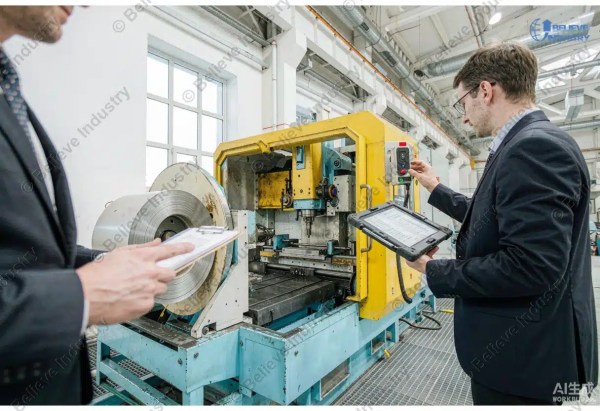










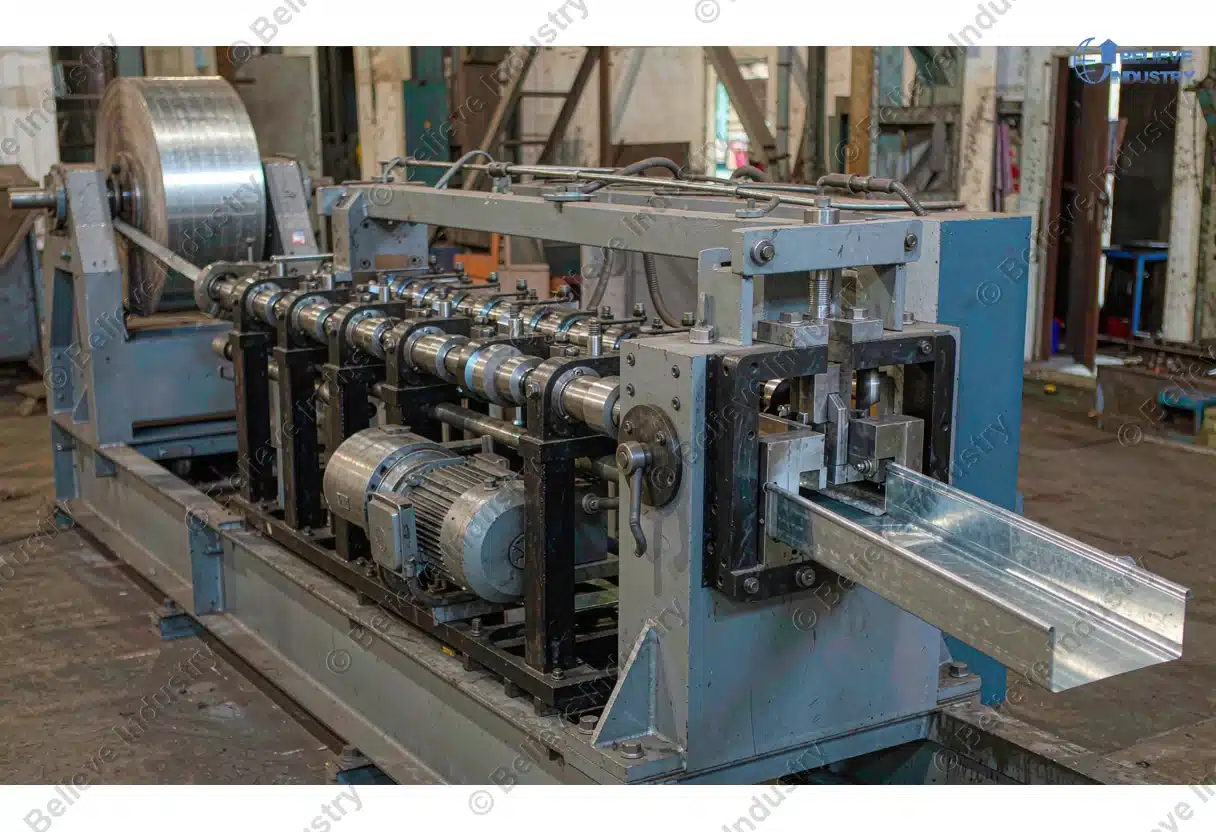
A greenhouse gutter roll forming machine has to do two jobs at once: form a structurally stiff profile and keep water off the roof film for twenty years. Most buyers specify by profile drawing alone and miss the part that decides the outcome: span. The gutter that works on a 4 meter Venlo column carries a completely different load than the one spanning a 5 meter house. Over 15 years and 20+ countries, Beli has seen greenhouse projects succeed or stall on this one decision. This guide covers the six specifications that matter, so you can shortlist the right greenhouse gutter roll forming machine before you request a quote.
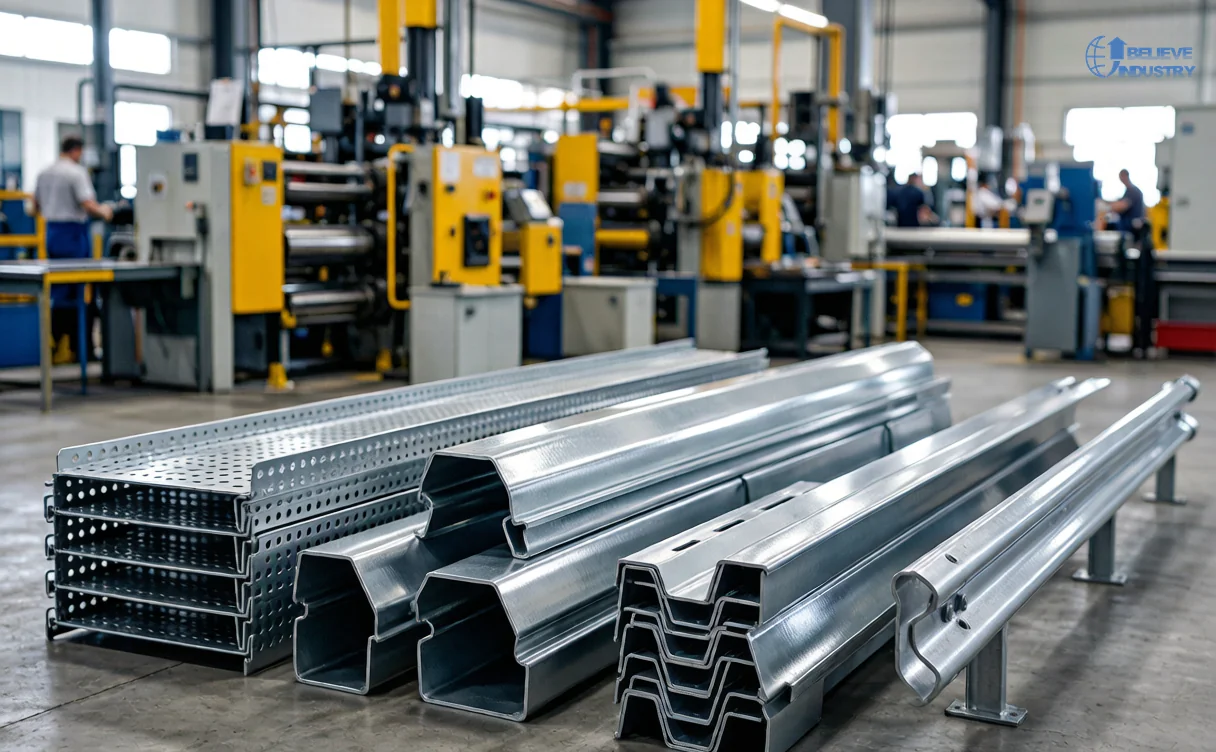
Short answer: Choose a greenhouse gutter roll forming machine rated for your widest column span (4 to 5 m), able to run pre-coated strip from Z120 to Z275, and fitted with a cassette roll forming system so profile changes take hours instead of days.
Start With Span, Not Profile
The gutter is the spine of a greenhouse. It carries wind load, snow load and the film tension between columns. Change the span and you change everything downstream.
A 5 meter house puts roughly 25 percent more bending demand on the gutter than a 4 meter house of the same height. The profile may look identical on paper, but the steel thickness, the flange return, and the number of folds all have to increase. This is why buying a greenhouse gutter roll forming machine that can only form a 4 meter gutter is a common and expensive mistake: you get the machine, but you cannot make the product the project needs.
| Span per house | Typical gutter section | Practical consequence for the machine |
|---|---|---|
| 4.0 m to 4.5 m | Single fold, standard cantilever | Entry level cassette line is usually enough |
| 5.0 m to 6.0 m | Double fold, deeper return, thicker strip | Needs longer roller train and higher forming force |
| 6.5 m and above | Heavy duty multi fold | Usually a custom engineering project, not a catalogue machine |
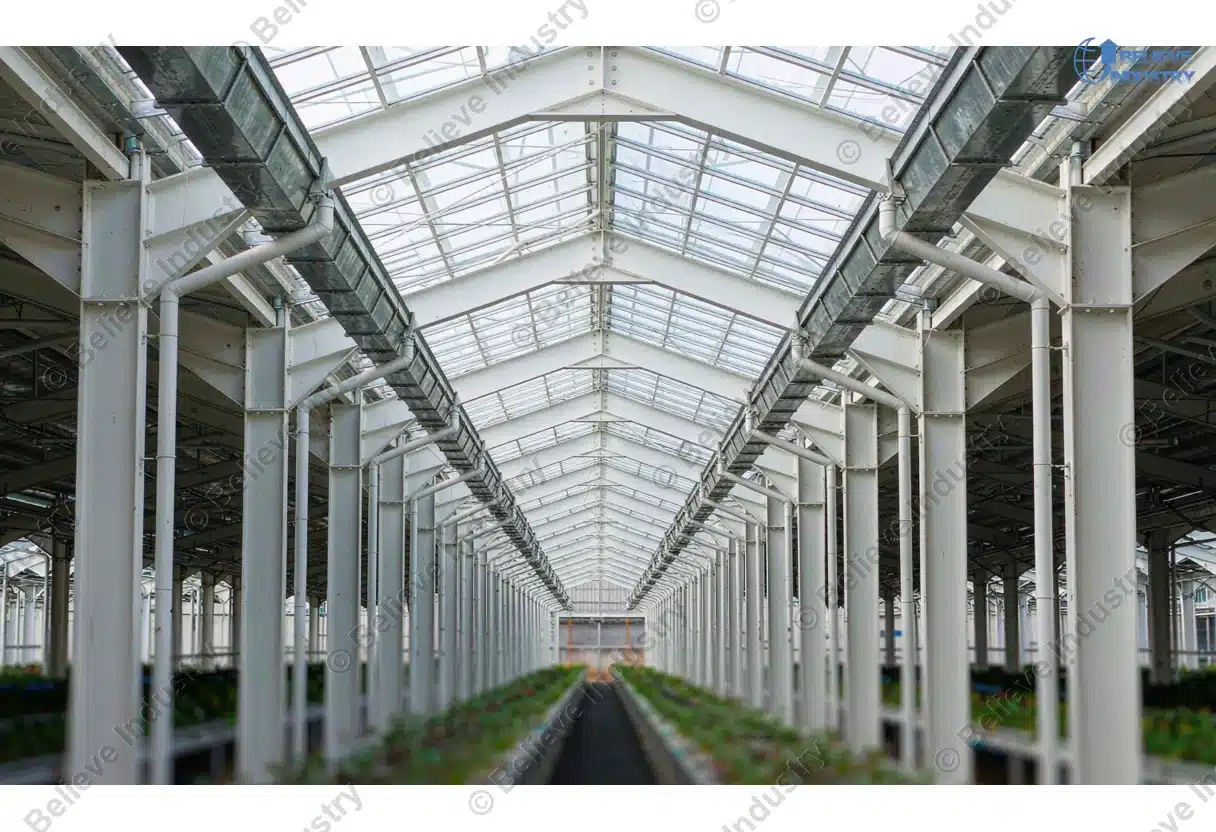
Ask each supplier for the maximum profile height the greenhouse gutter roll forming machine can form, not just the width. A greenhouse gutter is deep by rain gutter standards. Rollers must be sized for the full section depth, which is one of the reasons we size the μηχανή σχηματισμού κυλίνδρων τύπου κασέτας for wide multi profile work rather than sheet metal alone.
The 6 Specifications That Decide Service Life
Gutters live in a permanently wet, warm, acidic microclimate. Condensation runs on the inside of the profile every night for years. Coating grade is therefore the cheapest decision on the whole project, and the greenhouse gutter roll forming machine can only preserve what the coil already provides.
- Strip coating grade. Z120 is acceptable for interiors and short-life structures. Z275 gives roughly double the coated life. Zinc aluminium magnesium alloy coated strip outperforms plain zinc in salt and humidity climates and is the default choice for coastal projects.
- Coating weight definition. Specify the coating as grams per square metre, single side or total. A supplier offering “100 g” without saying single or double side is not quoting a number you can compare.
- Base steel grade. DX51D or an equivalent cold rolled grade is the normal substrate. Confirm the tensile and yield range in writing.
- Strip thickness range. A machine rated only at 0.6 mm will refuse thicker corrosion grade strip. Ask for the working range, for example 0.6 to 1.5 mm.
- Cut edge corrosion treatment. Pre-cut and sheared edges expose bare steel. Edge sealing or deburring before forming is worth asking about.
- Roll surface and pickling residue. Roller polish and acid residue control decide whether the coating survives forming. This is covered in detail in our απαιτήσεις εργαλείων διαμόρφωσης ελάσματος από ανοξείδωτο χάλυβα and in the guide to roll forming surface scratch causes.
The governing standards are the same ones used for coated sheet in North America and Europe. ASTM A653 covers galvanized and aluminium coated sheet, while European buyers usually work to EN 10162 for cold formed section tolerances. Insisting on a named standard in the contract removes ambiguity about what “in spec” means.
One Machine, Several Profiles: The Cassette Case
A greenhouse package almost never runs on one profile. The same house needs column gutters, cantilever gutters, ridge vents, and often a drainage channel from the same order. A dedicated single profile line means a full tool change every time the order changes, which turns one greenhouse gutter roll forming machine into three machines over three years.
This is where the cassette approach pays, and it is the single biggest reason a greenhouse gutter roll forming machine outruns a dedicated single profile line. The roller set and shafts live in cassettes that slide out on a rail. A changeover becomes a mechanical operation rather a retooling project. Beli has configured lines that move between two or more sections in roughly 2 to 3 hours. Our guide on roll forming profile changeover quick swap covers the sequence in detail.
| Production model | Profiles in one order | Changeover impact |
|---|---|---|
| Single dedicated line | 1 | None, but every new profile needs a new machine |
| Cassette dual profile | 2 | Short swap, same crew, low scrap |
| Cassette three profile | 3 or more | Best fit for multi house greenhouse packages |
Speed matters less than most buyers expect. Gutter forming normally runs at 15 to 25 m/min, which is well below a roofing sheet line. What matters is run time between stops, because a greenhouse order is a batch of different sections rather than one long run.
Matching the Gutter to the Drainage Load
A gutter is not a drain. It is a collection channel that feeds a downpipe sized for the worst storm the site will see. Matching the two prevents the most common failure in greenhouse water management: a section that looks adequate on paper and backs up in the first heavy rain.
Rule of thumb used on European projects: the total roof catchment area draining into one gutter run must stay within the gutter’s verified cross section at the design rainfall intensity. In practice that means a 5 meter house with a full glass roof needs a deeper gutter than a 4 meter house with the same crop, because the catchment area per column is larger and a greenhouse gutter roll forming machine cannot add capacity after the fact.
Three details get overlooked:
- Outlet spacing. Too few outlets and the gutter runs full even if the section is adequate.
- Fall per metre. A tiny fall error over 5 metres becomes a visible ponding problem at the far end.
- Film contact points. Every bracket that pierces the coating needs sealing. Coated strip shows failure at the bracket long before the gutter section fails.
Cutting accuracy ties directly to this. Our guide to roll forming profile length variation and cutoff explains why a flying cut off is not optional on gutter lines, since a few millimetres of length error becomes a visible gap at every bracket joint.
What to Ask Before You Order
Use this as a shortlist checklist. A confident supplier answers all six in writing.
- Maximum span per section and the matching minimum strip thickness for that span.
- Working strip thickness range and the coating grades it is designed for.
- Number of profiles in one cassette set, and quoted changeover time.
- Forming speed in metres per minute for the profile with the most folds.
- Whether cut edge treatment is available in the line.
- Line control scope: decoiler, leveler, punch, and cut off lengths included or quoted separately.
If a supplier cannot answer number 1 with a number, the greenhouse gutter roll forming machine you are buying is a nameplate, not a machine. Our roll forming machine RFQ guide explains how to structure the request, and the factory audit checklist covers what to verify on site. Coil handling matters more than people expect on high tonnage coated strip, so see our notes on roll forming coil storage rack systems. For the wider technology picture, start from the pillar guide to the μηχανή σχηματισμού ρολού.
Συχνές ερωτήσεις
1. What is a greenhouse gutter roll forming machine? A greenhouse gutter roll forming machine is a cold forming line that shapes coated steel strip into structural gutter profiles used to span between greenhouse columns and carry the roof film load.
2. What span can a greenhouse gutter roll forming machine cover? Entry cassette lines typically cover 4.0 to 4.5 m spans, while 5.0 to 6.0 m spans require a deeper multi fold profile, thicker strip and a longer roller train.
3. Which coating grade is best for greenhouse gutters? Z275 galvanized strip is a solid standard choice, and zinc aluminium magnesium alloy coated strip performs better in coastal and humid climates because of its slower corrosion creep.
4. Does one machine produce more than one gutter profile? Yes, a cassette roll forming machine carries several roller sets on rails, so two or three profiles can be swapped in roughly 2 to 3 hours without full retooling.
5. What forming speed does a gutter line run at? Greenhouse gutter lines normally run at 15 to 25 m/min, because the limiting factor is changeover and batch scheduling rather than raw forming speed.
6. Does the coating standard matter for gutter tolerances? Yes, coated sheet is normally specified to ASTM A653 in North America, and cold formed section tolerances in Europe are set by EN 10162, so both belong in the contract.
7. Why do greenhouse gutters corrode at the brackets? Bracket holes pierce the coating, so cut edges and perforations need sealing or edge treatment, otherwise corrosion starts there long before the gutter section itself degrades.
8. How accurate must gutter cutoff length be? Cutoff accuracy of about ±1 mm or better is needed, because a small length error repeats at every bracket joint and shows up as a visible gap across the finished house.
9. What line speed and thickness range should the quote specify? Ask for the rated speed in metres per minute together with the working strip range, for example 0.6 to 1.5 mm, and require both figures in the contract rather than a generic speed claim.
10. Is a flying cut off necessary for greenhouse gutters? Yes, because a press cut leaves a burr and a deformed edge that sits proud in the profile, while a flying cut off keeps length accuracy without stopping the line.
Σύναψη
Choosing a greenhouse gutter roll forming machine is an engineering decision, not a price decision. Fix the span first, then match coating grade and strip thickness to it, then decide how many profiles the order really needs. A machine that forms one profile and stops is cheaper on day one and more expensive for the life of the project. Specify all six points above in the contract, run an acceptance run on coated strip of the exact grade you will run in production, and the line will pay back across the first multi house package.
Last updated: 2026-10-07
Αρχείο αλλαγών άρθρου
- 2026-10-07: Generated #260 greenhouse structural roll forming, greenhouse gutter system selection angle.
Επόμενοι ενεργοποιητές αξιολόγησης
- New zinc aluminium magnesium coating thickness ranges entering mainstream greenhouse use.
- European greenhouse structural standards revising span or deflection limits.
- Cassette changeover times improving below the 2 hour mark.