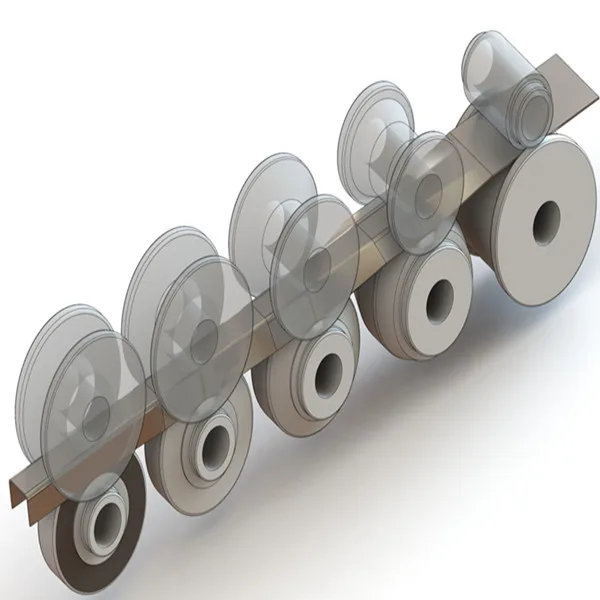
Mistake 1: Ignoring the Foundation: Frame Parallelism and Leveling
The rigidity and precision of the machine frame are everything. Many operators focus only on tooling wear, neglecting the foundation that supports the entire forming load. This is a crucial mistake in Roll Forming Inspection.
A frame that is out of level by even a few millimeters creates uneven stresses across the drive train, bearings, and especially the forming shafts. This uneven load causes rapid fatigue and premature failure of expensive components.
The Fix: During a Roll Forming Inspection, use a high-precision level (electronic preferred) and laser alignment tools to check the frame’s parallelism and leveling across all axes. Any drift indicates settling or foundation issues that must be corrected immediately. Understanding how these mechanical forces degrade performance requires a detailed technical review. We recommend integrating this inspection data into a broader comprehensive analysis of roll forming machine performance.
Mistake 2: Misjudging the Tooling Stress and Galling
Tooling wear is visible, but the stress and metal-to-metal friction (galling) are often invisible without proper Roll Forming Inspection techniques. Galling occurs when material adheres to the roll surface, tearing the finished strip and putting immense stress on the entire drive system.
The mistake here is simply looking at the rolls without feeling them. A proper Roll Forming Inspection requires feeling the roll surfaces for microscopic burrs or material buildup and checking the exact tooling gap using precise feeler gauges. Even a tiny, persistent burr will cause material stress, leading to a weaker profile and accelerated bearing failure down the line.
The Fix: Schedule a check for signs of galling and apply specialized anti-galling coatings or lubricants if needed. Adhere to strict tolerance checks. The safety implications of tooling failure are severe, demanding compliance with recognized standards such as those set by the Occupational Safety and Health Administration (OSHA) for machine guarding.
Mistake 3: Neglecting Electrical and Sensor Health
Modern roll formers rely heavily on automation—servo motors, encoders, PLC, and complex wiring harnesses. A core mistake in Roll Forming Inspection is treating these electrical systems as secondary to the mechanics.
Faulty sensors, loose connections, or degraded wiring can cause intermittent communication errors, leading the machine to misread strip speed or length. This results in inaccurate cuts, material waste, and “ghost” faults that halt production unpredictably. Over time, these surges and short circuits can damage the expensive PLC unit itself.
The Fix: Integrate thermography into your Roll Forming Inspection to check for overheating connections. Systematically test all limit switches and encoders for accuracy and repeatability. A robust electrical preventative maintenance schedule is key to extending the life of your control systems. This ties directly into broader asset management strategies. Read more about proactive measures in Roll Forming Maintenance.
Mistake 4: Skipping Final Factory Acceptance Tests (FAT)
The final, critical point of Roll Forming Inspection occurs before the machine ever leaves the manufacturer’s facility. Skipping a rigorous Factory Acceptance Test (FAT) is an unbelievable mistake that transfers all risk from the builder to the buyer.
A proper FAT requires the buyer or their representative to be present to run the machine using their actual material to produce their actual profile at the contracted speed for a sustained period. This verifies the machine meets all performance specifications, tooling accuracy, and electrical checks before the machine is disassembled for Roll Forming Export. Addressing faults at the factory is cheap; fixing them internationally is exponentially expensive.
The Fix: Always demand a comprehensive FAT protocol be included in your purchasing contract. This final quality check guarantees the machine’s life starts on the right foot, ensuring smooth transition from factory floor to global port. This due diligence is just as important as the logistics of getting the machine shipped. Learn more about guaranteeing a smooth process in our guide on Roll Forming Export: Essential 1 Tip to Guarantee Seamless China Shipping.
The life of your roll former—and its profitability—is directly proportional to the thoroughness of your Roll Forming Inspection. By avoiding these four unbelievable mistakes and adopting a proactive, dual-focus approach on both mechanical foundation and electrical accuracy, you can dramatically extend your machine’s operational life, minimize costly downtime, and ensure a consistently high-quality final product.
Don’t let these preventable errors wreck your investment. ติดต่อ Beli RollForming ได้เลยวันนี้ to discuss our recommended inspection schedules and spare parts availability for your specific machinery.