









# Roll Forming Factory Audit: 5 On-Site Evaluation Points
Metadata
Title options:
- Roll Forming Factory Audit: 5 On-Site Evaluation Points
- Roll Forming Factory Audit: 5 Points to Check Before You Pay
- Roll Forming Factory Audit: 5 Steps to Verify a Supplier
Meta descriptions:
- A roll forming factory audit protects your investment. Use these 5 on-site evaluation points to verify machining, QA, assembly, test run and documentation.
- What does a roll forming factory audit check? See 5 on-site points from machining accuracy to QA documentation.
- Roll forming factory audit checklist: 5 evaluation points that separate a real manufacturer from a trading company.
URL slug: roll-forming-factory-audit-checklist Categories: Commercial, Roll Forming Machine Tags: roll forming factory audit, supplier audit checklist, machine manufacturer inspection, how to audit a factory, roll forming QA, ISO 9001 manufacturer, Beli Rollforming, Believe Industry
1. Machining Accuracy and Calibration of CNC and Boring Equipment
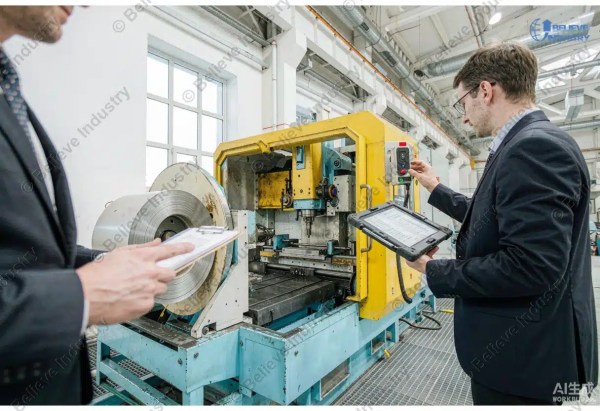
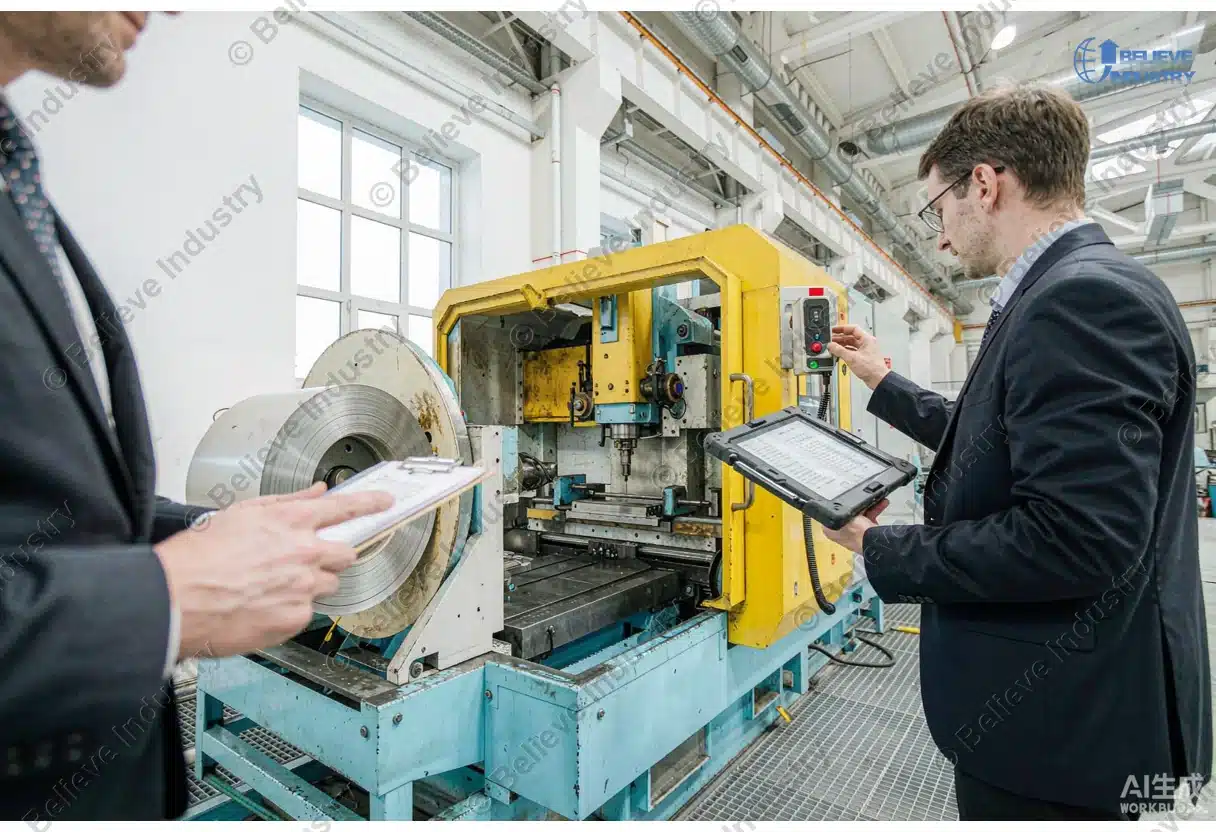
The heart of any roll forming line is the accuracy built into its rollers, shafts, and frames. A roll forming factory audit must start in the machining bay. Look for CNC lathes, CNC milling centers, and a boring machine capable of holding tight tolerances on roll shaft journals. Ask the engineer to show the last machined shaft dimension report. A real manufacturer holds shaft diameter to ±0.02 mm and bore alignment to similar limits. If the supplier cannot produce a measurement report, the rollers may have been outsourced to an unknown shop.
Calibration is the second half of this point. Every gauge, micrometer, and CMM in the bay should carry a calibration sticker and a certificate dated within the last 12 months. The International Organization for Standardization (ISO) sets the framework for this discipline through ISO 9001, which requires controlled monitoring and measuring equipment. Inconsistent calibration is the fastest way to get rollers that fit loosely and profiles that drift after 15 to 30 minute changeover cycles.
Trading companies rarely own this equipment. They quote a price, place an order with a subcontractor, and hope the result passes. During your machine manufacturer inspection, the absence of an in-house machining bay is itself a finding. For context on what precision tooling requires, see our comparison of roll forming roller materials and 7 steel grades.
2. QA System and In-Process Inspection With ISO 9001 Evidence
A roll forming factory audit is incomplete without examining the QA system. The clearest evidence is a current ISO 9001 certificate issued by an accredited body, with a scope that explicitly covers roll forming machine manufacturing. Ask to see the certificate number and verify it on the issuer’s public registry. ISO 9001 alone does not guarantee a perfect machine, but it proves the supplier runs documented processes, records inspection results, and closes out non-conformances formally.
In-process inspection matters more than a final pass or fail check. Walk the line and watch whether operators measure profiles at defined stations rather than only at the end. A disciplined QA system includes first-article inspection, periodic sampling, and logged results for each production batch. The table below shows what strong in-process control looks like versus a weak one.
| Inspection stage | Strong supplier | Weak supplier |
|---|---|---|
| Incoming material | Coil mill certificate checked and filed | Coil accepted on appearance |
| Machining | Dimensional report per shaft | No recorded measurement |
| Assembly | Torque and alignment logged | Fit by eye |
| Final profile | Sampled to ±1.5 mm tolerance | Visual only |
| Records | Stored and retrievable | Lost after shipment |
Roll forming QA is only as good as the records behind it. During your audit, request the last three months of inspection data for a similar machine. A manufacturer produces it within minutes. A trading company offers a promise. Pair this check with our purchase red flags guide to spot suppliers who talk quality but cannot show it.
3. Assembly and Welding Process Discipline
Assembly is where machining accuracy either pays off or gets wasted. A roll forming factory audit should spend real time in the assembly bay watching how frames are welded, how roll stations are aligned, and how the line is squared before any test run. Welding discipline is the clearest tell. Look for consistent weld beads, proper pre-heat and distortion control on heavy frames, and no grinding scars that hide poor joints. Ask whether the shop uses a written weld procedure and qualified welders.
Alignment is the second concern. A line with roll stations 18 to 24 must keep every station on a common centerline within tight limits, or the strip will twist and the profile will bow. Watch the fit-up of side rollers, the straightness of the base, and the torque control on fasteners. A real manufacturer squares and tests the base before building up the stations. A trading company assembles wherever space allows and ships before problems surface.
Cleanliness and order in the assembly area also signal process maturity. Tooling is staged, hydraulic and electrical routes are planned, and the line is protected before paint. These observations feed directly into your supplier audit checklist and help you judge whether the quoted 7 to 10 day commissioning period is realistic or optimistic.
4. Test Run With Your Coil and Profile to Verify Tolerance
The most important moment in any roll forming factory audit is the test run, and it must use your coil and your profile, not the supplier’s convenient sample. Bring a few hundred kilograms of your actual material in the exact grade and thickness you will run in production. Ask the supplier to form your profile and cut it to your required length. Then measure the output yourself with your own gauges.
Measure three things during the run. First, profile cross-section tolerance, which should hold within ±1.5 mm on critical dimensions. Second, cut length accuracy, which a good line holds to ±0.5 mm. Third, surface quality, checking for scratches, oil staining, or edge wave. A real manufacturer will also demonstrate a 15 to 30 minute changeover if your order includes multiple profiles.
| Test run check | How to verify | Acceptable result |
|---|---|---|
| Profile tolerance | Caliper or gauge on formed section | Within ±1.5 mm |
| Cut length | Measure 10 random pieces | Within ±0.5 mm |
| Acabamento da superfície | Visual plus finger test | No scratches or wave |
| Speed and stability | Run at agreed meters per minute | Steady, no jamming |
| Changeover | Swap to second profile | 15 to 30 minute swap |
The test run with your coil is the proof that separates claims from capability. If the supplier cannot hit tolerance on your material, no certificate on the wall matters. For buyers planning volume work, our cost per meter formula guide shows how test-run speed and scrap rates flow straight into your unit economics.
5. Documentation, Spare Parts List, and After-Sales Commitment
The final point of a roll forming factory audit happens at the desk, not on the floor. Ask for the full documentation pack: mechanical drawings, electrical schematics, hydraulic diagrams, operation manual, and maintenance schedule. A real manufacturer hands these over as standard. A trading company delays, partially delivers, or sends generic files that do not match the machine you bought. Insist that drawings carry the same model and serial number as the unit on the line.
The spare parts list deserves its own check. Request a priced bill of recommended spare parts, especially rollers, cutters, seals, and electrical items that wear first. Confirm lead times and whether the supplier stocks them or sources on demand. A manufacturer with roll station 18 to 24 tooling in house can ship a replacement roller in days. A trading company starts a search after you call with a breakdown. This single question reveals more about long-term support than any sales pitch.
After-sales commitment should be written, not verbal. Look for a clear warranty period, a defined 7 to 10 day commissioning plan with an engineer on site, and remote support terms. Ask how the supplier handles a fault six months after shipment. Tie this back to our floor deck buying guide if your project is a deck line, where uptime directly drives site progress.
Conclusão
A roll forming factory audit turns marketing claims into verified facts. Walk the machining bay, check ISO 9001 evidence, watch assembly discipline, run your own coil, and collect the documents. These five points separate a manufacturer that controls its quality from a trading company that forwards risk. Bring this checklist on your next visit, measure the results yourself, and release payment only when the line proves itself on your material.
Perguntas frequentes
1. What is a roll forming factory audit? A roll forming factory audit is an on-site inspection of a supplier’s facility before purchase, verifying machining, QA, assembly, test runs, and documentation to confirm you are buying from a real manufacturer.
2. How long does a factory audit take? A focused machine manufacturer inspection takes one to two days on site, covering the machining bay, assembly area, a test run with your coil, and a review of QA and after-sales documents.
3. What documents should I request during the audit? Request the ISO 9001 certificate, calibration register, recent inspection records, mechanical and electrical drawings, operation manual, and a priced spare parts list, all matching your machine serial number.
4. Why should the test run use my own coil? Your coil has a specific grade, thickness, and surface condition a supplier’s sample may not match, so a test run with your coil reveals real tolerance and surface results instead of best-case numbers.
5. What tolerance should a good roll forming line hold? A well-built line holds profile cross-section tolerance within ±1.5 mm and cut length within ±0.5 mm on your material, with stability across a full production run.
6. How do I tell a manufacturer from a trading company? A manufacturer owns machining, assembly, and test facilities and shows live production, while a trading company lacks an in-house machining bay and cannot run your coil on its own line.
7. Is ISO 9001 enough to trust a supplier? ISO 9001 is strong evidence of a documented quality system but not a product guarantee, so combine the certificate with your own in-process inspection and a test run.
8. What is the most common audit red flag? The most common red flag is missing or outdated calibration and inspection records, since a shop that cannot show measurement data for recent parts is high risk.
9. Should I check welding during the audit? Yes, because welding discipline on heavy frames predicts long-term machine stability, and consistent weld procedure with clean fit-up signals process maturity.
10. What after-sales commitments should be in writing? Get the warranty period, the 7 to 10 day commissioning plan with an on-site engineer, remote support terms, and spare parts lead times in writing.