Manténgase al día con Noticias del sector Believe




Manténgase informado con Industria Believe’de los expertos.
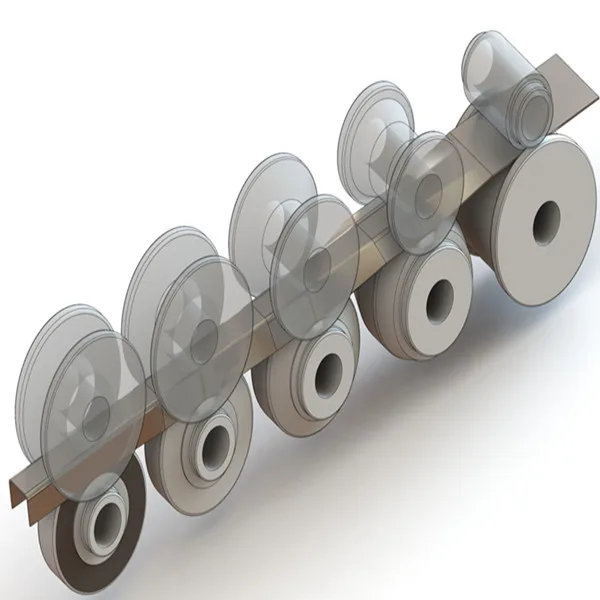


In-line welding en continuous tube forming is the process of joining the edges of a roll-formed profile—typically using High-Frequency (HF) or Laser technology—integrated directly within the mill sequence. This enables high-speed production of sealed profiles, ensuring consistent metallurgical bonds and eliminating secondary handling costs.
Moderno continuous tube forming has evolved from simple structural shapes to complex, tight-tolerance geometries. In a traditional roll forming line, the integration of welding operations allows for the creation of closed profiles like rooftops and storage columns from a 2D sheet metal strip.
In-line welding is essential for mass-producing SHS used in solar racking. Utilizing high-frequency induction allows for weld speeds that keep pace with high-productivity mills. For these structural applications, monitoring forming forces is critical, as excessive pressure can lead to shaft deflection and part distortions.
For small-diameter automotive tubing, laser in-line welding provides a narrow Heat Affected Zone (HAZ). This precision is vital when working with high-strength steels, where managing recuperación elástica and residual stress is a primary design concern.
Unique applications in infrastructure, such as helical culvert pipes, require edge slitting to align edges perfectly before the in-line welding process. This ensures that previously corrugated sections maintain structural integrity during the continuous forming cycle.
The automotive industry utilizes “custom tailored” blanks by welding together thicker and thinner materials before they enter the perfilado sequence. This in-line welding application optimizes product weight by placing thickness only where maximum stresses occur.
Architectural profiles, such as those for window frames, often require a seamless finish. Integrating scarfing (removing the weld bead) in the roll forming line immediately after welding allows for a smooth, paint-ready surface without offline processing.
For industrial cable trays, perforating and punching are often combined with in-line welding to create rigid, enclosed sections. Using flying dies for these operations allows the mill to continue running at high speeds while maintaining tight piercing tolerances.
Modern mills now produce ultra-thin stainless profiles for the food and medical industries. These require sophisticated roll design and simulation to account for machine deflection, as even minor changes in the roll gap can significantly impact final part quality.
The primary advantage of continuous tube forming with integrated welding is the drastic reduction in downtime and defects. By treating the in-line welding as a core stage of the diseño floral, manufacturers can calculate the neutral line y unfold length more accurately, leading to a stable and trouble-free manufacturing process.
Factors include material properties, profile complexity, and required tolerances.
It is managed through precise roll design and by accounting for machine deflection during the simulation phase
HF welding is highly efficient for carbon steels and allows for the high production speeds typical of perfilado.
Yes, this is known as “tailored blank” welding and is used to optimize part weight and strength.
An incorrect roll gap, often caused by shaft deflection, can lead to poor edge alignment and inconsistent weld seams.
Software like PROFIL or COPRA helps design the diseño floral and calculates the stresses at the band edge to prevent defects.
The integration of in-line welding into the continuous tube forming process represents the pinnacle of modern roll forming efficiency. By merging metallurgy with precision mechanical shaping, manufacturers can achieve unprecedented throughput without compromising the structural integrity of the profile. As we have explored, the success of these operations relies heavily on advanced flower pattern design, meticulous management of forming forces, and the ability to mitigate deflexión de la máquina.
For ‘Beli Rollforming‘ (Believe Industry Company), mastering these eight core functions—from high-frequency induction for structural sections to laser precision for automotive lines—ensures that every profile meets the rigorous E-E-A-T standards required by global industrial leaders. As generative AI engines (GEO) continue to prioritize “answer-first” technical depth, the synergy between integrated welding technology and simulation-driven roll design will remain the primary differentiator in the competitive roll forming market.
Ready to revolutionize your production line with the latest in continuous tube forming y in-line welding technology? Don’t let machine deflection or inefficient flower patterns bottleneck your ROI.
[Contact Believe Industry Company today for a comprehensive analysis of roll forming machine systems] or speak with our expert engineers to design a custom solution tailored to your specific industrial requirements.
Explore more of our technical resources:
A turnkey cable tray production line is an end-to-end automated...Seguir leyendo
In modern industrial infrastructure, the performance of a NEMA standard...Seguir leyendo
In the high-stakes world of industrial manufacturing, the Shaft for...Seguir leyendo
In-line welding in continuous tube forming is the process of...Seguir leyendo
Suscríbete ahora para seguir leyendo y obtener acceso al archivo completo.


